

Pasta mix, Italian four cheese lasagna, unprepared
Whole food · Meals, Entrees, and Side Dishes

Photo: Wikipedia
This is the dry, uncooked pasta sheet mix for a classic four-cheese lasagna, featuring a blend of ricotta, mozzarella, parmesan, and provolone flavors. The sheets are typically thin, slightly wavy, and firm, designed to soften and become tender during baking. Nutritionally, it is a high-carbohydrate base that provides a quick energy source, with a moderate amount of protein from the wheat and cheese blend.
Calorie split: 14% protein · 79% carbs · 7% fat
↓ Full nutrition💚 Why it's loved
People love it for its comforting, rich, and savory flavor profile that is deeply associated with Italian-American home cooking and family gatherings. Its versatility allows for endless customization with different sauces, vegetables, and meats, making it a beloved staple for both simple and elaborate meals.
⚠️ Watch-outs & how to enjoy it better
The high carbohydrate content can lead to blood-sugar spikes, especially when consumed in large portions without balancing fats or proteins. To counteract this, pair the lasagna with a side salad or steamed vegetables, and use portion control (e.g., a 118g serving). Also, check the sodium content in the cheese blend and consider using low-sodium versions or rinsing the cooked pasta lightly if needed.
Key benefits
- Provides a convenient base for a complete, layered meal.
- Offers a good source of energy from complex carbohydrates.
- Contains moderate protein for muscle maintenance.
- The fiber content, while modest, aids in digestion.
- The cheese blend adds calcium and flavor without excessive fat.
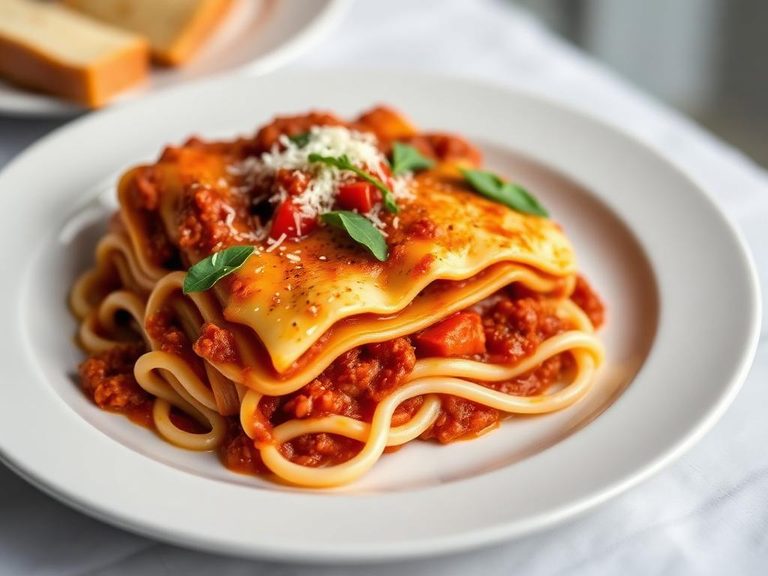
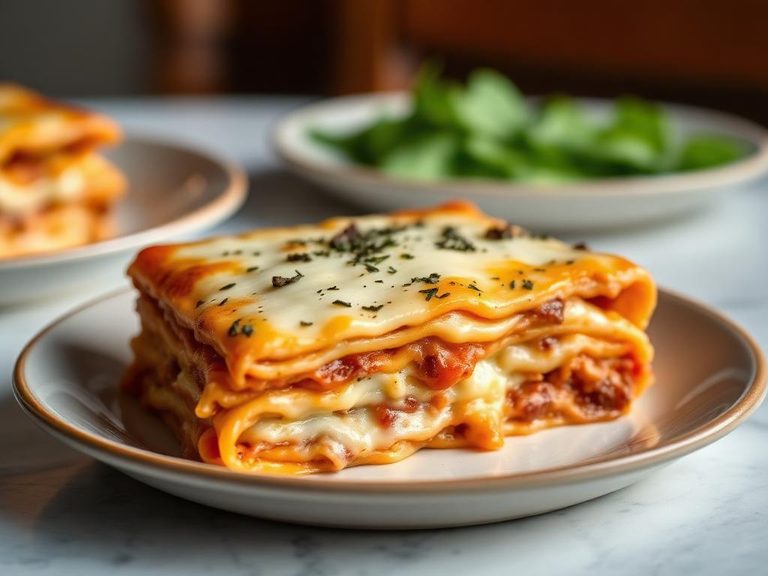
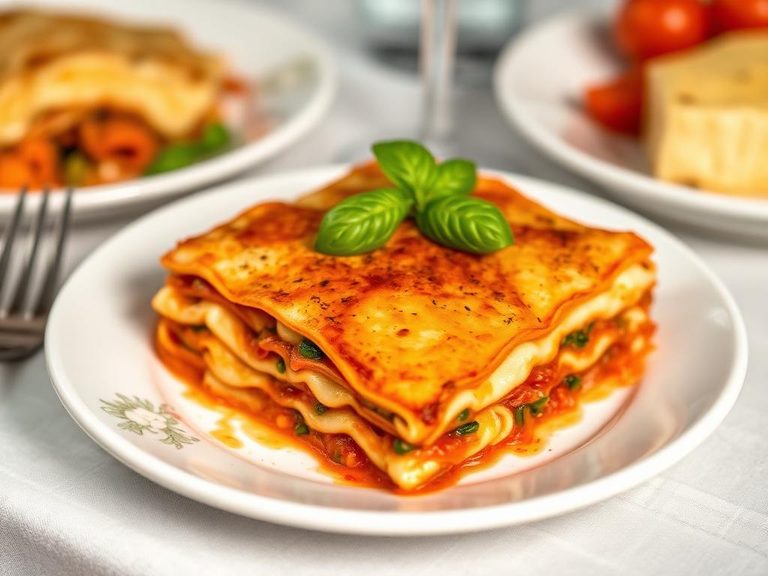
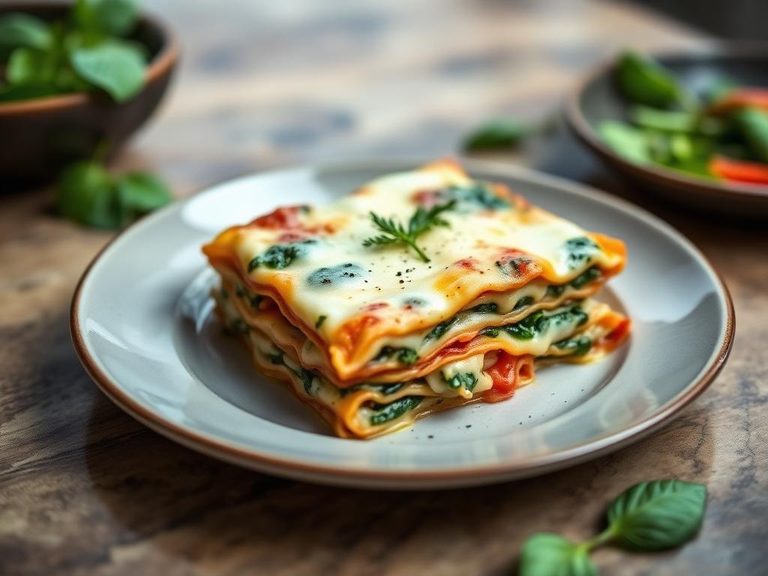
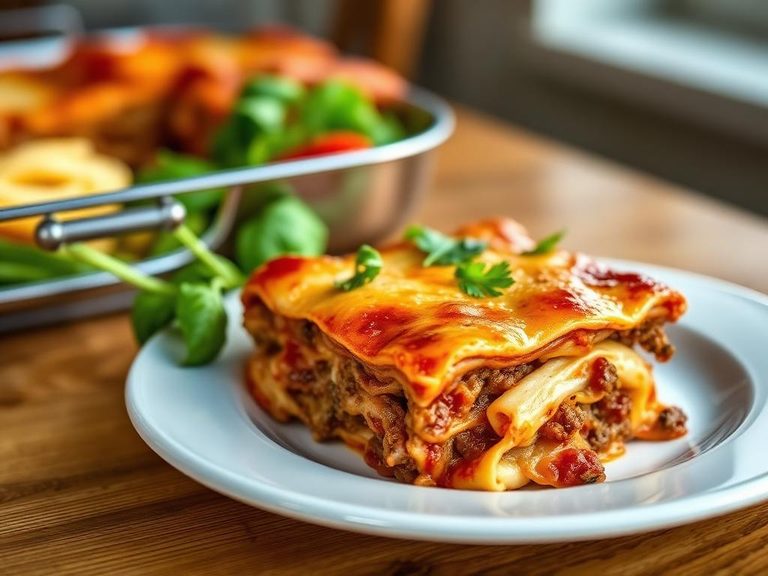
🍽️ Popular dishes
🌍 Where it's eaten
💡 Did you know?
The word 'lasagna' comes from the Greek 'lasanon,' meaning 'chamber pot,' which later evolved in Italian to refer to the cooking vessel used to bake the layered pasta dish.
Full nutrition (USDA data · scales with serving)
| Water | 8.1 g |
| Energy | 355 kcal |
| Energy | 1487 kj |
| Protein | 12.5 g |
| Total lipid (fat) | 2.7 g |
| Ash | 6.4 g |
| Carbohydrate, by difference | 70.3 g |
| Fiber, total dietary | 2.6 g |
| Total Sugars | 6.7 g |
| Sucrose | 1.6 g |
| Glucose | 0.27 g |
| Fructose | 0.40 g |
| Lactose | 2.4 g |
| Maltose | 2.1 g |
| Galactose | 0.00 g |
| Starch | 57.1 g |
| Calcium, Ca | 55.0 mg |
| Iron, Fe | 3.1 mg |
| Magnesium, Mg | 42.0 mg |
| Phosphorus, P | 162 mg |
| Potassium, K | 271 mg |
| Sodium, Na | 2093 mg |
| Zinc, Zn | 0.98 mg |
| Copper, Cu | 0.16 mg |
| Manganese, Mn | 0.69 mg |
| Selenium, Se | 36.9 ug |
| Thiamin | 0.81 mg |
| Riboflavin | 0.54 mg |
| Niacin | 6.1 mg |
| Pantothenic acid | 0.76 mg |
| Vitamin B-6 | 0.15 mg |
| Folate, total | 140 ug |
| Vitamin B-12 | 0.52 ug |
| Vitamin A, RAE | 38.0 ug |
| Retinol | 38.0 ug |
| Vitamin A, IU | 126 iu |
| Vitamin E (alpha-tocopherol) | 0.54 mg |
| Tocopherol, beta | 0.10 mg |
| Tocopherol, gamma | 0.32 mg |
| Tocopherol, delta | 0.08 mg |
| Tocotrienol, alpha | 0.05 mg |
| Tocotrienol, beta | 0.70 mg |
| Tocotrienol, gamma | 0.00 mg |
| Tocotrienol, delta | 0.00 mg |
Fat & fatty acid profile (per 100g)
| Fatty acids, total saturated | 0.70 g |
| SFA 4:0 | 0.02 g |
| SFA 6:0 | 0.01 g |
| SFA 8:0 | 0.01 g |
| SFA 10:0 | 0.03 g |
| SFA 12:0 | 0.02 g |
| SFA 14:0 | 0.08 g |
| SFA 15:0 | 0.01 g |
| SFA 16:0 | 0.40 g |
| SFA 17:0 | 0.01 g |
| SFA 18:0 | 0.10 g |
| SFA 20:0 | 0.00 g |
| SFA 22:0 | 0.00 g |
| SFA 24:0 | 0.00 g |
| Fatty acids, total monounsaturated | 0.55 g |
| MUFA 14:1 | 0.01 g |
| MUFA 15:1 | 0.00 g |
| MUFA 16:1 | 0.01 g |
| MUFA 16:1 c | 0.01 g |
| MUFA 17:1 | 0.00 g |
| MUFA 18:1 | 0.52 g |
| MUFA 18:1 c | 0.43 g |
| MUFA 20:1 | 0.01 g |
| MUFA 22:1 | 0.00 g |
| MUFA 22:1 c | 0.00 g |
| MUFA 24:1 c | 0.00 g |
| Fatty acids, total polyunsaturated | 0.52 g |
| PUFA 18:2 | 0.48 g |
| PUFA 18:2 n-6 c,c | 0.47 g |
| PUFA 18:2 CLAs | 0.00 g |
| PUFA 18:3 | 0.03 g |
| PUFA 18:3 n-3 c,c,c (ALA) | 0.03 g |
| PUFA 18:3 n-6 c,c,c | 0.00 g |
| PUFA 18:3i | 0.00 g |
| PUFA 18:4 | 0.00 g |
| PUFA 20:2 n-6 c,c | 0.00 g |
| PUFA 20:3 | 0.00 g |
| PUFA 20:3 n-3 | 0.00 g |
| PUFA 20:3 n-6 | 0.00 g |
| PUFA 20:4 | 0.00 g |
| PUFA 20:5 n-3 (EPA) | 0.00 g |
| PUFA 22:4 | 0.00 g |
| PUFA 22:5 n-3 (DPA) | 0.00 g |
| PUFA 22:6 n-3 (DHA) | 0.00 g |
| Fatty acids, total trans | 0.10 g |
| Fatty acids, total trans-monoenoic | 0.08 g |
| TFA 16:1 t | 0.00 g |
| TFA 18:1 t | 0.08 g |
| TFA 22:1 t | 0.00 g |
| TFA 18:2 t not further defined | 0.01 g |
| Fatty acids, total trans-polyenoic | 0.01 g |
| Cholesterol | 1.0 mg |
FAQ
How do I cook the unprepared pasta mix?
Typically, you layer the dry sheets with sauce and cheese, then bake covered with foil at 375°F (190°C) for about 45 minutes, then uncovered for 15 minutes until bubbly and golden.
Is this pasta mix gluten-free?
No, this mix is usually made from wheat flour and contains gluten. For a gluten-free version, look for specific gluten-free lasagna sheets or use alternatives like zucchini slices.
Can I freeze the assembled lasagna?
Yes, you can assemble the lasagna and freeze it before baking. Wrap it tightly and freeze for up to 3 months. Thaw in the refrigerator overnight before baking.
What's the best way to prevent the pasta from sticking together?
If the sheets are pre-cooked, rinse them with cold water and lay them flat on a baking sheet. For dry sheets, layer them directly without pre-cooking, but ensure they are fully covered with sauce to absorb moisture.
Nutrient density (calculated · NRF9.3)
Nutrient Rich Foods index: beneficial nutrients (protein, fiber, vitamins, minerals) minus saturated fat, added sugar & sodium, per 100 kcal.
NRF9.3 index — Fulgoni, Keast & Drewnowski, 2009. Computed from USDA nutrients.
Weight-loss friendliness (composite index)
Energy density 3.55 kcal/g · 14% calories from protein · 2.6 g fiber · 6.7 g sugar per 100 g.
Composite of energy density (Rolls et al., 1999), protein & fiber satiety, minus sugar. A calculated heuristic — ranks satiety-per-calorie, not a clinical measure.
Dietary load (calculated from USDA values)
Potential renal acid load. Positive = acid-forming, negative = alkaline-forming.
Sodium-to-potassium ratio: 7.72 (lower is better — aim for ≤ 1)
Sodium:potassium per WHO potassium guidance. Computed from USDA nutrients.