

Lasagna Primavera
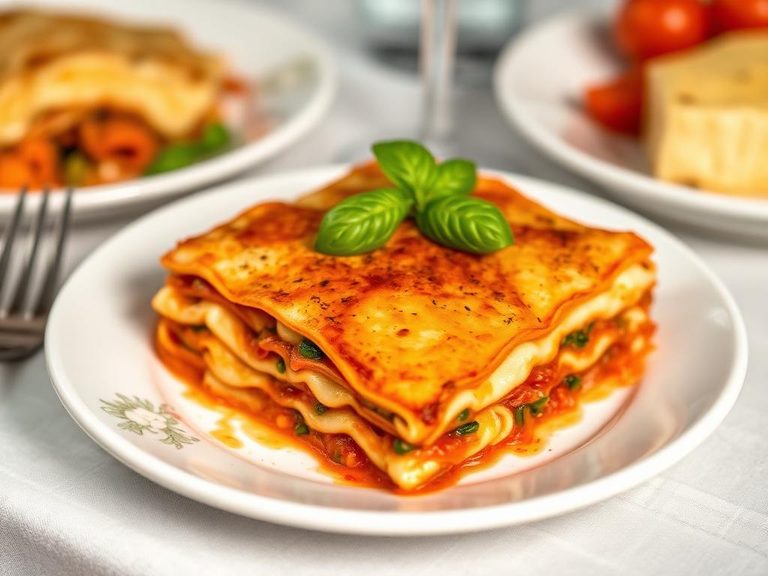
Lasagna Primavera is a vibrant, vegetable-forward twist on the classic Italian-American baked pasta dish, replacing heavy meat sauces with a colorful medley of fresh spring and summer vegetables like zucchini, bell peppers, spinach, and sometimes peas or asparagus. It typically features layers of pasta, a creamy béchamel or ricotta mixture, melted cheese, and a light tomato or cream-based sauce. The dish is a modern fusion creation, popular in North America, that celebrates seasonal produce.
🍳 View the full Lasagna Primavera recipe →
🍽️ Nutrition at a glance
This dish is generally high in carbohydrates from the pasta and fat from the cheese and creamy sauce, while also providing a good amount of protein from the dairy and a variety of vitamins and minerals from the vegetables. A typical serving can range from 400 to 600 calories, depending on the specific recipe and portion size.
Nutrition breakdown
| Calories | 350 kcal |
| Protein | 18 g |
| Carbs | 32 g |
| Fat | 17 g |
| Fiber | 4 g |
| Sugar | 8 g |
| Sodium | 750 mg |
| Calcium | 300 mg |
| Iron | 2.5 mg |
| Potassium | 450 mg |
| Vitamin A | 250 mcg RAE |
| Vitamin C | 15 mg |
| Vitamin K | 30 mcg |
| Folate | 60 mcg DFE |
| Phosphorus | 250 mg |
Per 1 piece (approx. 240 g) · estimated, varies by recipe
💡 What's interesting
Lasagna Primavera is culturally interesting as a prime example of culinary adaptation, where a traditional dish is reinvented to suit contemporary tastes for lighter, vegetable-centric meals. Nutritionally, it offers a unique way to incorporate a significant serving of diverse vegetables into a comforting, familiar format, making it a popular choice for both vegetarians and those simply seeking a fresher take on a classic.
🍽️ Related dishes
AI estimate may be inaccurate · Terms