

Onions, yellow, sauteed
Whole food · Vegetables and Vegetable Products

Photo: Wikipedia
Sautéed yellow onions are the sweet, golden-brown foundation of countless dishes, transformed from sharp and pungent to rich, savory, and melt-in-your-mouth tender. The cooking process caramelizes their natural sugars, creating a complex, umami-rich flavor and a soft, slightly oily texture. While they add significant fat from the cooking oil, they also retain a modest amount of fiber and provide a savory base without added sugar.
Calorie split: 3% protein · 24% carbs · 73% fat
↓ Full nutrition💚 Why it's loved
People love sautéed onions for their transformative power—they turn a simple dish into something deeply flavorful and aromatic. Their versatility as a base for soups, stews, and stir-fries makes them a culinary staple across cultures.
⚠️ Watch-outs & how to enjoy it better
The primary downside is the added fat from the oil used for sautéing, which can significantly increase calorie and fat content. To counteract this, use minimal high-quality oil (like olive or avocado oil) and consider pairing with lean proteins or vegetables to balance the meal. Also, the cooking process can reduce some heat-sensitive nutrients, so enjoy them as part of a varied diet.
Key benefits
- Provides a rich, savory base flavor for many dishes
- Good source of dietary fiber (1.7g per 100g)
- Contains antioxidants like quercetin, though some may leach into cooking oil
- Adds volume and flavor to meals without added sugar
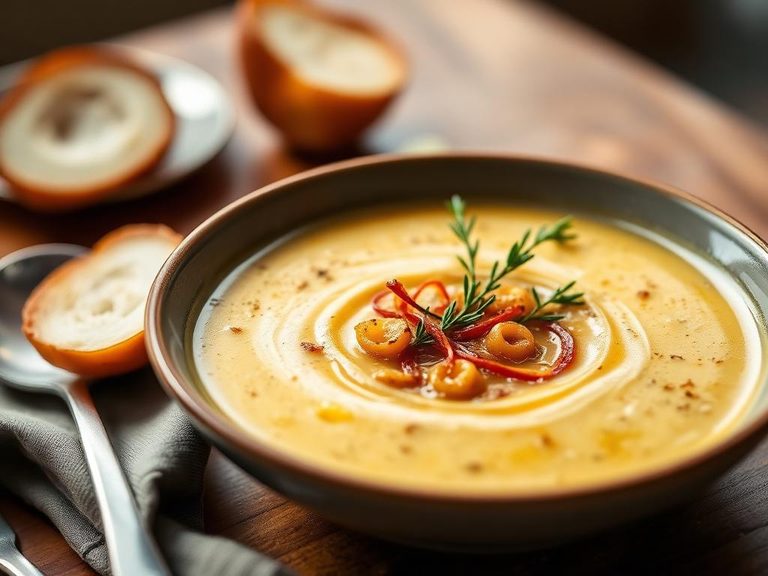
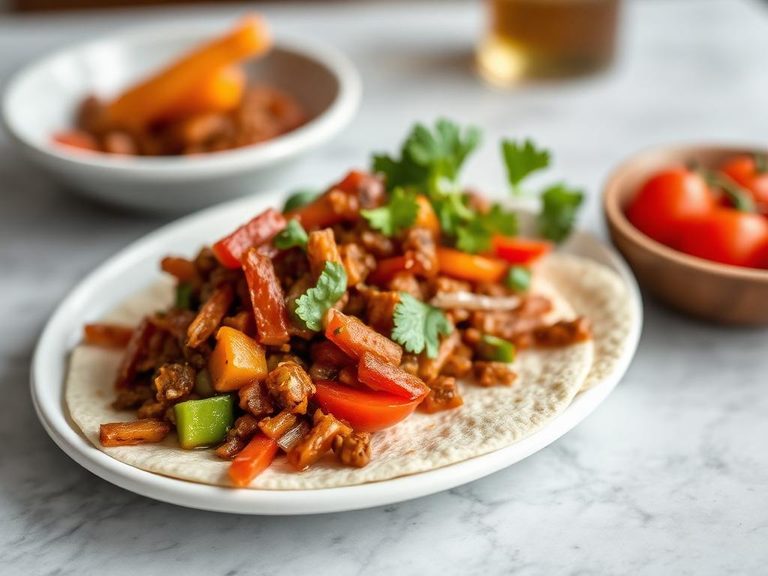
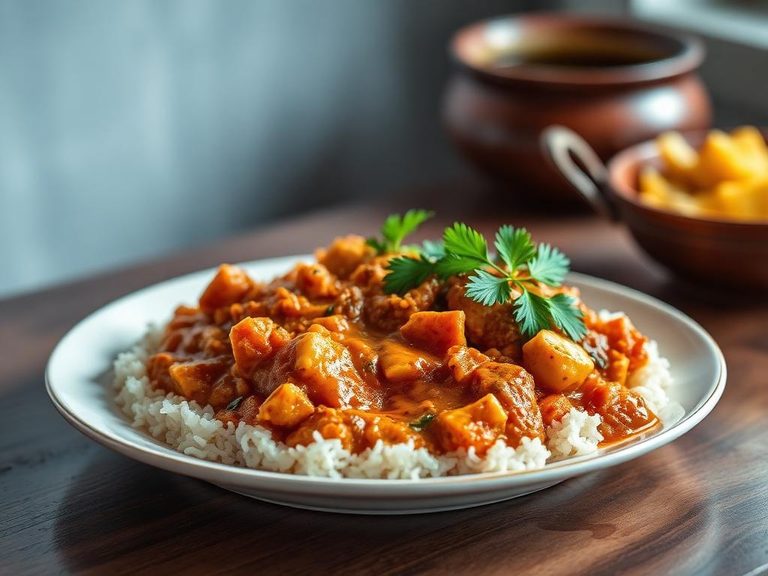
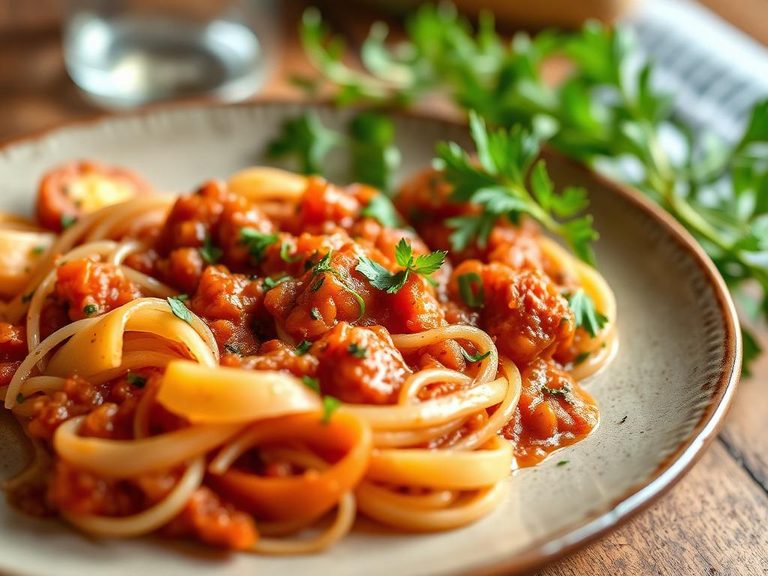
🍽️ Popular dishes

🌍 Where it's eaten
💡 Did you know?
The process of sautéing onions breaks down their cell walls and releases enzymes that create new flavor compounds, which is why they taste so different from raw onions—this is a chemical transformation called the Maillard reaction.
Full nutrition (USDA data · scales with serving)
| Water | 80.0 g |
| Energy | 123 kcal |
| Energy | 516 kj |
| Protein | 0.95 g |
| Total lipid (fat) | 10.8 g |
| Ash | 0.38 g |
| Carbohydrate, by difference | 7.9 g |
| Fiber, total dietary | 1.7 g |
| Sucrose | 0.81 g |
| Glucose | 2.1 g |
| Fructose | 1.5 g |
| Lactose | 0.00 g |
| Maltose | 0.00 g |
| Starch | 0.00 g |
| Calcium, Ca | 20.0 mg |
| Iron, Fe | 0.27 mg |
| Magnesium, Mg | 9.0 mg |
| Phosphorus, P | 33.0 mg |
| Potassium, K | 133 mg |
| Sodium, Na | 12.0 mg |
| Zinc, Zn | 0.21 mg |
| Copper, Cu | 0.02 mg |
| Manganese, Mn | 0.10 mg |
| Vitamin C, total ascorbic acid | 1.8 mg |
| Thiamin | 0.05 mg |
| Riboflavin | 0.04 mg |
| Niacin | 0.04 mg |
| Pantothenic acid | 0.17 mg |
| Vitamin B-6 | 0.21 mg |
| Folate, total | 2.0 ug |
| Folate, food | 2.0 ug |
| Choline, total | 6.5 mg |
| Betaine | 0.10 mg |
| Vitamin E (alpha-tocopherol) | 0.68 mg |
| Tocopherol, beta | 0.04 mg |
| Tocopherol, gamma | 5.6 mg |
| Tocopherol, delta | 1.6 mg |
| Tocotrienol, alpha | 0.03 mg |
| Tocotrienol, beta | 0.00 mg |
| Tocotrienol, gamma | 0.00 mg |
| Tocotrienol, delta | 0.00 mg |
| Vitamin D (D2 + D3), International Units | 0.00 iu |
| Vitamin D (D2 + D3) | 0.00 ug |
| Vitamin K (phylloquinone) | 21.6 ug |
| Vitamin K (Dihydrophylloquinone) | 0.00 ug |
Fat & fatty acid profile (per 100g)
| Fatty acids, total saturated | 1.5 g |
| SFA 8:0 | 0.00 g |
| SFA 10:0 | 0.00 g |
| SFA 12:0 | 0.00 g |
| SFA 14:0 | 0.00 g |
| SFA 15:0 | 0.00 g |
| SFA 16:0 | 1.0 g |
| SFA 17:0 | 0.00 g |
| SFA 18:0 | 0.40 g |
| SFA 20:0 | 0.03 g |
| SFA 22:0 | 0.03 g |
| SFA 24:0 | 0.00 g |
| Fatty acids, total monounsaturated | 2.2 g |
| MUFA 14:1 | 0.00 g |
| MUFA 15:1 | 0.00 g |
| MUFA 16:1 | 0.00 g |
| MUFA 17:1 | 0.00 g |
| MUFA 18:1 | 2.2 g |
| MUFA 20:1 | 0.03 g |
| MUFA 22:1 | 0.00 g |
| Fatty acids, total polyunsaturated | 5.5 g |
| PUFA 18:2 | 4.8 g |
| PUFA 18:3 | 0.66 g |
| PUFA 18:4 | 0.00 g |
| PUFA 20:2 n-6 c,c | 0.00 g |
| PUFA 20:3 | 0.00 g |
| PUFA 20:4 | 0.00 g |
| PUFA 20:5 n-3 (EPA) | 0.00 g |
| PUFA 22:5 n-3 (DPA) | 0.00 g |
| PUFA 22:6 n-3 (DHA) | 0.00 g |
| Fatty acids, total trans | 0.00 g |
Amino acid profile (per 100g)
| Tryptophan | 0.01 g |
| Threonine | 0.02 g |
| Isoleucine | 0.01 g |
| Leucine | 0.02 g |
| Lysine | 0.04 g |
| Methionine | 0.00 g |
| Cystine | 0.00 g |
| Phenylalanine | 0.02 g |
| Tyrosine | 0.01 g |
| Valine | 0.02 g |
| Arginine | 0.10 g |
| Histidine | 0.01 g |
| Alanine | 0.02 g |
| Aspartic acid | 0.09 g |
| Glutamic acid | 0.25 g |
| Glycine | 0.02 g |
| Proline | 0.01 g |
| Serine | 0.02 g |
FAQ
How does sautéing affect the nutrition of onions?
Sautéing can reduce some heat-sensitive vitamins (like vitamin C) but may increase the bioavailability of certain antioxidants. The main nutritional change is the addition of fat from the cooking oil, which increases calories and fat content.
Are sautéed onions high in sugar?
No, sautéed onions have 0g of sugar per 100g. The natural sugars in onions caramelize during cooking, creating a sweet flavor, but they are not added sugars and are part of the onion's natural carbohydrate content.
Can I sauté onions without adding oil?
Yes, you can sauté onions in a small amount of water or broth (water-sautéing) to reduce fat and calories. This method softens the onions and develops some flavor, though it won't achieve the same rich, caramelized texture as oil-based sautéing.
Nutrient density (calculated · NRF9.3)
Nutrient Rich Foods index: beneficial nutrients (protein, fiber, vitamins, minerals) minus saturated fat, added sugar & sodium, per 100 kcal.
NRF9.3 index — Fulgoni, Keast & Drewnowski, 2009. Computed from USDA nutrients.
Weight-loss friendliness (composite index)
Energy density 1.23 kcal/g · 3% calories from protein · 1.7 g fiber · 0.0 g sugar per 100 g.
Composite of energy density (Rolls et al., 1999), protein & fiber satiety, minus sugar. A calculated heuristic — ranks satiety-per-calorie, not a clinical measure.
Dietary load (calculated from USDA values)
Potential renal acid load. Positive = acid-forming, negative = alkaline-forming.
Sodium-to-potassium ratio: 0.09 (lower is better — aim for ≤ 1)
Sodium:potassium per WHO potassium guidance. Computed from USDA nutrients.