

Oil, industrial, palm kernel (hydrogenated), confection fat, uses similar to 95 degree hard butter
Whole food · Fats and Oils

Photo: Wikipedia
This is a highly refined, hydrogenated palm kernel oil engineered to behave like 95-degree hard butter in confectionery. It's a solid, white fat at room temperature with a very high melting point, offering a smooth, waxy mouthfeel and a neutral flavor. Nutritionally, it is 100% fat, providing a dense 884 kcal per 100 grams with no protein, carbs, or fiber.
Calorie split: 0% protein · 0% carbs · 100% fat
↓ Full nutrition💚 Why it's loved
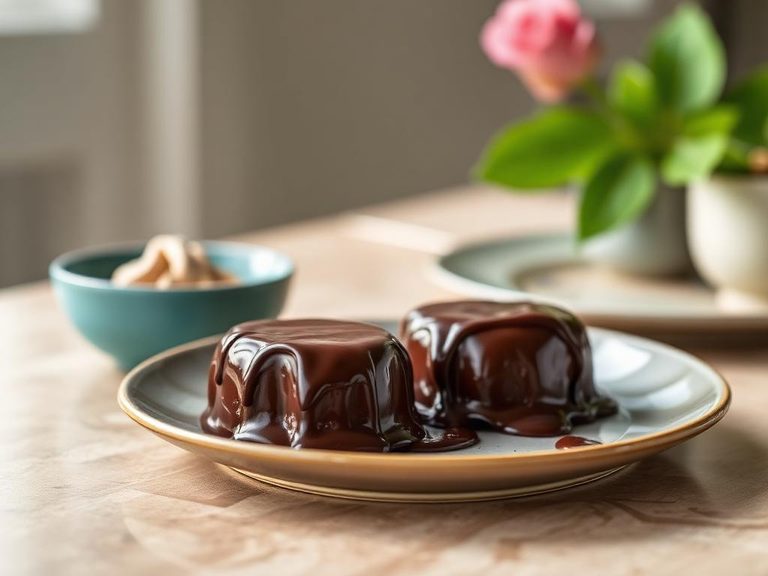
Confectioners and bakers love it for its functional reliability; it sets firmly at room temperature, gives a satisfying snap to coatings, and resists melting in warm hands, making it ideal for candy bars and truffles.
⚠️ Watch-outs & how to enjoy it better
As a fully hydrogenated fat, it is very high in saturated fats and contains trans fats from the hydrogenation process, which are linked to cardiovascular health concerns. For home use, it should be used sparingly and is best avoided by those monitoring their intake of saturated and trans fats. Counteract by using it as a minor component in a recipe and pairing finished treats with fiber-rich foods like fruit.
Key benefits
- Provides a stable, solid fat structure for confections
- Has a very high melting point, preventing bloom in chocolate
- Offers a long shelf life due to hydrogenation
- Creates a smooth, creamy texture in fillings and coatings
- Acts as a cost-effective substitute for cocoa butter
🍽️ Popular dishes

🌍 Where it's eaten
💡 Did you know?
Its name '95 degree hard butter' refers to its slip melting point of approximately 95°F (35°C), meaning it stays solid until just above human body temperature, which is why it melts smoothly in the mouth.
Full nutrition (USDA data · scales with serving)
| Water | 0.05 g |
| Energy | 884 kcal |
| Energy | 3699 kj |
| Protein | 0.00 g |
| Total lipid (fat) | 100 g |
| Ash | 0.01 g |
| Carbohydrate, by difference | 0.00 g |
| Fiber, total dietary | 0.00 g |
| Total Sugars | 0.00 g |
| Calcium, Ca | 1.0 mg |
| Iron, Fe | 0.15 mg |
| Magnesium, Mg | 0.00 mg |
| Phosphorus, P | 0.00 mg |
| Potassium, K | 1.0 mg |
| Sodium, Na | 6.0 mg |
| Zinc, Zn | 0.08 mg |
| Copper, Cu | 0.00 mg |
| Manganese, Mn | 0.00 mg |
| Selenium, Se | 0.00 ug |
| Vitamin C, total ascorbic acid | 0.00 mg |
| Thiamin | 0.00 mg |
| Riboflavin | 0.00 mg |
| Niacin | 0.00 mg |
| Pantothenic acid | 0.00 mg |
| Vitamin B-6 | 0.00 mg |
| Folate, total | 0.00 ug |
| Folic acid | 0.00 ug |
| Folate, food | 0.00 ug |
| Folate, DFE | 0.00 ug |
| Choline, total | 0.20 mg |
| Vitamin B-12 | 0.00 ug |
| Vitamin B-12, added | 0.00 ug |
| Vitamin A, RAE | 0.00 ug |
| Retinol | 0.00 ug |
| Carotene, beta | 0.00 ug |
| Carotene, alpha | 0.00 ug |
| Cryptoxanthin, beta | 0.00 ug |
| Vitamin A, IU | 0.00 iu |
| Lycopene | 0.00 ug |
| Lutein + zeaxanthin | 0.00 ug |
| Vitamin E (alpha-tocopherol) | 3.8 mg |
| Vitamin E, added | 0.00 mg |
| Vitamin K (phylloquinone) | 24.7 ug |
| Alcohol, ethyl | 0.00 g |
| Caffeine | 0.00 mg |
| Theobromine | 0.00 mg |
Fat & fatty acid profile (per 100g)
| Fatty acids, total saturated | 93.7 g |
| SFA 4:0 | 0.07 g |
| SFA 6:0 | 0.32 g |
| SFA 8:0 | 3.9 g |
| SFA 10:0 | 3.1 g |
| SFA 12:0 | 42.5 g |
| SFA 14:0 | 14.8 g |
| SFA 16:0 | 8.2 g |
| SFA 18:0 | 20.6 g |
| SFA 20:0 | 0.26 g |
| Fatty acids, total monounsaturated | 0.26 g |
| MUFA 16:1 | 0.00 g |
| MUFA 18:1 | 0.26 g |
| MUFA 18:1 c | 0.00 g |
| MUFA 20:1 | 0.00 g |
| MUFA 22:1 | 0.00 g |
| Fatty acids, total polyunsaturated | 0.00 g |
| PUFA 18:2 | 0.00 g |
| PUFA 18:2 n-6 c,c | 0.00 g |
| PUFA 18:3 | 0.00 g |
| PUFA 18:3i | 0.00 g |
| PUFA 18:4 | 0.00 g |
| PUFA 20:4 | 0.00 g |
| PUFA 20:5 n-3 (EPA) | 0.00 g |
| PUFA 22:5 n-3 (DPA) | 0.00 g |
| PUFA 22:6 n-3 (DHA) | 0.00 g |
| Fatty acids, total trans | 0.26 g |
| Fatty acids, total trans-monoenoic | 0.26 g |
| TFA 18:1 t | 0.26 g |
| Fatty acids, total trans-polyenoic | 0.00 g |
| Cholesterol | 0.00 mg |
| Phytosterols | 95.0 mg |
Amino acid profile (per 100g)
| Tryptophan | 0.00 g |
| Threonine | 0.00 g |
| Isoleucine | 0.00 g |
| Leucine | 0.00 g |
| Lysine | 0.00 g |
| Methionine | 0.00 g |
| Cystine | 0.00 g |
| Phenylalanine | 0.00 g |
| Tyrosine | 0.00 g |
| Valine | 0.00 g |
| Arginine | 0.00 g |
| Histidine | 0.00 g |
| Alanine | 0.00 g |
| Aspartic acid | 0.00 g |
| Glutamic acid | 0.00 g |
| Glycine | 0.00 g |
| Proline | 0.00 g |
| Serine | 0.00 g |
FAQ
How does it differ from regular palm oil?
This is a specific, highly processed fraction of palm kernel oil that has been hydrogenated to become solid and have a very high melting point. Regular palm oil is semi-solid at room temperature and has a lower melting point.
Is this the same as cocoa butter?
No. It is used as a substitute or extender for cocoa butter in cheaper confections due to its similar physical properties, but it lacks cocoa butter's unique flavor and fatty acid profile.
Can I use this for home baking?
It is primarily an industrial ingredient. For home use, it's more common to use coconut oil, palm shortening, or cocoa butter for similar solid-fat applications, as this product is difficult to source and handle.
Nutrient density (calculated · NRF9.3)
Nutrient Rich Foods index: beneficial nutrients (protein, fiber, vitamins, minerals) minus saturated fat, added sugar & sodium, per 100 kcal.
NRF9.3 index — Fulgoni, Keast & Drewnowski, 2009. Computed from USDA nutrients.
Weight-loss friendliness (composite index)
Energy density 8.84 kcal/g · 0% calories from protein · 0.0 g fiber · 0.0 g sugar per 100 g.
Composite of energy density (Rolls et al., 1999), protein & fiber satiety, minus sugar. A calculated heuristic — ranks satiety-per-calorie, not a clinical measure.
Dietary load (calculated from USDA values)
Potential renal acid load. Positive = acid-forming, negative = alkaline-forming.
Sodium-to-potassium ratio: 6.00 (lower is better — aim for ≤ 1)
Sodium:potassium per WHO potassium guidance. Computed from USDA nutrients.