

Candy bar centers and fillings
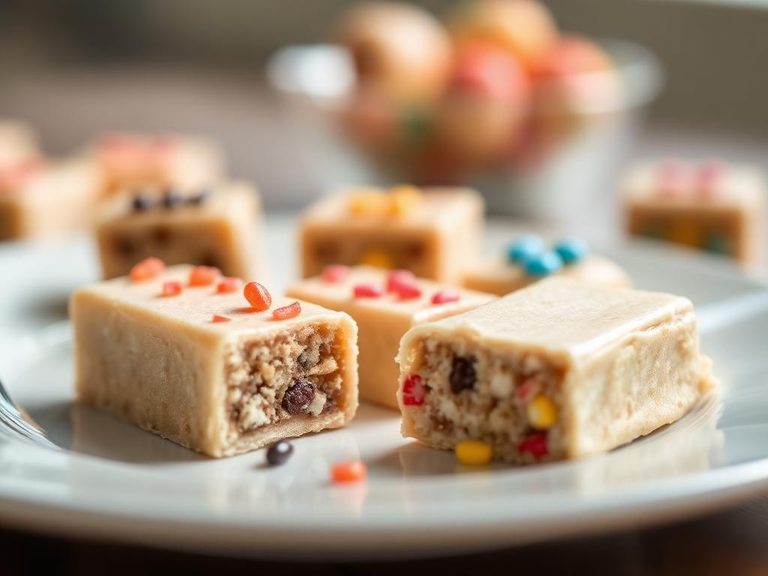
Candy bar centers and fillings are the soft, creamy, or chewy interiors of confections, typically made from ingredients like nougat, caramel, fudge, or ganache. They form the core of popular chocolate bars and are designed to provide a contrasting texture to a crisp outer shell. Originating in the early 20th century with the rise of mass-produced chocolate bars, they are a staple of American and European candy-making.
🍽️ Nutrition at a glance
These fillings are extremely high in carbohydrates and fat, with very little protein. They are a dense source of quick energy, primarily from sugars and saturated fats, with a typical serving containing roughly 150-250 calories.
Nutrition breakdown
| Calories | 220 kcal |
| Protein | 2 g |
| Carbs | 30 g |
| Fat | 11 g |
| Fiber | 1 g |
| Sugar | 25 g |
| Sodium | 80 mg |
| Iron | 1.5 mg |
| Calcium | 40 mg |
| Potassium | 100 mg |
| Magnesium | 15 mg |
| Phosphorus | 50 mg |
| Niacin (B3) | 0.5 mg |
| Vitamin B6 | 0.05 mg |
| Zinc | 0.5 mg |
Per 1 bar (45 g) · estimated, varies by recipe
💡 What's interesting
The creation of a stable, shelf-stable soft center was a major food science challenge, often solved by using emulsifiers like soy lecithin. Nutritionally, they are a classic example of 'hyper-palatable' food engineering, combining sugar, fat, and salt to maximize taste appeal.
🍽️ Related dishes





AI estimate may be inaccurate · Terms