Stuffed pasta fillings
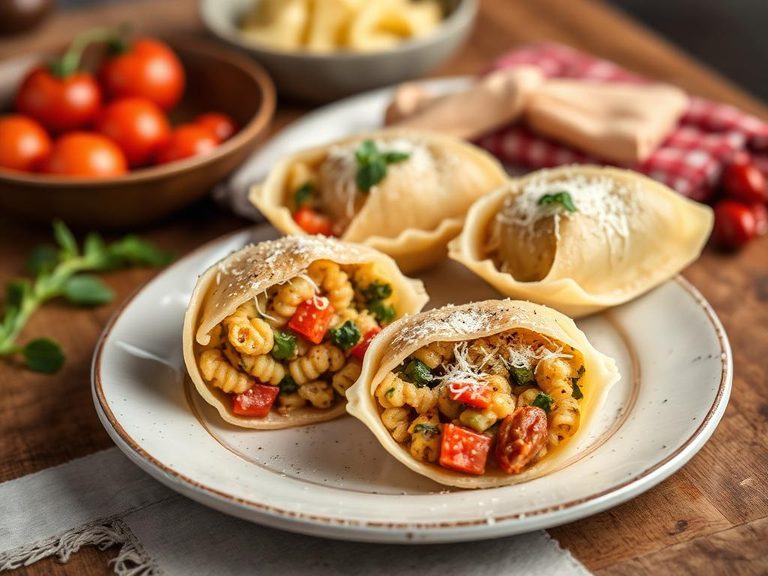
Stuffed pasta fillings refer to the savory mixtures encased within pasta shapes like ravioli, tortellini, or manicotti, originating primarily from Italian cuisine. Common fillings include a blend of cheeses (like ricotta and Parmesan), ground meats (such as beef or pork), vegetables (like spinach or mushrooms), and herbs. The specific combination varies widely by region and family tradition.
🍽️ Nutrition at a glance
Stuffed pasta is generally high in carbohydrates from the pasta dough and can be significant in fat and protein depending on the filling, particularly with meat or cheese. A typical serving provides a good source of energy, along with calcium, iron, and B vitamins, with a rough calorie range of 300-500 kcal per serving.
Nutrition breakdown
| Calories | 380 kcal |
| Protein | 18 g |
| Carbs | 42 g |
| Fat | 15 g |
| Fiber | 3 g |
| Sugar | 3 g |
| Sodium | 680 mg |
| Calcium | 220 mg |
| Iron | 3.5 mg |
| Potassium | 280 mg |
| Vitamin A | 150 mcg |
| Vitamin C | 4 mg |
| Thiamin (B1) | 0.3 mg |
| Folate | 80 mcg |
| Phosphorus | 190 mg |
Per 1 cup (240 g) of cheese and spinach ravioli with a light butter sauce · estimated, varies by recipe
💡 What's interesting
The art of stuffing pasta is a cornerstone of Italian culinary tradition, with each region boasting signature fillings that reflect local ingredients and history. Nutritionally, the filling allows for a customizable balance, making it possible to create versions rich in protein and vegetables alongside the classic carbohydrate base.