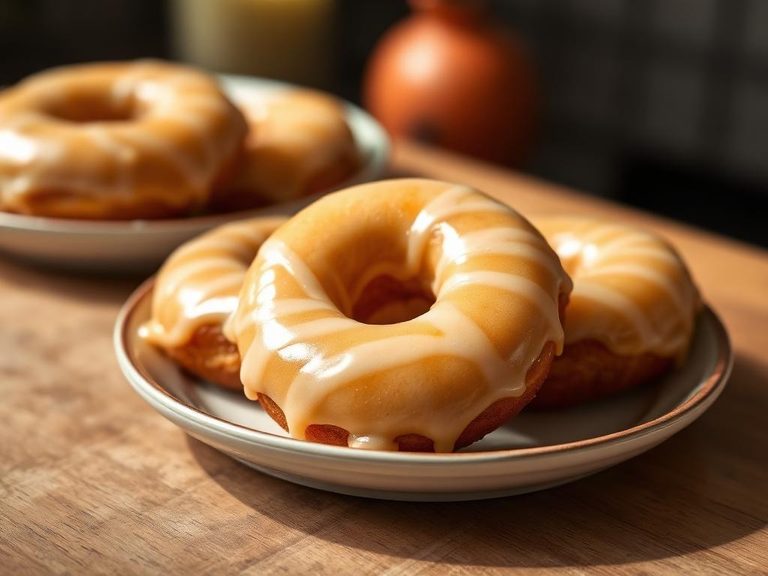
Donut fillings
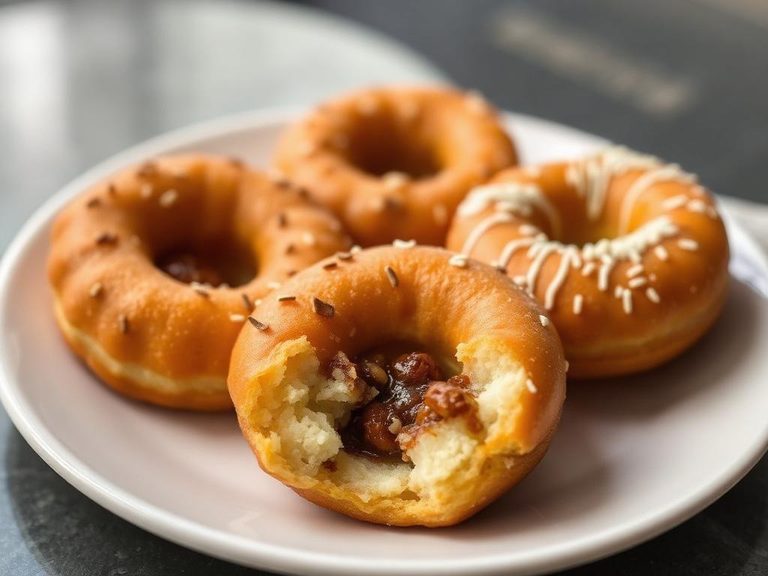
Donut fillings are the sweet, creamy, or fruity centers injected or sandwiched into doughnuts, transforming a simple fried dough ring into a decadent treat. Common fillings include vanilla custard, chocolate cream, raspberry jam, and Bavarian cream, each adding distinct flavors and textures. While doughnuts themselves originated in Europe, the filled variety became a staple of American bakeries and diners in the 20th century.
🍽️ Nutrition at a glance
Donut fillings are typically high in sugar and fat, providing a quick energy boost but minimal protein or fiber. A standard serving offers a significant calorie load, primarily from simple carbohydrates and saturated fats, with small amounts of vitamins like vitamin A from dairy-based custards.
Nutrition breakdown
| Calories | 320 kcal |
| Protein | 4 g |
| Carbs | 42 g |
| Fat | 16 g |
| Fiber | 1 g |
| Sugar | 22 g |
| Sodium | 250 mg |
| Calcium | 60 mg |
| Iron | 1.5 mg |
| Vitamin A | 80 mcg |
| Potassium | 100 mg |
| Phosphorus | 50 mg |
| Vitamin D | 0.2 mcg |
| Thiamin (B1) | 0.1 mg |
| Riboflavin (B2) | 0.1 mg |
Per 1 filled doughnut (approx. 115 g) · estimated, varies by recipe
💡 What's interesting
Culturally, filled doughnuts are often associated with celebration and indulgence, with regional variations like the Japanese 'an-pan' (red bean paste) or Polish 'pączki' (rose hip jam). Nutritionally, the high sugar content can lead to rapid energy spikes, while the fat from cream or custard fillings contributes to a rich, satisfying mouthfeel.