

Custard
Common food

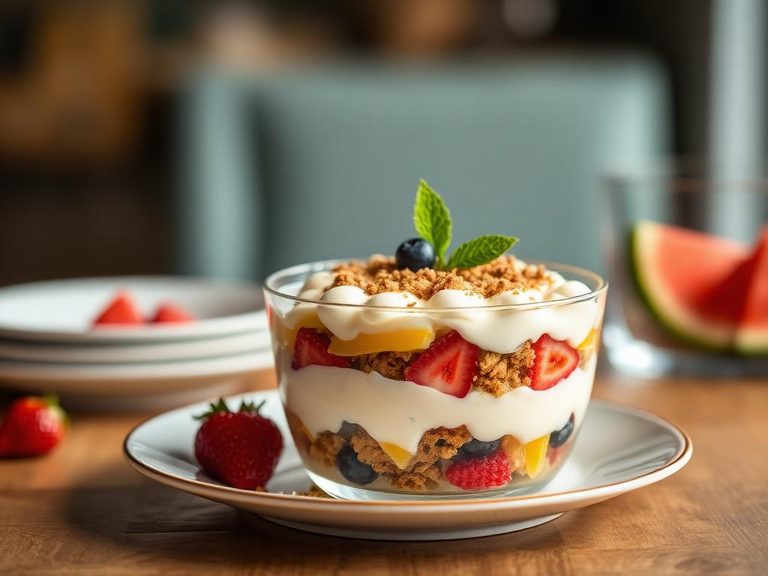
Photo: Wikipedia
Custard is a rich, creamy dessert or sauce made from a base of eggs and milk or cream, often sweetened and thickened by gentle heat. Its texture ranges from a pourable crème anglaise to a firm, wobbly baked pudding, with a smooth, velvety mouthfeel and a comforting, milky-sweet flavor. Nutritionally, it's a moderate source of protein and fats, but its primary energy comes from carbohydrates, especially sugar.
Calorie split: 21% protein · 45% carbs · 34% fat
↓ Full nutrition💚 Why it's loved
People love custard for its luxurious, comforting texture and its sweet, vanilla-kissed flavor that feels both nostalgic and indulgent. It's incredibly versatile, serving as a standalone dessert, a sauce for pies and crumbles, or a base for elaborate pastries.
⚠️ Watch-outs & how to enjoy it better
Its high sugar content (nearly 11g per 100g) can cause rapid blood-sugar spikes, making it unsuitable for those managing diabetes without careful portion control. As a dairy and egg product, it's a common allergen. To mitigate sugar impact, pair a small portion with fiber-rich fruit or nuts, and opt for homemade versions where you can control the sweetness.
Key benefits
- Provides high-quality protein from eggs and dairy
- Source of calcium and phosphorus for bone health
- Contains vitamin B12 and riboflavin from eggs and milk
- Offers a quick energy boost from its carbohydrate content
🍽️ Popular dishes
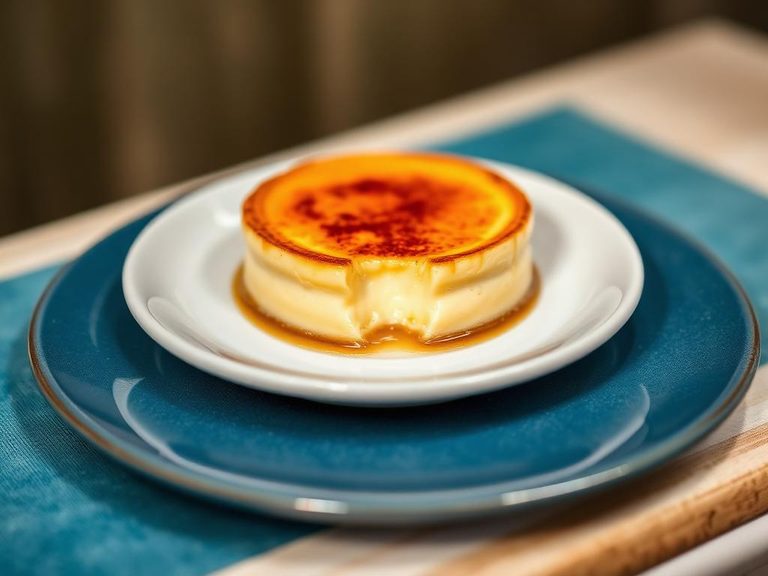
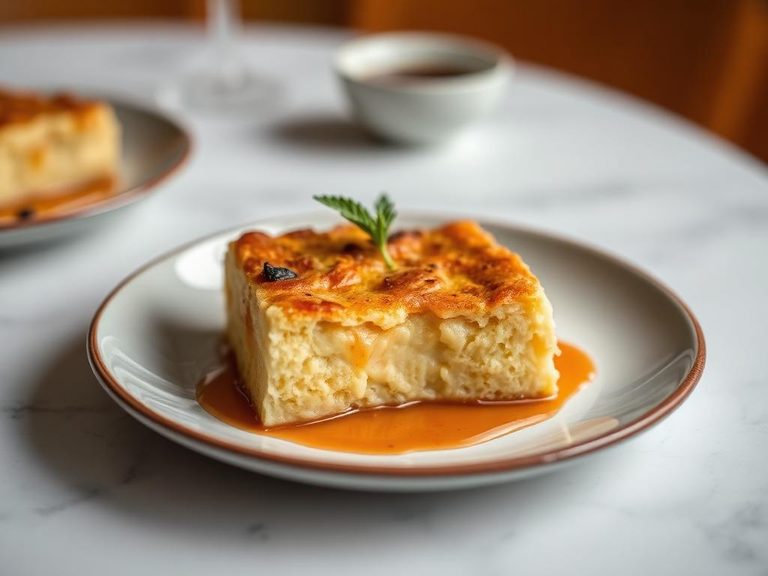
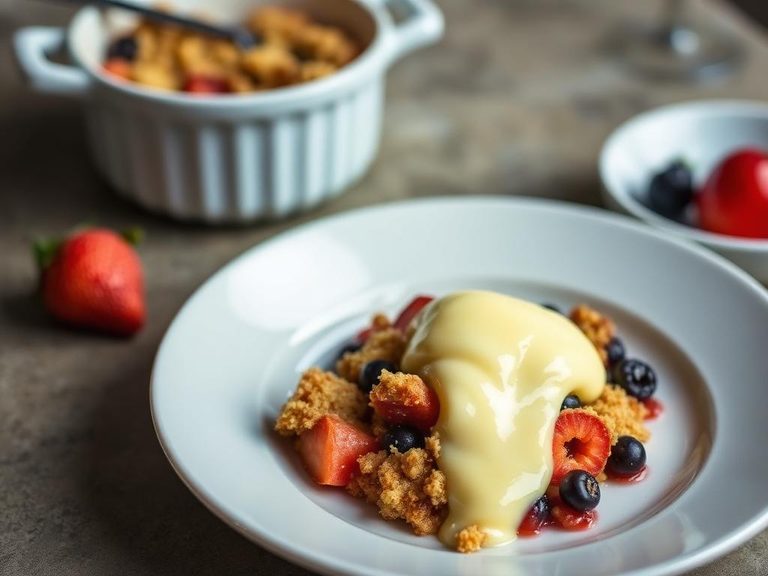
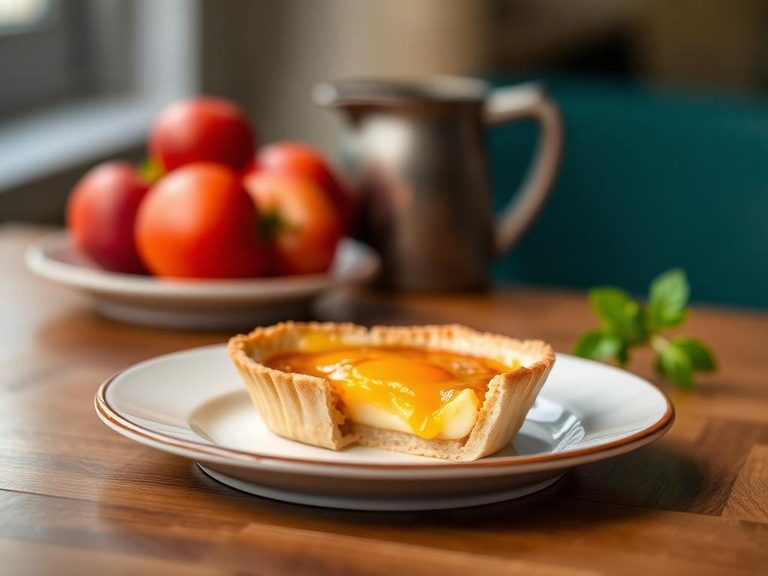

🌍 Where it's eaten
💡 Did you know?
The classic British 'Custard' powder, popularized by Bird's, was invented by Alfred Bird in 1837 because his wife was allergic to eggs—the powder uses cornflour and vanilla to mimic the real thing.
Full nutrition (USDA data · scales with serving)
| Water | 79.4 g |
| Energy | 97.0 kcal |
| Protein | 5.1 g |
| Total lipid (fat) | 3.6 g |
| Carbohydrate, by difference | 11.0 g |
| Fiber, total dietary | 0.00 g |
| Total Sugars | 10.9 g |
| Calcium, Ca | 117 mg |
| Iron, Fe | 0.30 mg |
| Magnesium, Mg | 12.0 mg |
| Phosphorus, P | 121 mg |
| Potassium, K | 158 mg |
| Sodium, Na | 84.0 mg |
| Zinc, Zn | 0.59 mg |
| Copper, Cu | 0.00 mg |
| Selenium, Se | 7.2 ug |
| Vitamin C, total ascorbic acid | 0.00 mg |
| Thiamin | 0.05 mg |
| Riboflavin | 0.19 mg |
| Niacin | 0.10 mg |
| Vitamin B-6 | 0.05 mg |
| Folate, total | 10.0 ug |
| Folic acid | 0.00 ug |
| Folate, food | 10.0 ug |
| Folate, DFE | 10.0 ug |
| Choline, total | 59.1 mg |
| Vitamin B-12 | 0.41 ug |
| Vitamin B-12, added | 0.00 ug |
| Vitamin A, RAE | 82.0 ug |
| Retinol | 81.0 ug |
| Carotene, beta | 4.0 ug |
| Carotene, alpha | 0.00 ug |
| Cryptoxanthin, beta | 2.0 ug |
| Lycopene | 0.00 ug |
| Lutein + zeaxanthin | 89.0 ug |
| Vitamin E (alpha-tocopherol) | 0.22 mg |
| Vitamin E, added | 0.00 mg |
| Vitamin D (D2 + D3) | 1.4 ug |
| Vitamin K (phylloquinone) | 0.20 ug |
| Alcohol, ethyl | 0.00 g |
| Caffeine | 0.00 mg |
| Theobromine | 0.00 mg |
Fat & fatty acid profile (per 100g)
| Fatty acids, total saturated | 1.6 g |
| SFA 4:0 | 0.04 g |
| SFA 6:0 | 0.03 g |
| SFA 8:0 | 0.02 g |
| SFA 10:0 | 0.05 g |
| SFA 12:0 | 0.06 g |
| SFA 14:0 | 0.18 g |
| SFA 16:0 | 0.91 g |
| SFA 18:0 | 0.32 g |
| Fatty acids, total monounsaturated | 1.0 g |
| MUFA 16:1 | 0.07 g |
| MUFA 18:1 | 1.00 g |
| MUFA 20:1 | 0.00 g |
| MUFA 22:1 | 0.00 g |
| Fatty acids, total polyunsaturated | 0.38 g |
| PUFA 18:2 | 0.32 g |
| PUFA 18:3 | 0.01 g |
| PUFA 18:4 | 0.00 g |
| PUFA 20:4 | 0.00 g |
| PUFA 20:5 n-3 (EPA) | 0.00 g |
| PUFA 22:5 n-3 (DPA) | 0.00 g |
| PUFA 22:6 n-3 (DHA) | 0.00 g |
| Cholesterol | 80.0 mg |
Amino acid profile (per 100g)
Estimated from Egg custards, dry mix — USDA does not publish this profile for Custard.
| Tryptophan | 0.09 g |
| Threonine | 0.40 g |
| Isoleucine | 0.37 g |
| Leucine | 0.62 g |
| Lysine | 0.55 g |
| Methionine | 0.15 g |
| Cystine | 0.13 g |
| Phenylalanine | 0.26 g |
| Tyrosine | 0.26 g |
| Valine | 0.38 g |
| Arginine | 0.36 g |
| Histidine | 0.16 g |
| Alanine | 0.34 g |
| Aspartic acid | 0.68 g |
| Glutamic acid | 1.0 g |
| Glycine | 0.18 g |
| Proline | 0.35 g |
| Serine | 0.47 g |
FAQ
What's the difference between custard and pudding?
In the UK, 'custard' typically refers to an egg-thickened sauce, while 'pudding' is a broader term for desserts. In the US, 'pudding' often means a starch-thickened, creamy dessert (like butterscotch pudding), whereas 'custard' implies an egg-based set like flan or crème brûlée.
Can I make custard without eggs?
Yes, you can make a simplified custard using cornstarch or other starches as the thickener, often called 'eggless custard' or 'crème pâtissière.' It will lack the rich flavor and silky texture of egg-based versions but is a common dairy-free or vegan alternative when made with plant milk.
Why did my custard curdle?
Curdling usually happens from overheating. The eggs' proteins over-coagulate and separate. To prevent this, cook gently over low heat, stirring constantly, and remove it from the heat as soon as it thickens enough to coat the back of a spoon. A double boiler can provide more gentle, even heat.
Nutrient density (calculated · NRF9.3)
Nutrient Rich Foods index: beneficial nutrients (protein, fiber, vitamins, minerals) minus saturated fat, added sugar & sodium, per 100 kcal.
NRF9.3 index — Fulgoni, Keast & Drewnowski, 2009. Computed from USDA nutrients.
Weight-loss friendliness (composite index)
Energy density 0.97 kcal/g · 21% calories from protein · 0.0 g fiber · 10.9 g sugar per 100 g.
Composite of energy density (Rolls et al., 1999), protein & fiber satiety, minus sugar. A calculated heuristic — ranks satiety-per-calorie, not a clinical measure.
Dietary load (calculated from USDA values)
Potential renal acid load. Positive = acid-forming, negative = alkaline-forming.
Sodium-to-potassium ratio: 0.53 (lower is better — aim for ≤ 1)
Sodium:potassium per WHO potassium guidance. Computed from USDA nutrients.