

Oil, industrial, palm kernel, confection fat, uses similar to high quality cocoa butter
Whole food · Fats and Oils
This is a highly refined, solid fat derived from palm kernel oil, specifically formulated to mimic the functional properties of premium cocoa butter. It has a smooth, creamy mouthfeel and a neutral flavor, allowing it to melt cleanly at body temperature without a waxy residue. Nutritionally, it is 100% fat, providing a dense 884 kcal per 100g with no protein, carbs, or micronutrients.
Calorie split: 0% protein · 0% carbs · 100% fat
↓ Full nutrition💚 Why it's loved
Food manufacturers and home bakers love it for its reliable crystallization, which creates a satisfying snap in chocolate and a flawless, shiny coating on truffles and bonbons. Its versatility in creating stable emulsions and its long shelf life make it a workhorse in commercial kitchens.
⚠️ Watch-outs & how to enjoy it better
As a saturated fat, it should be consumed in moderation, and its high caloric density offers no essential nutrients. To counteract this, use it sparingly as a functional ingredient rather than a primary cooking fat, and balance your diet with nutrient-dense foods like fruits, vegetables, and lean proteins.
Key benefits
- Excellent tempering stability for confectionery coatings
- Provides a smooth, glossy finish on chocolates and candies
- High heat tolerance for deep-frying applications
- Cost-effective alternative to cocoa butter in some products
- Neutral flavor profile that doesn't overpower other ingredients
🍽️ Popular dishes
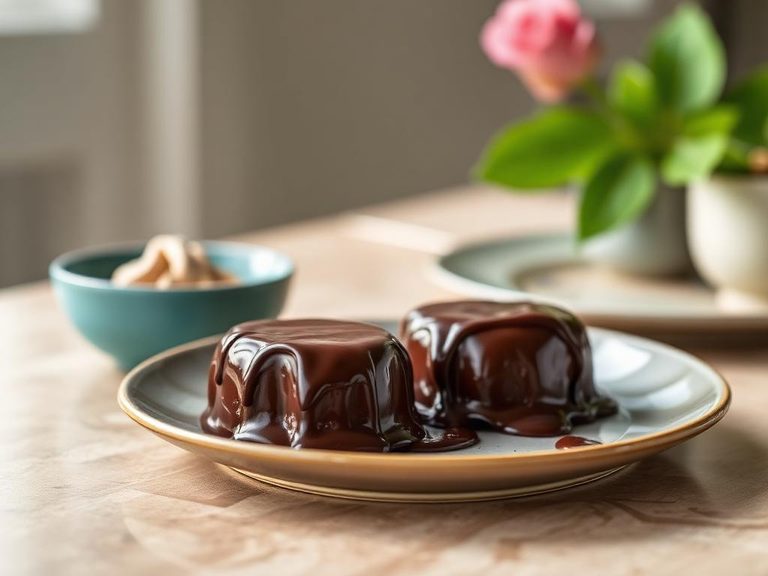

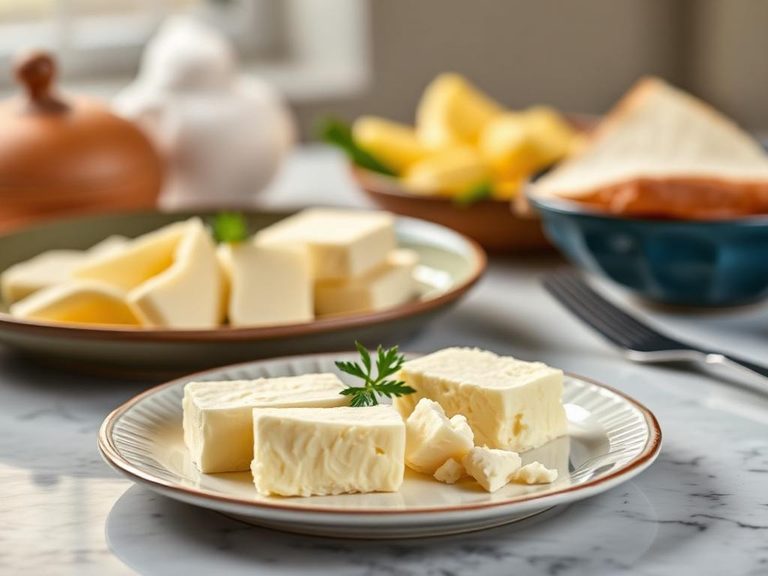
🌍 Where it's eaten
💡 Did you know?
This fat is often called 'Cocoa Butter Equivalent' (CBE) or 'Cocoa Butter Substitute' (CBS) in the industry, and its use can dramatically alter the price point of a chocolate product, as pure cocoa butter is one of the most expensive ingredients in confectionery.
Full nutrition (USDA data · scales with serving)
| Water | 0.05 g |
| Energy | 884 kcal |
| Energy | 3699 kj |
| Protein | 0.00 g |
| Total lipid (fat) | 100 g |
| Ash | 0.01 g |
| Carbohydrate, by difference | 0.00 g |
| Fiber, total dietary | 0.00 g |
| Total Sugars | 0.00 g |
| Calcium, Ca | 1.0 mg |
| Iron, Fe | 0.29 mg |
| Magnesium, Mg | 0.00 mg |
| Phosphorus, P | 0.00 mg |
| Potassium, K | 2.0 mg |
| Sodium, Na | 6.0 mg |
| Zinc, Zn | 0.04 mg |
| Copper, Cu | 0.00 mg |
| Manganese, Mn | 0.00 mg |
| Selenium, Se | 0.00 ug |
| Vitamin C, total ascorbic acid | 0.00 mg |
| Thiamin | 0.00 mg |
| Riboflavin | 0.00 mg |
| Niacin | 0.00 mg |
| Pantothenic acid | 0.00 mg |
| Vitamin B-6 | 0.00 mg |
| Folate, total | 0.00 ug |
| Folic acid | 0.00 ug |
| Folate, food | 0.00 ug |
| Folate, DFE | 0.00 ug |
| Choline, total | 0.20 mg |
| Vitamin B-12 | 0.00 ug |
| Vitamin B-12, added | 0.00 ug |
| Vitamin A, RAE | 0.00 ug |
| Retinol | 0.00 ug |
| Carotene, beta | 0.00 ug |
| Carotene, alpha | 0.00 ug |
| Cryptoxanthin, beta | 0.00 ug |
| Vitamin A, IU | 0.00 iu |
| Lycopene | 0.00 ug |
| Lutein + zeaxanthin | 0.00 ug |
| Vitamin E (alpha-tocopherol) | 3.8 mg |
| Vitamin E, added | 0.00 mg |
| Vitamin K (phylloquinone) | 24.7 ug |
| Alcohol, ethyl | 0.00 g |
| Caffeine | 0.00 mg |
| Theobromine | 0.00 mg |
Fat & fatty acid profile (per 100g)
| Fatty acids, total saturated | 87.6 g |
| SFA 4:0 | 0.08 g |
| SFA 6:0 | 0.16 g |
| SFA 8:0 | 2.5 g |
| SFA 10:0 | 3.1 g |
| SFA 12:0 | 53.4 g |
| SFA 14:0 | 18.9 g |
| SFA 16:0 | 7.5 g |
| SFA 18:0 | 1.9 g |
| SFA 20:0 | 0.04 g |
| Fatty acids, total monounsaturated | 5.4 g |
| MUFA 16:1 | 0.00 g |
| MUFA 18:1 | 5.4 g |
| MUFA 18:1 c | 5.4 g |
| MUFA 20:1 | 0.00 g |
| MUFA 22:1 | 0.00 g |
| Fatty acids, total polyunsaturated | 0.83 g |
| PUFA 18:2 | 0.83 g |
| PUFA 18:2 n-6 c,c | 0.83 g |
| PUFA 18:3 | 0.00 g |
| PUFA 18:3i | 0.00 g |
| PUFA 18:4 | 0.00 g |
| PUFA 20:4 | 0.00 g |
| PUFA 20:5 n-3 (EPA) | 0.00 g |
| PUFA 22:5 n-3 (DPA) | 0.00 g |
| PUFA 22:6 n-3 (DHA) | 0.00 g |
| Fatty acids, total trans | 0.00 g |
| Fatty acids, total trans-monoenoic | 0.00 g |
| TFA 18:1 t | 0.00 g |
| Fatty acids, total trans-polyenoic | 0.00 g |
| Cholesterol | 0.00 mg |
| Phytosterols | 95.0 mg |
Amino acid profile (per 100g)
| Tryptophan | 0.00 g |
| Threonine | 0.00 g |
| Isoleucine | 0.00 g |
| Leucine | 0.00 g |
| Lysine | 0.00 g |
| Methionine | 0.00 g |
| Cystine | 0.00 g |
| Phenylalanine | 0.00 g |
| Tyrosine | 0.00 g |
| Valine | 0.00 g |
| Arginine | 0.00 g |
| Histidine | 0.00 g |
| Alanine | 0.00 g |
| Aspartic acid | 0.00 g |
| Glutamic acid | 0.00 g |
| Glycine | 0.00 g |
| Proline | 0.00 g |
| Serine | 0.00 g |
FAQ
How is this different from regular palm oil?
Palm kernel oil comes from the seed (kernel) of the palm fruit, while regular palm oil comes from the fleshy fruit pulp. This confection fat is a further fractionated and hydrogenated product of palm kernel oil, engineered to have a specific melting point and crystal structure similar to cocoa butter.
Can I use this at home for chocolate making?
Yes, it's used in home chocolate making to create molded chocolates with a good snap and shine. However, it requires careful tempering, just like real chocolate. It's often found in 'melting wafers' or 'candy melts' sold in craft stores.
Is this the same as 'vegetable shortening'?
Not exactly. While both are solid fats, vegetable shortening is typically made from soybean, cottonseed, or palm oils and has a different plasticity and melting profile. This confection fat is specifically designed for the crystalline structure needed in coatings and confections.
Nutrient density (calculated · NRF9.3)
Nutrient Rich Foods index: beneficial nutrients (protein, fiber, vitamins, minerals) minus saturated fat, added sugar & sodium, per 100 kcal.
NRF9.3 index — Fulgoni, Keast & Drewnowski, 2009. Computed from USDA nutrients.
Weight-loss friendliness (composite index)
Energy density 8.84 kcal/g · 0% calories from protein · 0.0 g fiber · 0.0 g sugar per 100 g.
Composite of energy density (Rolls et al., 1999), protein & fiber satiety, minus sugar. A calculated heuristic — ranks satiety-per-calorie, not a clinical measure.
Dietary load (calculated from USDA values)
Potential renal acid load. Positive = acid-forming, negative = alkaline-forming.
Sodium-to-potassium ratio: 3.00 (lower is better — aim for ≤ 1)
Sodium:potassium per WHO potassium guidance. Computed from USDA nutrients.