

Lamb, shoulder, whole (arm and blade), separable lean and fat, trimmed to 1/4" fat, choice, raw
Whole food · Lamb, Veal, and Game Products
This is a primal cut from the upper front leg of the lamb, a robust and marbled portion that includes both the arm and blade bones. When raw, it presents a deep red meat interwoven with creamy white fat, promising a rich, beefy flavor that becomes succulent and tender with slow cooking. Nutritionally, it's a powerhouse of protein and provides a significant source of energy from its fat content, with zero carbohydrates.
Calorie split: 26% protein · 0% carbs · 74% fat
↓ Full nutrition💚 Why it's loved
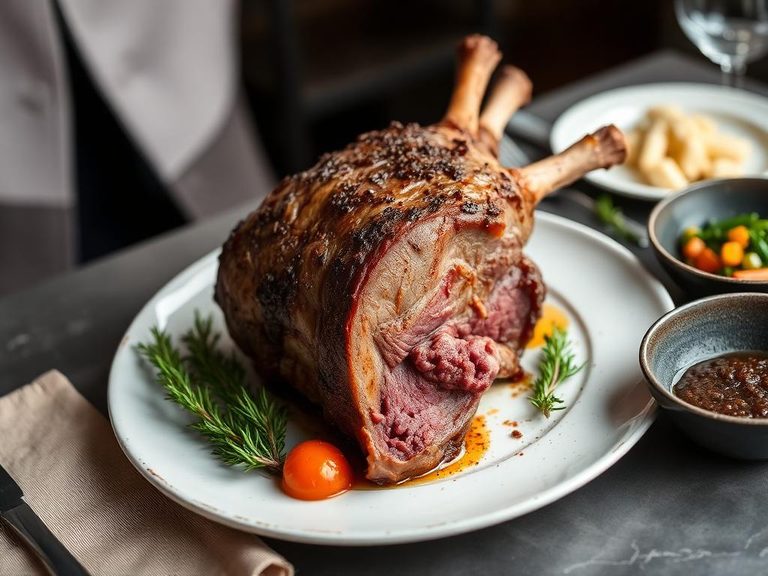
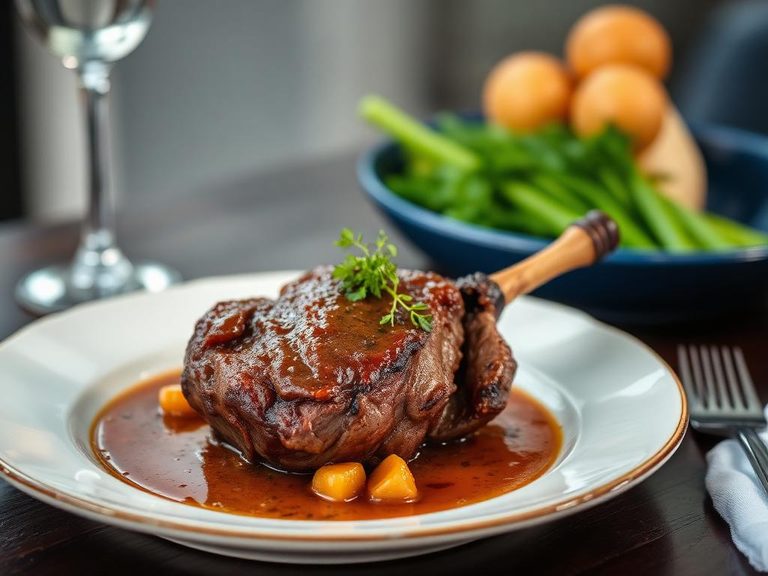
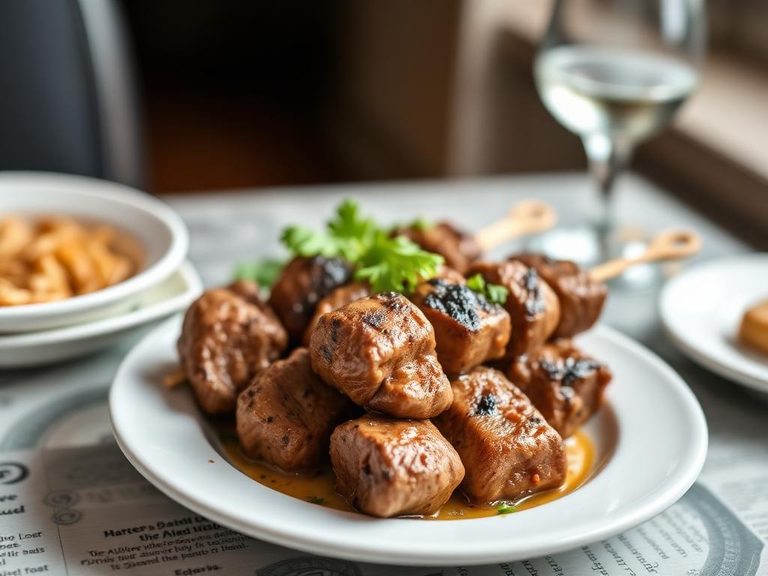
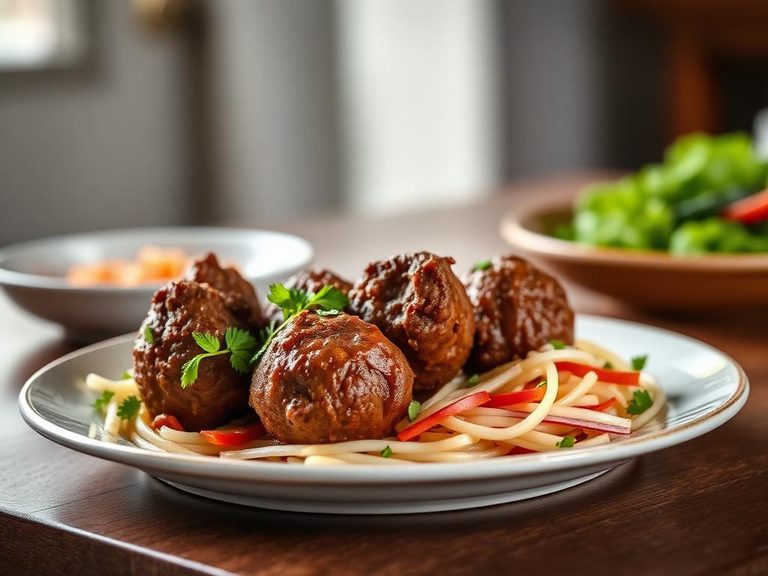
People love lamb shoulder for its deep, distinctive flavor that is more robust than other meats and its incredible versatility; it can be braised, roasted, or ground. It's the centerpiece of celebratory meals and comfort food across many cultures, from Sunday roasts to festive kebabs.
⚠️ Watch-outs & how to enjoy it better
The relatively high saturated fat content may be a concern for those monitoring heart health or calorie intake. To enjoy it mindfully, practice portion control, trim excess visible fat before cooking, and pair it with fiber-rich vegetables like roasted carrots or a fresh salad to balance the meal. Slow-cooking methods like braising can also allow some fat to render out.
Key benefits
- Excellent source of high-quality protein for muscle maintenance
- Provides essential B vitamins, particularly B12 for nerve function
- Rich in heme iron, which is highly bioavailable for preventing anemia
- Contains zinc, crucial for immune system health
- Offers conjugated linoleic acid (CLA), a type of beneficial fatty acid
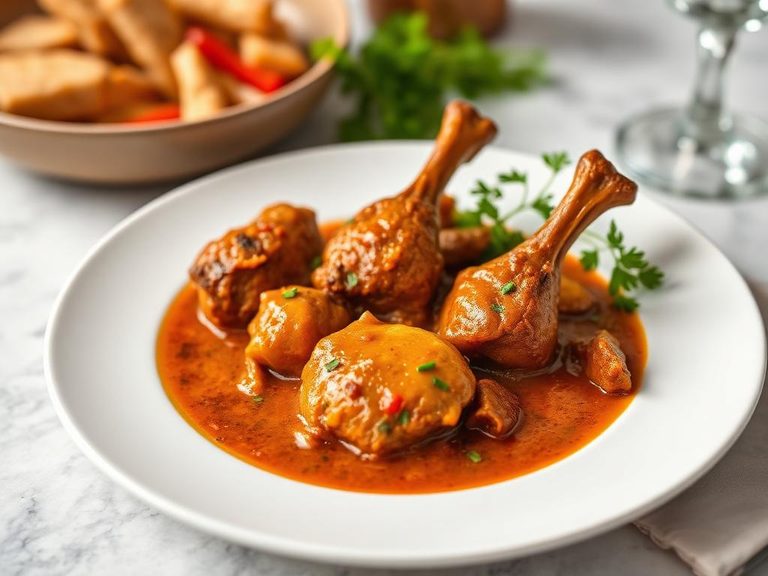
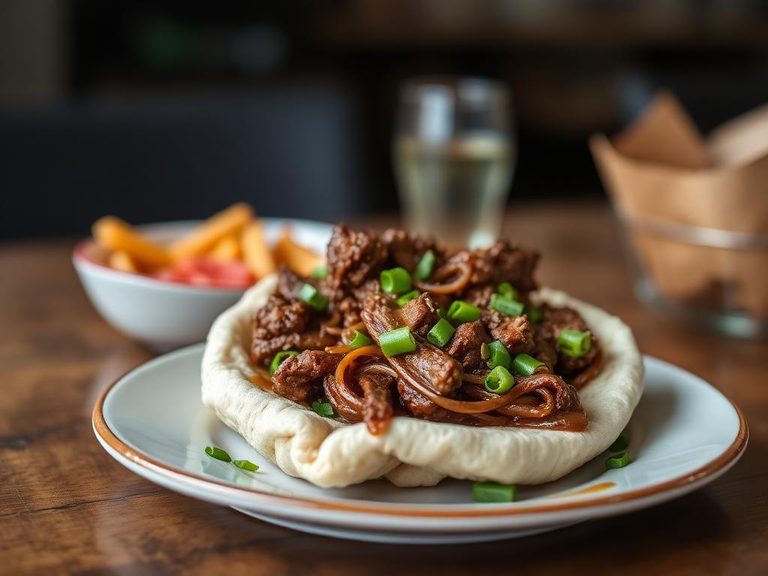
🍽️ Popular dishes
🌍 Where it's eaten
💡 Did you know?
The 'blade' in its name comes from the flat, blade-like scapula bone found in this cut, which is prized by chefs for adding immense flavor to stocks and braises.
Full nutrition (USDA data · scales with serving)
| Water | 61.4 g |
| Energy | 264 kcal |
| Energy | 1105 kj |
| Protein | 16.6 g |
| Total lipid (fat) | 21.4 g |
| Ash | 0.89 g |
| Carbohydrate, by difference | 0.00 g |
| Fiber, total dietary | 0.00 g |
| Total Sugars | 0.00 g |
| Calcium, Ca | 16.0 mg |
| Iron, Fe | 1.5 mg |
| Magnesium, Mg | 21.0 mg |
| Phosphorus, P | 158 mg |
| Potassium, K | 230 mg |
| Sodium, Na | 61.0 mg |
| Zinc, Zn | 3.9 mg |
| Copper, Cu | 0.10 mg |
| Manganese, Mn | 0.02 mg |
| Selenium, Se | 19.2 ug |
| Vitamin C, total ascorbic acid | 0.00 mg |
| Thiamin | 0.11 mg |
| Riboflavin | 0.21 mg |
| Niacin | 5.7 mg |
| Pantothenic acid | 0.68 mg |
| Vitamin B-6 | 0.13 mg |
| Folate, total | 19.0 ug |
| Folic acid | 0.00 ug |
| Folate, food | 19.0 ug |
| Folate, DFE | 19.0 ug |
| Choline, total | 69.5 mg |
| Betaine | 10.2 mg |
| Vitamin B-12 | 2.5 ug |
| Vitamin B-12, added | 0.00 ug |
| Vitamin A, RAE | 0.00 ug |
| Retinol | 0.00 ug |
| Carotene, beta | 0.00 ug |
| Carotene, alpha | 0.00 ug |
| Cryptoxanthin, beta | 0.00 ug |
| Vitamin A, IU | 0.00 iu |
| Lycopene | 0.00 ug |
| Lutein + zeaxanthin | 0.00 ug |
| Vitamin E (alpha-tocopherol) | 0.22 mg |
| Vitamin E, added | 0.00 mg |
| Vitamin D (D2 + D3), International Units | 2.0 iu |
| Vitamin D (D2 + D3) | 0.10 ug |
| Vitamin D3 (cholecalciferol) | 0.10 ug |
| Vitamin K (phylloquinone) | 3.4 ug |
| Vitamin K (Dihydrophylloquinone) | 0.00 ug |
| Alcohol, ethyl | 0.00 g |
| Caffeine | 0.00 mg |
| Theobromine | 0.00 mg |
Fat & fatty acid profile (per 100g)
| Fatty acids, total saturated | 9.3 g |
| SFA 4:0 | 0.00 g |
| SFA 6:0 | 0.00 g |
| SFA 8:0 | 0.00 g |
| SFA 10:0 | 0.05 g |
| SFA 12:0 | 0.09 g |
| SFA 14:0 | 0.84 g |
| SFA 16:0 | 4.7 g |
| SFA 18:0 | 2.9 g |
| Fatty acids, total monounsaturated | 8.8 g |
| MUFA 16:1 | 0.62 g |
| MUFA 18:1 | 7.9 g |
| MUFA 20:1 | 0.00 g |
| MUFA 22:1 | 0.00 g |
| Fatty acids, total polyunsaturated | 1.7 g |
| PUFA 18:2 | 1.3 g |
| PUFA 18:3 | 0.38 g |
| PUFA 18:4 | 0.00 g |
| PUFA 20:4 | 0.08 g |
| PUFA 20:5 n-3 (EPA) | 0.00 g |
| PUFA 22:5 n-3 (DPA) | 0.00 g |
| PUFA 22:6 n-3 (DHA) | 0.00 g |
| Cholesterol | 72.0 mg |
Amino acid profile (per 100g)
| Tryptophan | 0.19 g |
| Threonine | 0.71 g |
| Isoleucine | 0.80 g |
| Leucine | 1.3 g |
| Lysine | 1.5 g |
| Methionine | 0.43 g |
| Cystine | 0.20 g |
| Phenylalanine | 0.68 g |
| Tyrosine | 0.56 g |
| Valine | 0.90 g |
| Arginine | 0.98 g |
| Histidine | 0.53 g |
| Alanine | 1.00 g |
| Aspartic acid | 1.5 g |
| Glutamic acid | 2.4 g |
| Glycine | 0.81 g |
| Proline | 0.70 g |
| Serine | 0.62 g |
FAQ
What's the best cooking method for lamb shoulder?
Slow, moist-heat cooking is ideal. Braising, roasting low-and-slow, or stewing breaks down the connective tissue, making the meat fork-tender and flavorful.
How is lamb shoulder different from leg of lamb?
Shoulder is more marbled with fat and connective tissue, making it richer and better suited for slow cooking. Leg is leaner and more uniform, often roasted to medium-rare.
Can I grill lamb shoulder?
It's not ideal for direct grilling due to its fat content, which can cause flare-ups. It's better suited for ground preparations like burgers or kofta, or for slow-roasting indirect heat.
Nutrient density (calculated · NRF9.3)
Nutrient Rich Foods index: beneficial nutrients (protein, fiber, vitamins, minerals) minus saturated fat, added sugar & sodium, per 100 kcal.
NRF9.3 index — Fulgoni, Keast & Drewnowski, 2009. Computed from USDA nutrients.
Weight-loss friendliness (composite index)
Energy density 2.64 kcal/g · 25% calories from protein · 0.0 g fiber · 0.0 g sugar per 100 g.
Composite of energy density (Rolls et al., 1999), protein & fiber satiety, minus sugar. A calculated heuristic — ranks satiety-per-calorie, not a clinical measure.
Dietary load (calculated from USDA values)
Potential renal acid load. Positive = acid-forming, negative = alkaline-forming.
Sodium-to-potassium ratio: 0.27 (lower is better — aim for ≤ 1)
Sodium:potassium per WHO potassium guidance. Computed from USDA nutrients.