

Broccoli, frozen, chopped, unprepared
Whole food · Vegetables and Vegetable Products

Photo: Wikipedia
Frozen chopped broccoli is a flash-frozen, pre-cut vegetable that retains a surprisingly vibrant, grassy flavor and a tender-crisp texture once cooked. It offers a potent nutritional punch, delivering over 100% of your daily Vitamin C and a substantial dose of Vitamin K in a low-calorie, high-fiber package. This convenient staple is a powerhouse of plant-based nutrients, making it a reliable and accessible way to boost your vegetable intake year-round.
Calorie split: 34% protein · 58% carbs · 8% fat
↓ Full nutrition💚 Why it's loved
People love it for its incredible convenience and consistency; it's always ready to go, with no washing or chopping required. Its mild, slightly sweet flavor and satisfying texture make it a versatile canvas that pairs well with everything from cheese sauce to garlic and lemon.
⚠️ Watch-outs & how to enjoy it better
Some find the texture can become mushy if overcooked, and its mild flavor can be perceived as bland or sulfurous if not seasoned well. To counteract this, avoid boiling it to death—steam, roast, or sauté it quickly to preserve texture. Pairing it with a fat like olive oil or cheese, or an acid like lemon juice, brightens the flavor significantly.
Key benefits
- Excellent source of Vitamin C and Vitamin K
- High in dietary fiber for digestive health
- Low in calories and carbohydrates
- Contains sulforaphane, a compound linked to cellular health
- Convenient and reduces food waste
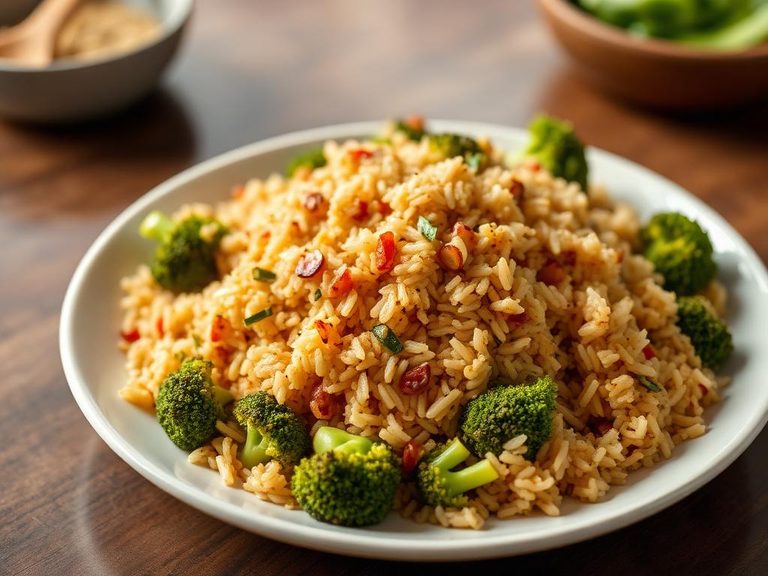
🍽️ Popular dishes
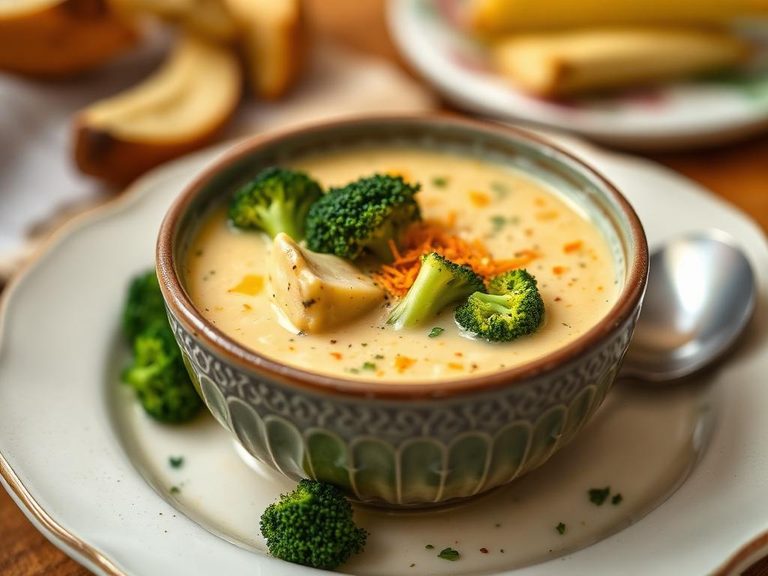
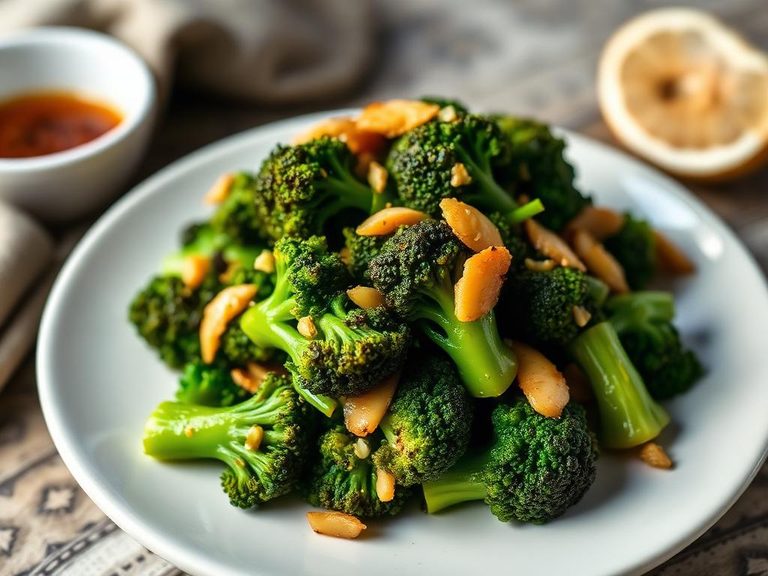
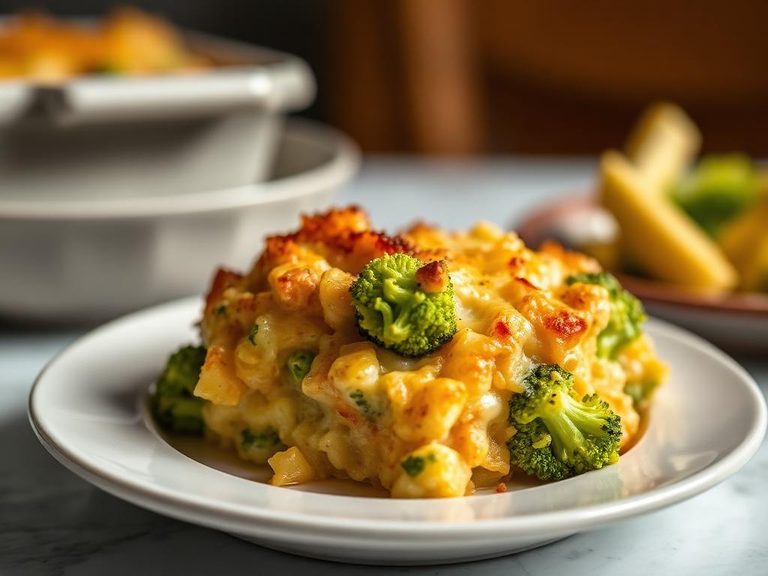
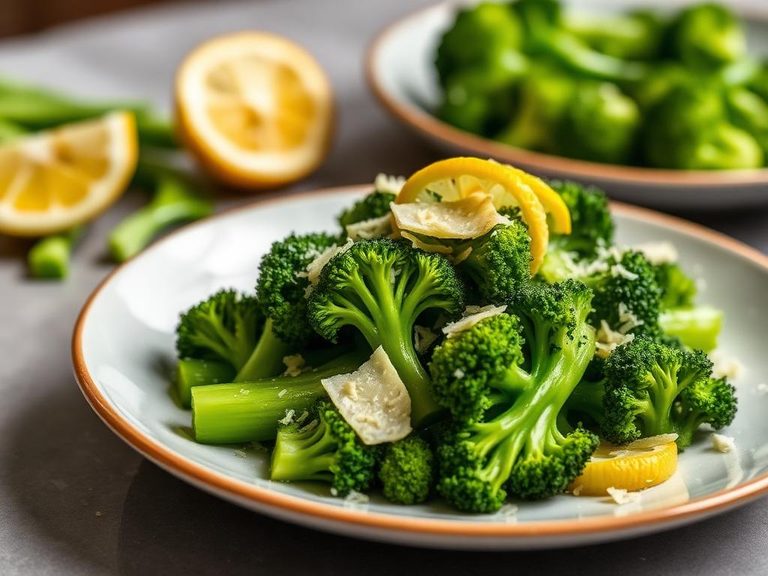
🌍 Where it's eaten
💡 Did you know?
The florets of broccoli are actually unopened flower buds, and if left to grow, they would bloom into small yellow flowers.
Full nutrition (USDA data · scales with serving)
| Water | 91.5 g |
| Energy | 26.0 kcal |
| Energy | 110 kj |
| Protein | 2.8 g |
| Total lipid (fat) | 0.29 g |
| Ash | 0.66 g |
| Carbohydrate, by difference | 4.8 g |
| Fiber, total dietary | 3.0 g |
| Total Sugars | 1.4 g |
| Glucose | 0.75 g |
| Fructose | 0.83 g |
| Calcium, Ca | 56.0 mg |
| Iron, Fe | 0.81 mg |
| Magnesium, Mg | 18.0 mg |
| Phosphorus, P | 50.0 mg |
| Potassium, K | 212 mg |
| Sodium, Na | 24.0 mg |
| Zinc, Zn | 0.48 mg |
| Copper, Cu | 0.04 mg |
| Manganese, Mn | 0.29 mg |
| Selenium, Se | 2.8 ug |
| Vitamin C, total ascorbic acid | 56.4 mg |
| Thiamin | 0.05 mg |
| Riboflavin | 0.10 mg |
| Niacin | 0.47 mg |
| Pantothenic acid | 0.28 mg |
| Vitamin B-6 | 0.13 mg |
| Folate, total | 67.0 ug |
| Folic acid | 0.00 ug |
| Folate, food | 67.0 ug |
| Folate, DFE | 67.0 ug |
| Choline, total | 14.9 mg |
| Vitamin B-12 | 0.00 ug |
| Vitamin B-12, added | 0.00 ug |
| Vitamin A, RAE | 52.0 ug |
| Retinol | 0.00 ug |
| Carotene, beta | 610 ug |
| Carotene, alpha | 20.0 ug |
| Cryptoxanthin, beta | 1.0 ug |
| Vitamin A, IU | 1034 iu |
| Lycopene | 0.00 ug |
| Lutein + zeaxanthin | 1120 ug |
| Vitamin E (alpha-tocopherol) | 1.2 mg |
| Vitamin E, added | 0.00 mg |
| Tocopherol, beta | 0.00 mg |
| Tocopherol, gamma | 0.27 mg |
| Tocopherol, delta | 0.00 mg |
| Vitamin D (D2 + D3), International Units | 0.00 iu |
| Vitamin D (D2 + D3) | 0.00 ug |
| Vitamin K (phylloquinone) | 81.1 ug |
| Alcohol, ethyl | 0.00 g |
| Caffeine | 0.00 mg |
| Theobromine | 0.00 mg |
Fat & fatty acid profile (per 100g)
| Fatty acids, total saturated | 0.04 g |
| SFA 4:0 | 0.00 g |
| SFA 6:0 | 0.00 g |
| SFA 8:0 | 0.00 g |
| SFA 10:0 | 0.00 g |
| SFA 12:0 | 0.00 g |
| SFA 14:0 | 0.00 g |
| SFA 16:0 | 0.04 g |
| SFA 18:0 | 0.01 g |
| Fatty acids, total monounsaturated | 0.02 g |
| MUFA 16:1 | 0.00 g |
| MUFA 18:1 | 0.02 g |
| MUFA 20:1 | 0.00 g |
| MUFA 22:1 | 0.00 g |
| Fatty acids, total polyunsaturated | 0.14 g |
| PUFA 18:2 | 0.03 g |
| PUFA 18:3 | 0.10 g |
| PUFA 18:4 | 0.00 g |
| PUFA 20:4 | 0.00 g |
| PUFA 20:5 n-3 (EPA) | 0.00 g |
| PUFA 22:5 n-3 (DPA) | 0.00 g |
| PUFA 22:6 n-3 (DHA) | 0.00 g |
| Fatty acids, total trans | 0.00 g |
| Cholesterol | 0.00 mg |
Amino acid profile (per 100g)
| Tryptophan | 0.03 g |
| Threonine | 0.09 g |
| Isoleucine | 0.11 g |
| Leucine | 0.13 g |
| Lysine | 0.14 g |
| Methionine | 0.03 g |
| Cystine | 0.02 g |
| Phenylalanine | 0.09 g |
| Tyrosine | 0.06 g |
| Valine | 0.13 g |
| Arginine | 0.15 g |
| Histidine | 0.05 g |
| Alanine | 0.12 g |
| Aspartic acid | 0.21 g |
| Glutamic acid | 0.38 g |
| Glycine | 0.10 g |
| Proline | 0.12 g |
| Serine | 0.10 g |
FAQ
Is frozen broccoli as nutritious as fresh?
Yes, often more so. Flash-freezing locks in nutrients at their peak, whereas fresh broccoli can lose vitamins during transport and storage.
Do I need to thaw frozen broccoli before cooking?
Not necessarily. You can cook it directly from frozen for most methods like steaming, roasting, or adding to soups and stir-fries. Thawing can make it watery.
How can I prevent frozen broccoli from becoming mushy?
Cook it quickly with high heat. Steaming for 3-4 minutes, sautéing in a hot pan, or roasting at 400°F (200°C) are best. Avoid boiling it for long periods.
Nutrient density (calculated · NRF9.3)
Nutrient Rich Foods index: beneficial nutrients (protein, fiber, vitamins, minerals) minus saturated fat, added sugar & sodium, per 100 kcal.
NRF9.3 index — Fulgoni, Keast & Drewnowski, 2009. Computed from USDA nutrients.
Weight-loss friendliness (composite index)
Energy density 0.26 kcal/g · 43% calories from protein · 3.0 g fiber · 1.4 g sugar per 100 g.
Composite of energy density (Rolls et al., 1999), protein & fiber satiety, minus sugar. A calculated heuristic — ranks satiety-per-calorie, not a clinical measure.
Dietary load (calculated from USDA values)
Potential renal acid load. Positive = acid-forming, negative = alkaline-forming.
Sodium-to-potassium ratio: 0.11 (lower is better — aim for ≤ 1)
Sodium:potassium per WHO potassium guidance. Computed from USDA nutrients.