

Beef, chuck, arm pot roast, separable lean only, trimmed to 1/8" fat, all grades, cooked, braised
Whole food · Beef Products

Photo: Wikipedia
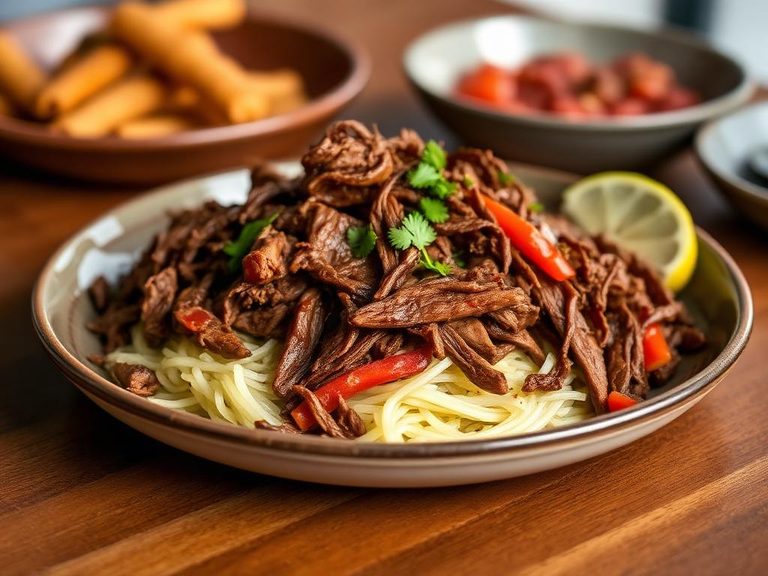
This is a richly flavored cut from the cow's shoulder, slow-braised until the lean meat becomes tender and succulent. With a deep, beefy taste and a melt-in-your-mouth texture, it's a protein powerhouse with virtually no carbohydrates. Its nutritional profile is defined by its high protein density and moderate fat content, making it a staple for hearty, satisfying meals.
Calorie split: 68% protein · 0% carbs · 32% fat
↓ Full nutrition💚 Why it's loved
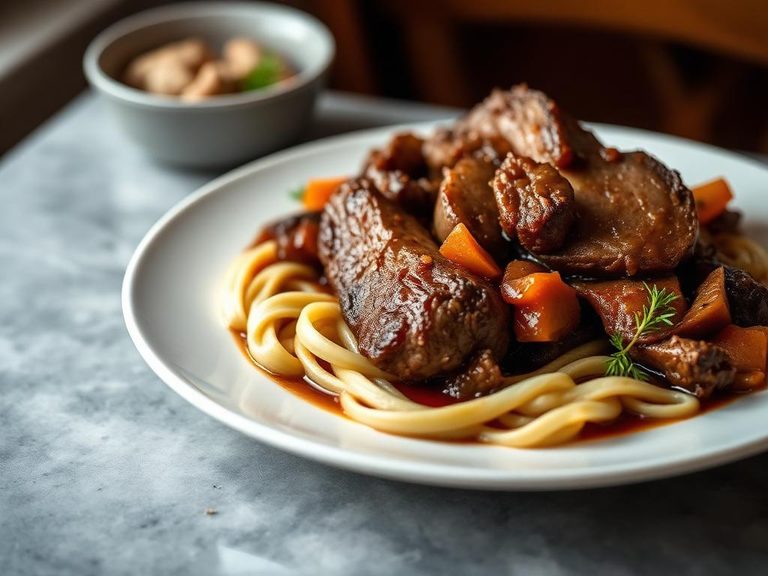
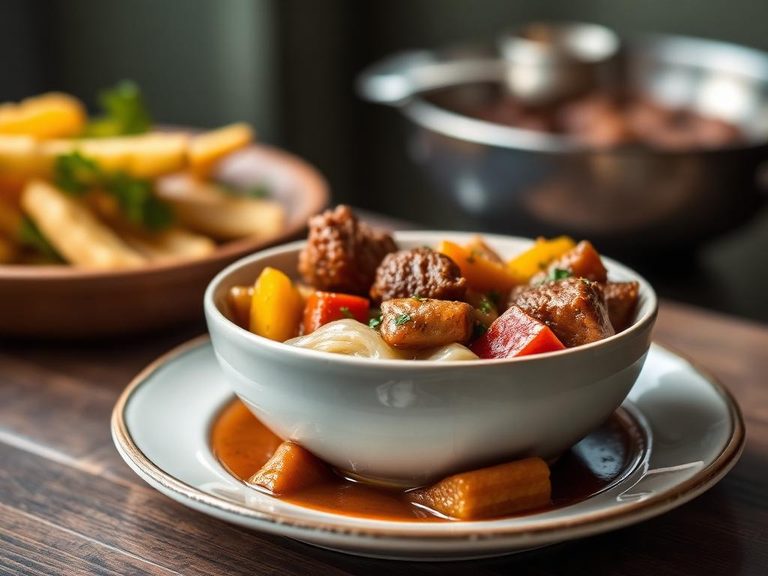
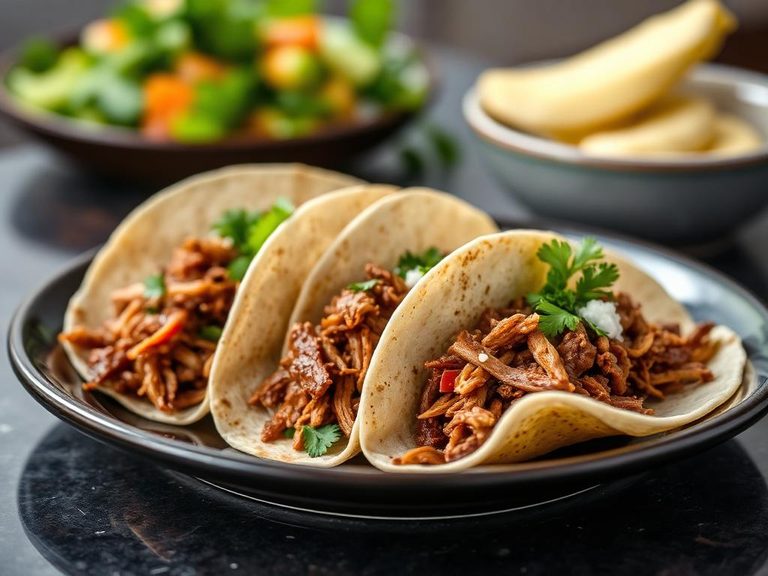
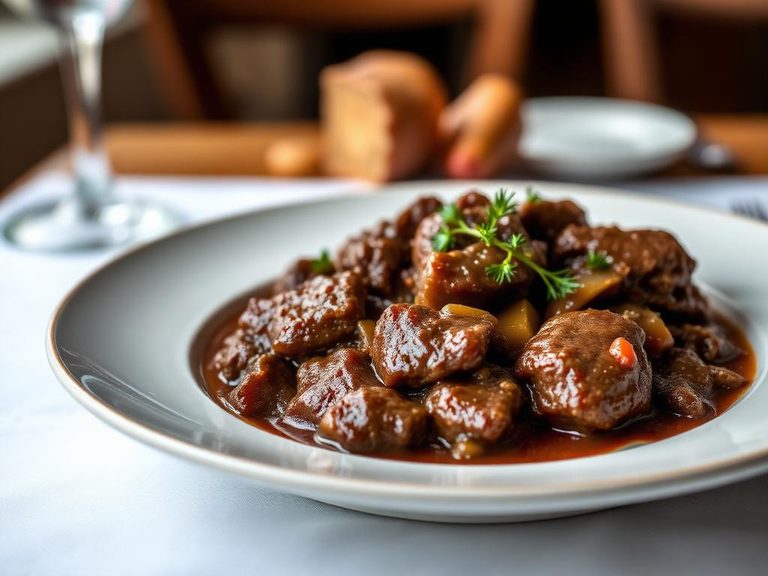
People adore its deep, savory umami flavor that develops beautifully with slow cooking. It's the ultimate comfort food, versatile enough to be the star of a rustic pot roast or shredded for tacos, embodying home-cooked tradition across many cultures.
⚠️ Watch-outs & how to enjoy it better
While lean, the braising process can sometimes result in a slightly dry texture if overcooked, and the cut itself can be tough if not prepared correctly. For those monitoring sodium, be mindful of added broths or seasonings in braised dishes. Counteract dryness by using a flavorful braising liquid (like wine or stock) and cooking low and slow until fork-tender.
Key benefits
- Excellent source of complete protein (34.66g per 100g)
- Zero carbohydrates and sugar, ideal for low-carb diets
- Rich in essential minerals like iron and zinc
- Provides B vitamins, especially B12, for energy metabolism
- The braising method breaks down collagen for easier digestion
🍽️ Popular dishes
🌍 Where it's eaten
💡 Did you know?
The term 'pot roast' is a misnomer; the cooking method is actually braising (searing then simmering in liquid), not roasting, which is a dry-heat method.
Full nutrition (USDA data · scales with serving)
| Water | 57.8 g |
| Energy | 214 kcal |
| Energy | 897 kj |
| Protein | 34.7 g |
| Total lipid (fat) | 7.4 g |
| Ash | 1.0 g |
| Carbohydrate, by difference | 0.00 g |
| Fiber, total dietary | 0.00 g |
| Total Sugars | 0.00 g |
| Calcium, Ca | 16.0 mg |
| Iron, Fe | 2.9 mg |
| Magnesium, Mg | 23.0 mg |
| Phosphorus, P | 213 mg |
| Potassium, K | 277 mg |
| Sodium, Na | 56.0 mg |
| Zinc, Zn | 8.3 mg |
| Copper, Cu | 0.12 mg |
| Manganese, Mn | 0.01 mg |
| Selenium, Se | 35.4 ug |
| Vitamin C, total ascorbic acid | 0.00 mg |
| Thiamin | 0.07 mg |
| Riboflavin | 0.22 mg |
| Niacin | 5.0 mg |
| Pantothenic acid | 0.68 mg |
| Vitamin B-6 | 0.33 mg |
| Folate, total | 12.0 ug |
| Folic acid | 0.00 ug |
| Folate, food | 12.0 ug |
| Folate, DFE | 12.0 ug |
| Choline, total | 132 mg |
| Betaine | 17.3 mg |
| Vitamin B-12 | 2.5 ug |
| Vitamin B-12, added | 0.00 ug |
| Vitamin A, RAE | 0.00 ug |
| Retinol | 0.00 ug |
| Carotene, beta | 0.00 ug |
| Carotene, alpha | 0.00 ug |
| Cryptoxanthin, beta | 0.00 ug |
| Vitamin A, IU | 0.00 iu |
| Lycopene | 0.00 ug |
| Lutein + zeaxanthin | 0.00 ug |
| Vitamin E (alpha-tocopherol) | 0.45 mg |
| Vitamin E, added | 0.00 mg |
| Tocopherol, beta | 0.00 mg |
| Tocopherol, gamma | 0.00 mg |
| Tocopherol, delta | 0.00 mg |
| Vitamin D (D2 + D3), International Units | 5.0 iu |
| Vitamin D (D2 + D3) | 0.10 ug |
| Vitamin D3 (cholecalciferol) | 0.10 ug |
| Vitamin K (phylloquinone) | 1.6 ug |
| Alcohol, ethyl | 0.00 g |
| Caffeine | 0.00 mg |
| Theobromine | 0.00 mg |
Fat & fatty acid profile (per 100g)
| Fatty acids, total saturated | 2.8 g |
| SFA 4:0 | 0.00 g |
| SFA 6:0 | 0.00 g |
| SFA 8:0 | 0.00 g |
| SFA 10:0 | 0.00 g |
| SFA 12:0 | 0.01 g |
| SFA 14:0 | 0.21 g |
| SFA 16:0 | 1.6 g |
| SFA 18:0 | 0.93 g |
| Fatty acids, total monounsaturated | 3.1 g |
| MUFA 16:1 | 0.26 g |
| MUFA 18:1 | 2.9 g |
| MUFA 20:1 | 0.00 g |
| MUFA 22:1 | 0.00 g |
| Fatty acids, total polyunsaturated | 0.27 g |
| PUFA 18:2 | 0.21 g |
| PUFA 18:3 | 0.02 g |
| PUFA 18:4 | 0.00 g |
| PUFA 20:4 | 0.03 g |
| PUFA 20:5 n-3 (EPA) | 0.00 g |
| PUFA 22:5 n-3 (DPA) | 0.01 g |
| PUFA 22:6 n-3 (DHA) | 0.00 g |
| Cholesterol | 104 mg |
Amino acid profile (per 100g)
| Tryptophan | 0.23 g |
| Threonine | 1.4 g |
| Isoleucine | 1.6 g |
| Leucine | 2.8 g |
| Lysine | 2.9 g |
| Methionine | 0.90 g |
| Cystine | 0.45 g |
| Phenylalanine | 1.4 g |
| Tyrosine | 1.1 g |
| Valine | 1.7 g |
| Arginine | 2.2 g |
| Histidine | 1.1 g |
| Alanine | 2.1 g |
| Aspartic acid | 3.2 g |
| Glutamic acid | 5.2 g |
| Glycine | 2.1 g |
| Proline | 1.7 g |
| Serine | 1.4 g |
| Hydroxyproline | 0.36 g |
FAQ
What is the difference between chuck roast and pot roast?
Pot roast is the cooking method (braising), while chuck roast is the specific cut of beef (from the shoulder) that is most commonly used for it.
How do I ensure my pot roast is tender?
The key is low and slow cooking. Braise it in liquid at a low temperature (around 300°F/150°C) for several hours until the connective tissue breaks down and the meat is easily shredded with a fork.
Is this cut healthy for weight management?
Yes, it's a high-protein, low-carb food that can promote satiety. The key is portion control and being mindful of the fat content, which is moderate in this trimmed version.
Nutrient density (calculated · NRF9.3)
Nutrient Rich Foods index: beneficial nutrients (protein, fiber, vitamins, minerals) minus saturated fat, added sugar & sodium, per 100 kcal.
NRF9.3 index — Fulgoni, Keast & Drewnowski, 2009. Computed from USDA nutrients.
Weight-loss friendliness (composite index)
Energy density 2.14 kcal/g · 65% calories from protein · 0.0 g fiber · 0.0 g sugar per 100 g.
Composite of energy density (Rolls et al., 1999), protein & fiber satiety, minus sugar. A calculated heuristic — ranks satiety-per-calorie, not a clinical measure.
Dietary load (calculated from USDA values)
Potential renal acid load. Positive = acid-forming, negative = alkaline-forming.
Sodium-to-potassium ratio: 0.20 (lower is better — aim for ≤ 1)
Sodium:potassium per WHO potassium guidance. Computed from USDA nutrients.