

Turnip greens, raw
Whole food · Vegetables and Vegetable Products

Photo: Wikipedia
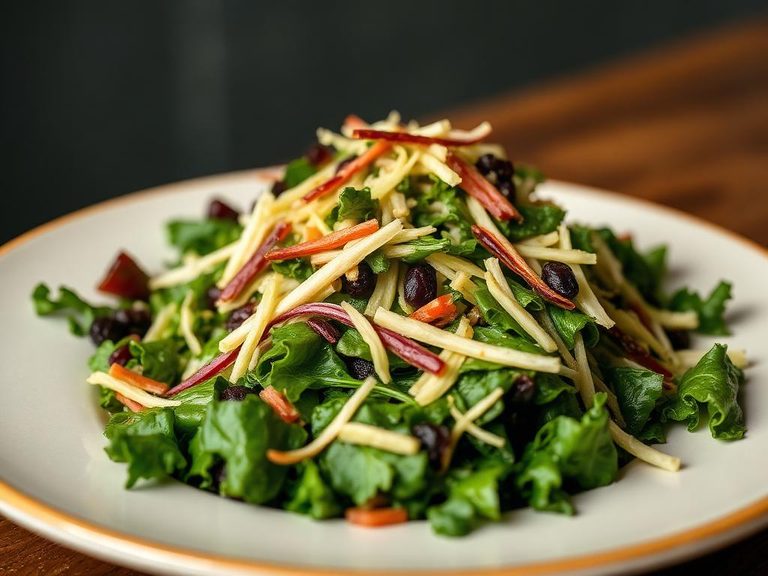
Turnip greens are the leafy, peppery tops of the turnip plant, offering a robust, slightly bitter flavor and a tender yet sturdy texture when raw. Nutritionally, they are a powerhouse of fiber and vitamins, particularly vitamin K and vitamin A, making them a low-calorie, nutrient-dense addition to salads and slaws. Their earthy, mustard-like bite provides a distinctive, bold contrast to milder greens.
Calorie split: 16% protein · 77% carbs · 7% fat
↓ Full nutrition💚 Why it's loved
People love turnip greens for their intense, peppery flavor that adds a zesty, complex dimension to salads and dishes. They are cherished in Southern U.S. cuisine and other culinary traditions for their ability to stand up to bold seasonings and hearty preparations.
⚠️ Watch-outs & how to enjoy it better
The raw greens can be tough and overly bitter for some palates, and their high vitamin K content may be a concern for individuals on blood-thinning medications. To counteract bitterness, pair them with a sweet or acidic dressing (like a vinaigrette with honey or apple cider vinegar) and consider lightly massaging them with salt to soften the texture and mellow the flavor.
Key benefits
- Rich in vitamin K for bone health
- High in fiber for digestive regularity
- Low in calories and fat
- Good source of vitamin A and C
- Contains antioxidants like glucosinolates
🍽️ Popular dishes
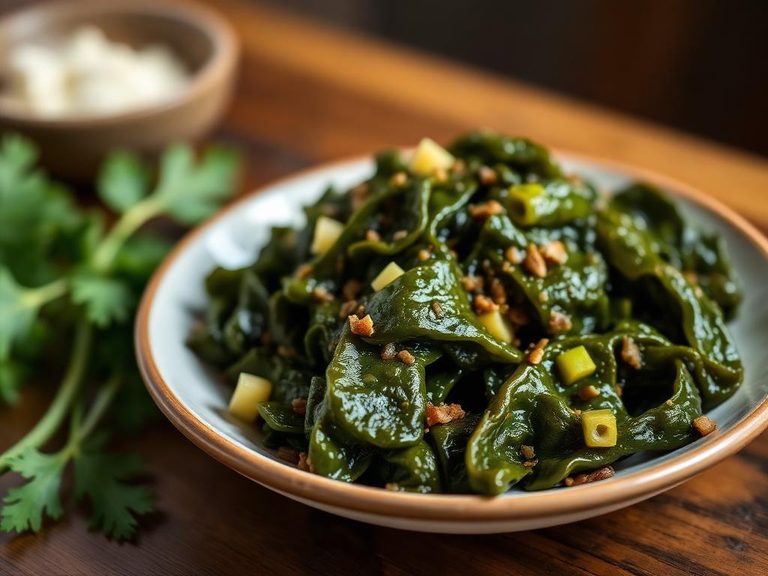
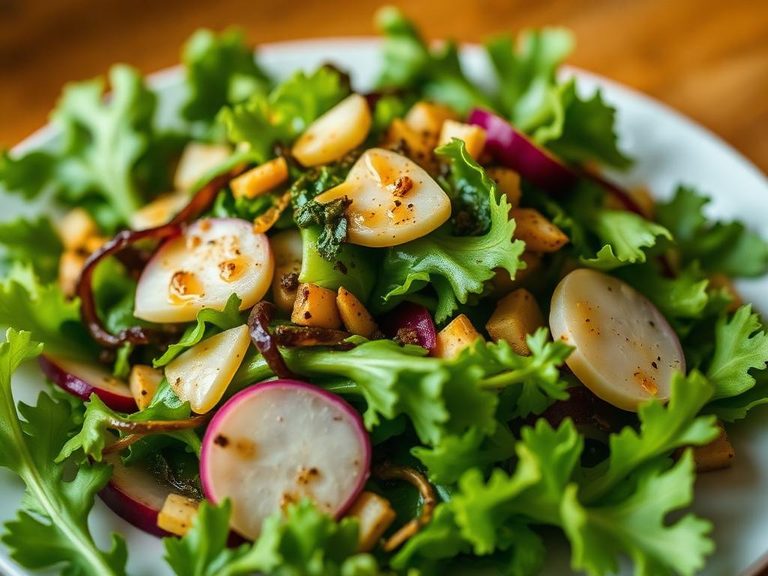
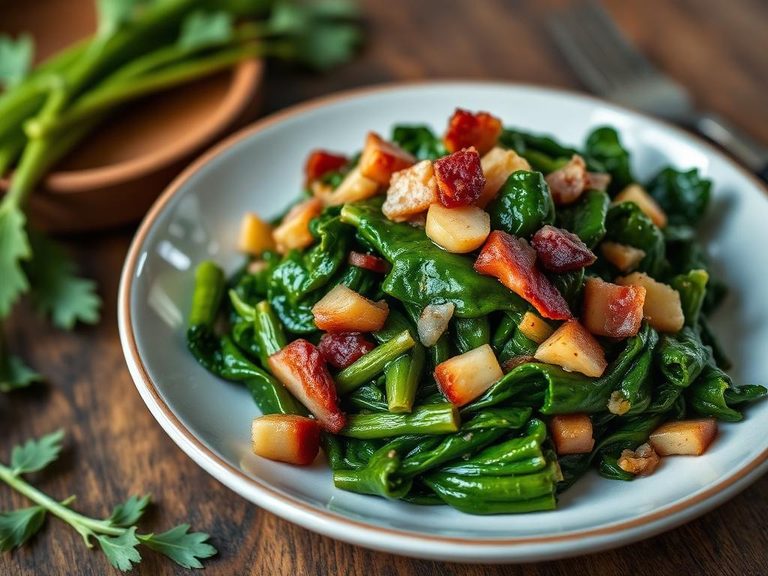
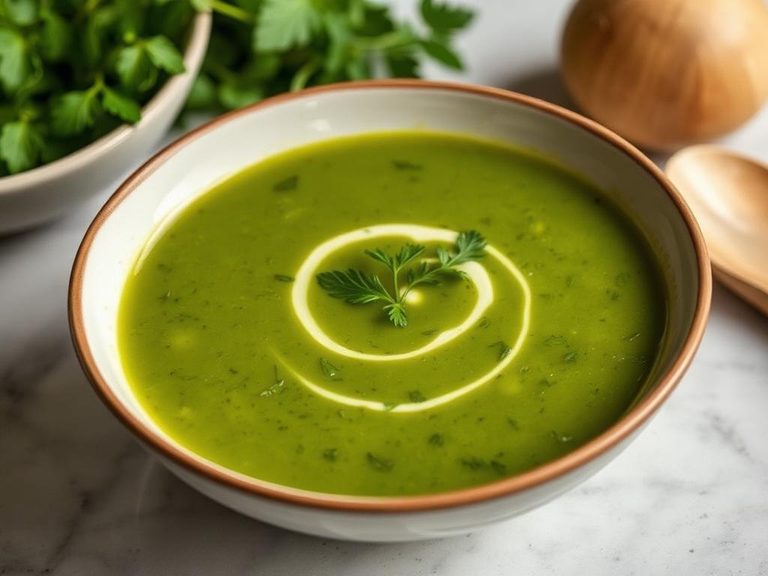
🌍 Where it's eaten
💡 Did you know?
Turnip greens are a more potent source of vitamin K than spinach, with a single cup providing over 500% of the daily value, which is crucial for blood clotting and bone health.
Full nutrition (USDA data · scales with serving)
| Water | 89.7 g |
| Energy | 32.0 kcal |
| Energy | 132 kj |
| Protein | 1.5 g |
| Total lipid (fat) | 0.30 g |
| Ash | 1.4 g |
| Carbohydrate, by difference | 7.1 g |
| Fiber, total dietary | 3.2 g |
| Total Sugars | 0.81 g |
| Glucose | 0.52 g |
| Fructose | 0.29 g |
| Calcium, Ca | 190 mg |
| Iron, Fe | 1.1 mg |
| Magnesium, Mg | 31.0 mg |
| Phosphorus, P | 42.0 mg |
| Potassium, K | 296 mg |
| Sodium, Na | 40.0 mg |
| Zinc, Zn | 0.19 mg |
| Copper, Cu | 0.35 mg |
| Manganese, Mn | 0.47 mg |
| Selenium, Se | 1.2 ug |
| Vitamin C, total ascorbic acid | 60.0 mg |
| Thiamin | 0.07 mg |
| Riboflavin | 0.10 mg |
| Niacin | 0.60 mg |
| Pantothenic acid | 0.38 mg |
| Vitamin B-6 | 0.26 mg |
| Folate, total | 194 ug |
| Folic acid | 0.00 ug |
| Folate, food | 194 ug |
| Folate, DFE | 194 ug |
| Vitamin B-12 | 0.00 ug |
| Vitamin A, RAE | 579 ug |
| Retinol | 0.00 ug |
| Carotene, beta | 6952 ug |
| Carotene, alpha | 0.00 ug |
| Cryptoxanthin, beta | 0.00 ug |
| Vitamin A, IU | 11587 iu |
| Lycopene | 0.00 ug |
| Lutein + zeaxanthin | 12825 ug |
| Vitamin E (alpha-tocopherol) | 2.9 mg |
| Tocopherol, beta | 0.00 mg |
| Tocopherol, gamma | 0.16 mg |
| Tocopherol, delta | 0.00 mg |
| Vitamin D (D2 + D3), International Units | 0.00 iu |
| Vitamin D (D2 + D3) | 0.00 ug |
| Vitamin K (phylloquinone) | 251 ug |
| Alcohol, ethyl | 0.00 g |
| Caffeine | 0.00 mg |
| Theobromine | 0.00 mg |
Fat & fatty acid profile (per 100g)
| Fatty acids, total saturated | 0.07 g |
| SFA 4:0 | 0.00 g |
| SFA 6:0 | 0.00 g |
| SFA 8:0 | 0.00 g |
| SFA 10:0 | 0.00 g |
| SFA 12:0 | 0.00 g |
| SFA 14:0 | 0.00 g |
| SFA 16:0 | 0.05 g |
| SFA 18:0 | 0.01 g |
| Fatty acids, total monounsaturated | 0.02 g |
| MUFA 16:1 | 0.01 g |
| MUFA 18:1 | 0.01 g |
| MUFA 20:1 | 0.00 g |
| MUFA 22:1 | 0.00 g |
| Fatty acids, total polyunsaturated | 0.12 g |
| PUFA 18:2 | 0.04 g |
| PUFA 18:3 | 0.08 g |
| PUFA 18:4 | 0.00 g |
| PUFA 20:4 | 0.00 g |
| PUFA 20:5 n-3 (EPA) | 0.00 g |
| PUFA 22:5 n-3 (DPA) | 0.00 g |
| PUFA 22:6 n-3 (DHA) | 0.00 g |
| Fatty acids, total trans | 0.00 g |
| Cholesterol | 0.00 mg |
| Phytosterols | 12.0 mg |
Amino acid profile (per 100g)
| Tryptophan | 0.03 g |
| Threonine | 0.08 g |
| Isoleucine | 0.08 g |
| Leucine | 0.14 g |
| Lysine | 0.10 g |
| Methionine | 0.03 g |
| Cystine | 0.02 g |
| Phenylalanine | 0.09 g |
| Tyrosine | 0.06 g |
| Valine | 0.10 g |
| Arginine | 0.09 g |
| Histidine | 0.04 g |
| Alanine | 0.10 g |
| Aspartic acid | 0.16 g |
| Glutamic acid | 0.20 g |
| Glycine | 0.09 g |
| Proline | 0.07 g |
| Serine | 0.06 g |
FAQ
Are turnip greens the same as turnip roots?
No, turnip greens are the leafy tops of the turnip plant, while the turnip root is the bulbous, edible part that grows underground. Both are edible but have different textures and flavors.
How do I reduce the bitterness of raw turnip greens?
You can reduce bitterness by massaging the greens with a pinch of salt and letting them sit for 10 minutes, then rinsing. Adding a sweet or acidic dressing, like one with lemon juice or honey, also helps balance the flavor.
Can I eat turnip greens raw in salads?
Yes, turnip greens can be eaten raw, but they are best when young and tender. Older leaves may be tougher and more bitter, so they are often better cooked or massaged before adding to salads.
Nutrient density (calculated · NRF9.3)
Nutrient Rich Foods index: beneficial nutrients (protein, fiber, vitamins, minerals) minus saturated fat, added sugar & sodium, per 100 kcal.
NRF9.3 index — Fulgoni, Keast & Drewnowski, 2009. Computed from USDA nutrients.
Weight-loss friendliness (composite index)
Energy density 0.32 kcal/g · 19% calories from protein · 3.2 g fiber · 0.8 g sugar per 100 g.
Composite of energy density (Rolls et al., 1999), protein & fiber satiety, minus sugar. A calculated heuristic — ranks satiety-per-calorie, not a clinical measure.
Dietary load (calculated from USDA values)
Potential renal acid load. Positive = acid-forming, negative = alkaline-forming.
Sodium-to-potassium ratio: 0.14 (lower is better — aim for ≤ 1)
Sodium:potassium per WHO potassium guidance. Computed from USDA nutrients.