

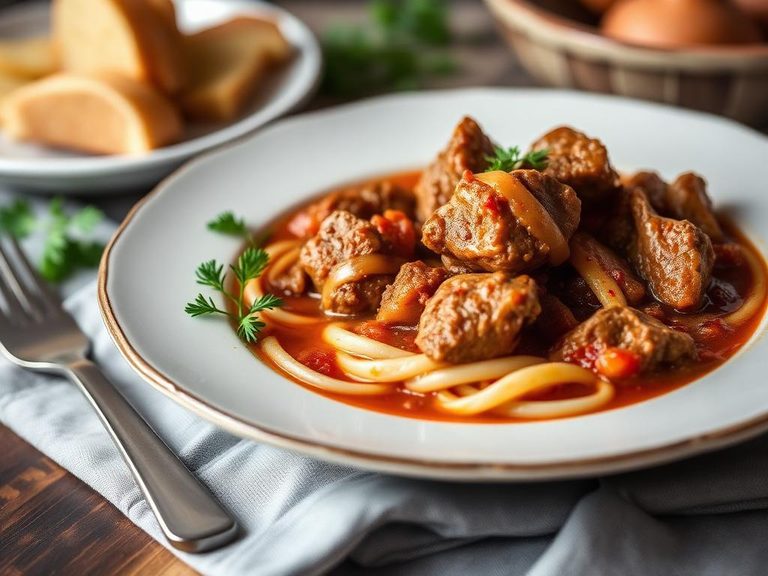
Veal, shoulder, whole (arm and blade), separable lean and fat, cooked, braised
Whole food · Lamb, Veal, and Game Products

Photo: Wikipedia
Braised veal shoulder is a rich, savory cut where the lean meat and marbled fat have been slow-cooked to a tender, fall-apart texture. The braising process renders the fat, creating a succulent, deeply flavorful bite with a velvety mouthfeel. Nutritionally, it's a protein powerhouse, delivering over 30 grams of high-quality protein per 100g with zero carbohydrates.
Calorie split: 58% protein · 0% carbs · 42% fat
↓ Full nutrition💚 Why it's loved
People adore it for its unparalleled tenderness and deep, meaty flavor that absorbs braising liquids beautifully. It's a centerpiece of comfort food traditions, offering a luxurious yet hearty meal.
⚠️ Watch-outs & how to enjoy it better
The high fat content, while contributing to flavor, makes it a calorie-dense choice not ideal for low-fat diets. To counteract this, practice strict portion control and pair it with large servings of non-starchy vegetables like roasted broccoli or a tangy slaw to add volume and fiber without excess calories.
Key benefits
- Excellent source of complete, high-quality protein for muscle maintenance.
- Provides essential minerals like zinc and selenium.
- Contains B vitamins, particularly B12, crucial for nerve function.
- The slow-cooking method makes connective tissue digestible and collagen-rich.
🍽️ Popular dishes
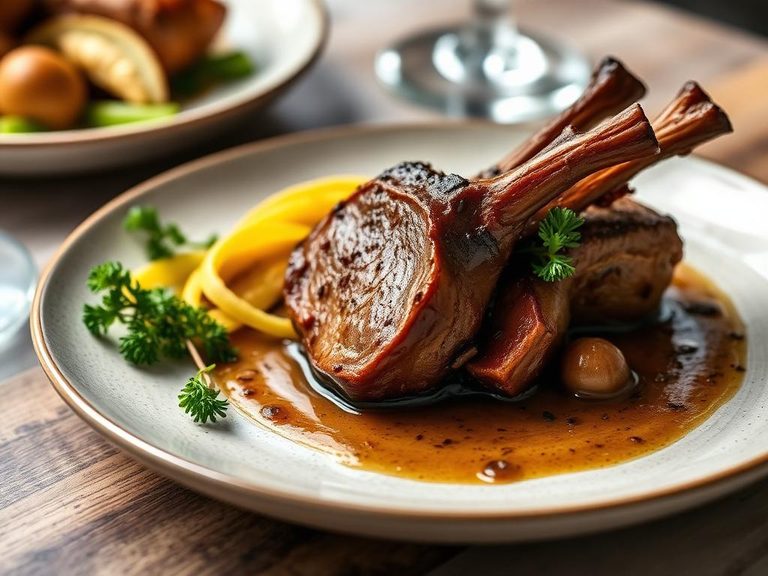
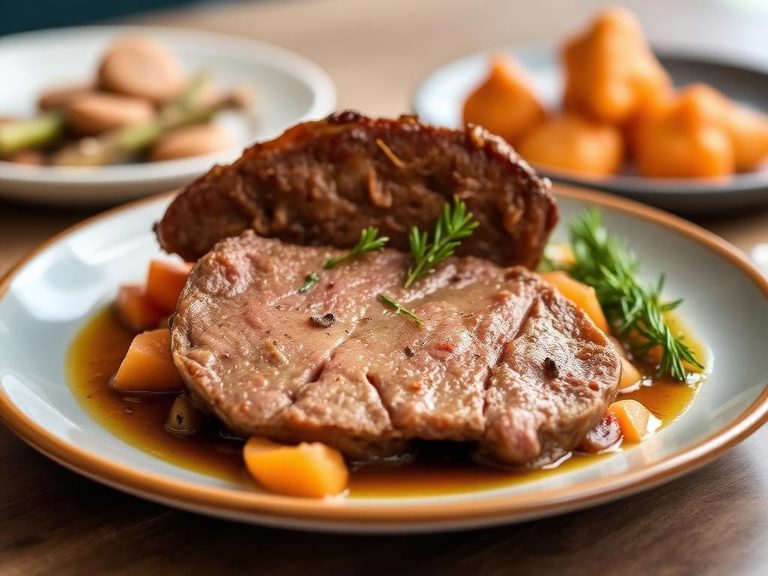
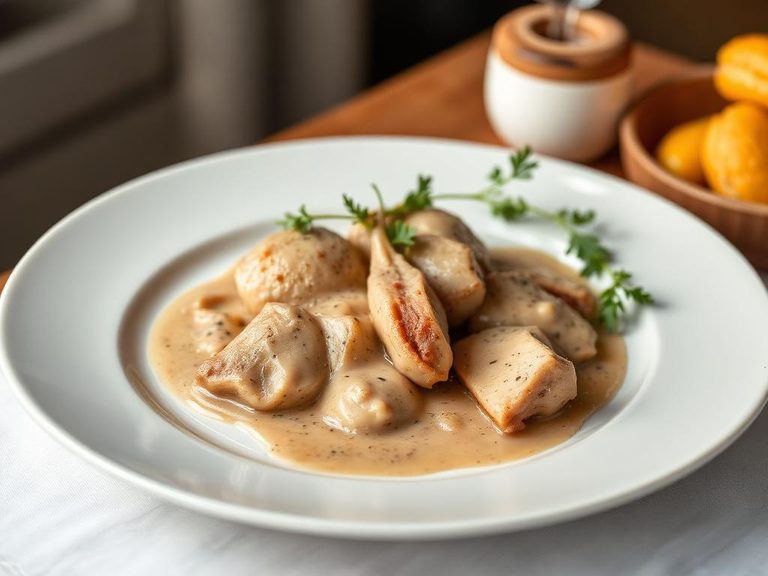
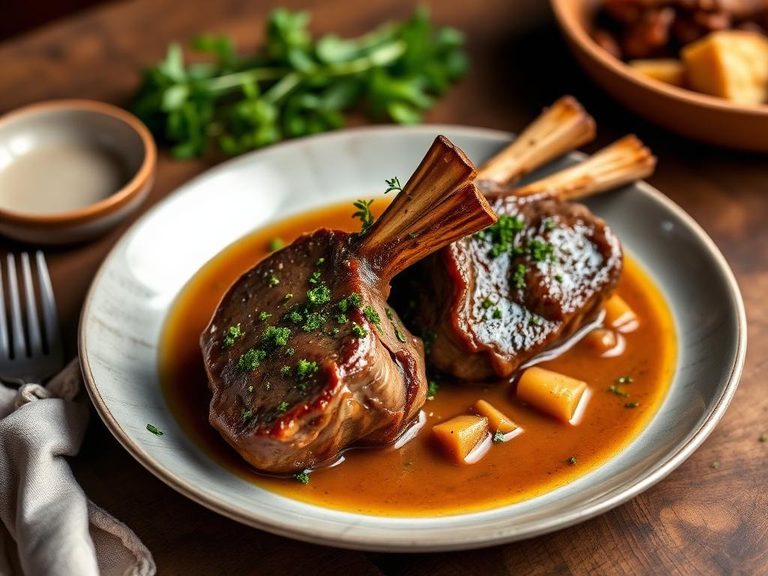
🌍 Where it's eaten
💡 Did you know?
The term 'blanquette' in the classic French dish Blanquette de Veau literally means 'white ragout,' referring to the traditional method of braising the veal without browning it first to keep the sauce pale.
Full nutrition (USDA data · scales with serving)
| Water | 56.4 g |
| Energy | 228 kcal |
| Energy | 954 kj |
| Protein | 32.1 g |
| Total lipid (fat) | 10.1 g |
| Ash | 1.2 g |
| Carbohydrate, by difference | 0.00 g |
| Fiber, total dietary | 0.00 g |
| Total Sugars | 0.00 g |
| Calcium, Ca | 35.0 mg |
| Iron, Fe | 1.4 mg |
| Magnesium, Mg | 27.0 mg |
| Phosphorus, P | 250 mg |
| Potassium, K | 309 mg |
| Sodium, Na | 95.0 mg |
| Zinc, Zn | 6.6 mg |
| Copper, Cu | 0.15 mg |
| Manganese, Mn | 0.04 mg |
| Selenium, Se | 14.2 ug |
| Vitamin C, total ascorbic acid | 0.00 mg |
| Thiamin | 0.06 mg |
| Riboflavin | 0.34 mg |
| Niacin | 6.4 mg |
| Pantothenic acid | 1.5 mg |
| Vitamin B-6 | 0.25 mg |
| Folate, total | 15.0 ug |
| Folic acid | 0.00 ug |
| Folate, food | 15.0 ug |
| Folate, DFE | 15.0 ug |
| Choline, total | 124 mg |
| Betaine | 16.3 mg |
| Vitamin B-12 | 1.8 ug |
| Vitamin B-12, added | 0.00 ug |
| Vitamin A, RAE | 0.00 ug |
| Retinol | 0.00 ug |
| Carotene, beta | 0.00 ug |
| Carotene, alpha | 0.00 ug |
| Cryptoxanthin, beta | 0.00 ug |
| Vitamin A, IU | 0.00 iu |
| Lycopene | 0.00 ug |
| Lutein + zeaxanthin | 0.00 ug |
| Vitamin E (alpha-tocopherol) | 0.42 mg |
| Vitamin E, added | 0.00 mg |
| Vitamin D (D2 + D3), International Units | 0.00 iu |
| Vitamin D (D2 + D3) | 0.00 ug |
| Vitamin D3 (cholecalciferol) | 0.00 ug |
| Vitamin K (phylloquinone) | 5.9 ug |
| Vitamin K (Dihydrophylloquinone) | 0.00 ug |
| Alcohol, ethyl | 0.00 g |
| Caffeine | 0.00 mg |
| Theobromine | 0.00 mg |
Fat & fatty acid profile (per 100g)
| Fatty acids, total saturated | 3.8 g |
| SFA 4:0 | 0.00 g |
| SFA 6:0 | 0.00 g |
| SFA 8:0 | 0.00 g |
| SFA 10:0 | 0.01 g |
| SFA 12:0 | 0.03 g |
| SFA 14:0 | 0.35 g |
| SFA 16:0 | 2.0 g |
| SFA 18:0 | 1.2 g |
| Fatty acids, total monounsaturated | 3.9 g |
| MUFA 16:1 | 0.41 g |
| MUFA 18:1 | 3.4 g |
| MUFA 20:1 | 0.00 g |
| MUFA 22:1 | 0.00 g |
| Fatty acids, total polyunsaturated | 0.73 g |
| PUFA 18:2 | 0.57 g |
| PUFA 18:3 | 0.06 g |
| PUFA 18:4 | 0.00 g |
| PUFA 20:4 | 0.10 g |
| PUFA 20:5 n-3 (EPA) | 0.00 g |
| PUFA 22:5 n-3 (DPA) | 0.00 g |
| PUFA 22:6 n-3 (DHA) | 0.00 g |
| Cholesterol | 126 mg |
Amino acid profile (per 100g)
| Tryptophan | 0.33 g |
| Threonine | 1.4 g |
| Isoleucine | 1.6 g |
| Leucine | 2.6 g |
| Lysine | 2.6 g |
| Methionine | 0.75 g |
| Cystine | 0.36 g |
| Phenylalanine | 1.3 g |
| Tyrosine | 1.0 g |
| Valine | 1.8 g |
| Arginine | 1.9 g |
| Histidine | 1.2 g |
| Alanine | 1.9 g |
| Aspartic acid | 2.8 g |
| Glutamic acid | 5.1 g |
| Glycine | 1.6 g |
| Proline | 1.3 g |
| Serine | 1.2 g |
FAQ
What's the difference between braising and roasting this cut?
Braising involves slow-cooking in liquid, which breaks down tough connective tissue for ultimate tenderness. Roasting uses dry heat, which would likely make this tougher, fattier cut chewy and less palatable.
Is the nutrition information for cooked or raw weight?
The provided data (228 kcal, 32g protein per 100g) is for the cooked, braised product, as the cooking process reduces water content and concentrates nutrients and calories.
Can I make this leaner?
You can trim excess external fat before cooking and, after braising, allow the dish to cool and solidify the fat for easy removal. However, some fat is essential for flavor and tenderness in this cut.
Nutrient density (calculated · NRF9.3)
Nutrient Rich Foods index: beneficial nutrients (protein, fiber, vitamins, minerals) minus saturated fat, added sugar & sodium, per 100 kcal.
NRF9.3 index — Fulgoni, Keast & Drewnowski, 2009. Computed from USDA nutrients.
Weight-loss friendliness (composite index)
Energy density 2.28 kcal/g · 56% calories from protein · 0.0 g fiber · 0.0 g sugar per 100 g.
Composite of energy density (Rolls et al., 1999), protein & fiber satiety, minus sugar. A calculated heuristic — ranks satiety-per-calorie, not a clinical measure.
Dietary load (calculated from USDA values)
Potential renal acid load. Positive = acid-forming, negative = alkaline-forming.
Sodium-to-potassium ratio: 0.31 (lower is better — aim for ≤ 1)
Sodium:potassium per WHO potassium guidance. Computed from USDA nutrients.