

Squash, winter, butternut, raw
Whole food · Vegetables and Vegetable Products

Photo: Wikipedia
Butternut squash is a winter squash with a creamy, dense flesh and a sweet, nutty flavor reminiscent of a cross between a pumpkin and a sweet potato. Its smooth, velvety texture when cooked makes it a favorite for purees and soups. Nutritionally, it's a low-calorie powerhouse, providing over 400% of your daily Vitamin A (as beta-carotene) per 100g, which supports vision and immune health.
Calorie split: 8% protein · 91% carbs · 2% fat
↓ Full nutrition💚 Why it's loved
People love its naturally sweet, caramelized flavor when roasted and its incredibly versatile, creamy texture that blends seamlessly into soups, risottos, and even baked goods. It's a staple of fall and winter comfort cooking, symbolizing harvest and warmth in many cultures.
⚠️ Watch-outs & how to enjoy it better
Its high natural sugar content (11.69g carbs per 100g) can cause blood-sugar spikes if eaten in large quantities alone, especially for those managing diabetes. To counteract this, pair it with a source of protein (like beans or chicken) or healthy fat (like olive oil or nuts) to slow digestion and stabilize blood sugar.
Key benefits
- Excellent source of Vitamin A (beta-carotene) for vision and immunity
- Good source of Vitamin C and potassium
- High in fiber for digestive health
- Low in calories and fat, making it weight-management friendly
- Contains antioxidants like lutein and zeaxanthin
🍽️ Popular dishes
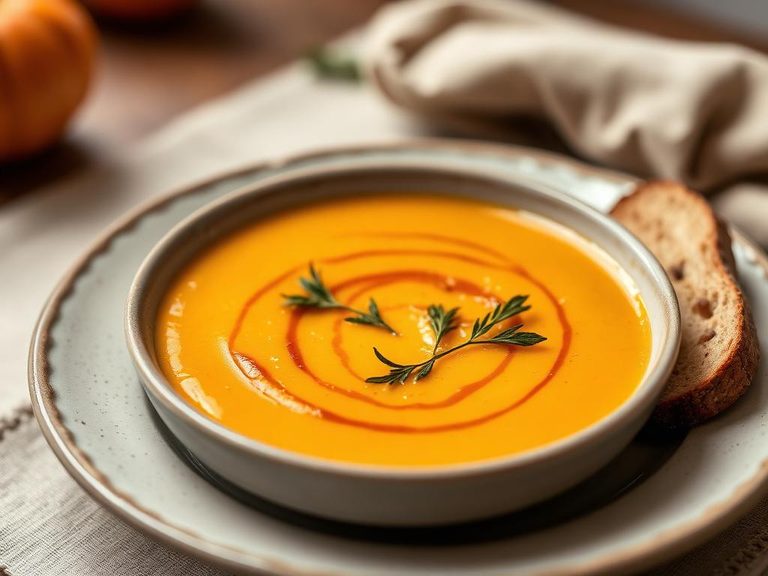
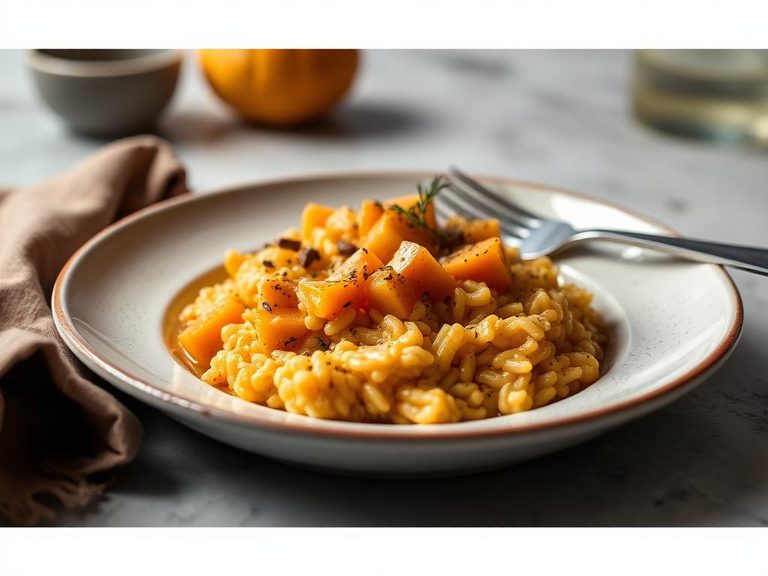
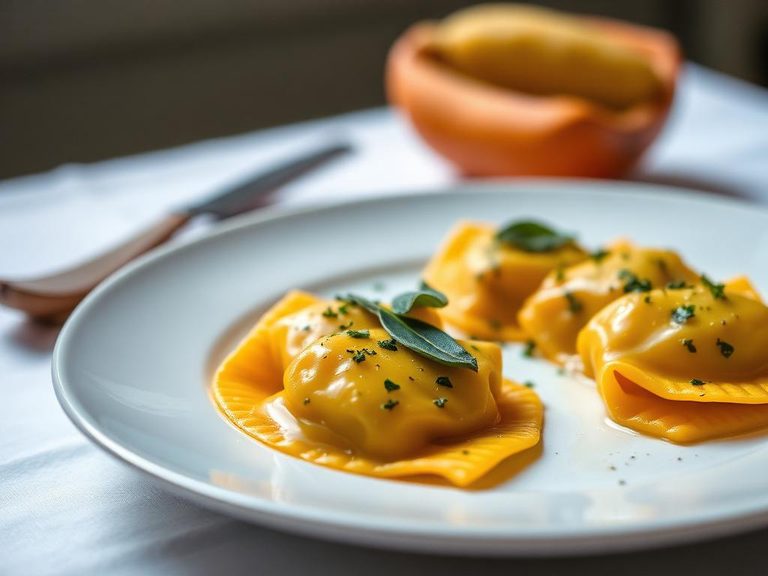


🌍 Where it's eaten
💡 Did you know?
The name 'butternut' refers to its smooth, nutty flavor and the fact that its hard rind makes a distinctive 'butternut' sound when tapped.
Full nutrition (USDA data · scales with serving)
| Water | 86.4 g |
| Energy | 45.0 kcal |
| Energy | 188 kj |
| Protein | 1.0 g |
| Total lipid (fat) | 0.10 g |
| Ash | 0.80 g |
| Carbohydrate, by difference | 11.7 g |
| Fiber, total dietary | 2.0 g |
| Total Sugars | 2.2 g |
| Sucrose | 0.22 g |
| Glucose | 0.99 g |
| Fructose | 0.99 g |
| Lactose | 0.00 g |
| Maltose | 0.00 g |
| Galactose | 0.00 g |
| Calcium, Ca | 48.0 mg |
| Iron, Fe | 0.70 mg |
| Magnesium, Mg | 34.0 mg |
| Phosphorus, P | 33.0 mg |
| Potassium, K | 352 mg |
| Sodium, Na | 4.0 mg |
| Zinc, Zn | 0.15 mg |
| Copper, Cu | 0.07 mg |
| Manganese, Mn | 0.20 mg |
| Selenium, Se | 0.50 ug |
| Vitamin C, total ascorbic acid | 21.0 mg |
| Thiamin | 0.10 mg |
| Riboflavin | 0.02 mg |
| Niacin | 1.2 mg |
| Pantothenic acid | 0.40 mg |
| Vitamin B-6 | 0.15 mg |
| Folate, total | 27.0 ug |
| Folic acid | 0.00 ug |
| Folate, food | 27.0 ug |
| Folate, DFE | 27.0 ug |
| Vitamin B-12 | 0.00 ug |
| Vitamin A, RAE | 532 ug |
| Retinol | 0.00 ug |
| Carotene, beta | 4226 ug |
| Carotene, alpha | 834 ug |
| Cryptoxanthin, beta | 3471 ug |
| Vitamin A, IU | 10630 iu |
| Lycopene | 0.00 ug |
| Lutein + zeaxanthin | 0.00 ug |
| Vitamin E (alpha-tocopherol) | 1.4 mg |
| Vitamin D (D2 + D3), International Units | 0.00 iu |
| Vitamin D (D2 + D3) | 0.00 ug |
| Vitamin K (phylloquinone) | 1.1 ug |
| Alcohol, ethyl | 0.00 g |
| Caffeine | 0.00 mg |
| Theobromine | 0.00 mg |
Fat & fatty acid profile (per 100g)
| Fatty acids, total saturated | 0.02 g |
| SFA 4:0 | 0.00 g |
| SFA 6:0 | 0.00 g |
| SFA 8:0 | 0.00 g |
| SFA 10:0 | 0.00 g |
| SFA 12:0 | 0.00 g |
| SFA 14:0 | 0.00 g |
| SFA 16:0 | 0.02 g |
| SFA 18:0 | 0.00 g |
| Fatty acids, total monounsaturated | 0.01 g |
| MUFA 16:1 | 0.00 g |
| MUFA 18:1 | 0.01 g |
| MUFA 20:1 | 0.00 g |
| MUFA 22:1 | 0.00 g |
| Fatty acids, total polyunsaturated | 0.04 g |
| PUFA 18:2 | 0.02 g |
| PUFA 18:3 | 0.03 g |
| PUFA 18:4 | 0.00 g |
| PUFA 20:4 | 0.00 g |
| PUFA 20:5 n-3 (EPA) | 0.00 g |
| PUFA 22:5 n-3 (DPA) | 0.00 g |
| PUFA 22:6 n-3 (DHA) | 0.00 g |
| Fatty acids, total trans | 0.00 g |
| Cholesterol | 0.00 mg |
Amino acid profile (per 100g)
| Tryptophan | 0.01 g |
| Threonine | 0.03 g |
| Isoleucine | 0.04 g |
| Leucine | 0.06 g |
| Lysine | 0.04 g |
| Methionine | 0.01 g |
| Cystine | 0.01 g |
| Phenylalanine | 0.04 g |
| Tyrosine | 0.03 g |
| Valine | 0.04 g |
| Arginine | 0.06 g |
| Histidine | 0.02 g |
| Alanine | 0.04 g |
| Aspartic acid | 0.11 g |
| Glutamic acid | 0.17 g |
| Glycine | 0.04 g |
| Proline | 0.04 g |
| Serine | 0.04 g |
FAQ
How do I choose a ripe butternut squash?
Look for one with a firm, matte (not glossy) skin, a heavy feel for its size, and a dry, intact stem. Avoid any with soft spots or blemishes.
Can I eat the skin?
Yes, the skin is edible and becomes tender when roasted or baked. It's often left on for wedges or cubes but peeled for soups or smooth purees.
What's the best way to cut it?
First, carefully trim off the ends. For safety, microwave the whole squash for 2-3 minutes to soften the rind. Then, slice it in half lengthwise, scoop out the seeds, and cut into your desired shape.
Nutrient density (calculated · NRF9.3)
Nutrient Rich Foods index: beneficial nutrients (protein, fiber, vitamins, minerals) minus saturated fat, added sugar & sodium, per 100 kcal.
NRF9.3 index — Fulgoni, Keast & Drewnowski, 2009. Computed from USDA nutrients.
Weight-loss friendliness (composite index)
Energy density 0.45 kcal/g · 9% calories from protein · 2.0 g fiber · 2.2 g sugar per 100 g.
Composite of energy density (Rolls et al., 1999), protein & fiber satiety, minus sugar. A calculated heuristic — ranks satiety-per-calorie, not a clinical measure.
Dietary load (calculated from USDA values)
Potential renal acid load. Positive = acid-forming, negative = alkaline-forming.
Sodium-to-potassium ratio: 0.01 (lower is better — aim for ≤ 1)
Sodium:potassium per WHO potassium guidance. Computed from USDA nutrients.