

Snacks, granola bar, chewy, reduced sugar, all flavors
Whole food · Snacks

Photo: Wikipedia
A chewy, reduced-sugar granola bar is a convenient, oat-based snack that delivers a satisfying, dense chew with a mild sweetness. Its nutrition profile is defined by a significant carbohydrate load (69.4g per 100g) and moderate fat, making it a quick energy source. The 'reduced sugar' claim is relative, as it still contains 20.8g of sugar per 100g.
Calorie split: 5% protein · 67% carbs · 27% fat
↓ Full nutrition💚 Why it's loved
People love it for its reliable, comforting texture and the promise of a treat that feels slightly more virtuous due to the 'reduced sugar' label. It's a staple in lunchboxes, desk drawers, and gym bags for its no-mess, instant gratification.
⚠️ Watch-outs & how to enjoy it better
The high carbohydrate and sugar content can lead to rapid blood sugar spikes, especially if eaten alone. It's often a common carrier for allergens like nuts, soy, and wheat. To mitigate, pair it with a source of protein or healthy fat (like a handful of nuts or a cheese stick) and practice strict portion control.
Key benefits
- Provides quick, accessible energy from carbohydrates
- Offers a small amount of plant-based protein (5.55g per 100g)
- Convenient, shelf-stable, and portable for on-the-go consumption
- Contains some dietary fiber (3.1g per 100g) for digestive support
🍽️ Popular dishes
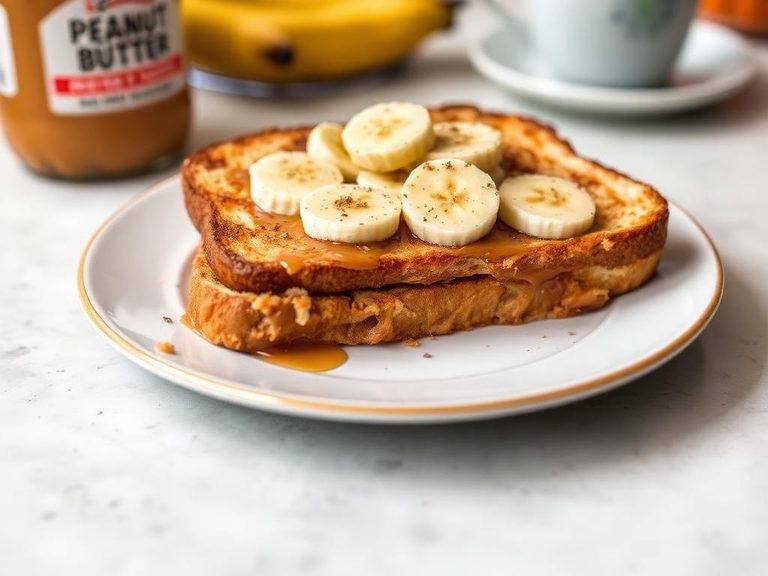

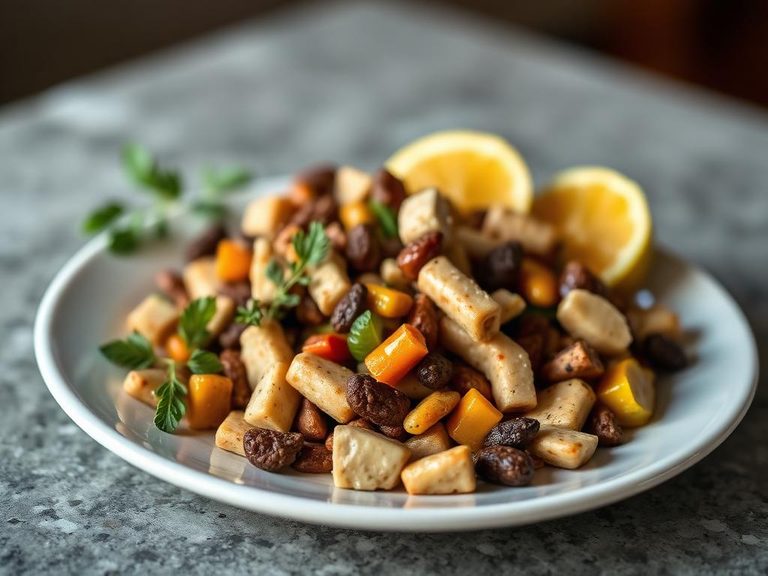


🌍 Where it's eaten
💡 Did you know?
The 'chewy' texture is primarily achieved by using a sticky binder like corn syrup, honey, or marshmallow, which acts as a glue for the oats and other ingredients.
Full nutrition (USDA data · scales with serving)
| Water | 11.7 g |
| Energy | 412 kcal |
| Energy | 1725 kj |
| Protein | 5.5 g |
| Total lipid (fat) | 12.5 g |
| Ash | 0.90 g |
| Carbohydrate, by difference | 69.4 g |
| Fiber, total dietary | 3.1 g |
| Total Sugars | 20.8 g |
| Calcium, Ca | 417 mg |
| Iron, Fe | 2.0 mg |
| Magnesium, Mg | 48.0 mg |
| Phosphorus, P | 159 mg |
| Potassium, K | 199 mg |
| Sodium, Na | 312 mg |
| Zinc, Zn | 1.3 mg |
| Copper, Cu | 0.16 mg |
| Manganese, Mn | 1.1 mg |
| Selenium, Se | 5.7 ug |
| Fluoride, F | 0.10 ug |
| Vitamin C, total ascorbic acid | 0.10 mg |
| Thiamin | 0.19 mg |
| Riboflavin | 0.12 mg |
| Niacin | 1.0 mg |
| Pantothenic acid | 0.42 mg |
| Vitamin B-6 | 0.09 mg |
| Folate, total | 17.0 ug |
| Folic acid | 0.00 ug |
| Folate, food | 17.0 ug |
| Folate, DFE | 17.0 ug |
| Choline, total | 15.5 mg |
| Vitamin B-12 | 0.09 ug |
| Vitamin B-12, added | 0.00 ug |
| Vitamin A, RAE | 0.00 ug |
| Retinol | 0.00 ug |
| Carotene, beta | 1.0 ug |
| Carotene, alpha | 0.00 ug |
| Cryptoxanthin, beta | 0.00 ug |
| Vitamin A, IU | 1.0 iu |
| Lycopene | 0.00 ug |
| Lutein + zeaxanthin | 47.0 ug |
| Vitamin E (alpha-tocopherol) | 1.5 mg |
| Vitamin E, added | 0.00 mg |
| Vitamin D (D2 + D3), International Units | 0.00 iu |
| Vitamin D (D2 + D3) | 0.00 ug |
| Vitamin K (phylloquinone) | 2.3 ug |
| Alcohol, ethyl | 0.00 g |
| Caffeine | 0.00 mg |
| Theobromine | 1.0 mg |
Fat & fatty acid profile (per 100g)
| Fatty acids, total saturated | 5.0 g |
| SFA 4:0 | 0.00 g |
| SFA 6:0 | 0.02 g |
| SFA 8:0 | 0.24 g |
| SFA 10:0 | 0.19 g |
| SFA 12:0 | 1.4 g |
| SFA 13:0 | 0.00 g |
| SFA 14:0 | 0.55 g |
| SFA 15:0 | 0.00 g |
| SFA 16:0 | 1.5 g |
| SFA 17:0 | 0.01 g |
| SFA 18:0 | 1.0 g |
| SFA 20:0 | 0.03 g |
| SFA 22:0 | 0.03 g |
| SFA 24:0 | 0.00 g |
| Fatty acids, total monounsaturated | 5.3 g |
| MUFA 14:1 | 0.00 g |
| MUFA 15:1 | 0.00 g |
| MUFA 16:1 | 0.01 g |
| MUFA 17:1 | 0.00 g |
| MUFA 18:1 | 5.3 g |
| MUFA 20:1 | 0.00 g |
| MUFA 22:1 | 0.00 g |
| MUFA 24:1 c | 0.00 g |
| Fatty acids, total polyunsaturated | 1.4 g |
| PUFA 18:2 | 1.4 g |
| PUFA 18:3 | 0.03 g |
| PUFA 18:4 | 0.00 g |
| PUFA 20:2 n-6 c,c | 0.00 g |
| PUFA 20:3 | 0.00 g |
| PUFA 20:4 | 0.00 g |
| PUFA 20:5 n-3 (EPA) | 0.00 g |
| PUFA 22:5 n-3 (DPA) | 0.00 g |
| PUFA 22:6 n-3 (DHA) | 0.00 g |
| Fatty acids, total trans | 0.00 g |
| Cholesterol | 0.00 mg |
| Phytosterols | 11.0 mg |
Amino acid profile (per 100g)
| Tryptophan | 0.02 g |
| Threonine | 0.04 g |
| Isoleucine | 0.05 g |
| Leucine | 0.10 g |
| Lysine | 0.03 g |
| Methionine | 0.03 g |
| Cystine | 0.03 g |
| Phenylalanine | 0.07 g |
| Tyrosine | 0.04 g |
| Valine | 0.06 g |
| Arginine | 0.06 g |
| Histidine | 0.03 g |
| Alanine | 0.05 g |
| Aspartic acid | 0.06 g |
| Glutamic acid | 0.48 g |
| Glycine | 0.05 g |
| Proline | 0.17 g |
| Serine | 0.07 g |
FAQ
What makes it 'reduced sugar'?
It typically contains 25% less sugar than the standard version of the same bar, often by using alternative sweeteners or simply reducing the amount of sugar syrups and adding more fillers like oats or chicory root fiber.
Is it a healthy snack?
It's a processed food best viewed as an occasional energy boost rather than a nutrient-dense health food. The 'reduced sugar' label doesn't negate its high overall carbohydrate content.
How does it differ from a regular granola bar?
A chewy reduced-sugar bar will have a softer, less crunchy texture and a lower sugar count than a standard chewy bar, but it will still be significantly higher in carbs and sugar than a whole-food snack like fruit or nuts.
Nutrient density (calculated · NRF9.3)
Nutrient Rich Foods index: beneficial nutrients (protein, fiber, vitamins, minerals) minus saturated fat, added sugar & sodium, per 100 kcal.
NRF9.3 index — Fulgoni, Keast & Drewnowski, 2009. Computed from USDA nutrients.
Weight-loss friendliness (composite index)
Energy density 4.12 kcal/g · 5% calories from protein · 3.1 g fiber · 20.8 g sugar per 100 g.
Composite of energy density (Rolls et al., 1999), protein & fiber satiety, minus sugar. A calculated heuristic — ranks satiety-per-calorie, not a clinical measure.
Dietary load (calculated from USDA values)
Potential renal acid load. Positive = acid-forming, negative = alkaline-forming.
Sodium-to-potassium ratio: 1.57 (lower is better — aim for ≤ 1)
Sodium:potassium per WHO potassium guidance. Computed from USDA nutrients.