

Salad dressing, french dressing, fat-free
Whole food · Fats and Oils

Photo: Wikipedia
This is a vibrant, tangy, and sweet emulsion, typically a bright orange-red color, designed to coat salads without adding any fat. Its texture is smooth and pourable, with a pronounced vinegar-forward zing balanced by a significant sweetness. Nutritionally, it's a low-calorie, virtually fat-free option, but it derives almost all its calories from carbohydrates, specifically a high amount of added sugar.
Calorie split: 1% protein · 98% carbs · 2% fat
↓ Full nutrition💚 Why it's loved
People love it for its bold, nostalgic flavor profile—a punchy mix of tangy vinegar and sweet tomato notes that can make a simple bowl of greens feel more indulgent. Its versatility extends beyond salads, serving as a quick dip for raw vegetables, a marinade base, or a drizzle for sandwiches and wraps.
⚠️ Watch-outs & how to enjoy it better
The primary downside is its very high sugar content (over 16g per 100g), which can lead to blood-sugar spikes, especially for those managing diabetes or insulin resistance. It often contains significant sodium and may include preservatives or artificial colors. To counteract this, use it sparingly, pair it with a source of protein (like grilled chicken or chickpeas) and healthy fat (like avocado or nuts) to slow sugar absorption, or dilute it with a splash of vinegar or water.
Key benefits
- Extremely low in fat and calories per serving
- Provides a strong flavor boost to plain vegetables
- Adds moisture and palatability to salads
- A convenient, shelf-stable condiment
🍽️ Popular dishes
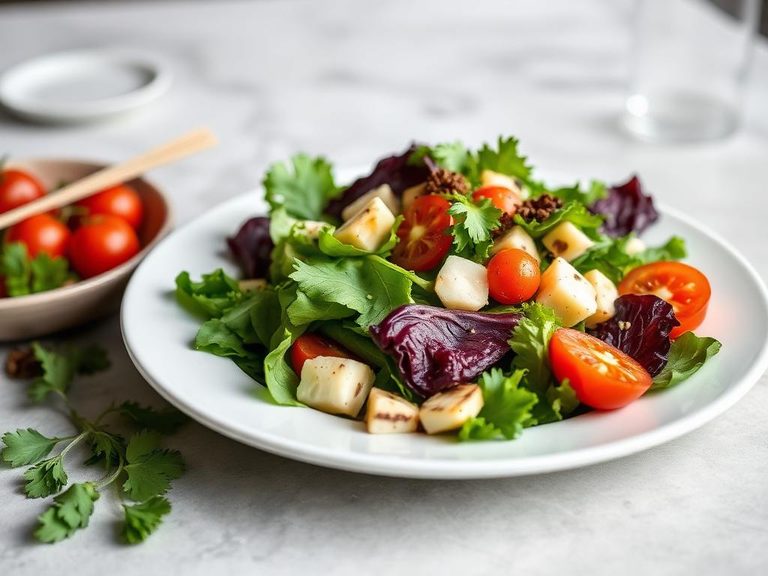
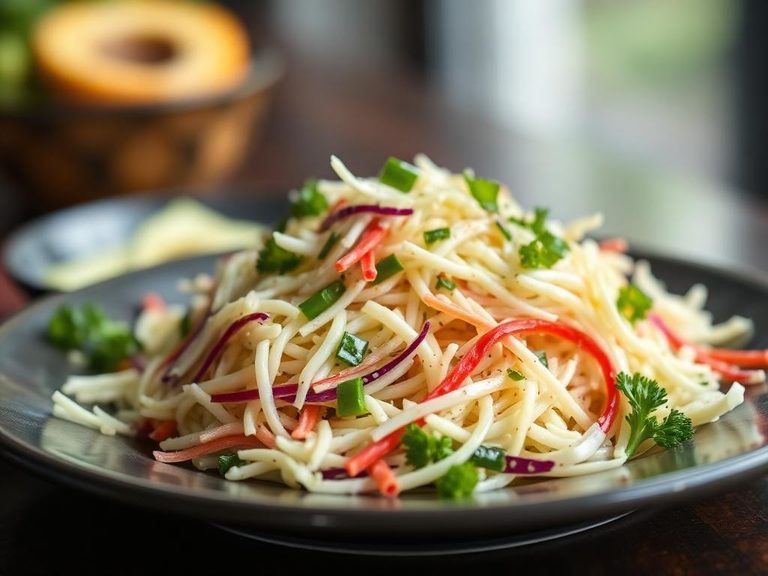
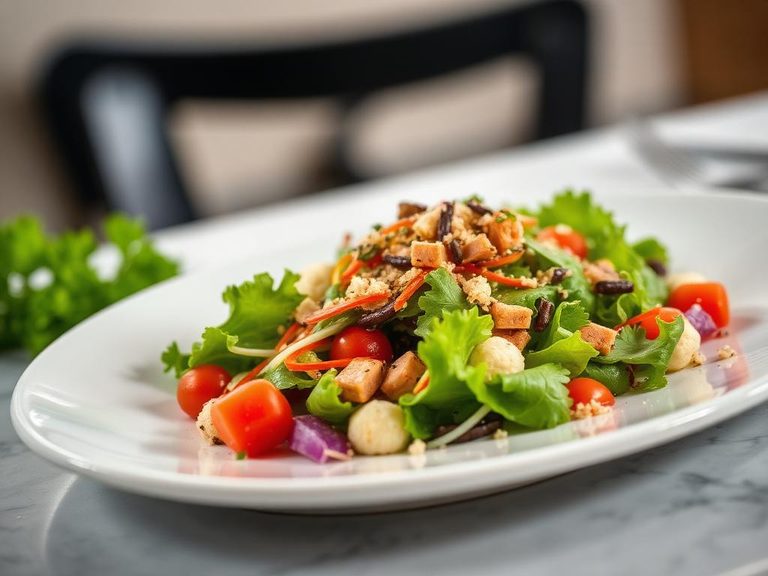
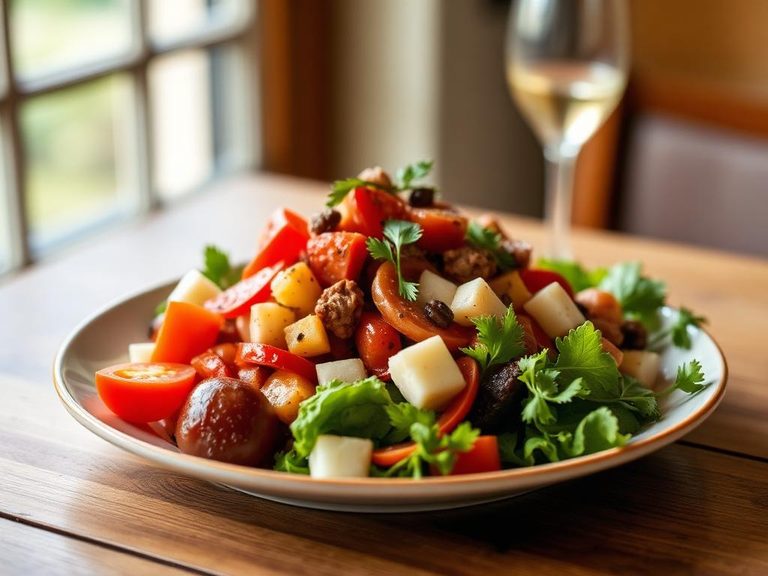

🌍 Where it's eaten
💡 Did you know?
Despite its name, true 'French' dressing in France is a simple vinaigrette; the thick, sweet, orange-red American version was popularized in the mid-20th century and is sometimes called 'Catalina' dressing.
Full nutrition (USDA data · scales with serving)
| Water | 65.0 g |
| Energy | 132 kcal |
| Energy | 551 kj |
| Protein | 0.20 g |
| Total lipid (fat) | 0.27 g |
| Ash | 2.4 g |
| Carbohydrate, by difference | 32.1 g |
| Fiber, total dietary | 2.2 g |
| Total Sugars | 16.4 g |
| Sucrose | 5.5 g |
| Glucose | 4.7 g |
| Fructose | 5.0 g |
| Maltose | 1.2 g |
| Starch | 14.5 g |
| Calcium, Ca | 5.0 mg |
| Iron, Fe | 0.58 mg |
| Magnesium, Mg | 3.0 mg |
| Phosphorus, P | 0.00 mg |
| Potassium, K | 84.0 mg |
| Sodium, Na | 853 mg |
| Zinc, Zn | 0.10 mg |
| Copper, Cu | 0.12 mg |
| Manganese, Mn | 0.02 mg |
| Selenium, Se | 2.0 ug |
| Vitamin C, total ascorbic acid | 0.00 mg |
| Thiamin | 0.01 mg |
| Riboflavin | 0.03 mg |
| Niacin | 0.11 mg |
| Pantothenic acid | 0.00 mg |
| Vitamin B-6 | 0.00 mg |
| Folate, total | 14.0 ug |
| Folic acid | 0.00 ug |
| Folate, food | 14.0 ug |
| Folate, DFE | 14.0 ug |
| Choline, total | 4.0 mg |
| Vitamin B-12 | 0.00 ug |
| Vitamin B-12, added | 0.00 ug |
| Vitamin A, RAE | 4.0 ug |
| Retinol | 0.00 ug |
| Carotene, beta | 38.0 ug |
| Carotene, alpha | 0.00 ug |
| Cryptoxanthin, beta | 15.0 ug |
| Vitamin A, IU | 75.0 iu |
| Lycopene | 319 ug |
| Lutein + zeaxanthin | 0.00 ug |
| Vitamin E (alpha-tocopherol) | 0.02 mg |
| Vitamin E, added | 0.00 mg |
| Vitamin D (D2 + D3), International Units | 0.00 iu |
| Vitamin D (D2 + D3) | 0.00 ug |
| Vitamin K (phylloquinone) | 0.10 ug |
| Alcohol, ethyl | 0.00 g |
| Caffeine | 0.00 mg |
| Theobromine | 0.00 mg |
Fat & fatty acid profile (per 100g)
| Fatty acids, total saturated | 0.04 g |
| SFA 4:0 | 0.00 g |
| SFA 6:0 | 0.00 g |
| SFA 8:0 | 0.00 g |
| SFA 10:0 | 0.00 g |
| SFA 12:0 | 0.00 g |
| SFA 14:0 | 0.00 g |
| SFA 16:0 | 0.02 g |
| SFA 18:0 | 0.01 g |
| SFA 24:0 | 0.00 g |
| Fatty acids, total monounsaturated | 0.14 g |
| MUFA 16:1 | 0.00 g |
| MUFA 17:1 | 0.01 g |
| MUFA 18:1 | 0.05 g |
| MUFA 20:1 | 0.03 g |
| MUFA 22:1 | 0.05 g |
| Fatty acids, total polyunsaturated | 0.06 g |
| PUFA 18:2 | 0.04 g |
| PUFA 18:3 | 0.02 g |
| PUFA 18:4 | 0.00 g |
| PUFA 20:2 n-6 c,c | 0.00 g |
| PUFA 20:4 | 0.00 g |
| PUFA 20:5 n-3 (EPA) | 0.00 g |
| PUFA 22:5 n-3 (DPA) | 0.00 g |
| PUFA 22:6 n-3 (DHA) | 0.00 g |
| Cholesterol | 0.00 mg |
Amino acid profile (per 100g)
Estimated from Salad dressing, sesame seed dressing, regular — USDA does not publish this profile for Salad dressing.
| Tryptophan | 0.05 g |
| Threonine | 0.05 g |
| Isoleucine | 0.05 g |
| Leucine | 0.08 g |
| Lysine | 0.14 g |
| Methionine | 0.03 g |
| Cystine | 0.00 g |
| Phenylalanine | 0.09 g |
| Tyrosine | 0.10 g |
| Valine | 0.07 g |
| Arginine | 0.40 g |
| Histidine | 0.03 g |
| Alanine | 0.00 g |
| Aspartic acid | 0.00 g |
| Glutamic acid | 0.46 g |
| Glycine | 0.00 g |
| Proline | 0.00 g |
| Serine | 0.00 g |
FAQ
Is fat-free French dressing actually healthy?
While it is very low in fat and calories, its high sugar content (often over 10g per serving) means it should be used in moderation. It's not a 'health food' but can be part of a balanced diet when portion-controlled.
Can I use it for cooking or just salads?
It's primarily a cold condiment, but it can be used as a quick glaze for roasted vegetables or a base for a sweet-and-sour sauce if simmered briefly. High heat for long periods may degrade its flavor.
What's the difference between French and Catalina dressing?
They are very similar—both are sweet, tangy, tomato-based, and often fat-free. Catalina is typically a bit thinner and more vinegar-forward, while French dressing can be slightly thicker and sweeter, but the terms are often used interchangeably in the U.S.
Nutrient density (calculated · NRF9.3)
Nutrient Rich Foods index: beneficial nutrients (protein, fiber, vitamins, minerals) minus saturated fat, added sugar & sodium, per 100 kcal.
NRF9.3 index — Fulgoni, Keast & Drewnowski, 2009. Computed from USDA nutrients.
Weight-loss friendliness (composite index)
Energy density 1.32 kcal/g · 1% calories from protein · 2.2 g fiber · 16.4 g sugar per 100 g.
Composite of energy density (Rolls et al., 1999), protein & fiber satiety, minus sugar. A calculated heuristic — ranks satiety-per-calorie, not a clinical measure.
Dietary load (calculated from USDA values)
Potential renal acid load. Positive = acid-forming, negative = alkaline-forming.
Sodium-to-potassium ratio: 10.15 (lower is better — aim for ≤ 1)
Sodium:potassium per WHO potassium guidance. Computed from USDA nutrients.