

Rye flour, medium
Whole food · Cereal Grains and Pasta

Photo: Wikipedia
Medium rye flour is a hearty, aromatic flour milled from the entire rye grain kernel, offering a distinctive earthy, slightly sour flavor and a dense, moist texture to baked goods. Its nutritional profile is notable for its high fiber content, particularly the soluble fiber beta-glucan, which supports digestive health and helps manage blood sugar levels.
Calorie split: 12% protein · 84% carbs · 4% fat
↓ Full nutrition💚 Why it's loved
People love it for its robust, tangy flavor that adds depth and complexity to breads and pastries, and its cultural significance in traditional European baking, from German pumpernickel to Finnish ruisleipä. Its ability to create moist, long-lasting baked goods is highly prized.
⚠️ Watch-outs & how to enjoy it better
The strong, earthy flavor can be polarizing, and its dense texture may be unfamiliar to those accustomed to lighter wheat breads. Individuals with celiac disease must avoid it due to gluten content. To balance its density, it's often blended with wheat flour, and its flavor can be mellowed by toasting or pairing with rich toppings like smoked fish or cheese.
Key benefits
- High in dietary fiber (11.8g per 100g) for digestive health.
- Contains beta-glucan, a soluble fiber that may help lower cholesterol.
- Provides a good source of plant-based protein (10.88g per 100g).
- Low in fat (1.52g per 100g) and naturally low in sugar.
- Rich in minerals like magnesium, phosphorus, and B vitamins.
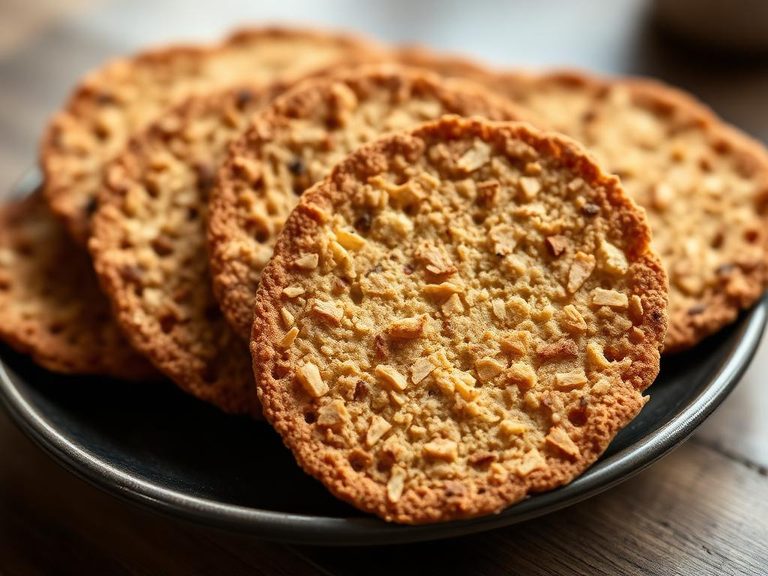
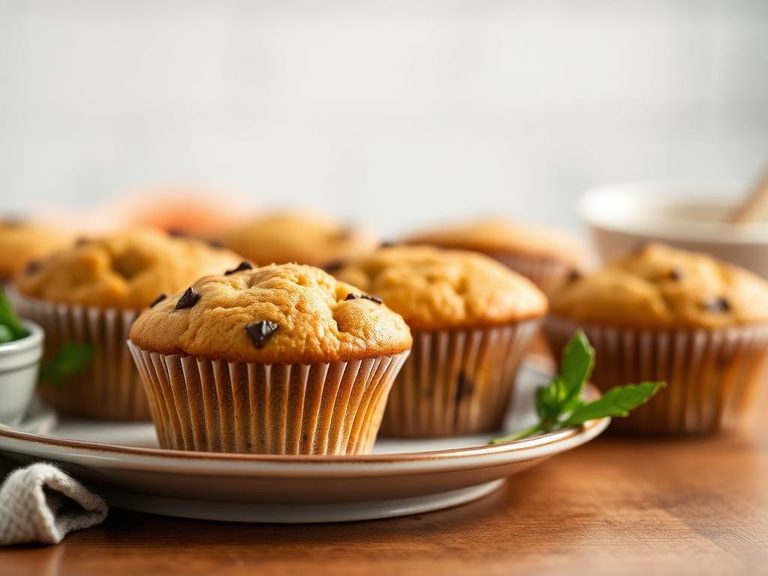
🍽️ Popular dishes
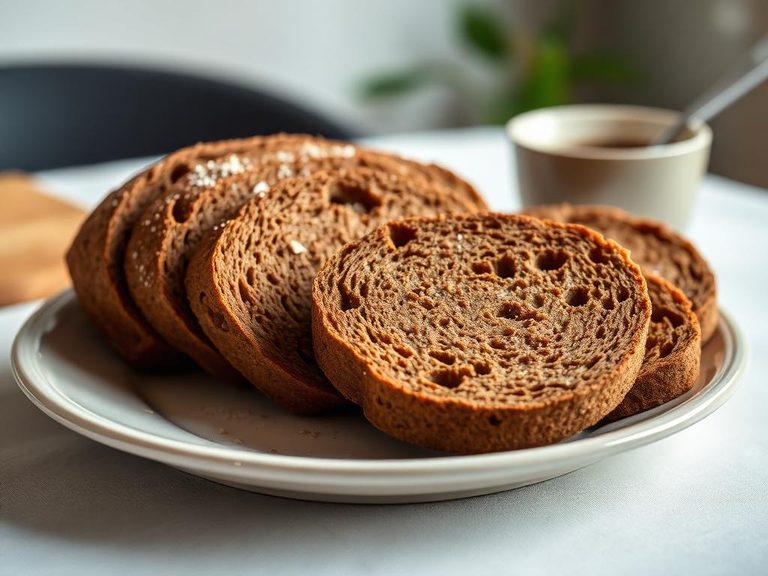
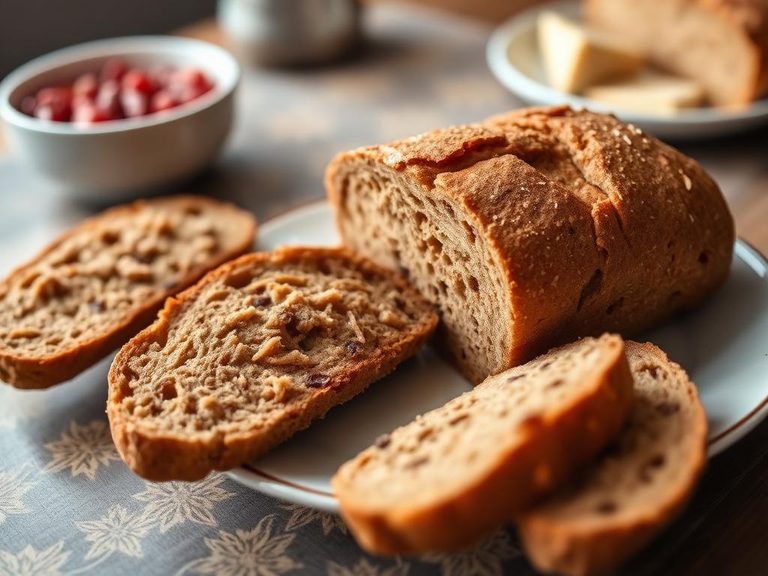
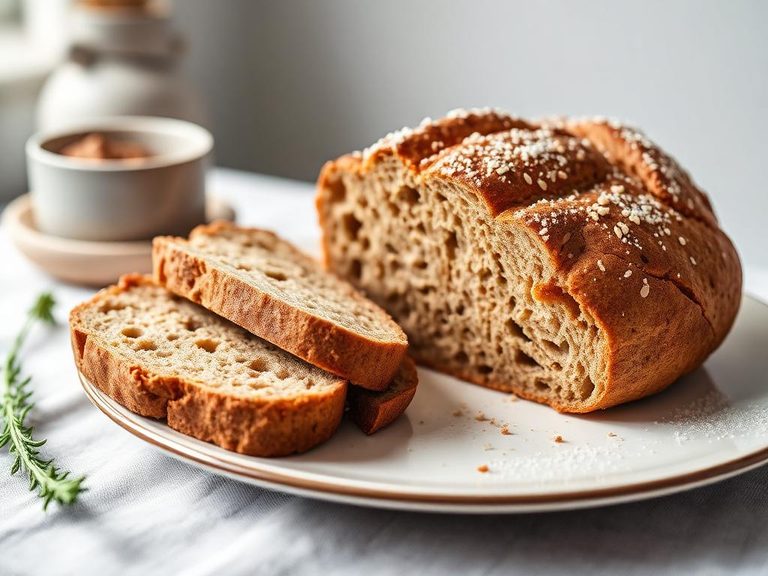
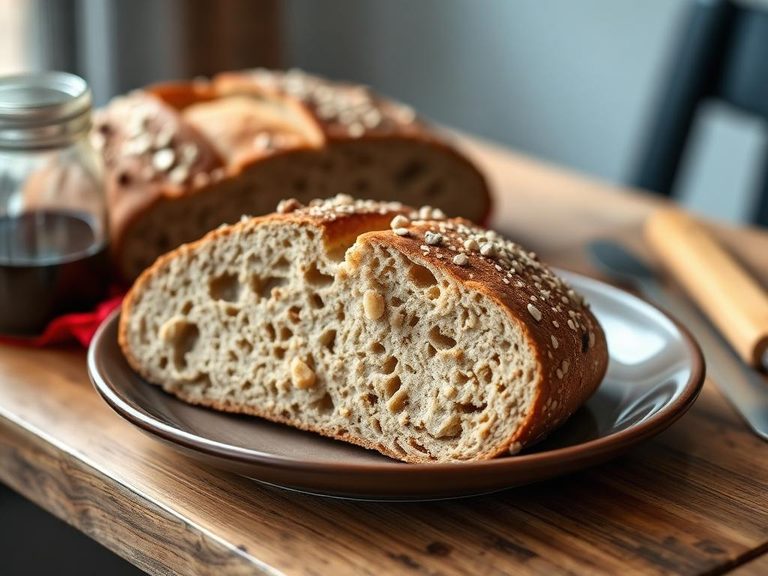
🌍 Where it's eaten
💡 Did you know?
Rye is one of the hardiest cereal grains, capable of growing in poor soils and cold climates where wheat would fail, which historically made it a crucial staple in Northern and Eastern Europe.
Full nutrition (USDA data · scales with serving)
| Water | 11.0 g |
| Energy | 349 kcal |
| Energy | 1459 kj |
| Protein | 10.9 g |
| Total lipid (fat) | 1.5 g |
| Ash | 1.2 g |
| Carbohydrate, by difference | 75.4 g |
| Fiber, total dietary | 11.8 g |
| Total Sugars | 1.1 g |
| Sucrose | 0.90 g |
| Glucose | 0.06 g |
| Fructose | 0.12 g |
| Lactose | 0.00 g |
| Maltose | 0.02 g |
| Galactose | 0.00 g |
| Calcium, Ca | 24.0 mg |
| Iron, Fe | 2.5 mg |
| Magnesium, Mg | 63.0 mg |
| Phosphorus, P | 225 mg |
| Potassium, K | 374 mg |
| Sodium, Na | 2.0 mg |
| Zinc, Zn | 2.2 mg |
| Copper, Cu | 0.33 mg |
| Manganese, Mn | 2.4 mg |
| Selenium, Se | 14.4 ug |
| Vitamin C, total ascorbic acid | 0.00 mg |
| Thiamin | 0.29 mg |
| Riboflavin | 0.11 mg |
| Niacin | 1.7 mg |
| Pantothenic acid | 0.49 mg |
| Vitamin B-6 | 0.27 mg |
| Folate, total | 34.0 ug |
| Folic acid | 0.00 ug |
| Folate, food | 34.0 ug |
| Folate, DFE | 34.0 ug |
| Choline, total | 20.6 mg |
| Vitamin B-12 | 0.00 ug |
| Vitamin B-12, added | 0.00 ug |
| Vitamin A, RAE | 0.00 ug |
| Retinol | 0.00 ug |
| Carotene, beta | 0.00 ug |
| Carotene, alpha | 0.00 ug |
| Cryptoxanthin, beta | 0.00 ug |
| Vitamin A, IU | 0.00 iu |
| Lycopene | 0.00 ug |
| Lutein + zeaxanthin | 210 ug |
| Vitamin E (alpha-tocopherol) | 1.4 mg |
| Vitamin E, added | 0.00 mg |
| Vitamin D (D2 + D3), International Units | 0.00 iu |
| Vitamin D (D2 + D3) | 0.00 ug |
| Vitamin K (phylloquinone) | 5.9 ug |
| Alcohol, ethyl | 0.00 g |
| Caffeine | 0.00 mg |
| Theobromine | 0.00 mg |
Fat & fatty acid profile (per 100g)
| Fatty acids, total saturated | 0.18 g |
| SFA 4:0 | 0.00 g |
| SFA 6:0 | 0.00 g |
| SFA 8:0 | 0.00 g |
| SFA 10:0 | 0.00 g |
| SFA 12:0 | 0.00 g |
| SFA 14:0 | 0.00 g |
| SFA 16:0 | 0.17 g |
| SFA 18:0 | 0.01 g |
| Fatty acids, total monounsaturated | 0.19 g |
| MUFA 16:1 | 0.01 g |
| MUFA 18:1 | 0.17 g |
| MUFA 20:1 | 0.01 g |
| MUFA 22:1 | 0.00 g |
| Fatty acids, total polyunsaturated | 0.69 g |
| PUFA 18:2 | 0.60 g |
| PUFA 18:3 | 0.10 g |
| PUFA 18:4 | 0.00 g |
| PUFA 20:4 | 0.00 g |
| PUFA 20:5 n-3 (EPA) | 0.00 g |
| PUFA 22:5 n-3 (DPA) | 0.00 g |
| PUFA 22:6 n-3 (DHA) | 0.00 g |
| Fatty acids, total trans | 0.00 g |
| Cholesterol | 0.00 mg |
Amino acid profile (per 100g)
| Tryptophan | 0.12 g |
| Threonine | 0.34 g |
| Isoleucine | 0.25 g |
| Leucine | 0.61 g |
| Lysine | 0.21 g |
| Methionine | 0.14 g |
| Phenylalanine | 0.49 g |
| Tyrosine | 0.18 g |
| Valine | 0.35 g |
| Arginine | 0.47 g |
| Histidine | 0.16 g |
| Alanine | 0.41 g |
| Aspartic acid | 0.54 g |
| Glutamic acid | 2.5 g |
| Glycine | 0.43 g |
| Proline | 0.85 g |
| Serine | 0.48 g |
FAQ
What's the difference between medium and dark rye flour?
Medium rye is milled from the whole rye berry (like whole wheat), while dark rye often has the bran added back in or is made from a more roasted grain, giving it a stronger flavor and darker color.
Can I substitute rye flour for wheat flour 1:1?
No, due to its different gluten structure, rye flour is typically blended with wheat flour (often 20-40% rye) for bread, or used in specific recipes designed for its unique properties.
Is rye flour gluten-free?
No, rye contains gluten (specifically secalin), so it is not safe for people with celiac disease or gluten intolerance.
Nutrient density (calculated · NRF9.3)
Nutrient Rich Foods index: beneficial nutrients (protein, fiber, vitamins, minerals) minus saturated fat, added sugar & sodium, per 100 kcal.
NRF9.3 index — Fulgoni, Keast & Drewnowski, 2009. Computed from USDA nutrients.
Weight-loss friendliness (composite index)
Energy density 3.49 kcal/g · 12% calories from protein · 11.8 g fiber · 1.1 g sugar per 100 g.
Composite of energy density (Rolls et al., 1999), protein & fiber satiety, minus sugar. A calculated heuristic — ranks satiety-per-calorie, not a clinical measure.
Dietary load (calculated from USDA values)
Potential renal acid load. Positive = acid-forming, negative = alkaline-forming.
Sodium-to-potassium ratio: 0.01 (lower is better — aim for ≤ 1)
Sodium:potassium per WHO potassium guidance. Computed from USDA nutrients.