

Pork, cured, ham, extra lean and regular, canned, unheated
Whole food · Pork Products
This is a shelf-stable, ready-to-eat protein source made from cured pork leg, sliced from a can. It offers a soft, moist texture with a pronounced salty, savory, and slightly smoky flavor. Nutritionally, it is a lean powerhouse, delivering nearly 18 grams of protein per 100 grams with zero carbohydrates.
Calorie split: 52% protein · 0% carbs · 48% fat
↓ Full nutrition💚 Why it's loved
People love it for its intense, savory flavor that instantly elevates simple dishes and its unmatched convenience for quick meals, sandwiches, or camping trips.
⚠️ Watch-outs & how to enjoy it better
The primary downside is its very high sodium content, which can be problematic for blood pressure management. To counteract this, rinse the slices under cold water before eating and pair it with potassium-rich foods like leafy greens or avocado to help balance sodium levels.
Key benefits
- Excellent source of complete protein
- Zero carbohydrates, suitable for low-carb diets
- Long shelf life, no refrigeration needed until opened
- Convenient, ready-to-eat meal component
🍽️ Popular dishes
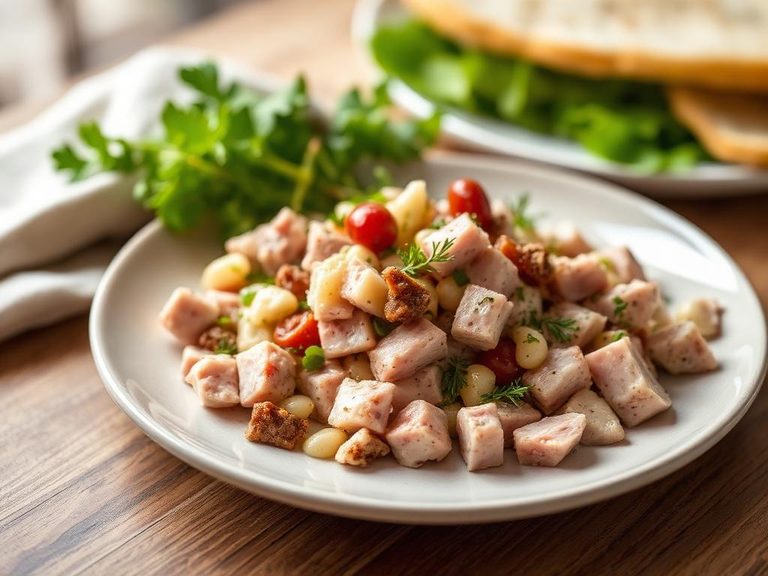
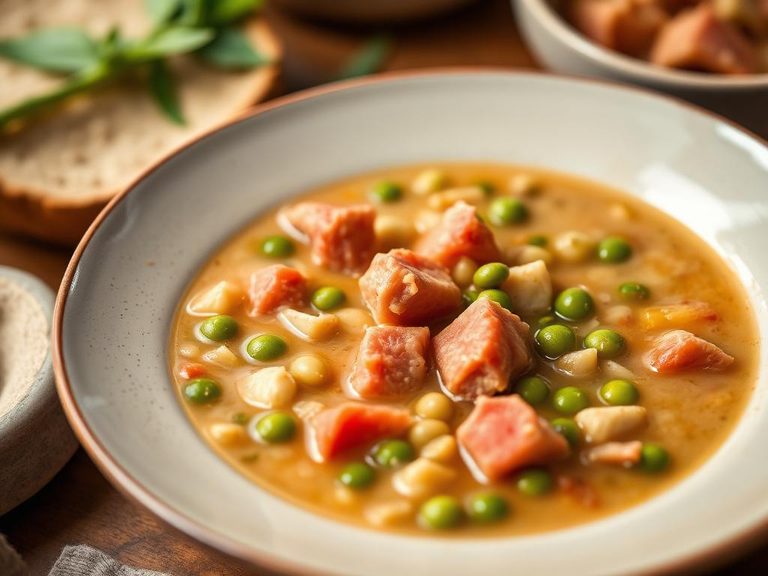

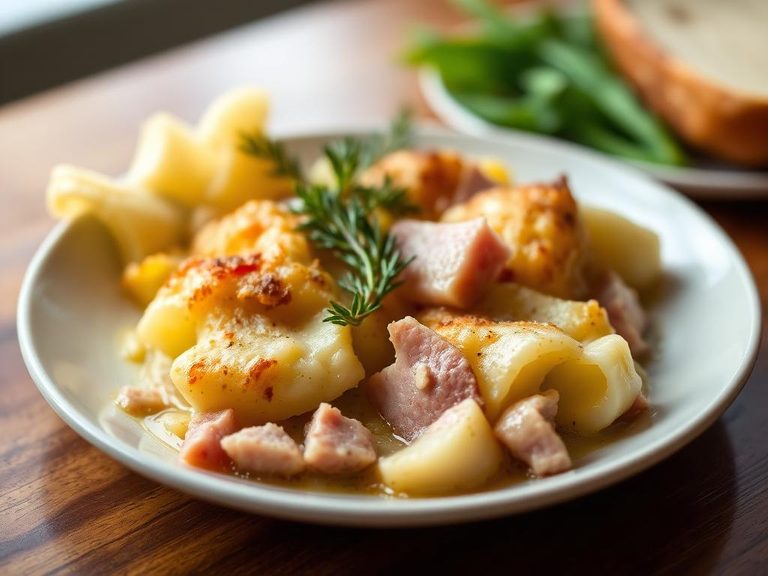


🌍 Where it's eaten
💡 Did you know?
The process of canning ham was commercialized in the 1920s, and the distinctive rectangular shape of the meat in the can comes from being pressed into the can during the cooking and sealing process.
Full nutrition (USDA data · scales with serving)
| Water | 71.1 g |
| Energy | 144 kcal |
| Energy | 602 kj |
| Protein | 18.0 g |
| Total lipid (fat) | 7.5 g |
| Ash | 3.6 g |
| Carbohydrate, by difference | 0.00 g |
| Fiber, total dietary | 0.00 g |
| Total Sugars | 0.00 g |
| Calcium, Ca | 6.0 mg |
| Iron, Fe | 0.90 mg |
| Magnesium, Mg | 16.0 mg |
| Phosphorus, P | 207 mg |
| Potassium, K | 334 mg |
| Sodium, Na | 1276 mg |
| Zinc, Zn | 1.8 mg |
| Copper, Cu | 0.08 mg |
| Manganese, Mn | 0.02 mg |
| Selenium, Se | 22.1 ug |
| Vitamin C, total ascorbic acid | 0.00 mg |
| Thiamin | 0.88 mg |
| Riboflavin | 0.23 mg |
| Niacin | 4.6 mg |
| Pantothenic acid | 0.46 mg |
| Vitamin B-6 | 0.46 mg |
| Folate, total | 6.0 ug |
| Folic acid | 0.00 ug |
| Folate, food | 6.0 ug |
| Folate, DFE | 6.0 ug |
| Choline, total | 68.7 mg |
| Betaine | 4.5 mg |
| Vitamin B-12 | 0.80 ug |
| Vitamin B-12, added | 0.00 ug |
| Vitamin A, RAE | 0.00 ug |
| Retinol | 0.00 ug |
| Carotene, beta | 0.00 ug |
| Carotene, alpha | 0.00 ug |
| Cryptoxanthin, beta | 0.00 ug |
| Vitamin A, IU | 0.00 iu |
| Lycopene | 0.00 ug |
| Lutein + zeaxanthin | 0.00 ug |
| Vitamin E (alpha-tocopherol) | 0.19 mg |
| Vitamin E, added | 0.00 mg |
| Vitamin D (D2 + D3), International Units | 22.0 iu |
| Vitamin D (D2 + D3) | 0.60 ug |
| Vitamin D3 (cholecalciferol) | 0.60 ug |
| Vitamin K (phylloquinone) | 0.00 ug |
| Vitamin K (Dihydrophylloquinone) | 0.00 ug |
| Alcohol, ethyl | 0.00 g |
| Caffeine | 0.00 mg |
| Theobromine | 0.00 mg |
Fat & fatty acid profile (per 100g)
| Fatty acids, total saturated | 2.5 g |
| SFA 4:0 | 0.00 g |
| SFA 6:0 | 0.00 g |
| SFA 8:0 | 0.00 g |
| SFA 10:0 | 0.02 g |
| SFA 12:0 | 0.01 g |
| SFA 14:0 | 0.05 g |
| SFA 16:0 | 1.6 g |
| SFA 18:0 | 0.76 g |
| Fatty acids, total monounsaturated | 3.6 g |
| MUFA 16:1 | 0.29 g |
| MUFA 18:1 | 3.3 g |
| MUFA 20:1 | 0.00 g |
| MUFA 22:1 | 0.00 g |
| Fatty acids, total polyunsaturated | 0.76 g |
| PUFA 18:2 | 0.68 g |
| PUFA 18:3 | 0.08 g |
| PUFA 18:4 | 0.00 g |
| PUFA 20:4 | 0.00 g |
| PUFA 20:5 n-3 (EPA) | 0.00 g |
| PUFA 22:5 n-3 (DPA) | 0.00 g |
| PUFA 22:6 n-3 (DHA) | 0.00 g |
| Cholesterol | 38.0 mg |
| Phytosterols | 0.00 mg |
Amino acid profile (per 100g)
| Tryptophan | 0.20 g |
| Threonine | 0.80 g |
| Isoleucine | 0.77 g |
| Leucine | 1.4 g |
| Lysine | 1.5 g |
| Methionine | 0.47 g |
| Cystine | 0.21 g |
| Phenylalanine | 0.69 g |
| Tyrosine | 0.59 g |
| Valine | 0.81 g |
| Arginine | 1.1 g |
| Histidine | 0.71 g |
| Alanine | 1.0 g |
| Aspartic acid | 1.7 g |
| Glutamic acid | 2.7 g |
| Glycine | 0.88 g |
| Proline | 0.76 g |
| Serine | 0.70 g |
FAQ
Is canned ham pre-cooked?
Yes, canned ham is fully cooked during the canning process. It is safe to eat directly from the can, though many prefer to heat it for flavor and texture.
How long does it last after opening?
Once opened, transfer any unused portion to an airtight container and consume it within 3-5 days.
Can I freeze leftovers?
Yes, you can freeze sliced or diced canned ham for up to 1-2 months. Thaw in the refrigerator before use.
Nutrient density (calculated · NRF9.3)
Nutrient Rich Foods index: beneficial nutrients (protein, fiber, vitamins, minerals) minus saturated fat, added sugar & sodium, per 100 kcal.
NRF9.3 index — Fulgoni, Keast & Drewnowski, 2009. Computed from USDA nutrients.
Weight-loss friendliness (composite index)
Energy density 1.44 kcal/g · 50% calories from protein · 0.0 g fiber · 0.0 g sugar per 100 g.
Composite of energy density (Rolls et al., 1999), protein & fiber satiety, minus sugar. A calculated heuristic — ranks satiety-per-calorie, not a clinical measure.
Dietary load (calculated from USDA values)
Potential renal acid load. Positive = acid-forming, negative = alkaline-forming.
Sodium-to-potassium ratio: 3.82 (lower is better — aim for ≤ 1)
Sodium:potassium per WHO potassium guidance. Computed from USDA nutrients.