

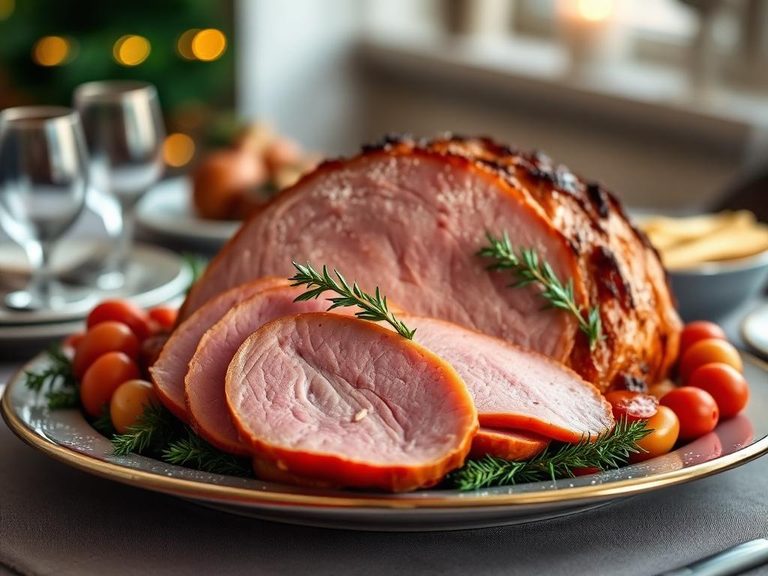
Pork, cured, ham, boneless, regular (approximately 11% fat), roasted
Whole food · Pork Products
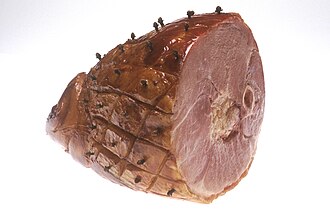
Photo: Wikipedia
This is a lean, savory cut of roasted pork ham, prized for its smooth, tender texture and deep, smoky-salty flavor. With virtually no carbohydrates and a high protein content, it's a powerhouse for muscle maintenance and satiety. Its uniform, boneless shape makes it ideal for precise slicing and elegant presentation.
Calorie split: 53% protein · 0% carbs · 47% fat
↓ Full nutrition💚 Why it's loved
People adore it for its perfect balance of savory, smoky, and slightly sweet flavors that are deeply satisfying. Its versatility allows it to shine in everything from a simple sandwich to a sophisticated holiday centerpiece.
⚠️ Watch-outs & how to enjoy it better
The primary concern is its high sodium content from the curing process, which can be an issue for blood pressure management. To counteract this, pair it with potassium-rich foods like steamed leafy greens or a fresh salad, and be mindful of portion sizes. It may also contain nitrates/nitrites as preservatives.
Key benefits
- Excellent source of complete protein (22.6g per 100g).
- Virtually zero carbohydrates and sugar.
- Provides essential B vitamins like thiamine (B1) and niacin (B3).
- Contains minerals such as zinc, phosphorus, and selenium.
- Convenient, pre-cooked protein for quick meal assembly.
🍽️ Popular dishes
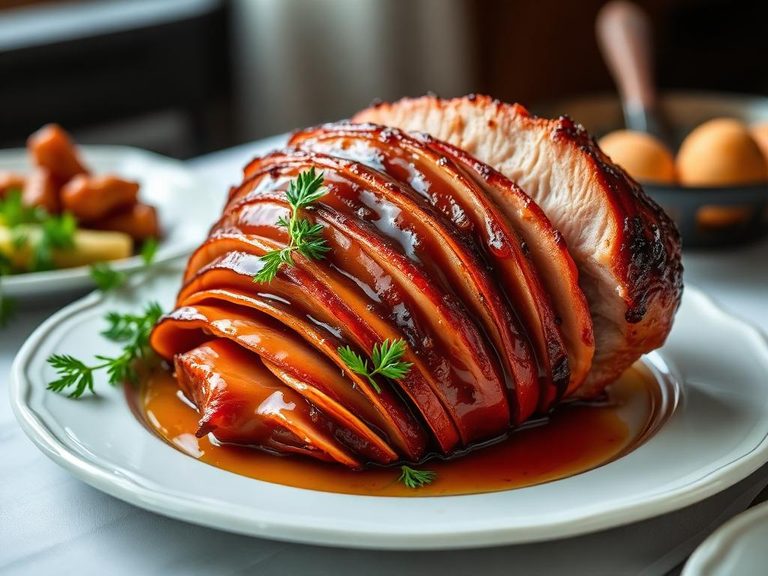

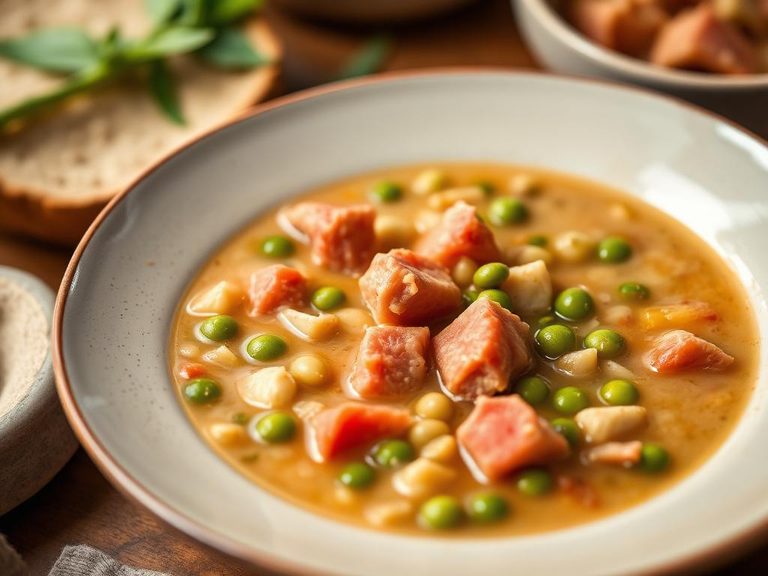

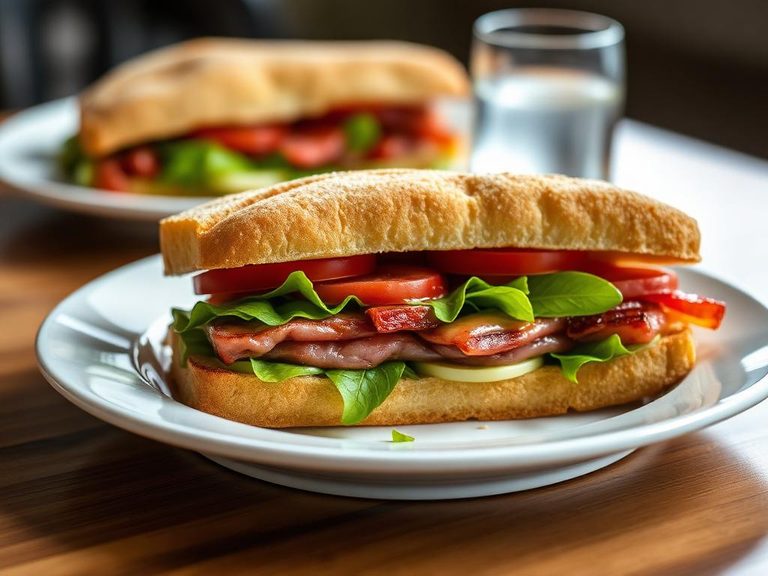
🌍 Where it's eaten
💡 Did you know?
The tradition of glazing ham with a sweet coating, like honey or pineapple, originated as a practical method to balance the intense saltiness of the cure and to create a flavorful, caramelized crust.
Full nutrition (USDA data · scales with serving)
| Water | 64.5 g |
| Energy | 178 kcal |
| Energy | 745 kj |
| Protein | 22.6 g |
| Total lipid (fat) | 9.0 g |
| Ash | 4.0 g |
| Carbohydrate, by difference | 0.00 g |
| Fiber, total dietary | 0.00 g |
| Total Sugars | 0.00 g |
| Calcium, Ca | 8.0 mg |
| Iron, Fe | 1.3 mg |
| Magnesium, Mg | 22.0 mg |
| Phosphorus, P | 281 mg |
| Potassium, K | 409 mg |
| Sodium, Na | 1500 mg |
| Zinc, Zn | 2.5 mg |
| Copper, Cu | 0.14 mg |
| Manganese, Mn | 0.04 mg |
| Selenium, Se | 19.8 ug |
| Vitamin C, total ascorbic acid | 0.00 mg |
| Thiamin | 0.73 mg |
| Riboflavin | 0.33 mg |
| Niacin | 6.2 mg |
| Pantothenic acid | 0.72 mg |
| Vitamin B-6 | 0.31 mg |
| Folate, total | 3.0 ug |
| Folic acid | 0.00 ug |
| Folate, food | 3.0 ug |
| Folate, DFE | 3.0 ug |
| Choline, total | 88.4 mg |
| Betaine | 5.9 mg |
| Vitamin B-12 | 0.70 ug |
| Vitamin B-12, added | 0.00 ug |
| Vitamin A, RAE | 0.00 ug |
| Retinol | 0.00 ug |
| Carotene, beta | 0.00 ug |
| Carotene, alpha | 0.00 ug |
| Cryptoxanthin, beta | 0.00 ug |
| Vitamin A, IU | 0.00 iu |
| Lycopene | 0.00 ug |
| Lutein + zeaxanthin | 0.00 ug |
| Vitamin E (alpha-tocopherol) | 0.31 mg |
| Vitamin E, added | 0.00 mg |
| Vitamin D (D2 + D3), International Units | 32.0 iu |
| Vitamin D (D2 + D3) | 0.80 ug |
| Vitamin D3 (cholecalciferol) | 0.80 ug |
| Vitamin K (phylloquinone) | 0.00 ug |
| Vitamin K (Dihydrophylloquinone) | 0.00 ug |
| Alcohol, ethyl | 0.00 g |
| Caffeine | 0.00 mg |
| Theobromine | 0.00 mg |
Fat & fatty acid profile (per 100g)
| Fatty acids, total saturated | 3.1 g |
| SFA 4:0 | 0.00 g |
| SFA 6:0 | 0.00 g |
| SFA 8:0 | 0.00 g |
| SFA 10:0 | 0.03 g |
| SFA 12:0 | 0.02 g |
| SFA 14:0 | 0.15 g |
| SFA 16:0 | 1.9 g |
| SFA 18:0 | 1.1 g |
| Fatty acids, total monounsaturated | 4.4 g |
| MUFA 16:1 | 0.45 g |
| MUFA 18:1 | 4.0 g |
| MUFA 20:1 | 0.00 g |
| MUFA 22:1 | 0.00 g |
| Fatty acids, total polyunsaturated | 1.4 g |
| PUFA 18:2 | 1.2 g |
| PUFA 18:3 | 0.24 g |
| PUFA 18:4 | 0.00 g |
| PUFA 20:4 | 0.00 g |
| PUFA 20:5 n-3 (EPA) | 0.00 g |
| PUFA 22:5 n-3 (DPA) | 0.00 g |
| PUFA 22:6 n-3 (DHA) | 0.00 g |
| Cholesterol | 59.0 mg |
| Phytosterols | 0.00 mg |
Amino acid profile (per 100g)
| Tryptophan | 0.24 g |
| Threonine | 0.88 g |
| Isoleucine | 0.87 g |
| Leucine | 1.6 g |
| Lysine | 1.7 g |
| Methionine | 0.52 g |
| Cystine | 0.30 g |
| Phenylalanine | 0.86 g |
| Tyrosine | 0.65 g |
| Valine | 0.86 g |
| Arginine | 1.3 g |
| Histidine | 0.71 g |
| Alanine | 1.2 g |
| Aspartic acid | 1.9 g |
| Glutamic acid | 3.2 g |
| Glycine | 1.0 g |
| Proline | 0.85 g |
| Serine | 0.81 g |
FAQ
Is this the same as fresh pork loin?
No. This is a cured and roasted product, meaning it has been treated with salt and often other seasonings or preservatives before cooking. Fresh pork loin is unprocessed and will have a different flavor, texture, and much lower sodium content.
How should I store leftover roasted ham?
Wrap tightly in plastic wrap or store in an airtight container in the refrigerator for up to 5-7 days. For longer storage, slice and freeze in freezer-safe bags for up to 1-2 months.
Can I use this ham in a recipe that calls for 'fresh ham'?
It's not a direct substitute. Using this pre-cooked, salty ham in a recipe designed for fresh, raw ham will result in an over-seasoned dish and a completely different texture. It's best used in recipes that call for 'cooked ham' or 'cured ham'.
Nutrient density (calculated · NRF9.3)
Nutrient Rich Foods index: beneficial nutrients (protein, fiber, vitamins, minerals) minus saturated fat, added sugar & sodium, per 100 kcal.
NRF9.3 index — Fulgoni, Keast & Drewnowski, 2009. Computed from USDA nutrients.
Weight-loss friendliness (composite index)
Energy density 1.78 kcal/g · 51% calories from protein · 0.0 g fiber · 0.0 g sugar per 100 g.
Composite of energy density (Rolls et al., 1999), protein & fiber satiety, minus sugar. A calculated heuristic — ranks satiety-per-calorie, not a clinical measure.
Dietary load (calculated from USDA values)
Potential renal acid load. Positive = acid-forming, negative = alkaline-forming.
Sodium-to-potassium ratio: 3.67 (lower is better — aim for ≤ 1)
Sodium:potassium per WHO potassium guidance. Computed from USDA nutrients.