

Pineapple juice, canned or bottled, unsweetened, without added ascorbic acid
Whole food · Fruits and Fruit Juices

Photo: Wikipedia
This is the golden, nectar-like juice extracted from ripe pineapple, preserved without sweeteners or vitamin C additives. It delivers a vibrant, tangy-sweet flavor with a smooth, slightly pulpy texture. Nutritionally, it's a light, hydrating source of quick energy from its natural sugars.
Calorie split: 3% protein · 95% carbs · 2% fat
↓ Full nutrition💚 Why it's loved
People adore its bright, tropical punch that instantly evokes sunshine and relaxation. It's incredibly versatile, serving as a standalone refreshment, a cocktail mixer, or a base for marinades and sauces.
⚠️ Watch-outs & how to enjoy it better
The high natural sugar content (nearly 10g per 100g) can cause blood-sugar spikes, especially for those with diabetes. The acidity may also aggravate acid reflux or mouth sores in some individuals. To counteract sugar spikes, pair it with a source of protein or fat (like nuts or yogurt) and practice portion control. Diluting it with sparkling water can reduce both sugar and acid intensity.
Key benefits
- Good source of manganese, essential for bone health and metabolism.
- Contains bromelain, an enzyme that may aid protein digestion.
- Provides vitamin C, supporting immune function.
- Low in fat and sodium, making it a heart-healthy beverage choice.
- Offers quick, natural carbohydrates for energy.
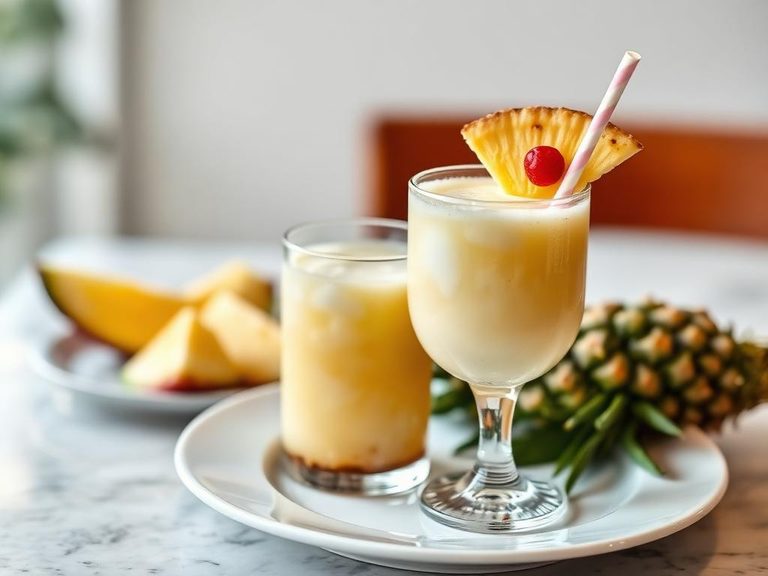
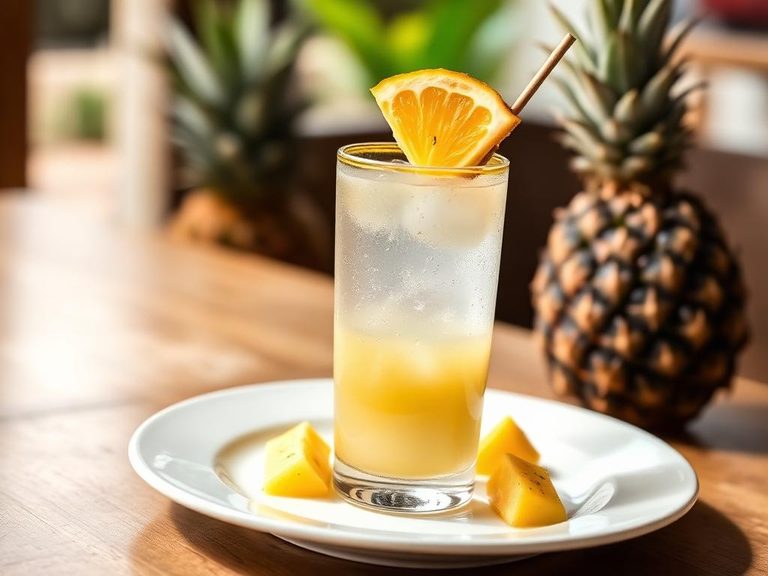
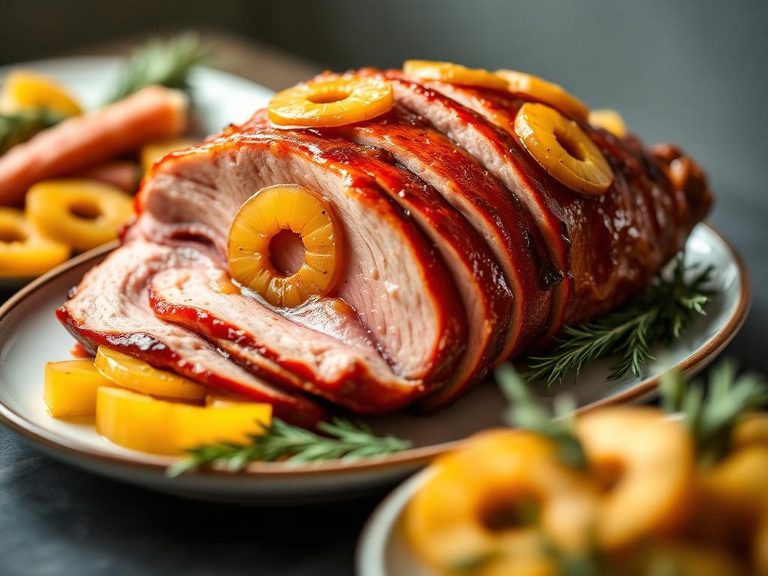
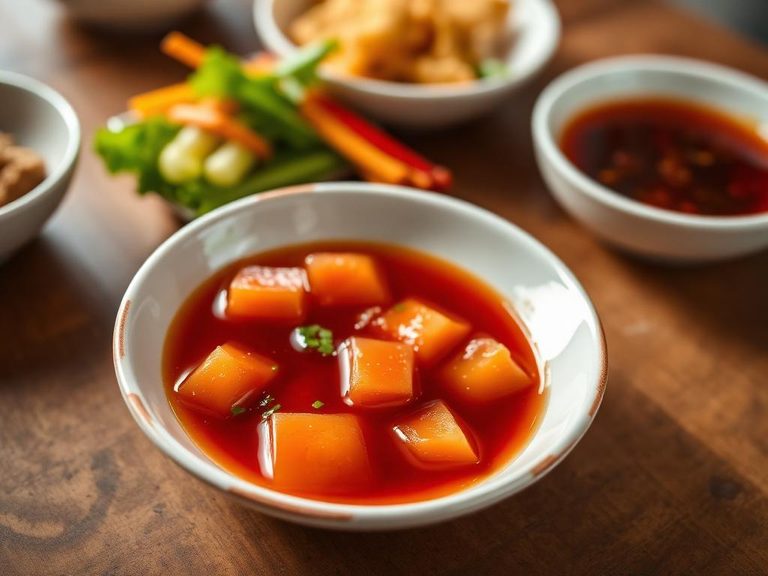
🍽️ Popular dishes
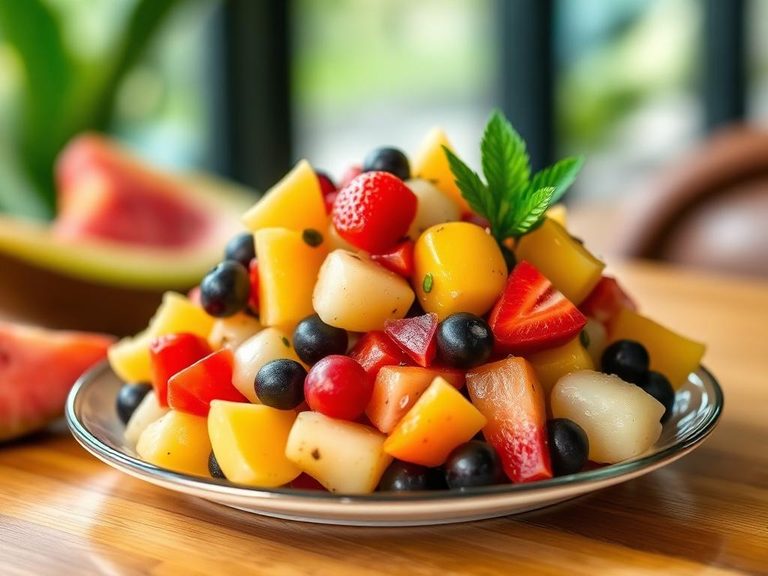
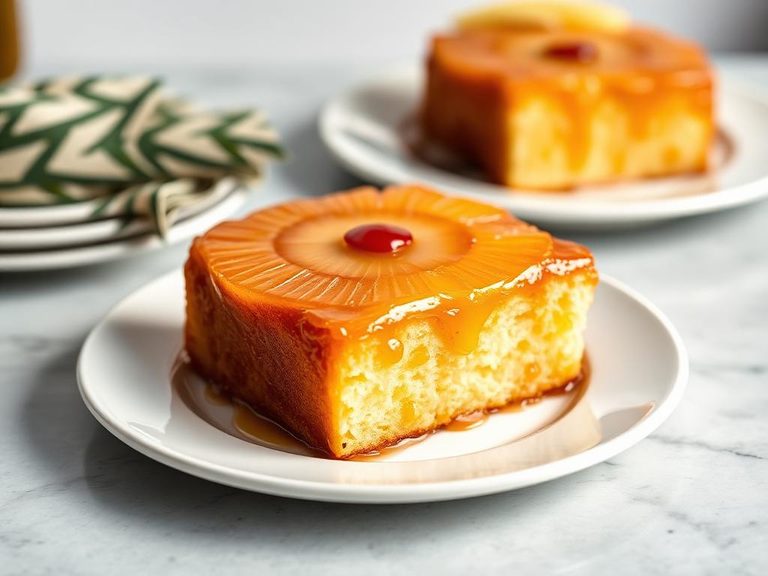
🌍 Where it's eaten
💡 Did you know?
The bromelain enzyme in pineapple juice is so potent that it's used as a meat tenderizer, and it can prevent gelatin from setting, which is why you can't make jelly with fresh pineapple.
Full nutrition (USDA data · scales with serving)
| Water | 86.4 g |
| Energy | 53.0 kcal |
| Energy | 220 kj |
| Protein | 0.36 g |
| Total lipid (fat) | 0.12 g |
| Ash | 0.28 g |
| Carbohydrate, by difference | 12.9 g |
| Fiber, total dietary | 0.20 g |
| Total Sugars | 10.0 g |
| Sucrose | 1.5 g |
| Glucose | 4.7 g |
| Fructose | 3.8 g |
| Lactose | 0.00 g |
| Maltose | 0.00 g |
| Galactose | 0.00 g |
| Calcium, Ca | 13.0 mg |
| Iron, Fe | 0.31 mg |
| Magnesium, Mg | 12.0 mg |
| Phosphorus, P | 8.0 mg |
| Potassium, K | 130 mg |
| Sodium, Na | 2.0 mg |
| Zinc, Zn | 0.11 mg |
| Copper, Cu | 0.07 mg |
| Manganese, Mn | 0.50 mg |
| Selenium, Se | 0.10 ug |
| Vitamin C, total ascorbic acid | 10.0 mg |
| Thiamin | 0.06 mg |
| Riboflavin | 0.02 mg |
| Niacin | 0.20 mg |
| Pantothenic acid | 0.06 mg |
| Vitamin B-6 | 0.10 mg |
| Folate, total | 18.0 ug |
| Folic acid | 0.00 ug |
| Folate, food | 18.0 ug |
| Folate, DFE | 18.0 ug |
| Choline, total | 3.3 mg |
| Vitamin B-12 | 0.00 ug |
| Vitamin B-12, added | 0.00 ug |
| Vitamin A, RAE | 0.00 ug |
| Retinol | 0.00 ug |
| Carotene, beta | 3.0 ug |
| Carotene, alpha | 0.00 ug |
| Cryptoxanthin, beta | 0.00 ug |
| Vitamin A, IU | 5.0 iu |
| Lycopene | 0.00 ug |
| Lutein + zeaxanthin | 0.00 ug |
| Vitamin E (alpha-tocopherol) | 0.02 mg |
| Vitamin E, added | 0.00 mg |
| Vitamin D (D2 + D3), International Units | 0.00 iu |
| Vitamin D (D2 + D3) | 0.00 ug |
| Vitamin K (phylloquinone) | 0.30 ug |
| Alcohol, ethyl | 0.00 g |
| Caffeine | 0.00 mg |
| Theobromine | 0.00 mg |
Fat & fatty acid profile (per 100g)
| Fatty acids, total saturated | 0.01 g |
| SFA 4:0 | 0.00 g |
| SFA 6:0 | 0.00 g |
| SFA 8:0 | 0.00 g |
| SFA 10:0 | 0.00 g |
| SFA 12:0 | 0.00 g |
| SFA 14:0 | 0.00 g |
| SFA 16:0 | 0.01 g |
| SFA 18:0 | 0.00 g |
| Fatty acids, total monounsaturated | 0.01 g |
| MUFA 16:1 | 0.00 g |
| MUFA 18:1 | 0.01 g |
| MUFA 20:1 | 0.00 g |
| MUFA 22:1 | 0.00 g |
| Fatty acids, total polyunsaturated | 0.04 g |
| PUFA 18:2 | 0.02 g |
| PUFA 18:3 | 0.02 g |
| PUFA 18:4 | 0.00 g |
| PUFA 20:4 | 0.00 g |
| PUFA 20:5 n-3 (EPA) | 0.00 g |
| PUFA 22:5 n-3 (DPA) | 0.00 g |
| PUFA 22:6 n-3 (DHA) | 0.00 g |
| Fatty acids, total trans | 0.00 g |
| Cholesterol | 0.00 mg |
Amino acid profile (per 100g)
Estimated from Pineapple, canned, juice pack, solids and liquids — USDA does not publish this profile for Pineapple juice.
| Tryptophan | 0.01 g |
| Threonine | 0.01 g |
| Isoleucine | 0.01 g |
| Leucine | 0.02 g |
| Lysine | 0.02 g |
| Methionine | 0.01 g |
| Cystine | 0.00 g |
| Phenylalanine | 0.01 g |
| Tyrosine | 0.01 g |
| Valine | 0.01 g |
| Arginine | 0.01 g |
| Histidine | 0.01 g |
| Alanine | 0.02 g |
| Aspartic acid | 0.10 g |
| Glutamic acid | 0.05 g |
| Glycine | 0.02 g |
| Proline | 0.01 g |
| Serine | 0.02 g |
FAQ
Is canned pineapple juice as healthy as fresh?
It retains most vitamins and minerals but may have slightly less vitamin C due to heat processing. The key difference is often the absence of the fresh, frothy texture and some volatile flavor compounds.
Why does my mouth feel weird after drinking it?
That's the bromelain enzyme gently exfoliating the delicate skin inside your mouth. It's harmless and temporary, though some people find it irritating.
Can I use it in cooking beyond drinks?
Absolutely! It's a fantastic tenderizer for meats in marinades, a sweetener in glazes, and a key ingredient in both savory sauces (like sweet and sour) and desserts.
Nutrient density (calculated · NRF9.3)
Nutrient Rich Foods index: beneficial nutrients (protein, fiber, vitamins, minerals) minus saturated fat, added sugar & sodium, per 100 kcal.
NRF9.3 index — Fulgoni, Keast & Drewnowski, 2009. Computed from USDA nutrients.
Weight-loss friendliness (composite index)
Energy density 0.53 kcal/g · 3% calories from protein · 0.2 g fiber · 10.0 g sugar per 100 g.
Composite of energy density (Rolls et al., 1999), protein & fiber satiety, minus sugar. A calculated heuristic — ranks satiety-per-calorie, not a clinical measure.
Dietary load (calculated from USDA values)
Potential renal acid load. Positive = acid-forming, negative = alkaline-forming.
Sodium-to-potassium ratio: 0.02 (lower is better — aim for ≤ 1)
Sodium:potassium per WHO potassium guidance. Computed from USDA nutrients.