

Pickles, cucumber, sour
Whole food · Vegetables and Vegetable Products
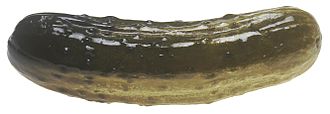
Photo: Wikipedia
Sour pickles are cucumbers transformed by brine or vinegar into crisp, tangy bites with a satisfying crunch. Their bright, acidic punch is low in calories (11 kcal per 100g) but high in flavor, offering a small boost of fiber (1.2g) with virtually no fat.
Calorie split: 11% protein · 74% carbs · 15% fat
↓ Full nutrition💚 Why it's loved
People love them for their sharp, palate-cleansing tang that cuts through rich or fatty foods, making them a classic sandwich or burger companion. Their versatility as a snack, garnish, or ingredient in salads and relishes is also a huge draw.
⚠️ Watch-outs & how to enjoy it better
The primary downside is high sodium content from the brine, which can be a concern for blood pressure. They are also very acidic, which may trigger heartburn in some individuals. Tip: Rinse slices under water to reduce sodium, and consume in moderation if sensitive to acid.
Key benefits
- Adds intense flavor with minimal calories
- Source of dietary fiber
- Contains some probiotics if traditionally fermented
- Provides a satisfying crunch for texture contrast
- Low in fat and sugar
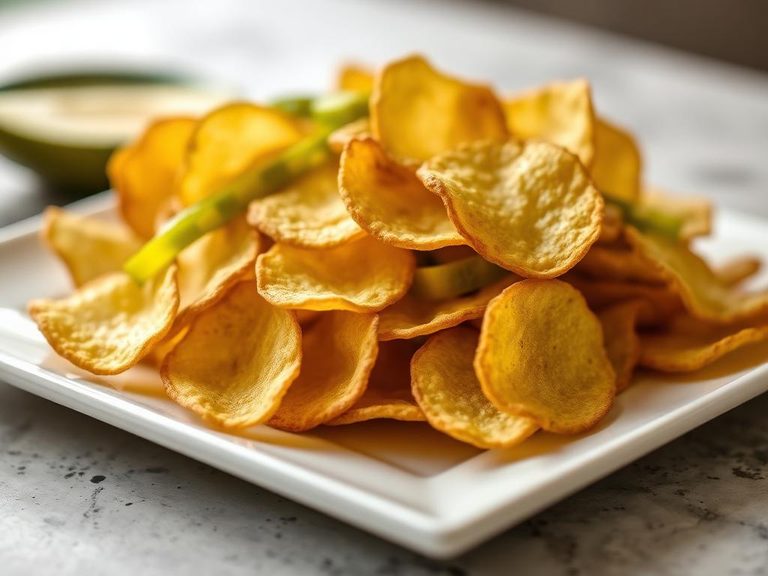
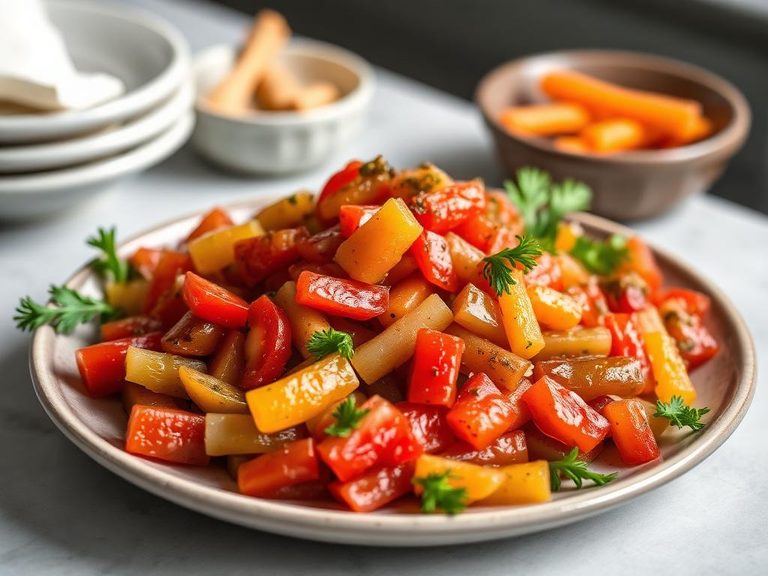
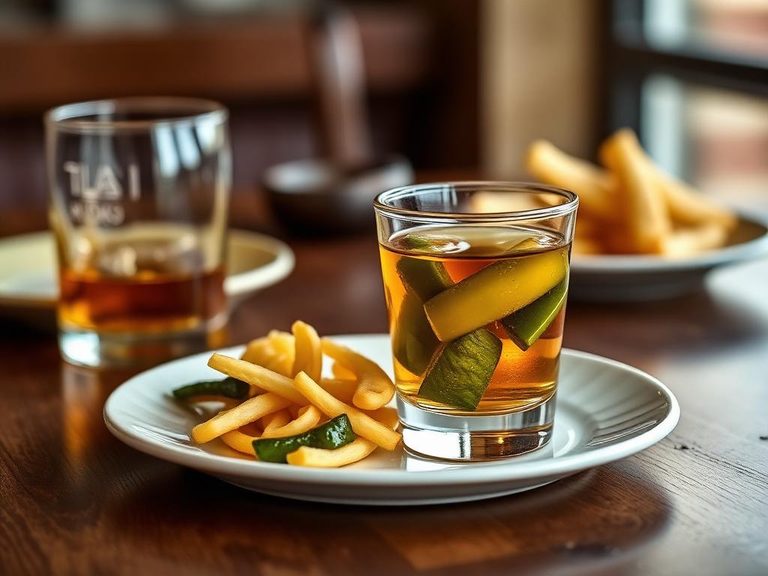
🍽️ Popular dishes
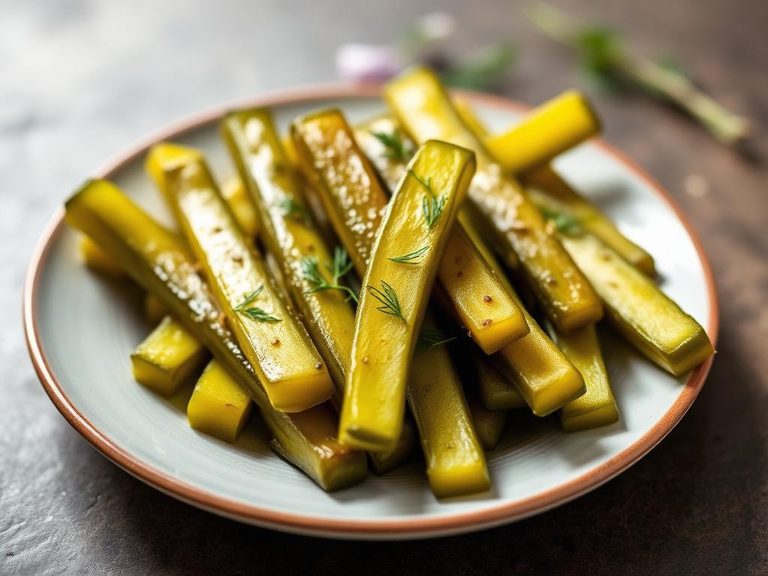
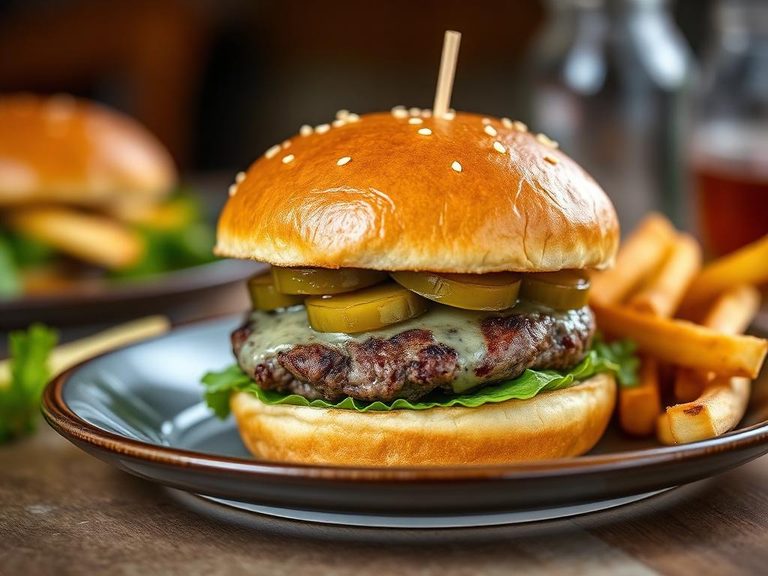
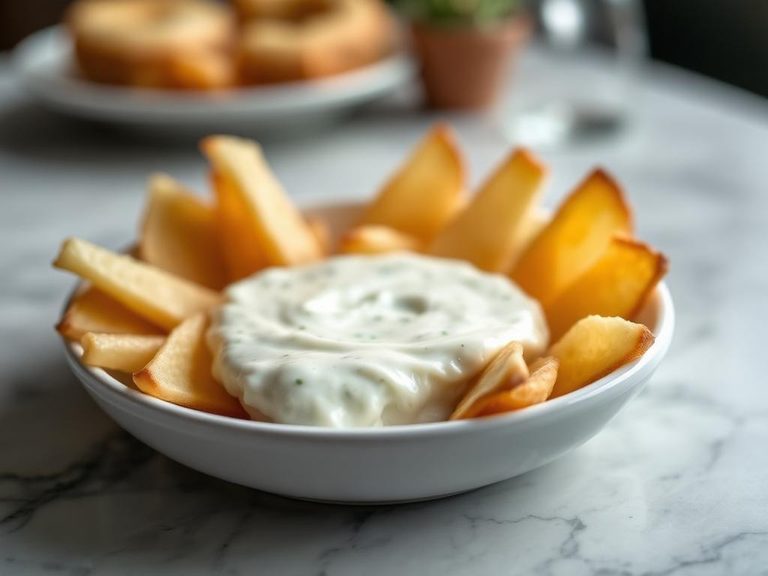
🌍 Where it's eaten
💡 Did you know?
The phrase 'in a pickle' meaning to be in a difficult situation was popularized by Shakespeare, but cucumbers have actually been pickled for over 4,000 years.
Full nutrition (USDA data · scales with serving)
| Water | 94.1 g |
| Energy | 11.0 kcal |
| Energy | 44.0 kj |
| Protein | 0.33 g |
| Total lipid (fat) | 0.20 g |
| Ash | 3.1 g |
| Carbohydrate, by difference | 2.3 g |
| Fiber, total dietary | 1.2 g |
| Total Sugars | 1.1 g |
| Calcium, Ca | 0.00 mg |
| Iron, Fe | 0.40 mg |
| Magnesium, Mg | 4.0 mg |
| Phosphorus, P | 14.0 mg |
| Potassium, K | 23.0 mg |
| Sodium, Na | 1208 mg |
| Zinc, Zn | 0.02 mg |
| Copper, Cu | 0.09 mg |
| Manganese, Mn | 0.01 mg |
| Selenium, Se | 0.00 ug |
| Vitamin C, total ascorbic acid | 1.0 mg |
| Thiamin | 0.00 mg |
| Riboflavin | 0.01 mg |
| Niacin | 0.00 mg |
| Pantothenic acid | 0.04 mg |
| Vitamin B-6 | 0.01 mg |
| Folate, total | 1.0 ug |
| Folic acid | 0.00 ug |
| Folate, food | 1.0 ug |
| Folate, DFE | 1.0 ug |
| Choline, total | 3.6 mg |
| Betaine | 0.00 mg |
| Vitamin B-12 | 0.00 ug |
| Vitamin B-12, added | 0.00 ug |
| Vitamin A, RAE | 10.0 ug |
| Retinol | 0.00 ug |
| Carotene, beta | 81.0 ug |
| Carotene, alpha | 20.0 ug |
| Cryptoxanthin, beta | 47.0 ug |
| Vitamin A, IU | 191 iu |
| Lycopene | 0.00 ug |
| Lutein + zeaxanthin | 43.0 ug |
| Vitamin E (alpha-tocopherol) | 0.09 mg |
| Vitamin E, added | 0.00 mg |
| Vitamin D (D2 + D3), International Units | 0.00 iu |
| Vitamin D (D2 + D3) | 0.00 ug |
| Vitamin K (phylloquinone) | 47.0 ug |
| Alcohol, ethyl | 0.00 g |
| Caffeine | 0.00 mg |
| Theobromine | 0.00 mg |
Fat & fatty acid profile (per 100g)
| Fatty acids, total saturated | 0.05 g |
| SFA 4:0 | 0.00 g |
| SFA 6:0 | 0.00 g |
| SFA 8:0 | 0.00 g |
| SFA 10:0 | 0.00 g |
| SFA 12:0 | 0.00 g |
| SFA 14:0 | 0.00 g |
| SFA 16:0 | 0.04 g |
| SFA 18:0 | 0.01 g |
| Fatty acids, total monounsaturated | 0.00 g |
| MUFA 16:1 | 0.00 g |
| MUFA 18:1 | 0.00 g |
| MUFA 20:1 | 0.00 g |
| MUFA 22:1 | 0.00 g |
| Fatty acids, total polyunsaturated | 0.08 g |
| PUFA 18:2 | 0.03 g |
| PUFA 18:3 | 0.05 g |
| PUFA 18:4 | 0.00 g |
| PUFA 20:4 | 0.00 g |
| PUFA 20:5 n-3 (EPA) | 0.00 g |
| PUFA 22:5 n-3 (DPA) | 0.00 g |
| PUFA 22:6 n-3 (DHA) | 0.00 g |
| Fatty acids, total trans | 0.00 g |
| Cholesterol | 0.00 mg |
| Phytosterols | 14.0 mg |
Amino acid profile (per 100g)
| Tryptophan | 0.00 g |
| Threonine | 0.01 g |
| Isoleucine | 0.01 g |
| Leucine | 0.01 g |
| Lysine | 0.01 g |
| Methionine | 0.00 g |
| Cystine | 0.00 g |
| Phenylalanine | 0.01 g |
| Tyrosine | 0.01 g |
| Valine | 0.01 g |
| Arginine | 0.02 g |
| Histidine | 0.01 g |
| Alanine | 0.01 g |
| Aspartic acid | 0.02 g |
| Glutamic acid | 0.10 g |
| Glycine | 0.01 g |
| Proline | 0.01 g |
| Serine | 0.01 g |
FAQ
Are sour pickles the same as dill pickles?
Not exactly. 'Sour' refers to the tangy taste from fermentation or vinegar, while 'dill' specifies the herb used. Most dill pickles are sour, but not all sour pickles are dill.
Do fermented pickles have probiotics?
Yes, traditionally fermented pickles (in brine, not vinegar) contain live, gut-friendly bacteria. Look for them in the refrigerated section, not the shelf-stable aisle.
Can I eat pickles on a low-carb diet?
Generally yes. With only 2.26g of carbs per 100g and 1g of sugar, they are a very low-carb, keto-friendly snack.
Nutrient density (calculated · NRF9.3)
Nutrient Rich Foods index: beneficial nutrients (protein, fiber, vitamins, minerals) minus saturated fat, added sugar & sodium, per 100 kcal.
NRF9.3 index — Fulgoni, Keast & Drewnowski, 2009. Computed from USDA nutrients.
Weight-loss friendliness (composite index)
Energy density 0.11 kcal/g · 12% calories from protein · 1.2 g fiber · 1.1 g sugar per 100 g.
Composite of energy density (Rolls et al., 1999), protein & fiber satiety, minus sugar. A calculated heuristic — ranks satiety-per-calorie, not a clinical measure.
Dietary load (calculated from USDA values)
Potential renal acid load. Positive = acid-forming, negative = alkaline-forming.
Sodium-to-potassium ratio: 52.52 (lower is better — aim for ≤ 1)
Sodium:potassium per WHO potassium guidance. Computed from USDA nutrients.