

Peppers, sweet, red, cooked, boiled, drained, without salt
Whole food · Vegetables and Vegetable Products

Photo: Wikipedia
Boiled and drained red bell peppers are a vibrant, tender-crisp vegetable with a naturally sweet, mild flavor and a soft, juicy texture. They are a low-calorie powerhouse, delivering a remarkable amount of vitamin C and vitamin A in a simple, no-added-salt preparation. Their bright color and gentle sweetness make them a versatile ingredient in both cooked and chilled dishes.
Calorie split: 11% protein · 83% carbs · 6% fat
↓ Full nutrition💚 Why it's loved
People love them for their vibrant color and natural sweetness, which intensifies with cooking. They are incredibly versatile, easily blending into sauces, salads, or serving as a simple, healthy side dish across many global cuisines.
⚠️ Watch-outs & how to enjoy it better
The natural sugars can contribute to blood sugar spikes if consumed in very large quantities without other macronutrients. Some individuals may experience mild digestive discomfort (like heartburn) due to their acidity. To counteract, pair with a source of protein (like chicken or beans) or healthy fat (like olive oil) to slow sugar absorption, and practice portion control if sensitive to acidic foods.
Key benefits
- Excellent source of vitamin C (over 100% DV per 100g).
- Very high in vitamin A (beta-carotene), supporting eye health.
- Low in calories and naturally fat-free.
- Provides dietary fiber for digestive health.
- Rich in antioxidants like capsanthin and quercetin.
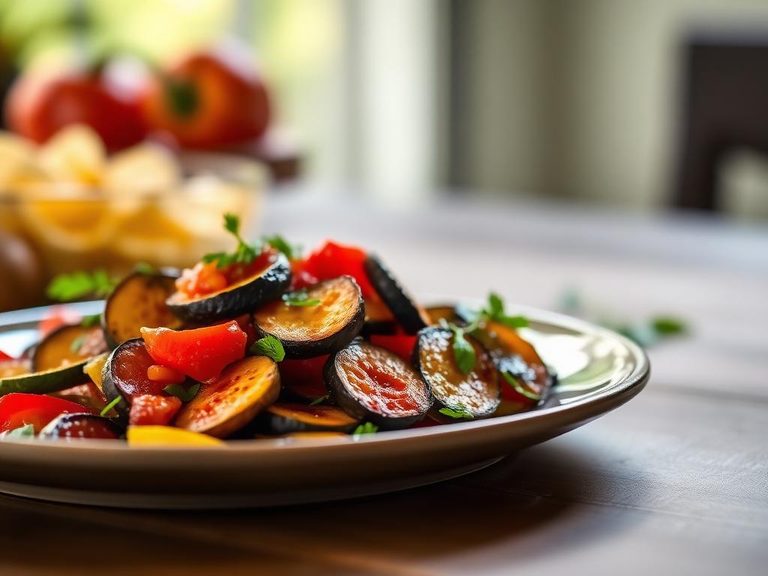
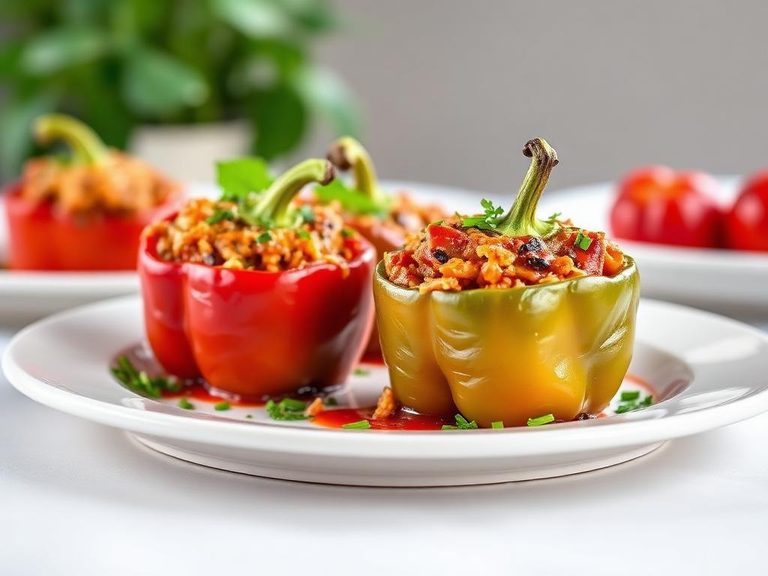
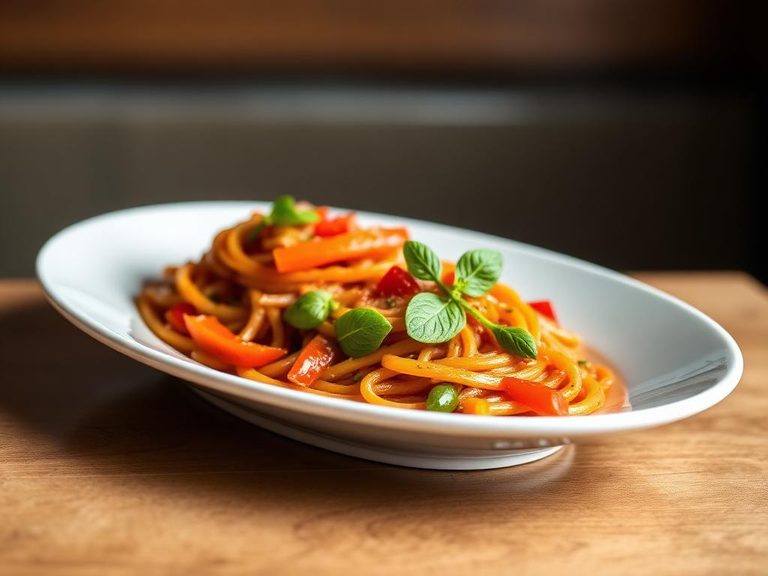
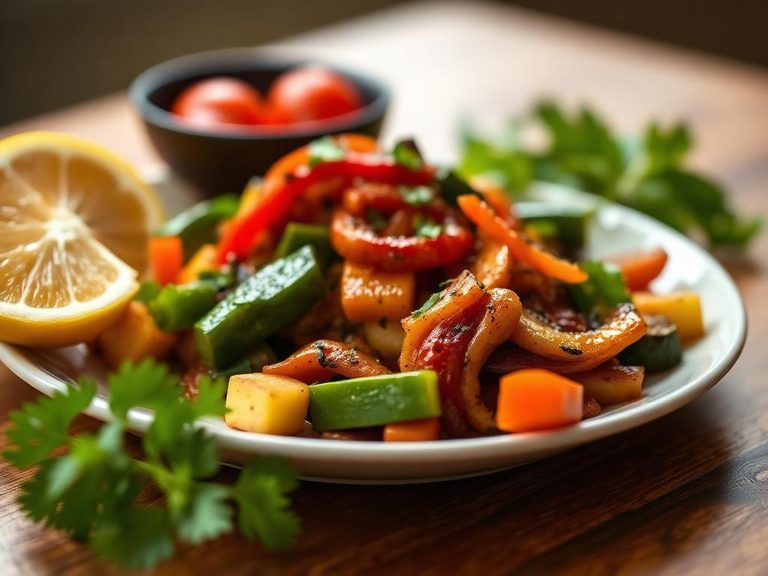
🍽️ Popular dishes
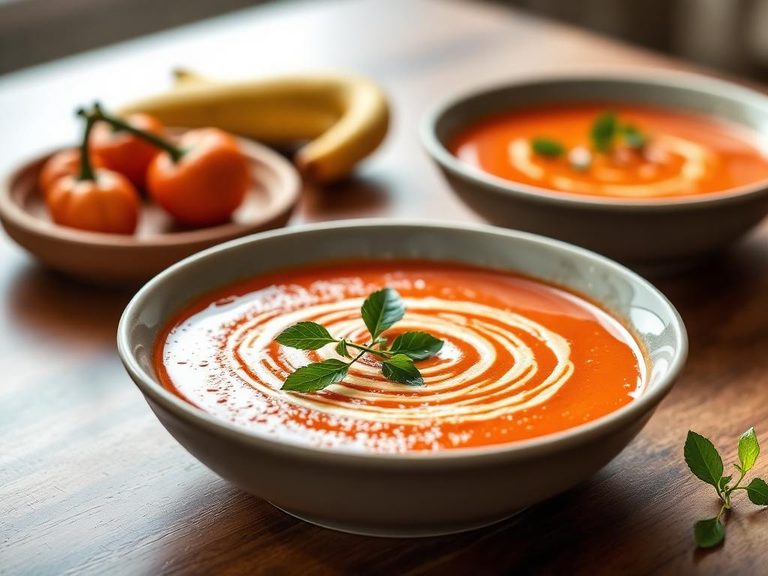
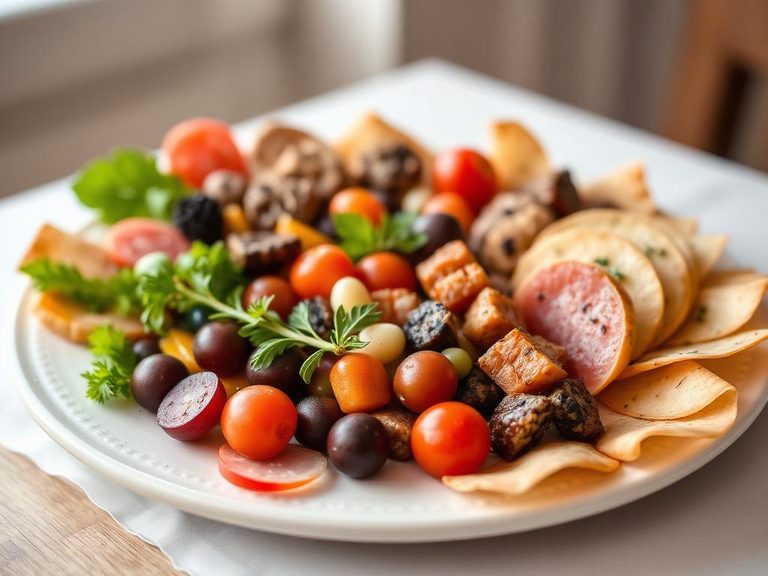
🌍 Where it's eaten
💡 Did you know?
Red bell peppers are simply green peppers that have been left on the vine to fully ripen, a process that develops their sweetness and dramatically increases their vitamin C content.
Full nutrition (USDA data · scales with serving)
| Water | 91.9 g |
| Energy | 28.0 kcal |
| Energy | 117 kj |
| Protein | 0.92 g |
| Total lipid (fat) | 0.20 g |
| Ash | 0.31 g |
| Carbohydrate, by difference | 6.7 g |
| Fiber, total dietary | 1.2 g |
| Total Sugars | 4.4 g |
| Calcium, Ca | 9.0 mg |
| Iron, Fe | 0.46 mg |
| Magnesium, Mg | 10.0 mg |
| Phosphorus, P | 18.0 mg |
| Potassium, K | 166 mg |
| Sodium, Na | 2.0 mg |
| Zinc, Zn | 0.12 mg |
| Copper, Cu | 0.07 mg |
| Manganese, Mn | 0.12 mg |
| Selenium, Se | 0.30 ug |
| Vitamin C, total ascorbic acid | 171 mg |
| Thiamin | 0.06 mg |
| Riboflavin | 0.03 mg |
| Niacin | 0.48 mg |
| Pantothenic acid | 0.08 mg |
| Vitamin B-6 | 0.23 mg |
| Folate, total | 16.0 ug |
| Folic acid | 0.00 ug |
| Folate, food | 16.0 ug |
| Folate, DFE | 16.0 ug |
| Choline, total | 5.8 mg |
| Vitamin B-12 | 0.00 ug |
| Vitamin B-12, added | 0.00 ug |
| Vitamin A, RAE | 147 ug |
| Retinol | 0.00 ug |
| Carotene, beta | 1525 ug |
| Carotene, alpha | 18.0 ug |
| Cryptoxanthin, beta | 460 ug |
| Vitamin A, IU | 2941 iu |
| Lycopene | 0.00 ug |
| Lutein + zeaxanthin | 47.0 ug |
| Vitamin E (alpha-tocopherol) | 1.6 mg |
| Vitamin E, added | 0.00 mg |
| Vitamin D (D2 + D3), International Units | 0.00 iu |
| Vitamin D (D2 + D3) | 0.00 ug |
| Vitamin K (phylloquinone) | 5.1 ug |
| Alcohol, ethyl | 0.00 g |
| Caffeine | 0.00 mg |
| Theobromine | 0.00 mg |
Fat & fatty acid profile (per 100g)
| Fatty acids, total saturated | 0.03 g |
| SFA 4:0 | 0.00 g |
| SFA 6:0 | 0.00 g |
| SFA 8:0 | 0.00 g |
| SFA 10:0 | 0.00 g |
| SFA 12:0 | 0.00 g |
| SFA 14:0 | 0.00 g |
| SFA 16:0 | 0.02 g |
| SFA 18:0 | 0.01 g |
| Fatty acids, total monounsaturated | 0.01 g |
| MUFA 16:1 | 0.00 g |
| MUFA 18:1 | 0.01 g |
| MUFA 20:1 | 0.00 g |
| MUFA 22:1 | 0.00 g |
| Fatty acids, total polyunsaturated | 0.11 g |
| PUFA 18:2 | 0.10 g |
| PUFA 18:3 | 0.01 g |
| PUFA 18:4 | 0.00 g |
| PUFA 20:4 | 0.00 g |
| PUFA 20:5 n-3 (EPA) | 0.00 g |
| PUFA 22:5 n-3 (DPA) | 0.00 g |
| PUFA 22:6 n-3 (DHA) | 0.00 g |
| Fatty acids, total trans | 0.00 g |
| Cholesterol | 0.00 mg |
| Phytosterols | 9.0 mg |
Amino acid profile (per 100g)
| Tryptophan | 0.01 g |
| Threonine | 0.03 g |
| Isoleucine | 0.03 g |
| Leucine | 0.05 g |
| Lysine | 0.04 g |
| Methionine | 0.01 g |
| Cystine | 0.02 g |
| Phenylalanine | 0.03 g |
| Tyrosine | 0.02 g |
| Valine | 0.04 g |
| Arginine | 0.04 g |
| Histidine | 0.02 g |
| Alanine | 0.04 g |
| Aspartic acid | 0.13 g |
| Glutamic acid | 0.12 g |
| Glycine | 0.03 g |
| Proline | 0.04 g |
| Serine | 0.04 g |
FAQ
Are boiled red peppers as nutritious as raw ones?
Boiling can cause some loss of water-soluble vitamins like vitamin C, but it makes other antioxidants more bioavailable. They remain highly nutritious, especially in vitamins A and C.
Why are they called 'sweet' peppers?
The term distinguishes them from hot chili peppers. They lack capsaicin, the compound that creates heat, resulting in a mild, sweet flavor profile.
Can I freeze boiled red peppers?
Yes. Drain them very well, pat dry, and freeze in a single layer on a baking sheet before transferring to a bag. They'll be perfect for future soups, stews, or sauces.
Nutrient density (calculated · NRF9.3)
Nutrient Rich Foods index: beneficial nutrients (protein, fiber, vitamins, minerals) minus saturated fat, added sugar & sodium, per 100 kcal.
NRF9.3 index — Fulgoni, Keast & Drewnowski, 2009. Computed from USDA nutrients.
Weight-loss friendliness (composite index)
Energy density 0.28 kcal/g · 13% calories from protein · 1.2 g fiber · 4.4 g sugar per 100 g.
Composite of energy density (Rolls et al., 1999), protein & fiber satiety, minus sugar. A calculated heuristic — ranks satiety-per-calorie, not a clinical measure.
Dietary load (calculated from USDA values)
Potential renal acid load. Positive = acid-forming, negative = alkaline-forming.
Sodium-to-potassium ratio: 0.01 (lower is better — aim for ≤ 1)
Sodium:potassium per WHO potassium guidance. Computed from USDA nutrients.