

Oil, industrial, palm kernel (hydrogenated), filling fat
Whole food · Fats and Oils
This is a highly refined, solid fat derived from the kernel of the palm fruit, then hydrogenated to create a stable, white, waxy substance. It has a neutral, bland taste with a smooth, melt-in-the-mouth texture, similar to vegetable shortening. Nutritionally, it is a dense source of 100% fat, providing 884 kcal per 100g with no protein, carbs, or fiber.
Calorie split: 0% protein · 0% carbs · 100% fat
↓ Full nutrition💚 Why it's loved
Food manufacturers and bakers prize it for its ability to create a consistent, solid fat structure in products like margarine, confectionery coatings, and pastries, ensuring a long shelf life and uniform texture without altering the intended flavor profile.
⚠️ Watch-outs & how to enjoy it better
It is high in saturated fat and, due to hydrogenation, may contain trans fats, which are linked to heart health concerns. It is a highly processed ingredient with minimal nutritional value. For a healthier profile, use it sparingly and balance meals with whole foods, lean proteins, and fiber-rich vegetables.
Key benefits
- High smoke point ideal for deep-frying
- Extremely shelf-stable, resists rancidity
- Provides a flaky, tender texture in baked goods
- Cost-effective for commercial food production
- Neutral flavor doesn't overpower other ingredients
🍽️ Popular dishes

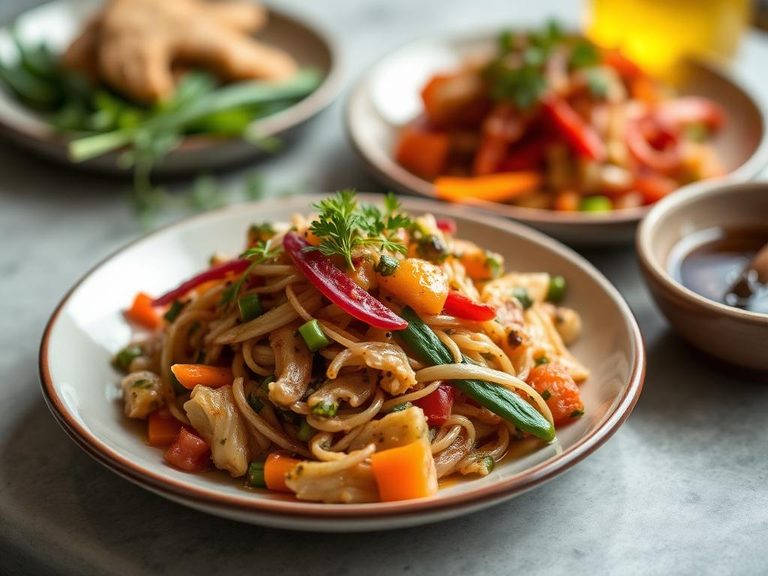

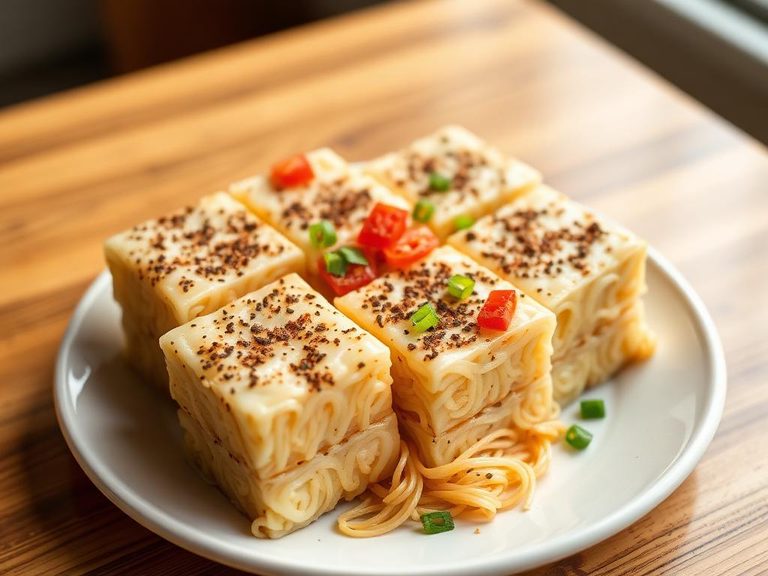
🌍 Where it's eaten
💡 Did you know?
The 'cloud point' of palm kernel oil is a critical quality metric; it determines how the fat crystallizes and is key to achieving the perfect 'snap' in chocolate coatings and the smooth melt in ice cream.
Full nutrition (USDA data · scales with serving)
| Water | 0.08 g |
| Energy | 884 kcal |
| Energy | 3699 kj |
| Protein | 0.00 g |
| Total lipid (fat) | 100 g |
| Ash | 0.01 g |
| Carbohydrate, by difference | 0.00 g |
| Fiber, total dietary | 0.00 g |
| Total Sugars | 0.00 g |
| Calcium, Ca | 2.0 mg |
| Iron, Fe | 0.15 mg |
| Magnesium, Mg | 0.00 mg |
| Phosphorus, P | 0.00 mg |
| Potassium, K | 1.0 mg |
| Sodium, Na | 6.0 mg |
| Zinc, Zn | 0.04 mg |
| Copper, Cu | 0.00 mg |
| Manganese, Mn | 0.00 mg |
| Selenium, Se | 0.00 ug |
| Vitamin C, total ascorbic acid | 0.00 mg |
| Thiamin | 0.00 mg |
| Riboflavin | 0.00 mg |
| Niacin | 0.00 mg |
| Pantothenic acid | 0.00 mg |
| Vitamin B-6 | 0.00 mg |
| Folate, total | 0.00 ug |
| Folic acid | 0.00 ug |
| Folate, food | 0.00 ug |
| Folate, DFE | 0.00 ug |
| Choline, total | 0.20 mg |
| Vitamin B-12 | 0.00 ug |
| Vitamin B-12, added | 0.00 ug |
| Vitamin A, RAE | 0.00 ug |
| Retinol | 0.00 ug |
| Carotene, beta | 0.00 ug |
| Carotene, alpha | 0.00 ug |
| Cryptoxanthin, beta | 0.00 ug |
| Vitamin A, IU | 0.00 iu |
| Lycopene | 0.00 ug |
| Lutein + zeaxanthin | 0.00 ug |
| Vitamin E (alpha-tocopherol) | 3.8 mg |
| Vitamin E, added | 0.00 mg |
| Vitamin K (phylloquinone) | 24.7 ug |
| Alcohol, ethyl | 0.00 g |
| Caffeine | 0.00 mg |
| Theobromine | 0.00 mg |
Fat & fatty acid profile (per 100g)
| Fatty acids, total saturated | 88.2 g |
| SFA 4:0 | 0.06 g |
| SFA 6:0 | 0.32 g |
| SFA 8:0 | 3.8 g |
| SFA 10:0 | 3.3 g |
| SFA 12:0 | 44.7 g |
| SFA 14:0 | 14.1 g |
| SFA 16:0 | 7.7 g |
| SFA 18:0 | 14.3 g |
| SFA 20:0 | 0.00 g |
| Fatty acids, total monounsaturated | 5.7 g |
| MUFA 16:1 | 0.00 g |
| MUFA 18:1 | 5.7 g |
| MUFA 18:1 c | 1.0 g |
| MUFA 20:1 | 0.00 g |
| MUFA 22:1 | 0.00 g |
| Fatty acids, total polyunsaturated | 0.00 g |
| PUFA 18:2 | 0.00 g |
| PUFA 18:2 n-6 c,c | 0.00 g |
| PUFA 18:3 | 0.00 g |
| PUFA 18:3i | 0.00 g |
| PUFA 18:4 | 0.00 g |
| PUFA 20:4 | 0.00 g |
| PUFA 20:5 n-3 (EPA) | 0.00 g |
| PUFA 22:5 n-3 (DPA) | 0.00 g |
| PUFA 22:6 n-3 (DHA) | 0.00 g |
| Fatty acids, total trans | 4.7 g |
| Fatty acids, total trans-monoenoic | 4.7 g |
| TFA 18:1 t | 4.7 g |
| Fatty acids, total trans-polyenoic | 0.00 g |
| Cholesterol | 0.00 mg |
| Phytosterols | 95.0 mg |
Amino acid profile (per 100g)
| Tryptophan | 0.00 g |
| Threonine | 0.00 g |
| Isoleucine | 0.00 g |
| Leucine | 0.00 g |
| Lysine | 0.00 g |
| Methionine | 0.00 g |
| Cystine | 0.00 g |
| Phenylalanine | 0.00 g |
| Tyrosine | 0.00 g |
| Valine | 0.00 g |
| Arginine | 0.00 g |
| Histidine | 0.00 g |
| Alanine | 0.00 g |
| Aspartic acid | 0.00 g |
| Glutamic acid | 0.00 g |
| Glycine | 0.00 g |
| Proline | 0.00 g |
| Serine | 0.00 g |
FAQ
How is this different from regular palm oil?
Regular palm oil comes from the fruit's flesh (mesocarp), while this oil comes from the kernel (seed) inside the fruit. Palm kernel oil is higher in saturated fat and has different physical properties, making it more suitable for hydrogenation and solid fat applications.
Why is it hydrogenated?
Hydrogenation is a process that adds hydrogen to liquid vegetable oils, converting them into solid or semi-solid fats. This increases shelf life, improves texture for baking, and creates a stable fat for frying, but it can produce harmful trans fats.
Is this the same as coconut oil?
No, though both are high in saturated fat and come from a kernel/seed. They have different fatty acid profiles, melting points, and flavors. Coconut oil retains a distinct coconut taste, while palm kernel oil is more neutral.
Nutrient density (calculated · NRF9.3)
Nutrient Rich Foods index: beneficial nutrients (protein, fiber, vitamins, minerals) minus saturated fat, added sugar & sodium, per 100 kcal.
NRF9.3 index — Fulgoni, Keast & Drewnowski, 2009. Computed from USDA nutrients.
Weight-loss friendliness (composite index)
Energy density 8.84 kcal/g · 0% calories from protein · 0.0 g fiber · 0.0 g sugar per 100 g.
Composite of energy density (Rolls et al., 1999), protein & fiber satiety, minus sugar. A calculated heuristic — ranks satiety-per-calorie, not a clinical measure.
Dietary load (calculated from USDA values)
Potential renal acid load. Positive = acid-forming, negative = alkaline-forming.
Sodium-to-potassium ratio: 6.00 (lower is better — aim for ≤ 1)
Sodium:potassium per WHO potassium guidance. Computed from USDA nutrients.