

Margarine

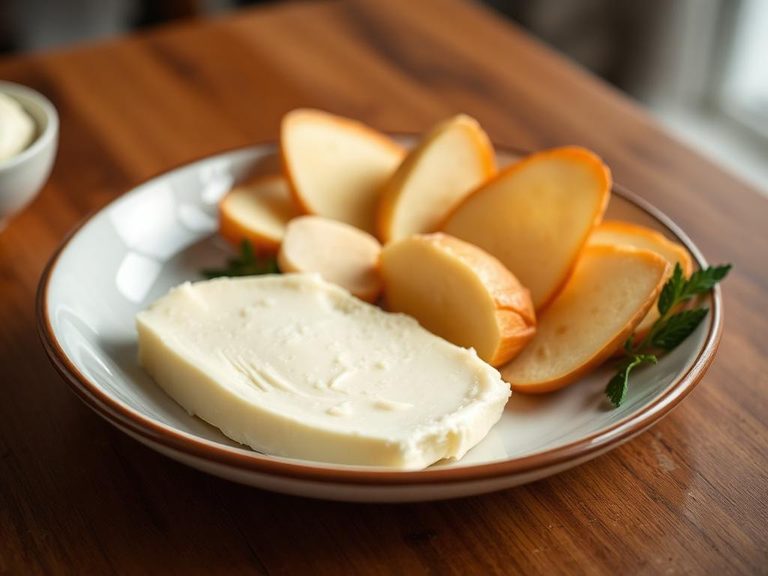
Margarine is a popular butter substitute made primarily from refined vegetable oils, water, and salt, often with added emulsifiers and flavorings. Originating in France in the late 19th century as an affordable alternative to butter, it has become a global pantry staple used for spreading, baking, and cooking.
🍳 View the full Margarine recipe →
🍽️ Nutrition at a glance
Margarine is predominantly a source of fat, with very little protein or carbohydrates. Depending on its formulation, it can be a significant source of unsaturated fats and is often fortified with vitamins A and D, with a typical serving containing around 100-120 calories.
Nutrition breakdown
| Calories | 100 kcal |
| Protein | 0.1 g |
| Carbs | 0.1 g |
| Fat | 11.5 g |
| Fiber | 0 g |
| Sugar | 0 g |
| Sodium | 120 mg |
| Vitamin A | 115 mcg RAE |
| Vitamin D | 0.2 mcg |
| Vitamin E | 1.5 mg |
| Vitamin K | 8 mcg |
| Sodium | 120 mg |
| Potassium | 5 mg |
| Cholesterol | 0 mg |
| Saturated Fat | 2.8 g |
Per 1 tablespoon (14 g) · estimated, varies by recipe
💡 What's interesting
Margarine was invented in 1869 by a French chemist in response to a challenge from Emperor Napoleon III to create a butter alternative for the military and working class. Its composition has evolved dramatically over the decades, shifting from using animal fats to becoming almost entirely plant-based.
🍽️ Related dishes



AI estimate may be inaccurate · Terms