

Industrial margarine
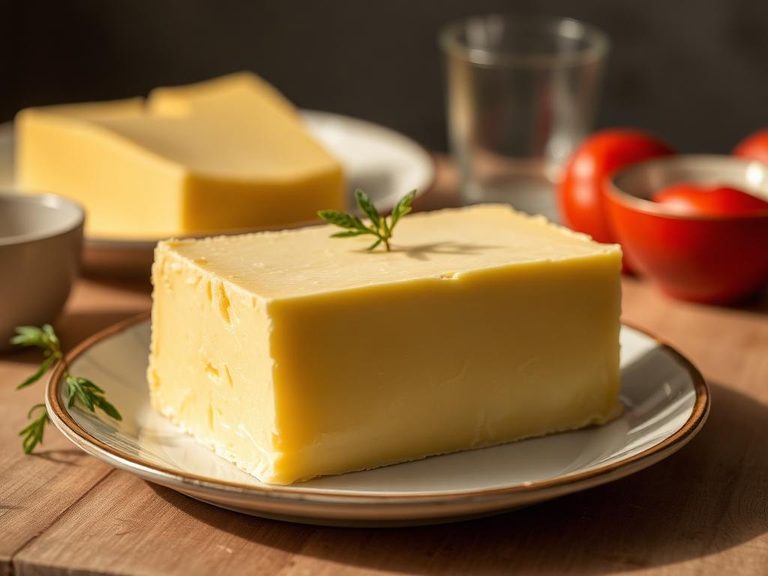
Industrial margarine is a highly processed, plant-based spread designed as a shelf-stable and cost-effective alternative to butter. It is typically made from refined vegetable oils (like soybean, palm, or canola), water, salt, and emulsifiers, often with added artificial flavors and colors to mimic butter. Originating in the early 20th century, it was developed as a cheaper substitute for dairy butter.
🍳 View the full Industrial margarine recipe →
🍽️ Nutrition at a glance
Industrial margarine is very high in fat, primarily from refined vegetable oils, and contains negligible protein and carbohydrates. A single tablespoon provides roughly 100-110 calories, with most of its nutritional value coming from added fats, some of which may be saturated or trans fats depending on the formulation.
Nutrition breakdown
| Calories | 100 kcal |
| Protein | 0 g |
| Carbs | 0 g |
| Fat | 11.5 g |
| Fiber | 0 g |
| Sugar | 0 g |
| Sodium | 90 mg |
| Vitamin A | 115 IU (2% DV) |
| Vitamin D | 0 IU (0% DV) |
| Vitamin E | 1.2 mg (8% DV) |
| Vitamin K | 8.5 mcg (7% DV) |
| Saturated Fat | 2.5 g |
| Monounsaturated Fat | 3.5 g |
| Polyunsaturated Fat | 5.0 g |
| Trans Fat | 0 g (if partially hydrogenated oils are not used) |
Per 1 tablespoon (14 g) · estimated, varies by recipe
💡 What's interesting
Historically, margarine was the subject of intense lobbying and legal battles from the dairy industry, leading to laws that sometimes required it to be dyed an unappetizing color to distinguish it from butter. Nutritionally, its health impact is highly debated, hinging on the specific types of fats used and the presence of potentially harmful trans fats.
🍽️ Related dishes






AI estimate may be inaccurate · Terms