

Oat bran, raw
Whole food · Cereal Grains and Pasta

Photo: Wikipedia
Oat bran is the coarse, outer layer of the oat groat, milled into a nutty, fibrous meal. It has a distinctly chewy texture and a mild, earthy flavor that becomes creamy when cooked. Nutritionally, it's a powerhouse, delivering an exceptional 15.4g of fiber per 100g, which is over half the daily recommended intake.
Calorie split: 17% protein · 67% carbs · 16% fat
↓ Full nutrition💚 Why it's loved
People love oat bran for its ability to transform simple breakfasts into satisfying, nutrient-dense meals. Its mild, nutty flavor is incredibly versatile, blending seamlessly into both sweet and savory dishes.
⚠️ Watch-outs & how to enjoy it better
The dense, chewy texture can be unappealing to some, and its high fiber content may cause digestive discomfort if introduced too quickly. To mitigate this, start with small portions and gradually increase intake, ensuring you drink plenty of water. Pairing it with a source of protein or healthy fat (like nuts or yogurt) can also help balance its impact on blood sugar.
Key benefits
- Exceptionally high in soluble fiber (beta-glucan) for heart health.
- Promotes digestive regularity and gut microbiome health.
- Helps promote a feeling of fullness, aiding in weight management.
- A good source of plant-based protein and essential minerals like manganese and phosphorus.
🍽️ Popular dishes
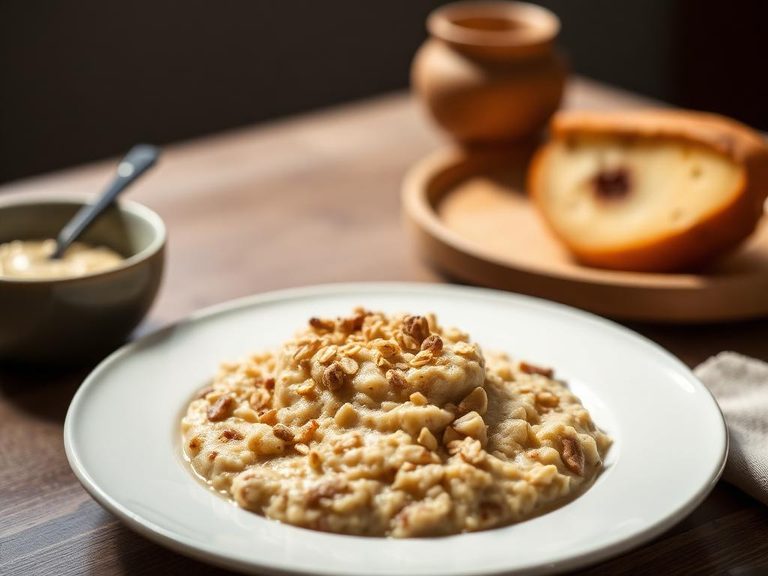
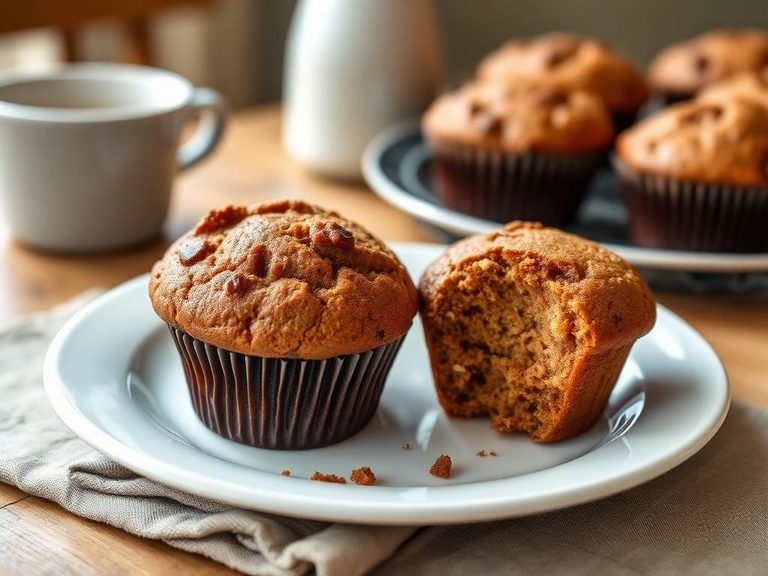
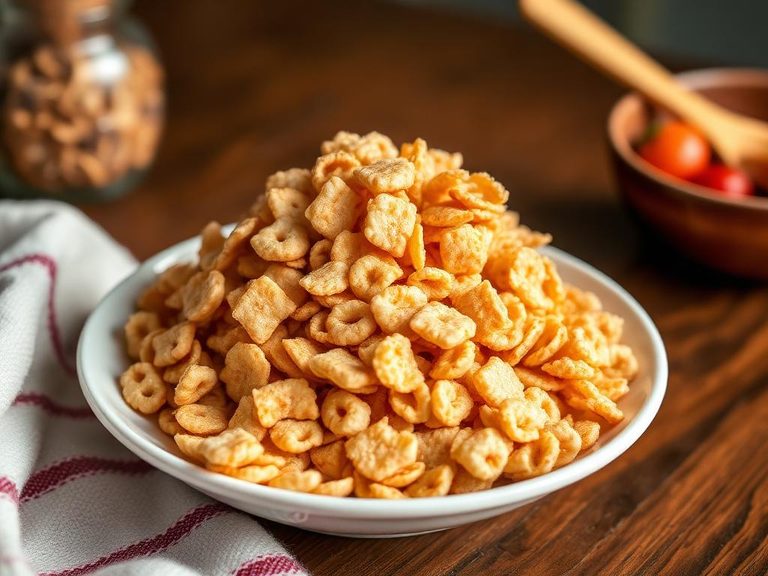
🌍 Where it's eaten
💡 Did you know?
The beta-glucan fiber in oat bran forms a gel-like substance in the digestive tract, which is specifically linked to helping lower LDL ('bad') cholesterol levels.
Full nutrition (USDA data · scales with serving)
| Water | 6.5 g |
| Energy | 246 kcal |
| Energy | 1029 kj |
| Protein | 17.3 g |
| Total lipid (fat) | 7.0 g |
| Ash | 2.9 g |
| Carbohydrate, by difference | 66.2 g |
| Fiber, total dietary | 15.4 g |
| Total Sugars | 1.4 g |
| Calcium, Ca | 58.0 mg |
| Iron, Fe | 5.4 mg |
| Magnesium, Mg | 235 mg |
| Phosphorus, P | 734 mg |
| Potassium, K | 566 mg |
| Sodium, Na | 4.0 mg |
| Zinc, Zn | 3.1 mg |
| Copper, Cu | 0.40 mg |
| Manganese, Mn | 5.6 mg |
| Selenium, Se | 45.2 ug |
| Vitamin C, total ascorbic acid | 0.00 mg |
| Thiamin | 1.2 mg |
| Riboflavin | 0.22 mg |
| Niacin | 0.93 mg |
| Pantothenic acid | 1.5 mg |
| Vitamin B-6 | 0.17 mg |
| Folate, total | 52.0 ug |
| Folic acid | 0.00 ug |
| Folate, food | 52.0 ug |
| Folate, DFE | 52.0 ug |
| Choline, total | 32.2 mg |
| Betaine | 19.6 mg |
| Vitamin B-12 | 0.00 ug |
| Vitamin B-12, added | 0.00 ug |
| Vitamin A, RAE | 0.00 ug |
| Retinol | 0.00 ug |
| Carotene, beta | 0.00 ug |
| Carotene, alpha | 0.00 ug |
| Cryptoxanthin, beta | 0.00 ug |
| Vitamin A, IU | 0.00 iu |
| Lycopene | 0.00 ug |
| Lutein + zeaxanthin | 180 ug |
| Vitamin E (alpha-tocopherol) | 1.0 mg |
| Vitamin E, added | 0.00 mg |
| Tocopherol, beta | 0.08 mg |
| Tocopherol, gamma | 0.00 mg |
| Tocopherol, delta | 0.10 mg |
| Tocotrienol, alpha | 2.2 mg |
| Tocotrienol, beta | 0.08 mg |
| Tocotrienol, gamma | 0.00 mg |
| Vitamin D (D2 + D3), International Units | 0.00 iu |
| Vitamin D (D2 + D3) | 0.00 ug |
| Vitamin K (phylloquinone) | 3.2 ug |
| Alcohol, ethyl | 0.00 g |
| Caffeine | 0.00 mg |
| Theobromine | 0.00 mg |
Fat & fatty acid profile (per 100g)
| Fatty acids, total saturated | 1.3 g |
| SFA 4:0 | 0.00 g |
| SFA 6:0 | 0.00 g |
| SFA 8:0 | 0.00 g |
| SFA 10:0 | 0.00 g |
| SFA 12:0 | 0.03 g |
| SFA 14:0 | 0.02 g |
| SFA 16:0 | 1.1 g |
| SFA 18:0 | 0.07 g |
| Fatty acids, total monounsaturated | 2.4 g |
| MUFA 16:1 | 0.01 g |
| MUFA 18:1 | 2.4 g |
| MUFA 20:1 | 0.00 g |
| MUFA 22:1 | 0.00 g |
| Fatty acids, total polyunsaturated | 2.8 g |
| PUFA 18:2 | 2.6 g |
| PUFA 18:3 | 0.12 g |
| PUFA 18:4 | 0.00 g |
| PUFA 20:4 | 0.00 g |
| PUFA 20:5 n-3 (EPA) | 0.00 g |
| PUFA 22:5 n-3 (DPA) | 0.00 g |
| PUFA 22:6 n-3 (DHA) | 0.00 g |
| Cholesterol | 0.00 mg |
Amino acid profile (per 100g)
| Tryptophan | 0.34 g |
| Threonine | 0.50 g |
| Isoleucine | 0.67 g |
| Leucine | 1.4 g |
| Lysine | 0.76 g |
| Methionine | 0.34 g |
| Cystine | 0.58 g |
| Phenylalanine | 0.91 g |
| Tyrosine | 0.67 g |
| Valine | 0.96 g |
| Arginine | 1.3 g |
| Histidine | 0.41 g |
| Alanine | 0.87 g |
| Aspartic acid | 1.6 g |
| Glutamic acid | 3.7 g |
| Glycine | 0.95 g |
| Proline | 0.98 g |
| Serine | 0.89 g |
FAQ
Is oat bran the same as rolled oats?
No. Oat bran is the outer layer of the oat groat, while rolled oats are the entire groat that has been steamed and flattened. Oat bran is higher in fiber and protein but lower in calories than whole oats.
How do I cook oat bran?
The simplest method is to simmer it with liquid (water, milk, or a plant-based alternative) for about 10-15 minutes. A common ratio is 1 part oat bran to 2 parts liquid. It can also be eaten raw, sprinkled on foods.
Is oat bran gluten-free?
Pure oat bran is naturally gluten-free. However, it is often processed in facilities that handle wheat, so cross-contamination is possible. Look for brands that are certified gluten-free if you have celiac disease or a severe sensitivity.
Nutrient density (calculated · NRF9.3)
Nutrient Rich Foods index: beneficial nutrients (protein, fiber, vitamins, minerals) minus saturated fat, added sugar & sodium, per 100 kcal.
NRF9.3 index — Fulgoni, Keast & Drewnowski, 2009. Computed from USDA nutrients.
Weight-loss friendliness (composite index)
Energy density 2.46 kcal/g · 28% calories from protein · 15.4 g fiber · 1.4 g sugar per 100 g.
Composite of energy density (Rolls et al., 1999), protein & fiber satiety, minus sugar. A calculated heuristic — ranks satiety-per-calorie, not a clinical measure.
Dietary load (calculated from USDA values)
Potential renal acid load. Positive = acid-forming, negative = alkaline-forming.
Sodium-to-potassium ratio: 0.01 (lower is better — aim for ≤ 1)
Sodium:potassium per WHO potassium guidance. Computed from USDA nutrients.