

Mushrooms, canned, drained solids
Whole food · Vegetables and Vegetable Products

Photo: Wikipedia
Canned, drained mushrooms are pre-cooked fungi with a tender, slightly chewy texture and a mild, earthy flavor that readily absorbs surrounding sauces. Nutritionally, they are a low-calorie, high-fiber food, providing over 8% of your daily fiber needs in a single 100g serving. Their preparation makes them a convenient pantry staple for quick meals.
Calorie split: 25% protein · 67% carbs · 9% fat
↓ Full nutrition💚 Why it's loved
People love them for their incredible convenience and versatility, acting as a quick umami boost in everything from salads to pasta sauces. Their mild flavor and consistent texture make them a reliable ingredient for both home cooks and professional kitchens.
⚠️ Watch-outs & how to enjoy it better
The canning process can lead to a softer texture and a more muted flavor compared to fresh mushrooms. They are often high in sodium, so those monitoring salt intake should look for low-sodium varieties or rinse them thoroughly before use to reduce the sodium content by up to 40%.
Key benefits
- Excellent source of dietary fiber for digestive health
- Very low in calories and fat
- Good source of plant-based protein
- Contains B vitamins like riboflavin and niacin
- Provides essential minerals like selenium and copper
🍽️ Popular dishes
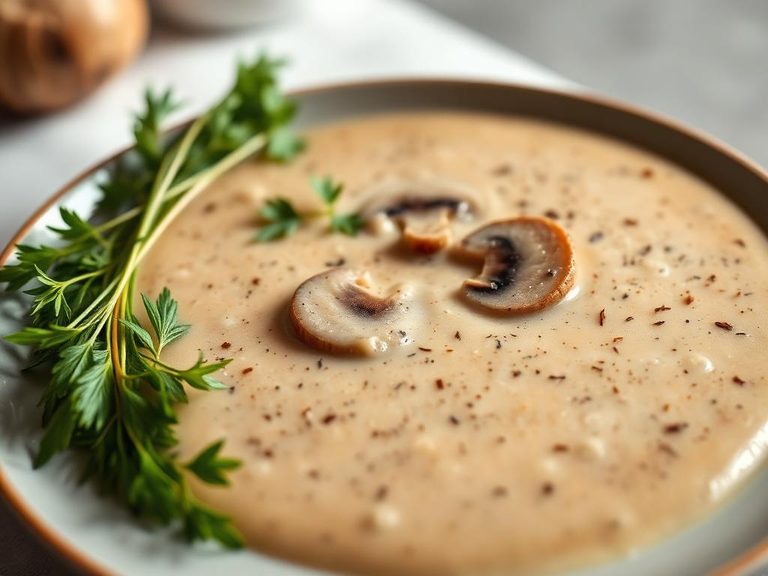

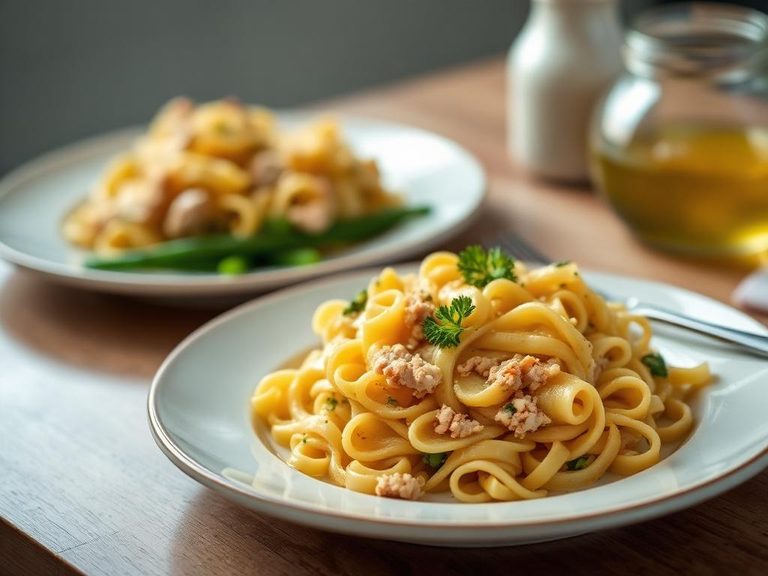

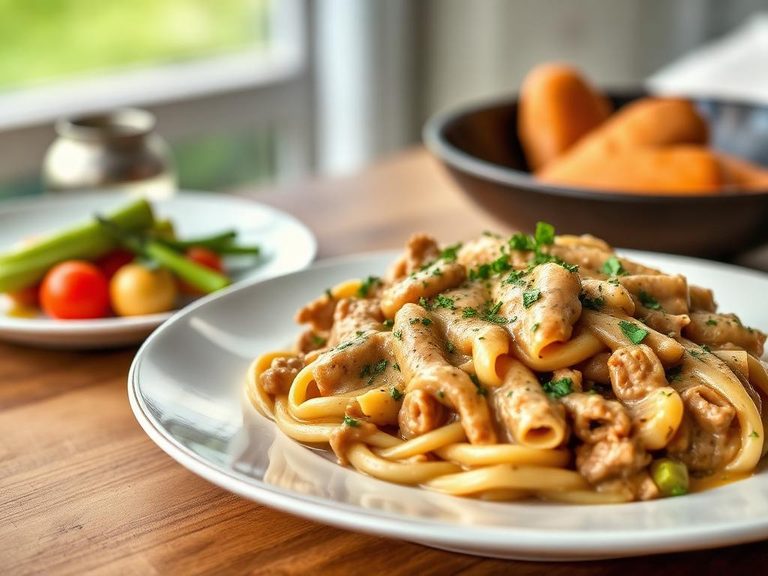

🌍 Where it's eaten
💡 Did you know?
The canning process for mushrooms was perfected in the 1920s, and the United States still produces the vast majority of the world's canned mushrooms, with many coming from a single region in Pennsylvania.
Full nutrition (USDA data · scales with serving)
| Water | 91.1 g |
| Energy | 25.0 kcal |
| Energy | 105 kj |
| Protein | 1.9 g |
| Total lipid (fat) | 0.29 g |
| Ash | 1.7 g |
| Carbohydrate, by difference | 5.1 g |
| Fiber, total dietary | 2.4 g |
| Total Sugars | 2.3 g |
| Calcium, Ca | 11.0 mg |
| Iron, Fe | 0.79 mg |
| Magnesium, Mg | 15.0 mg |
| Phosphorus, P | 66.0 mg |
| Potassium, K | 129 mg |
| Sodium, Na | 425 mg |
| Zinc, Zn | 0.72 mg |
| Copper, Cu | 0.23 mg |
| Manganese, Mn | 0.09 mg |
| Selenium, Se | 4.1 ug |
| Vitamin C, total ascorbic acid | 0.00 mg |
| Thiamin | 0.09 mg |
| Riboflavin | 0.02 mg |
| Niacin | 1.6 mg |
| Pantothenic acid | 0.81 mg |
| Vitamin B-6 | 0.06 mg |
| Folate, total | 12.0 ug |
| Folic acid | 0.00 ug |
| Folate, food | 12.0 ug |
| Folate, DFE | 12.0 ug |
| Choline, total | 20.4 mg |
| Vitamin B-12 | 0.00 ug |
| Vitamin B-12, added | 0.00 ug |
| Vitamin A, RAE | 0.00 ug |
| Retinol | 0.00 ug |
| Carotene, beta | 0.00 ug |
| Carotene, alpha | 0.00 ug |
| Cryptoxanthin, beta | 0.00 ug |
| Vitamin A, IU | 0.00 iu |
| Lycopene | 0.00 ug |
| Lutein + zeaxanthin | 0.00 ug |
| Vitamin E (alpha-tocopherol) | 0.01 mg |
| Vitamin E, added | 0.00 mg |
| Vitamin D (D2 + D3), International Units | 8.0 iu |
| Vitamin D (D2 + D3) | 0.20 ug |
| Vitamin D2 (ergocalciferol) | 0.20 ug |
| Vitamin D3 (cholecalciferol) | 0.00 ug |
| Vitamin K (phylloquinone) | 0.00 ug |
| Alcohol, ethyl | 0.00 g |
| Caffeine | 0.00 mg |
| Theobromine | 0.00 mg |
Fat & fatty acid profile (per 100g)
| Fatty acids, total saturated | 0.04 g |
| SFA 4:0 | 0.00 g |
| SFA 6:0 | 0.00 g |
| SFA 8:0 | 0.00 g |
| SFA 10:0 | 0.00 g |
| SFA 12:0 | 0.00 g |
| SFA 14:0 | 0.00 g |
| SFA 16:0 | 0.02 g |
| SFA 18:0 | 0.01 g |
| Fatty acids, total monounsaturated | 0.01 g |
| MUFA 16:1 | 0.00 g |
| MUFA 18:1 | 0.01 g |
| MUFA 20:1 | 0.00 g |
| MUFA 22:1 | 0.00 g |
| Fatty acids, total polyunsaturated | 0.11 g |
| PUFA 18:2 | 0.11 g |
| PUFA 18:3 | 0.00 g |
| PUFA 18:4 | 0.00 g |
| PUFA 20:4 | 0.00 g |
| PUFA 20:5 n-3 (EPA) | 0.00 g |
| PUFA 22:5 n-3 (DPA) | 0.00 g |
| PUFA 22:6 n-3 (DHA) | 0.00 g |
| Fatty acids, total trans | 0.00 g |
| Cholesterol | 0.00 mg |
Amino acid profile (per 100g)
| Tryptophan | 0.02 g |
| Threonine | 0.07 g |
| Isoleucine | 0.05 g |
| Leucine | 0.07 g |
| Lysine | 0.07 g |
| Methionine | 0.02 g |
| Cystine | 0.01 g |
| Phenylalanine | 0.05 g |
| Tyrosine | 0.03 g |
| Valine | 0.14 g |
| Arginine | 0.05 g |
| Histidine | 0.03 g |
| Alanine | 0.12 g |
| Aspartic acid | 0.12 g |
| Glutamic acid | 0.21 g |
| Glycine | 0.06 g |
| Proline | 0.05 g |
| Serine | 0.06 g |
FAQ
Do I need to cook canned mushrooms before eating?
No, canned mushrooms are fully cooked during the canning process. They are safe to eat straight from the can and are ready to use in salads, sandwiches, or as a topping.
How should I store leftover canned mushrooms?
Once opened, transfer any unused mushrooms and their liquid to a clean, airtight container and refrigerate. Use within 3-4 days for best quality and safety.
What's the difference between canned and fresh mushrooms nutritionally?
Canned mushrooms have a similar calorie and fiber content to fresh. However, they can be higher in sodium due to the brine. The canning process may slightly reduce some heat-sensitive vitamins like vitamin C.
Nutrient density (calculated · NRF9.3)
Nutrient Rich Foods index: beneficial nutrients (protein, fiber, vitamins, minerals) minus saturated fat, added sugar & sodium, per 100 kcal.
NRF9.3 index — Fulgoni, Keast & Drewnowski, 2009. Computed from USDA nutrients.
Weight-loss friendliness (composite index)
Energy density 0.25 kcal/g · 30% calories from protein · 2.4 g fiber · 2.3 g sugar per 100 g.
Composite of energy density (Rolls et al., 1999), protein & fiber satiety, minus sugar. A calculated heuristic — ranks satiety-per-calorie, not a clinical measure.
Dietary load (calculated from USDA values)
Potential renal acid load. Positive = acid-forming, negative = alkaline-forming.
Sodium-to-potassium ratio: 3.29 (lower is better — aim for ≤ 1)
Sodium:potassium per WHO potassium guidance. Computed from USDA nutrients.