

Milk, dry, nonfat, regular, without added vitamin A and vitamin D
Whole food · Dairy and Egg Products

Photo: Wikipedia
Nonfat dry milk powder is a shelf-stable, concentrated form of milk created by evaporating liquid nonfat milk. It has a fine, free-flowing texture and a sweet, distinctly milky flavor, though it can taste slightly 'cooked' or caramelized compared to fresh milk. Nutritionally, it's a protein powerhouse, delivering over 36 grams per 100 grams with virtually no fat.
Calorie split: 40% protein · 58% carbs · 2% fat
↓ Full nutrition💚 Why it's loved
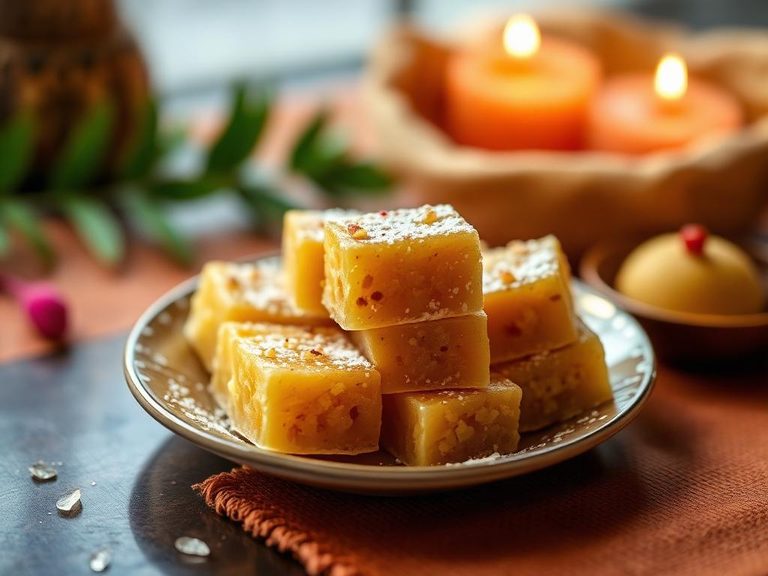
People love it for its incredible convenience and versatility—it instantly boosts the protein and calcium content of smoothies, baked goods, and sauces without adding fat. It's also a staple in many cultures for making everything from tea and coffee to traditional sweets and reconstituted milk for drinking.
⚠️ Watch-outs & how to enjoy it better
The primary downside is its high concentration of lactose (the sugar), which can cause digestive issues for lactose-intolerant individuals. The powder also lacks the fresh, creamy mouthfeel of liquid milk, and its reconstituted form can sometimes develop a scorching or cardboard-like flavor if not stored properly. To counteract digestive issues, use it in small amounts as an ingredient or opt for lactose-free versions. To improve flavor, mix it with a small amount of hot water first to create a smooth paste before adding cold liquid.
Key benefits
- Excellent source of high-quality protein for muscle maintenance and satiety.
- Rich in calcium and phosphorus for bone and dental health.
- Provides B vitamins like B12 and riboflavin essential for energy metabolism.
- Long shelf life and convenient for food storage or emergency preparedness.
- Low in fat and calories, making it a lean dairy option.
🍽️ Popular dishes

🌍 Where it's eaten
💡 Did you know?
Nonfat dry milk powder was a key ration for soldiers during World War II, and its widespread use in the post-war era helped popularize convenience baking mixes in American kitchens.
Full nutrition (USDA data · scales with serving)
| Water | 3.2 g |
| Energy | 362 kcal |
| Energy | 1516 kj |
| Protein | 36.2 g |
| Total lipid (fat) | 0.77 g |
| Ash | 7.9 g |
| Carbohydrate, by difference | 52.0 g |
| Fiber, total dietary | 0.00 g |
| Total Sugars | 52.0 g |
| Calcium, Ca | 1257 mg |
| Iron, Fe | 0.32 mg |
| Magnesium, Mg | 110 mg |
| Phosphorus, P | 968 mg |
| Potassium, K | 1794 mg |
| Sodium, Na | 535 mg |
| Zinc, Zn | 4.1 mg |
| Copper, Cu | 0.04 mg |
| Manganese, Mn | 0.02 mg |
| Selenium, Se | 27.3 ug |
| Vitamin C, total ascorbic acid | 6.8 mg |
| Thiamin | 0.41 mg |
| Riboflavin | 1.6 mg |
| Niacin | 0.95 mg |
| Pantothenic acid | 3.6 mg |
| Vitamin B-6 | 0.36 mg |
| Folate, total | 50.0 ug |
| Folic acid | 0.00 ug |
| Folate, food | 50.0 ug |
| Folate, DFE | 50.0 ug |
| Choline, total | 169 mg |
| Vitamin B-12 | 4.0 ug |
| Vitamin B-12, added | 0.00 ug |
| Vitamin A, RAE | 6.0 ug |
| Retinol | 6.0 ug |
| Carotene, beta | 1.0 ug |
| Carotene, alpha | 0.00 ug |
| Cryptoxanthin, beta | 0.00 ug |
| Vitamin A, IU | 22.0 iu |
| Lycopene | 0.00 ug |
| Lutein + zeaxanthin | 0.00 ug |
| Vitamin E (alpha-tocopherol) | 0.00 mg |
| Vitamin E, added | 0.00 mg |
| Tocopherol, beta | 0.00 mg |
| Tocopherol, gamma | 0.00 mg |
| Tocopherol, delta | 0.00 mg |
| Tocotrienol, alpha | 0.00 mg |
| Tocotrienol, beta | 0.00 mg |
| Tocotrienol, gamma | 0.00 mg |
| Tocotrienol, delta | 0.00 mg |
| Vitamin D (D2 + D3), International Units | 0.00 iu |
| Vitamin D (D2 + D3) | 0.00 ug |
| Vitamin D3 (cholecalciferol) | 0.00 ug |
| Vitamin K (phylloquinone) | 0.10 ug |
| Alcohol, ethyl | 0.00 g |
| Caffeine | 0.00 mg |
| Theobromine | 0.00 mg |
Fat & fatty acid profile (per 100g)
| Fatty acids, total saturated | 0.50 g |
| SFA 4:0 | 0.03 g |
| SFA 6:0 | 0.01 g |
| SFA 8:0 | 0.01 g |
| SFA 10:0 | 0.02 g |
| SFA 12:0 | 0.01 g |
| SFA 14:0 | 0.08 g |
| SFA 16:0 | 0.23 g |
| SFA 18:0 | 0.09 g |
| Fatty acids, total monounsaturated | 0.20 g |
| MUFA 16:1 | 0.02 g |
| MUFA 18:1 | 0.17 g |
| MUFA 20:1 | 0.00 g |
| MUFA 22:1 | 0.00 g |
| Fatty acids, total polyunsaturated | 0.03 g |
| PUFA 18:2 | 0.02 g |
| PUFA 18:3 | 0.01 g |
| PUFA 18:4 | 0.00 g |
| PUFA 20:4 | 0.00 g |
| PUFA 20:5 n-3 (EPA) | 0.00 g |
| PUFA 22:5 n-3 (DPA) | 0.00 g |
| PUFA 22:6 n-3 (DHA) | 0.00 g |
| Cholesterol | 20.0 mg |
Amino acid profile (per 100g)
| Tryptophan | 0.51 g |
| Threonine | 1.6 g |
| Isoleucine | 2.2 g |
| Leucine | 3.5 g |
| Lysine | 2.9 g |
| Methionine | 0.91 g |
| Cystine | 0.33 g |
| Phenylalanine | 1.7 g |
| Tyrosine | 1.7 g |
| Valine | 2.4 g |
| Arginine | 1.3 g |
| Histidine | 0.98 g |
| Alanine | 1.2 g |
| Aspartic acid | 2.7 g |
| Glutamic acid | 7.6 g |
| Glycine | 0.77 g |
| Proline | 3.5 g |
| Serine | 2.0 g |
FAQ
How do I reconstitute nonfat dry milk?
The standard ratio is about 3 tablespoons of powder per 1 cup (240ml) of cold water. For best results, mix the powder with a small amount of warm water first to form a smooth paste, then add the remaining cold water and stir or shake vigorously.
Can I use it in baking instead of fresh milk?
Yes, it's an excellent substitute. To replace 1 cup of milk, mix 1/3 cup of nonfat dry milk with 1 cup of water. You can also add it dry directly to flour in recipes for an extra protein boost.
Why does my reconstituted milk taste different?
The flavor can be affected by storage conditions (heat, light, air exposure) or the 'cooked' notes from the drying process. Using cooler water and consuming it shortly after mixing can help. It's also perfect for cooking or baking where the flavor integrates with other ingredients.
Nutrient density (calculated · NRF9.3)
Nutrient Rich Foods index: beneficial nutrients (protein, fiber, vitamins, minerals) minus saturated fat, added sugar & sodium, per 100 kcal.
NRF9.3 index — Fulgoni, Keast & Drewnowski, 2009. Computed from USDA nutrients.
Weight-loss friendliness (composite index)
Energy density 3.62 kcal/g · 40% calories from protein · 0.0 g fiber · 52.0 g sugar per 100 g.
Composite of energy density (Rolls et al., 1999), protein & fiber satiety, minus sugar. A calculated heuristic — ranks satiety-per-calorie, not a clinical measure.
Dietary load (calculated from USDA values)
Potential renal acid load. Positive = acid-forming, negative = alkaline-forming.
Sodium-to-potassium ratio: 0.30 (lower is better — aim for ≤ 1)
Sodium:potassium per WHO potassium guidance. Computed from USDA nutrients.