

Lamb, leg, whole (shank and sirloin), separable lean only, trimmed to 1/4" fat, choice, cooked, roasted
Whole food · Lamb, Veal, and Game Products

Photo: Wikipedia
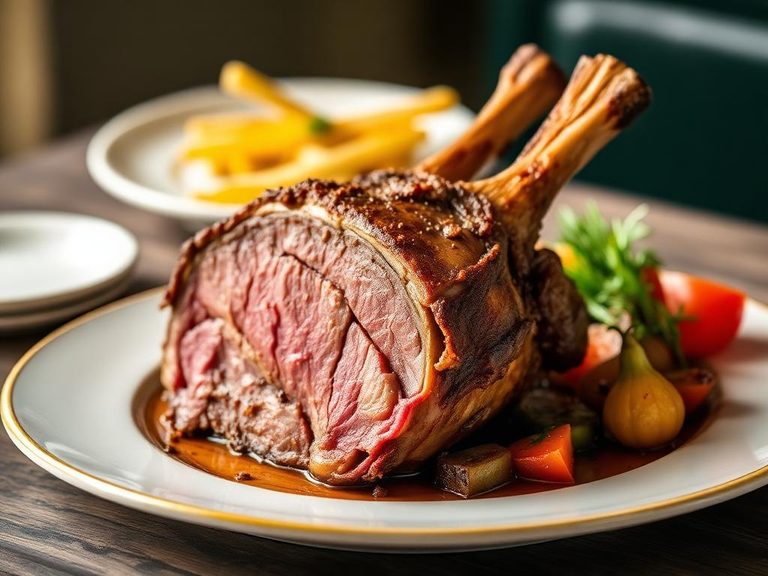
This is a lean, succulent cut of roasted lamb leg, prized for its deep, savory flavor and tender, meaty texture. With a remarkable 28.3 grams of protein per 100g and virtually no carbohydrates, it's a powerhouse for muscle maintenance and satiety. Its lean profile (only 7.74g fat) makes it a robust yet relatively light red meat option.
Calorie split: 62% protein · 0% carbs · 38% fat
↓ Full nutrition💚 Why it's loved
People cherish this cut for its robust, slightly sweet and earthy flavor that intensifies with roasting, and its satisfying, tender bite. It's a centerpiece for celebratory meals, from Sunday roasts to holiday feasts, embodying comfort and culinary tradition.
⚠️ Watch-outs & how to enjoy it better
The primary concern is its high purine content, which can be problematic for individuals with gout or certain kidney conditions. To mitigate this, ensure adequate hydration and consider moderate portion sizes, pairing it with low-purine vegetables like roasted carrots or steamed greens.
Key benefits
- Excellent source of complete protein for muscle repair and growth.
- Rich in heme iron, which is more easily absorbed than plant-based iron.
- Provides essential B vitamins like B12 and niacin for energy metabolism.
- Naturally low in carbohydrates, suitable for low-carb and ketogenic diets.
- Contains zinc, supporting immune function and wound healing.
🍽️ Popular dishes
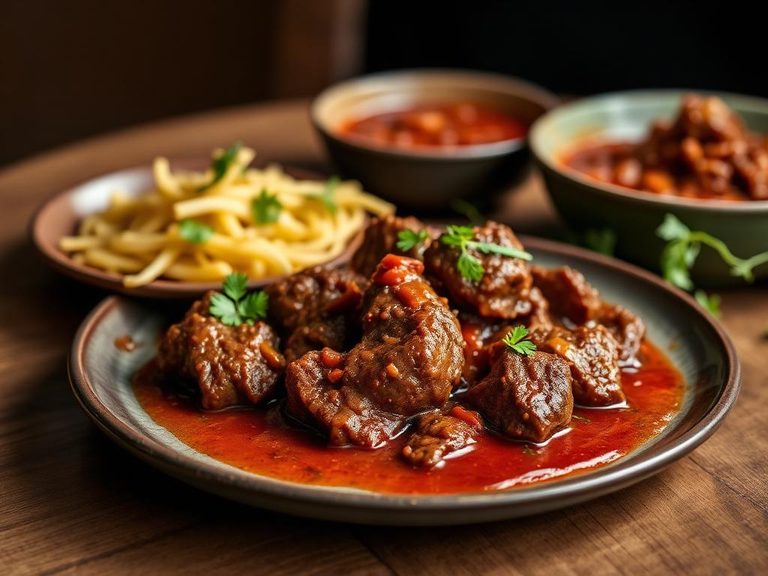
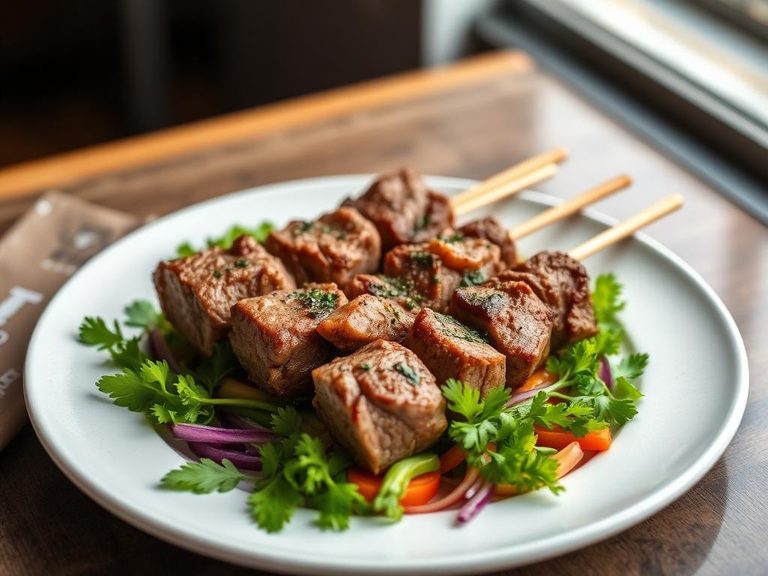
🌍 Where it's eaten
💡 Did you know?
Lamb leg meat is one of the few red meats that actually becomes more tender when cooked to a higher internal temperature (around 145°F/63°C), as the connective tissue breaks down, unlike beef which can toughen if overcooked.
Full nutrition (USDA data · scales with serving)
| Water | 63.9 g |
| Energy | 191 kcal |
| Energy | 799 kj |
| Protein | 28.3 g |
| Total lipid (fat) | 7.7 g |
| Ash | 1.1 g |
| Carbohydrate, by difference | 0.00 g |
| Fiber, total dietary | 0.00 g |
| Total Sugars | 0.00 g |
| Calcium, Ca | 8.0 mg |
| Iron, Fe | 2.1 mg |
| Magnesium, Mg | 26.0 mg |
| Phosphorus, P | 206 mg |
| Potassium, K | 338 mg |
| Sodium, Na | 68.0 mg |
| Zinc, Zn | 4.9 mg |
| Copper, Cu | 0.12 mg |
| Manganese, Mn | 0.03 mg |
| Selenium, Se | 30.1 ug |
| Vitamin C, total ascorbic acid | 0.00 mg |
| Thiamin | 0.11 mg |
| Riboflavin | 0.29 mg |
| Niacin | 6.3 mg |
| Pantothenic acid | 0.71 mg |
| Vitamin B-6 | 0.17 mg |
| Folate, total | 23.0 ug |
| Folic acid | 0.00 ug |
| Folate, food | 23.0 ug |
| Folate, DFE | 23.0 ug |
| Choline, total | 105 mg |
| Betaine | 13.8 mg |
| Vitamin B-12 | 2.6 ug |
| Vitamin B-12, added | 0.00 ug |
| Vitamin A, RAE | 0.00 ug |
| Retinol | 0.00 ug |
| Carotene, beta | 0.00 ug |
| Carotene, alpha | 0.00 ug |
| Cryptoxanthin, beta | 0.00 ug |
| Vitamin A, IU | 0.00 iu |
| Lycopene | 0.00 ug |
| Lutein + zeaxanthin | 0.00 ug |
| Vitamin E (alpha-tocopherol) | 0.18 mg |
| Vitamin E, added | 0.00 mg |
| Vitamin D (D2 + D3), International Units | 2.0 iu |
| Vitamin D (D2 + D3) | 0.10 ug |
| Vitamin D3 (cholecalciferol) | 0.10 ug |
| Vitamin K (phylloquinone) | 3.6 ug |
| Vitamin K (Dihydrophylloquinone) | 0.00 ug |
| Alcohol, ethyl | 0.00 g |
| Caffeine | 0.00 mg |
| Theobromine | 0.00 mg |
Fat & fatty acid profile (per 100g)
| Fatty acids, total saturated | 2.8 g |
| SFA 4:0 | 0.00 g |
| SFA 6:0 | 0.00 g |
| SFA 8:0 | 0.00 g |
| SFA 10:0 | 0.02 g |
| SFA 12:0 | 0.02 g |
| SFA 14:0 | 0.24 g |
| SFA 16:0 | 1.5 g |
| SFA 18:0 | 0.95 g |
| Fatty acids, total monounsaturated | 3.4 g |
| MUFA 16:1 | 0.23 g |
| MUFA 18:1 | 3.1 g |
| MUFA 20:1 | 0.00 g |
| MUFA 22:1 | 0.00 g |
| Fatty acids, total polyunsaturated | 0.51 g |
| PUFA 18:2 | 0.41 g |
| PUFA 18:3 | 0.05 g |
| PUFA 18:4 | 0.00 g |
| PUFA 20:4 | 0.05 g |
| PUFA 20:5 n-3 (EPA) | 0.00 g |
| PUFA 22:5 n-3 (DPA) | 0.00 g |
| PUFA 22:6 n-3 (DHA) | 0.00 g |
| Cholesterol | 89.0 mg |
Amino acid profile (per 100g)
| Tryptophan | 0.33 g |
| Threonine | 1.2 g |
| Isoleucine | 1.4 g |
| Leucine | 2.2 g |
| Lysine | 2.5 g |
| Methionine | 0.73 g |
| Cystine | 0.34 g |
| Phenylalanine | 1.2 g |
| Tyrosine | 0.95 g |
| Valine | 1.5 g |
| Arginine | 1.7 g |
| Histidine | 0.90 g |
| Alanine | 1.7 g |
| Aspartic acid | 2.5 g |
| Glutamic acid | 4.1 g |
| Glycine | 1.4 g |
| Proline | 1.2 g |
| Serine | 1.1 g |
FAQ
How does the nutritional profile of roasted lamb leg compare to beef or chicken?
Roasted lamb leg (lean only) is comparable to lean beef in protein but typically lower in fat. It has significantly more protein and less fat than chicken breast, though it's higher in iron and B12 than chicken.
Is this cut suitable for a low-fat diet?
Yes, when trimmed to 1/4" fat and with separable lean only, it's a relatively lean red meat option at 7.74g fat per 100g. However, it's still higher in fat than skinless poultry or fish.
What's the best way to cook it to retain its tenderness and nutrition?
Roasting or slow-cooking methods are ideal. For roasting, cook to an internal temperature of 145°F (63°C) for medium-rare, then let it rest. This preserves the natural juices and nutrients while ensuring tenderness.
Nutrient density (calculated · NRF9.3)
Nutrient Rich Foods index: beneficial nutrients (protein, fiber, vitamins, minerals) minus saturated fat, added sugar & sodium, per 100 kcal.
NRF9.3 index — Fulgoni, Keast & Drewnowski, 2009. Computed from USDA nutrients.
Weight-loss friendliness (composite index)
Energy density 1.91 kcal/g · 59% calories from protein · 0.0 g fiber · 0.0 g sugar per 100 g.
Composite of energy density (Rolls et al., 1999), protein & fiber satiety, minus sugar. A calculated heuristic — ranks satiety-per-calorie, not a clinical measure.
Dietary load (calculated from USDA values)
Potential renal acid load. Positive = acid-forming, negative = alkaline-forming.
Sodium-to-potassium ratio: 0.20 (lower is better — aim for ≤ 1)
Sodium:potassium per WHO potassium guidance. Computed from USDA nutrients.