

Fish, whitefish, mixed species, smoked
Whole food · Finfish and Shellfish Products
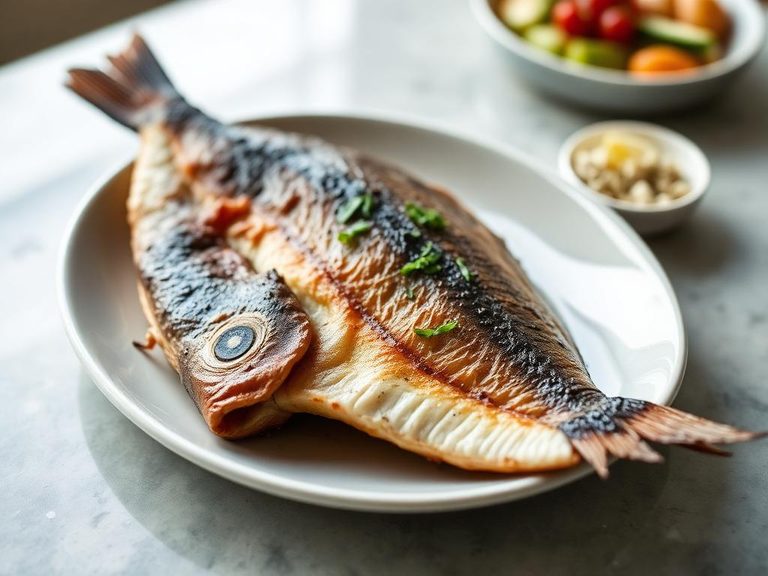
Smoked whitefish is a delicacy made from the flesh of various white-fleshed fish species, such as cod, haddock, or pollock, that has been cured and then smoked. It boasts a rich, savory, and distinctly smoky flavor with a tender, flaky, and often silky texture. Nutritionally, it is an exceptionally lean source of high-quality protein, providing over 23 grams per 100 grams with virtually no carbohydrates or fat.
Calorie split: 92% protein · 0% carbs · 8% fat
↓ Full nutrition💚 Why it's loved
People cherish smoked whitefish for its deep, complex smokiness that transforms simple fish into a luxurious treat. Its versatility makes it a star in everything from elegant appetizers to hearty breakfasts, embodying a tradition of preservation and flavor.
⚠️ Watch-outs & how to enjoy it better
The smoking process can significantly increase the sodium content, which is a consideration for those monitoring salt intake. As a common fish, it is a potential allergen for individuals with fish allergies. To mitigate high sodium, you can rinse slices briefly under cold water or pair it with unsalted accompaniments like fresh vegetables or unsalted crackers.
Key benefits
- Excellent source of complete, high-quality protein for muscle maintenance.
- Virtually zero carbohydrates, making it suitable for low-carb and ketogenic diets.
- Very low in fat, providing a lean protein option.
- Contains essential nutrients like selenium and B vitamins, particularly B12.
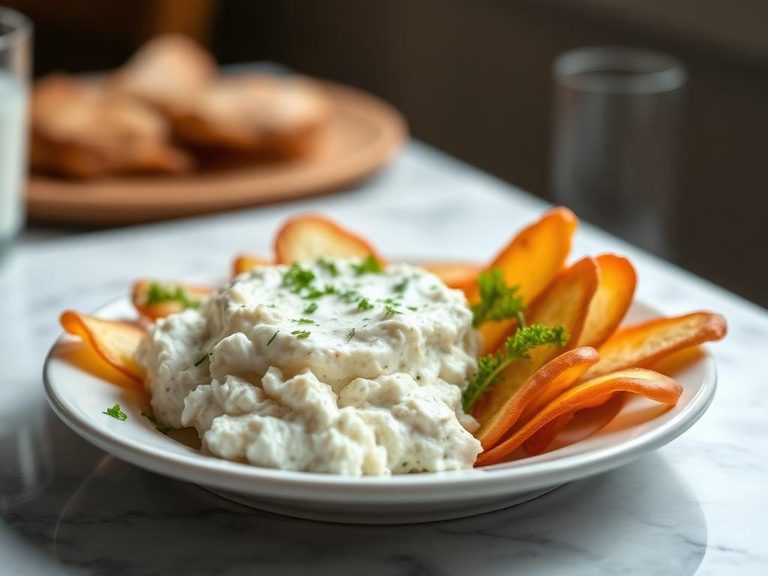
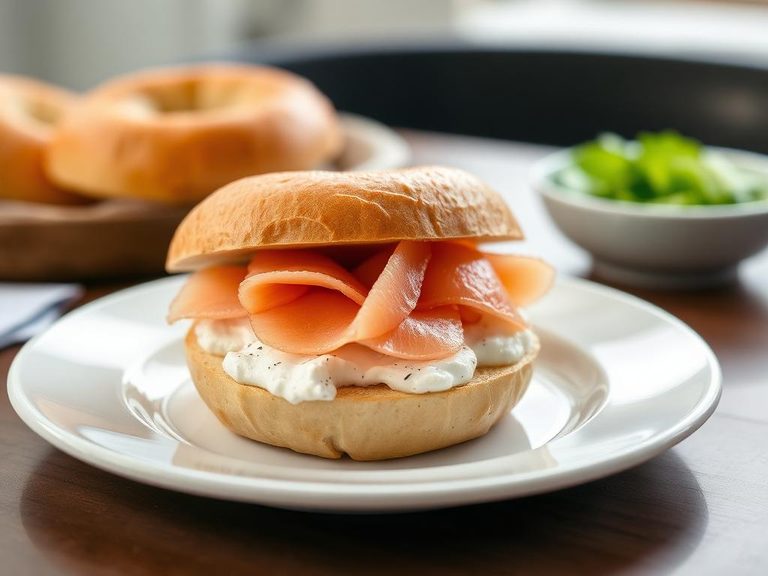
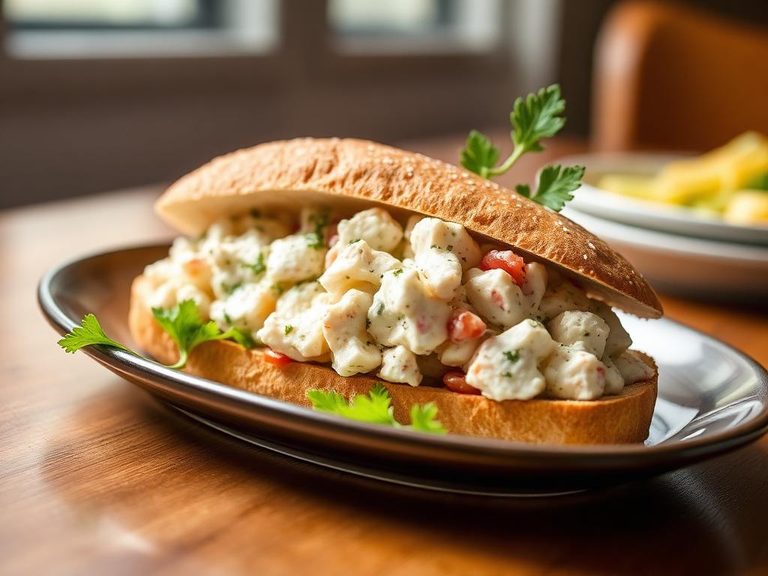
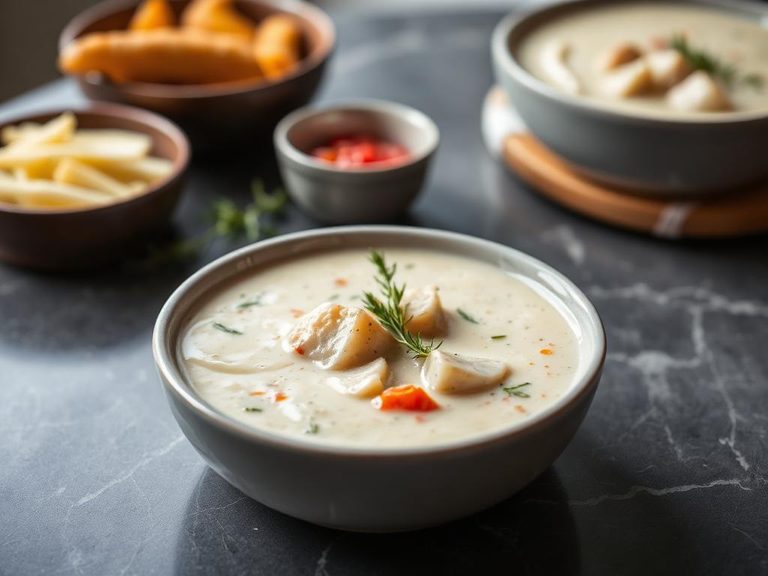
🍽️ Popular dishes
🌍 Where it's eaten
💡 Did you know?
The traditional method for smoking whitefish often involves a 'cold smoking' process, where the fish is exposed to smoke at temperatures below 90°F (32°C), which flavors and preserves it without cooking the flesh, resulting in its characteristic silky, translucent texture.
Full nutrition (USDA data · scales with serving)
| Water | 70.8 g |
| Energy | 108 kcal |
| Energy | 452 kj |
| Protein | 23.4 g |
| Total lipid (fat) | 0.93 g |
| Ash | 5.1 g |
| Carbohydrate, by difference | 0.00 g |
| Fiber, total dietary | 0.00 g |
| Total Sugars | 0.00 g |
| Calcium, Ca | 18.0 mg |
| Iron, Fe | 0.50 mg |
| Magnesium, Mg | 23.0 mg |
| Phosphorus, P | 132 mg |
| Potassium, K | 423 mg |
| Sodium, Na | 1019 mg |
| Zinc, Zn | 0.49 mg |
| Copper, Cu | 0.32 mg |
| Manganese, Mn | 0.03 mg |
| Selenium, Se | 13.5 ug |
| Vitamin C, total ascorbic acid | 0.00 mg |
| Thiamin | 0.03 mg |
| Riboflavin | 0.10 mg |
| Niacin | 2.4 mg |
| Pantothenic acid | 0.10 mg |
| Vitamin B-6 | 0.39 mg |
| Folate, total | 7.0 ug |
| Folic acid | 0.00 ug |
| Folate, food | 7.0 ug |
| Folate, DFE | 7.0 ug |
| Choline, total | 95.0 mg |
| Vitamin B-12 | 3.3 ug |
| Vitamin B-12, added | 0.00 ug |
| Vitamin A, RAE | 57.0 ug |
| Retinol | 57.0 ug |
| Carotene, beta | 0.00 ug |
| Carotene, alpha | 0.00 ug |
| Cryptoxanthin, beta | 0.00 ug |
| Vitamin A, IU | 190 iu |
| Lycopene | 0.00 ug |
| Lutein + zeaxanthin | 0.00 ug |
| Vitamin E (alpha-tocopherol) | 0.21 mg |
| Vitamin E, added | 0.00 mg |
| Vitamin D (D2 + D3), International Units | 512 iu |
| Vitamin D (D2 + D3) | 12.8 ug |
| Vitamin D3 (cholecalciferol) | 12.8 ug |
| Vitamin K (phylloquinone) | 0.10 ug |
| Alcohol, ethyl | 0.00 g |
| Caffeine | 0.00 mg |
| Theobromine | 0.00 mg |
Fat & fatty acid profile (per 100g)
| Fatty acids, total saturated | 0.23 g |
| SFA 4:0 | 0.00 g |
| SFA 6:0 | 0.00 g |
| SFA 8:0 | 0.00 g |
| SFA 10:0 | 0.00 g |
| SFA 12:0 | 0.00 g |
| SFA 14:0 | 0.01 g |
| SFA 16:0 | 0.18 g |
| SFA 18:0 | 0.04 g |
| Fatty acids, total monounsaturated | 0.28 g |
| MUFA 16:1 | 0.03 g |
| MUFA 18:1 | 0.20 g |
| MUFA 20:1 | 0.02 g |
| MUFA 22:1 | 0.02 g |
| Fatty acids, total polyunsaturated | 0.29 g |
| PUFA 18:2 | 0.08 g |
| PUFA 18:3 | 0.00 g |
| PUFA 18:4 | 0.00 g |
| PUFA 20:4 | 0.00 g |
| PUFA 20:5 n-3 (EPA) | 0.05 g |
| PUFA 22:5 n-3 (DPA) | 0.01 g |
| PUFA 22:6 n-3 (DHA) | 0.16 g |
| Cholesterol | 33.0 mg |
Amino acid profile (per 100g)
| Tryptophan | 0.26 g |
| Threonine | 1.0 g |
| Isoleucine | 1.1 g |
| Leucine | 1.9 g |
| Lysine | 2.1 g |
| Methionine | 0.69 g |
| Cystine | 0.25 g |
| Phenylalanine | 0.91 g |
| Tyrosine | 0.79 g |
| Valine | 1.2 g |
| Arginine | 1.4 g |
| Histidine | 0.69 g |
| Alanine | 1.4 g |
| Aspartic acid | 2.4 g |
| Glutamic acid | 3.5 g |
| Glycine | 1.1 g |
| Proline | 0.83 g |
| Serine | 0.95 g |
FAQ
Is smoked whitefish cooked?
It depends on the method. 'Hot-smoked' whitefish is cooked by the heat of the smoke, while 'cold-smoked' whitefish (like traditional Nova-style) is cured and flavored by smoke but not fully cooked, giving it a raw-like, silky texture.
How should I store it?
Keep it tightly wrapped in its original packaging or an airtight container in the coldest part of your refrigerator (below 40°F / 4°C). It is best consumed within 3 to 5 days of opening.
Can I freeze smoked whitefish?
Yes, you can freeze it for up to 2 months for best quality. Wrap it tightly in plastic wrap and then foil, or use a freezer bag. Thaw it slowly in the refrigerator before use.
Nutrient density (calculated · NRF9.3)
Nutrient Rich Foods index: beneficial nutrients (protein, fiber, vitamins, minerals) minus saturated fat, added sugar & sodium, per 100 kcal.
NRF9.3 index — Fulgoni, Keast & Drewnowski, 2009. Computed from USDA nutrients.
Weight-loss friendliness (composite index)
Energy density 1.08 kcal/g · 87% calories from protein · 0.0 g fiber · 0.0 g sugar per 100 g.
Composite of energy density (Rolls et al., 1999), protein & fiber satiety, minus sugar. A calculated heuristic — ranks satiety-per-calorie, not a clinical measure.
Dietary load (calculated from USDA values)
Potential renal acid load. Positive = acid-forming, negative = alkaline-forming.
Sodium-to-potassium ratio: 2.41 (lower is better — aim for ≤ 1)
Sodium:potassium per WHO potassium guidance. Computed from USDA nutrients.