

Crackers, snack, Goya Crackers
Whole food · Baked Products

Photo: Wikipedia
Goya Crackers are a crisp, savory snack with a satisfying crunch and a subtle, toasty wheat flavor. They are nutritionally dense, offering a solid 14.25g of protein and 3.8g of fiber per 100g, making them more substantial than many typical crackers. Their golden-brown color and light, airy texture make them ideal for dipping or enjoying on their own.
Calorie split: 13% protein · 59% carbs · 28% fat
↓ Full nutrition💚 Why it's loved
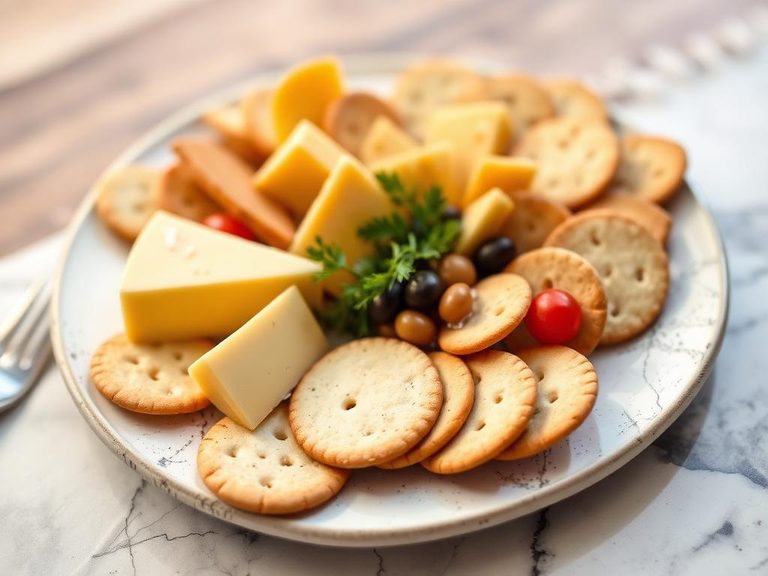
People love Goya Crackers for their perfect balance of a light, crispy texture and a hearty, satisfying bite. Their neutral, slightly salty flavor makes them a perfect canvas for a wide range of toppings and dips, from creamy cheeses to spicy salsas.
⚠️ Watch-outs & how to enjoy it better
As a processed grain product, they can cause blood-sugar spikes if eaten alone in large quantities, and their sodium content may be a concern for some. To counteract this, pair them with a protein or healthy fat like hummus, guacamole, or a slice of cheese, and practice portion control by serving them as part of a balanced snack plate.
Key benefits
- High in protein for a snack cracker
- Good source of dietary fiber
- Low in sugar content
- Provides sustained energy from complex carbohydrates
- Versatile for both sweet and savory pairings
🍽️ Popular dishes
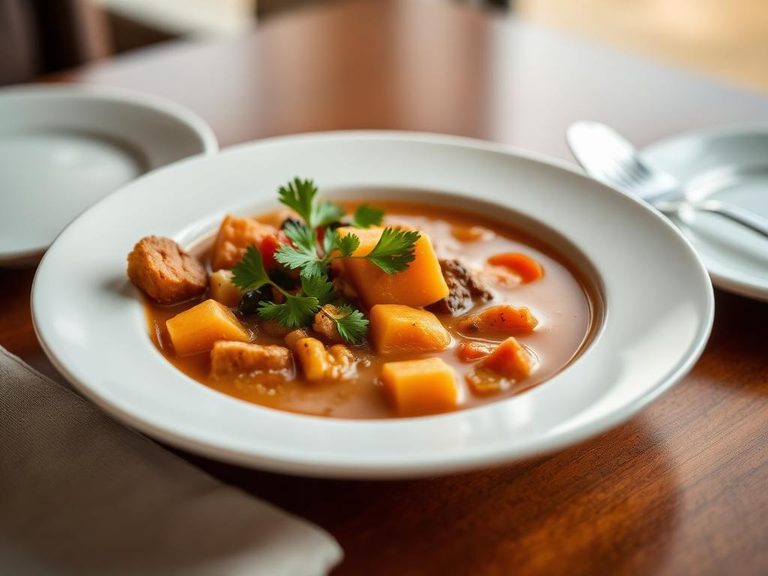
🌍 Where it's eaten
💡 Did you know?
Goya Foods, the company behind these crackers, was founded in 1936 by Spanish immigrants in New York City and is now the largest Hispanic-owned food company in the United States.
Full nutrition (USDA data · scales with serving)
| Water | 5.9 g |
| Energy | 433 kcal |
| Energy | 1812 kj |
| Protein | 14.3 g |
| Total lipid (fat) | 13.3 g |
| Ash | 2.1 g |
| Carbohydrate, by difference | 64.3 g |
| Fiber, total dietary | 3.8 g |
| Total Sugars | 2.4 g |
| Sucrose | 0.00 g |
| Glucose | 0.00 g |
| Fructose | 0.47 g |
| Lactose | 0.00 g |
| Maltose | 1.9 g |
| Galactose | 0.00 g |
| Starch | 57.8 g |
| Calcium, Ca | 16.0 mg |
| Iron, Fe | 5.7 mg |
| Magnesium, Mg | 39.0 mg |
| Phosphorus, P | 145 mg |
| Potassium, K | 124 mg |
| Sodium, Na | 665 mg |
| Zinc, Zn | 1.2 mg |
| Copper, Cu | 0.15 mg |
| Manganese, Mn | 0.63 mg |
Fat & fatty acid profile (per 100g)
| Fatty acids, total saturated | 6.3 g |
| SFA 4:0 | 0.00 g |
| SFA 6:0 | 0.00 g |
| SFA 8:0 | 0.01 g |
| SFA 10:0 | 0.01 g |
| SFA 12:0 | 0.04 g |
| SFA 14:0 | 0.13 g |
| SFA 15:0 | 0.01 g |
| SFA 16:0 | 5.5 g |
| SFA 17:0 | 0.01 g |
| SFA 18:0 | 0.56 g |
| SFA 20:0 | 0.04 g |
| SFA 22:0 | 0.01 g |
| SFA 24:0 | 0.01 g |
| Fatty acids, total monounsaturated | 4.7 g |
| MUFA 14:1 | 0.00 g |
| MUFA 15:1 | 0.00 g |
| MUFA 16:1 | 0.02 g |
| MUFA 16:1 c | 0.02 g |
| MUFA 17:1 | 0.00 g |
| MUFA 18:1 | 4.6 g |
| MUFA 18:1 c | 4.6 g |
| MUFA 20:1 | 0.03 g |
| MUFA 22:1 | 0.00 g |
| MUFA 22:1 c | 0.00 g |
| MUFA 24:1 c | 0.01 g |
| Fatty acids, total polyunsaturated | 1.5 g |
| PUFA 18:2 | 1.5 g |
| PUFA 18:2 n-6 c,c | 1.4 g |
| PUFA 18:2 CLAs | 0.00 g |
| PUFA 18:3 | 0.04 g |
| PUFA 18:3 n-3 c,c,c (ALA) | 0.04 g |
| PUFA 18:3 n-6 c,c,c | 0.00 g |
| PUFA 18:4 | 0.00 g |
| PUFA 20:2 n-6 c,c | 0.00 g |
| PUFA 20:3 | 0.00 g |
| PUFA 20:3 n-3 | 0.00 g |
| PUFA 20:3 n-6 | 0.00 g |
| PUFA 20:4 | 0.00 g |
| PUFA 20:5 n-3 (EPA) | 0.00 g |
| PUFA 22:4 | 0.00 g |
| PUFA 22:5 n-3 (DPA) | 0.00 g |
| PUFA 22:6 n-3 (DHA) | 0.00 g |
| Fatty acids, total trans | 0.06 g |
| Fatty acids, total trans-monoenoic | 0.01 g |
| TFA 16:1 t | 0.00 g |
| TFA 18:1 t | 0.01 g |
| TFA 22:1 t | 0.00 g |
| TFA 18:2 t not further defined | 0.05 g |
| Fatty acids, total trans-polyenoic | 0.05 g |
Amino acid profile (per 100g)
Estimated from Crackers, cheese, sandwich-type with cheese filling — USDA does not publish this profile for Crackers.
| Tryptophan | 0.11 g |
| Threonine | 0.33 g |
| Isoleucine | 0.36 g |
| Leucine | 0.64 g |
| Lysine | 0.39 g |
| Methionine | 0.15 g |
| Cystine | 0.15 g |
| Phenylalanine | 0.35 g |
| Tyrosine | 0.25 g |
| Valine | 0.38 g |
| Arginine | 0.29 g |
| Histidine | 0.17 g |
| Alanine | 0.30 g |
| Aspartic acid | 0.52 g |
| Glutamic acid | 2.2 g |
| Glycine | 0.24 g |
| Proline | 0.77 g |
| Serine | 0.40 g |
FAQ
Are Goya Crackers gluten-free?
No, they are typically made from wheat flour and contain gluten, making them unsuitable for those with celiac disease or gluten sensitivity.
What is the best way to store them?
Keep them in a cool, dry place in an airtight container or resealable bag to maintain their crispness and prevent staleness.
Can they be used in dessert recipes?
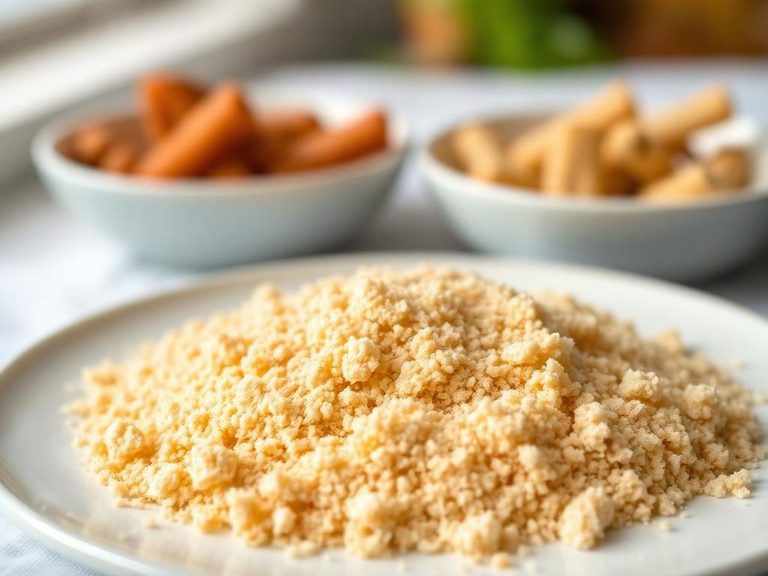
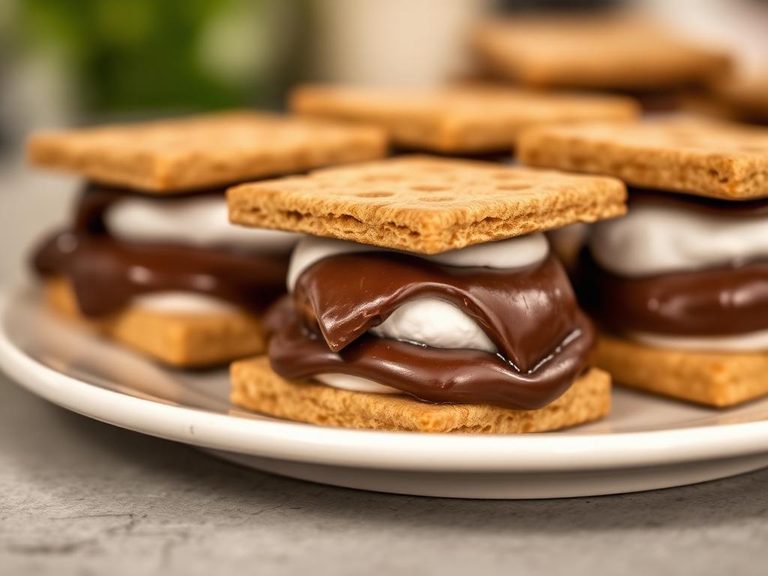
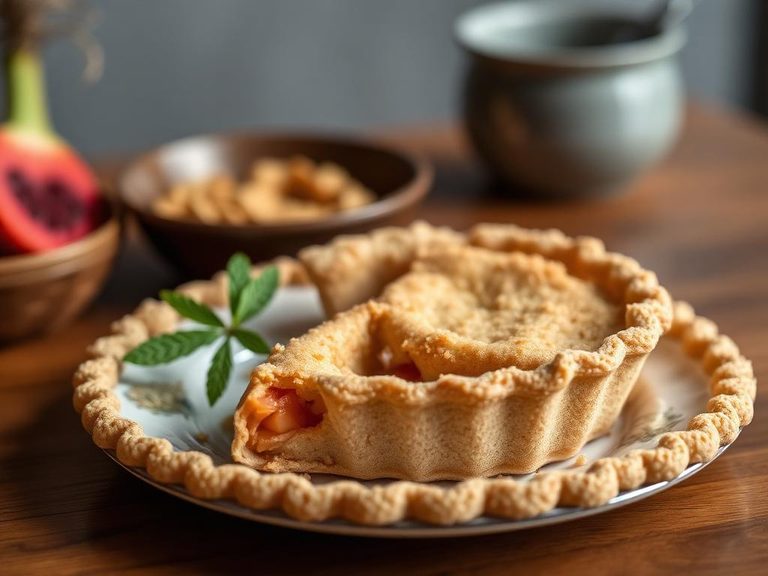
Yes, their mild flavor makes them suitable for sweet applications like pie crusts, crumb toppings for fruit crisps, or as a base for no-bake dessert bars.
Nutrient density (calculated · NRF9.3)
Nutrient Rich Foods index: beneficial nutrients (protein, fiber, vitamins, minerals) minus saturated fat, added sugar & sodium, per 100 kcal.
NRF9.3 index — Fulgoni, Keast & Drewnowski, 2009. Computed from USDA nutrients.
Weight-loss friendliness (composite index)
Energy density 4.33 kcal/g · 13% calories from protein · 3.8 g fiber · 2.4 g sugar per 100 g.
Composite of energy density (Rolls et al., 1999), protein & fiber satiety, minus sugar. A calculated heuristic — ranks satiety-per-calorie, not a clinical measure.
Dietary load (calculated from USDA values)
Potential renal acid load. Positive = acid-forming, negative = alkaline-forming.
Sodium-to-potassium ratio: 5.36 (lower is better — aim for ≤ 1)
Sodium:potassium per WHO potassium guidance. Computed from USDA nutrients.