

Cookies, peanut butter, commercially prepared, sugar free
Whole food · Baked Products

Photo: Wikipedia
A dense, crumbly cookie with a rich, nutty peanut butter flavor, offering a satisfyingly firm texture that melts on the tongue. Commercially prepared and sugar-free, it provides a high-energy, protein-rich snack with minimal sugar impact. Each 100g delivers over 500 calories, making it a substantial treat for those seeking a low-sugar indulgence.
Calorie split: 8% protein · 39% carbs · 53% fat
↓ Full nutrition💚 Why it's loved
People love it for the classic, comforting taste of peanut butter combined with a satisfying crunch, often evoking nostalgic feelings of childhood snacks. Its versatility makes it a quick, portable energy boost for busy lifestyles, and its sugar-free nature appeals to health-conscious consumers.
⚠️ Watch-outs & how to enjoy it better
The high fat and calorie content can contribute to weight gain if overconsumed, and peanut butter is a common allergen that may cause reactions in sensitive individuals. To counteract this, practice portion control (e.g., stick to 1-2 cookies per serving) and pair with a glass of water or a piece of fruit to enhance satiety without excess calories.
Key benefits
- High protein content from peanut butter supports muscle maintenance
- Sugar-free formulation helps manage blood sugar levels
- Rich in healthy fats for sustained energy
- Good source of fiber for digestive health
- Convenient, shelf-stable snack option
🍽️ Popular dishes
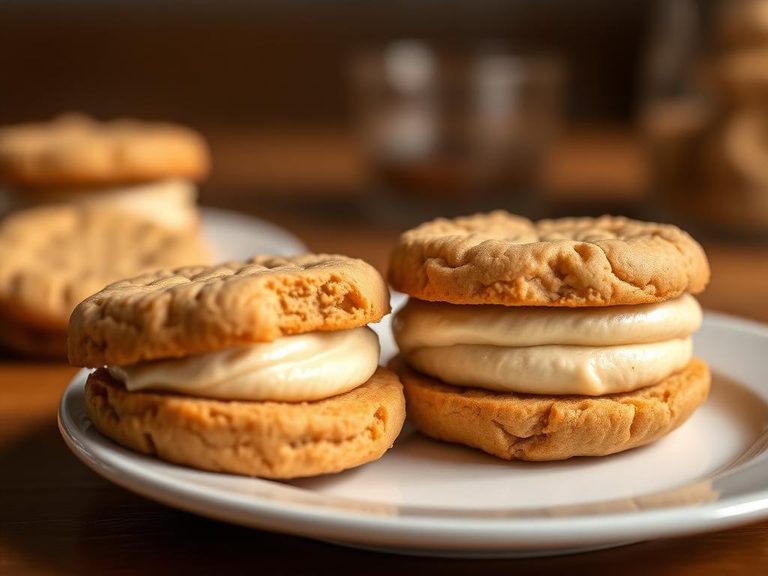
🌍 Where it's eaten
💡 Did you know?
Sugar-free peanut butter cookies often use sugar alcohols like maltitol, which can have a cooling effect on the tongue and may cause digestive discomfort in some people if eaten in large quantities.
Full nutrition (USDA data · scales with serving)
| Water | 6.2 g |
| Energy | 523 kcal |
| Energy | 2187 kj |
| Protein | 10.3 g |
| Total lipid (fat) | 31.0 g |
| Ash | 1.9 g |
| Carbohydrate, by difference | 50.5 g |
| Fiber, total dietary | 3.4 g |
| Total Sugars | 0.00 g |
| Calcium, Ca | 0.00 mg |
| Iron, Fe | 2.5 mg |
| Magnesium, Mg | 49.0 mg |
| Phosphorus, P | 132 mg |
| Potassium, K | 202 mg |
| Sodium, Na | 448 mg |
| Zinc, Zn | 1.1 mg |
| Copper, Cu | 0.20 mg |
| Selenium, Se | 16.6 ug |
| Vitamin C, total ascorbic acid | 0.00 mg |
| Thiamin | 0.34 mg |
| Riboflavin | 0.22 mg |
| Niacin | 5.5 mg |
| Vitamin B-6 | 0.11 mg |
| Folate, total | 83.0 ug |
| Folic acid | 48.0 ug |
| Folate, food | 35.0 ug |
| Folate, DFE | 117 ug |
| Choline, total | 38.5 mg |
| Vitamin B-12 | 0.00 ug |
| Vitamin B-12, added | 0.00 ug |
| Vitamin A, RAE | 0.00 ug |
| Retinol | 0.00 ug |
| Carotene, beta | 0.00 ug |
| Carotene, alpha | 0.00 ug |
| Cryptoxanthin, beta | 0.00 ug |
| Vitamin A, IU | 1.0 iu |
| Lycopene | 0.00 ug |
| Lutein + zeaxanthin | 31.0 ug |
| Vitamin E (alpha-tocopherol) | 3.5 mg |
| Vitamin E, added | 0.00 mg |
| Vitamin D (D2 + D3), International Units | 0.00 iu |
| Vitamin D (D2 + D3) | 0.00 ug |
| Vitamin K (phylloquinone) | 34.8 ug |
| Alcohol, ethyl | 0.00 g |
| Caffeine | 0.00 mg |
| Theobromine | 0.00 mg |
Fat & fatty acid profile (per 100g)
| Fatty acids, total saturated | 8.6 g |
| SFA 4:0 | 0.00 g |
| SFA 6:0 | 0.00 g |
| SFA 8:0 | 0.00 g |
| SFA 10:0 | 0.00 g |
| SFA 12:0 | 0.03 g |
| SFA 14:0 | 0.06 g |
| SFA 15:0 | 0.00 g |
| SFA 16:0 | 5.9 g |
| SFA 17:0 | 0.01 g |
| SFA 18:0 | 1.8 g |
| SFA 20:0 | 0.20 g |
| SFA 22:0 | 0.35 g |
| SFA 24:0 | 0.09 g |
| Fatty acids, total monounsaturated | 7.7 g |
| MUFA 14:1 | 0.00 g |
| MUFA 15:1 | 0.00 g |
| MUFA 16:1 | 0.03 g |
| MUFA 17:1 | 0.00 g |
| MUFA 18:1 | 7.6 g |
| MUFA 20:1 | 0.14 g |
| MUFA 22:1 | 0.00 g |
| MUFA 24:1 c | 0.00 g |
| Fatty acids, total polyunsaturated | 11.5 g |
| PUFA 18:2 | 10.5 g |
| PUFA 18:3 | 0.99 g |
| PUFA 18:4 | 0.00 g |
| PUFA 20:2 n-6 c,c | 0.00 g |
| PUFA 20:3 | 0.00 g |
| PUFA 20:4 | 0.00 g |
| PUFA 20:5 n-3 (EPA) | 0.00 g |
| PUFA 22:4 | 0.00 g |
| PUFA 22:5 n-3 (DPA) | 0.00 g |
| PUFA 22:6 n-3 (DHA) | 0.00 g |
| Fatty acids, total trans | 0.00 g |
| Cholesterol | 17.0 mg |
Amino acid profile (per 100g)
Estimated from Cookies, animal crackers (includes arrowroot, tea biscuits) — USDA does not publish this profile for Cookies.
| Tryptophan | 0.10 g |
| Threonine | 0.19 g |
| Isoleucine | 0.26 g |
| Leucine | 0.47 g |
| Lysine | 0.24 g |
| Methionine | 0.12 g |
| Cystine | 0.15 g |
| Phenylalanine | 0.32 g |
| Tyrosine | 0.20 g |
| Valine | 0.30 g |
| Arginine | 0.26 g |
| Histidine | 0.14 g |
| Alanine | 0.21 g |
| Aspartic acid | 0.29 g |
| Glutamic acid | 2.3 g |
| Glycine | 0.23 g |
| Proline | 0.76 g |
| Serine | 0.36 g |
FAQ
Are sugar-free peanut butter cookies healthier than regular ones?
They are lower in sugar and can be better for blood sugar management, but they still contain high calories and fat, so moderation is key.
Can I eat these if I have a peanut allergy?
No, these cookies contain peanut butter, a common allergen, and should be avoided if you have a peanut allergy.
How should I store these cookies?
Keep them in an airtight container at room temperature to maintain freshness and prevent them from becoming stale or absorbing moisture.
Nutrient density (calculated · NRF9.3)
Nutrient Rich Foods index: beneficial nutrients (protein, fiber, vitamins, minerals) minus saturated fat, added sugar & sodium, per 100 kcal.
NRF9.3 index — Fulgoni, Keast & Drewnowski, 2009. Computed from USDA nutrients.
Weight-loss friendliness (composite index)
Energy density 5.23 kcal/g · 8% calories from protein · 3.4 g fiber · 0.0 g sugar per 100 g.
Composite of energy density (Rolls et al., 1999), protein & fiber satiety, minus sugar. A calculated heuristic — ranks satiety-per-calorie, not a clinical measure.
Dietary load (calculated from USDA values)
Potential renal acid load. Positive = acid-forming, negative = alkaline-forming.
Sodium-to-potassium ratio: 2.22 (lower is better — aim for ≤ 1)
Sodium:potassium per WHO potassium guidance. Computed from USDA nutrients.