

Chicken, broilers or fryers, meat only, raw
Whole food · Poultry Products

Photo: Wikipedia
This is the lean, boneless, skinless breast meat of young chickens, prized for its mild, clean flavor and a tender, dense texture that becomes juicy when cooked properly. Nutritionally, it's a powerhouse of high-quality protein with minimal fat and zero carbohydrates, making it a foundational food for muscle-building and low-calorie diets.
Calorie split: 76% protein · 0% carbs · 24% fat
↓ Full nutrition💚 Why it's loved
People love it for its incredible culinary chameleon nature—it readily absorbs marinades, spices, and sauces, transforming from a simple grilled cutlet into global flavors. Its lean profile allows for guilt-free, high-protein meals that form the backbone of fitness and home cooking.
⚠️ Watch-outs & how to enjoy it better
The primary downside is its tendency to dry out into a chalky, tasteless texture if overcooked, which is a common kitchen mishap. To counteract this, always marinate it, use a meat thermometer (pull at 160°F/71°C), and let it rest before slicing. Those monitoring sodium should be mindful of processed forms like deli slices or pre-marinated cuts.
Key benefits
- Exceptionally high in complete protein for muscle repair and satiety
- Very low in fat, especially saturated fat, supporting heart health
- Zero carbohydrates, making it ideal for ketogenic and low-carb diets
- Rich in niacin (vitamin B3) and selenium, essential for energy metabolism and thyroid function
- A versatile, affordable base for countless healthy meal preparations
🍽️ Popular dishes

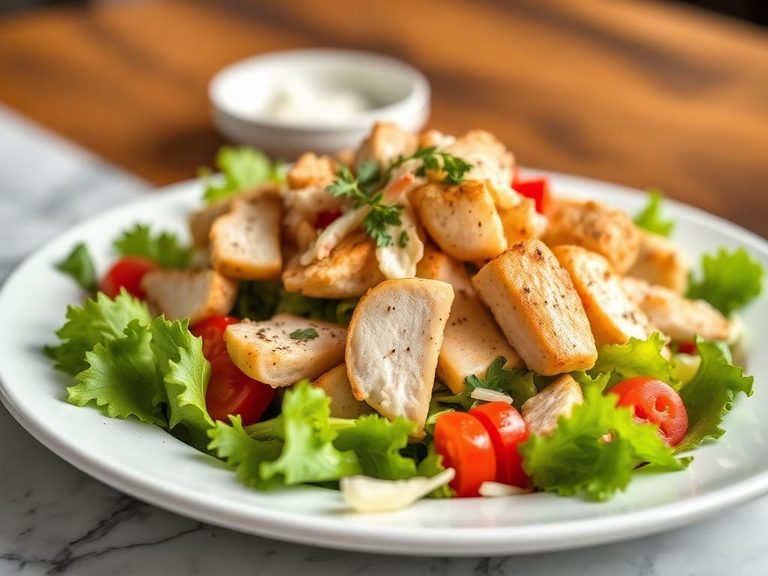
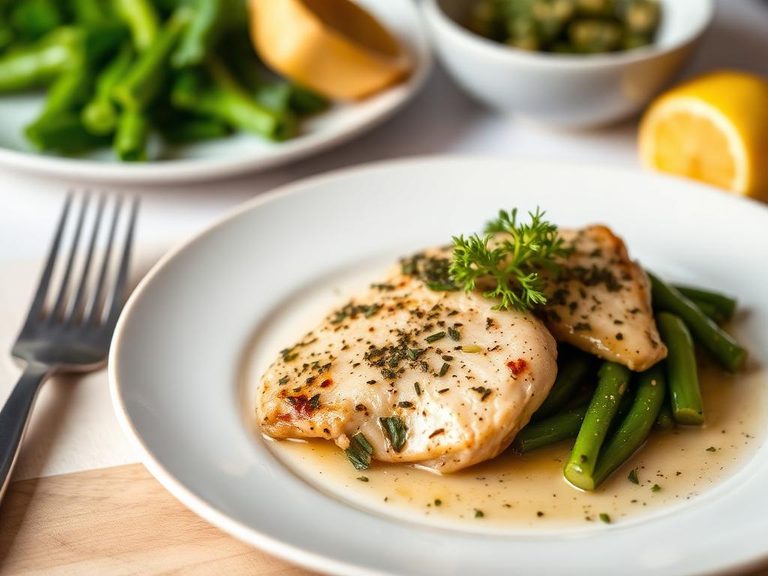
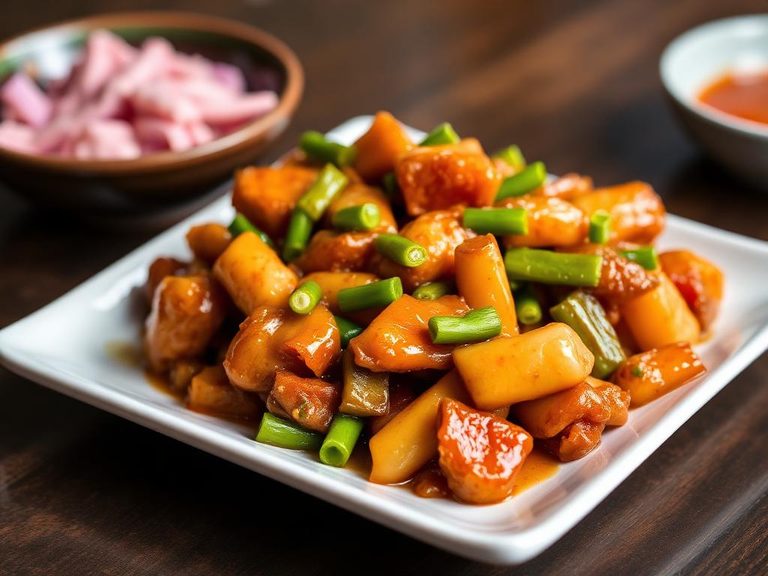
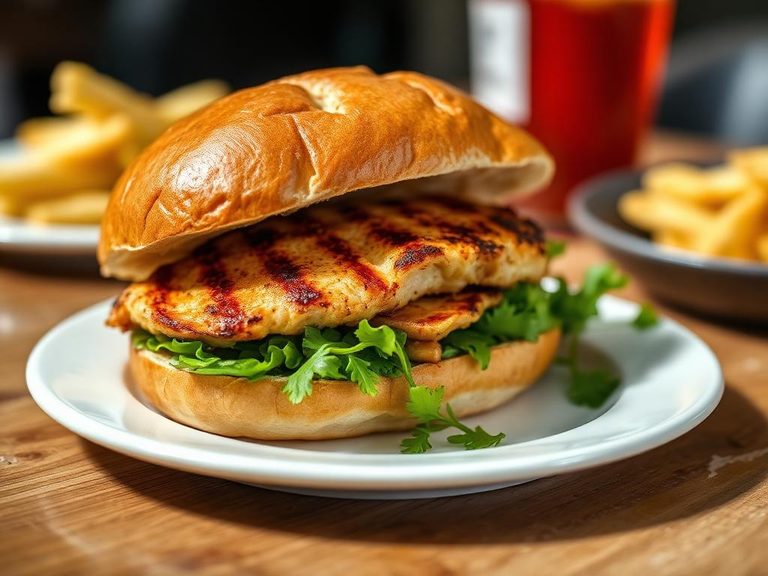

🌍 Where it's eaten
💡 Did you know?
The white meat of chicken breast contains about 2.5 times more myoglobin than dark meat, but it's still classified as 'white meat' because its myoglobin concentration is far lower than in beef, which is why it cooks so much faster and turns pale.
Full nutrition (USDA data · scales with serving)
| Water | 75.5 g |
| Energy | 119 kcal |
| Energy | 498 kj |
| Protein | 21.4 g |
| Total lipid (fat) | 3.1 g |
| Ash | 0.96 g |
| Carbohydrate, by difference | 0.00 g |
| Fiber, total dietary | 0.00 g |
| Total Sugars | 0.00 g |
| Calcium, Ca | 12.0 mg |
| Iron, Fe | 0.89 mg |
| Magnesium, Mg | 25.0 mg |
| Phosphorus, P | 173 mg |
| Potassium, K | 229 mg |
| Sodium, Na | 77.0 mg |
| Zinc, Zn | 1.5 mg |
| Copper, Cu | 0.05 mg |
| Manganese, Mn | 0.02 mg |
| Selenium, Se | 15.7 ug |
| Vitamin C, total ascorbic acid | 2.3 mg |
| Thiamin | 0.07 mg |
| Riboflavin | 0.14 mg |
| Niacin | 8.2 mg |
| Pantothenic acid | 1.1 mg |
| Vitamin B-6 | 0.43 mg |
| Folate, total | 7.0 ug |
| Folic acid | 0.00 ug |
| Folate, food | 7.0 ug |
| Folate, DFE | 7.0 ug |
| Choline, total | 65.7 mg |
| Betaine | 8.5 mg |
| Vitamin B-12 | 0.37 ug |
| Vitamin B-12, added | 0.00 ug |
| Vitamin A, RAE | 16.0 ug |
| Retinol | 16.0 ug |
| Carotene, beta | 0.00 ug |
| Carotene, alpha | 0.00 ug |
| Cryptoxanthin, beta | 0.00 ug |
| Vitamin A, IU | 53.0 iu |
| Lycopene | 0.00 ug |
| Lutein + zeaxanthin | 0.00 ug |
| Vitamin E (alpha-tocopherol) | 0.21 mg |
| Vitamin E, added | 0.00 mg |
| Vitamin D (D2 + D3), International Units | 5.0 iu |
| Vitamin D (D2 + D3) | 0.10 ug |
| Vitamin D3 (cholecalciferol) | 0.10 ug |
| Vitamin K (phylloquinone) | 1.8 ug |
| Vitamin K (Dihydrophylloquinone) | 0.00 ug |
| Alcohol, ethyl | 0.00 g |
| Caffeine | 0.00 mg |
| Theobromine | 0.00 mg |
Fat & fatty acid profile (per 100g)
| Fatty acids, total saturated | 0.79 g |
| SFA 4:0 | 0.00 g |
| SFA 6:0 | 0.00 g |
| SFA 8:0 | 0.00 g |
| SFA 10:0 | 0.00 g |
| SFA 12:0 | 0.01 g |
| SFA 14:0 | 0.02 g |
| SFA 16:0 | 0.53 g |
| SFA 18:0 | 0.22 g |
| Fatty acids, total monounsaturated | 0.90 g |
| MUFA 16:1 | 0.12 g |
| MUFA 18:1 | 0.76 g |
| MUFA 20:1 | 0.01 g |
| MUFA 22:1 | 0.00 g |
| Fatty acids, total polyunsaturated | 0.75 g |
| PUFA 18:2 | 0.55 g |
| PUFA 18:3 | 0.02 g |
| PUFA 18:4 | 0.00 g |
| PUFA 20:4 | 0.08 g |
| PUFA 20:5 n-3 (EPA) | 0.01 g |
| PUFA 22:5 n-3 (DPA) | 0.02 g |
| PUFA 22:6 n-3 (DHA) | 0.03 g |
| Cholesterol | 70.0 mg |
Amino acid profile (per 100g)
| Tryptophan | 0.25 g |
| Threonine | 0.90 g |
| Isoleucine | 1.1 g |
| Leucine | 1.6 g |
| Lysine | 1.8 g |
| Methionine | 0.59 g |
| Cystine | 0.27 g |
| Phenylalanine | 0.85 g |
| Tyrosine | 0.72 g |
| Valine | 1.1 g |
| Arginine | 1.3 g |
| Histidine | 0.66 g |
| Alanine | 1.2 g |
| Aspartic acid | 1.9 g |
| Glutamic acid | 3.2 g |
| Glycine | 1.1 g |
| Proline | 0.88 g |
| Serine | 0.74 g |
FAQ
Why is my chicken breast always dry and rubbery?
You're likely overcooking it. Chicken breast is very lean and has little fat to keep it moist. Cook it quickly over medium-high heat (grill, pan-sear) or gently poach, and use an instant-read thermometer. Remove it from heat at 160°F (71°C) and let it rest for 5-10 minutes; carryover cooking will bring it to the safe 165°F (74°C).
Is the nutritional difference between raw and cooked chicken breast significant?
Yes, due to water loss. 100g of raw chicken breast yields about 75-80g of cooked meat. So, per 100g, cooked chicken has more concentrated protein and calories. Always check if a nutrition label refers to raw or cooked weight.
What's the best way to add flavor without adding fat?
Marinate it! An acidic base (yogurt, lemon juice, vinegar) with herbs and spices tenderizes and infuses flavor. Dry rubs with paprika, garlic powder, cumin, and black pepper create a delicious crust when grilled or baked. You can also poach it in broth with aromatics.
Nutrient density (calculated · NRF9.3)
Nutrient Rich Foods index: beneficial nutrients (protein, fiber, vitamins, minerals) minus saturated fat, added sugar & sodium, per 100 kcal.
NRF9.3 index — Fulgoni, Keast & Drewnowski, 2009. Computed from USDA nutrients.
Weight-loss friendliness (composite index)
Energy density 1.19 kcal/g · 72% calories from protein · 0.0 g fiber · 0.0 g sugar per 100 g.
Composite of energy density (Rolls et al., 1999), protein & fiber satiety, minus sugar. A calculated heuristic — ranks satiety-per-calorie, not a clinical measure.
Dietary load (calculated from USDA values)
Potential renal acid load. Positive = acid-forming, negative = alkaline-forming.
Sodium-to-potassium ratio: 0.34 (lower is better — aim for ≤ 1)
Sodium:potassium per WHO potassium guidance. Computed from USDA nutrients.