

Chicken, broilers or fryers, breast, meat and skin, cooked, roasted
Whole food · Poultry Products
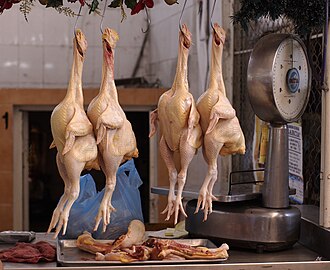
Photo: Wikipedia
This is the lean, protein-packed muscle meat from a young chicken, roasted with its skin on. The meat is tender and juicy, while the skin adds a savory, crispy contrast. It's a nutritional powerhouse, delivering nearly 30 grams of high-quality protein per 100 grams with zero carbs.
Calorie split: 63% protein · 0% carbs · 37% fat
↓ Full nutrition💚 Why it's loved
People adore it for its mild, savory flavor that acts as a perfect canvas for countless seasonings and cooking methods. Its universal appeal lies in its ability to be the hearty centerpiece of a weeknight dinner or a gourmet dish.
⚠️ Watch-outs & how to enjoy it better
The skin significantly increases the saturated fat and calorie content, which may be a concern for those monitoring fat intake. To enjoy it healthily, consider removing the skin before eating or using it sparingly for flavor. Also, as a common poultry product, ensure it's cooked thoroughly to an internal temperature of 165°F (74°C) to avoid foodborne illness.
Key benefits
- Excellent source of complete protein for muscle maintenance and repair.
- Rich in B vitamins like niacin (B3) and B6, essential for energy metabolism.
- Provides minerals like selenium, important for immune function and thyroid health.
- A versatile, low-carb protein source suitable for various dietary plans.
🍽️ Popular dishes
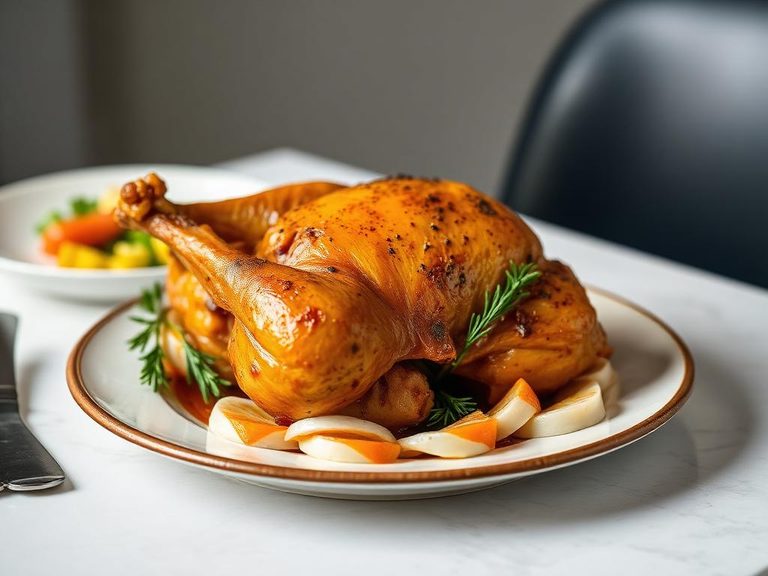
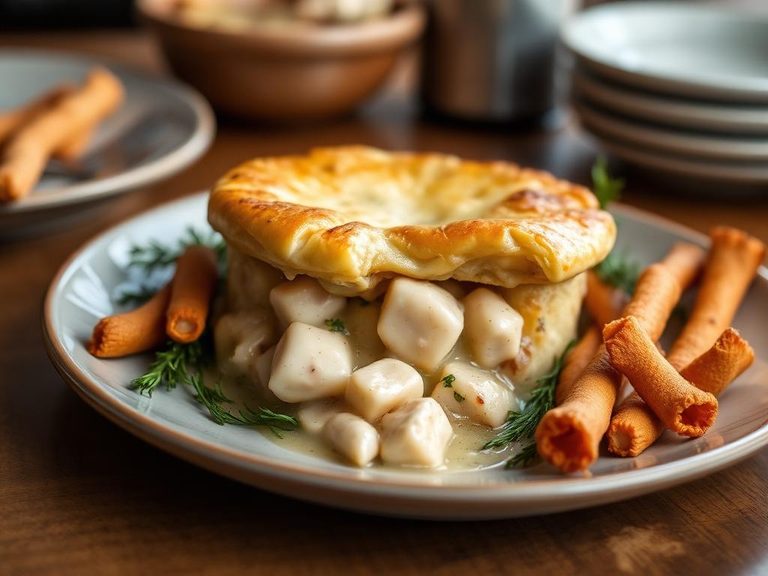
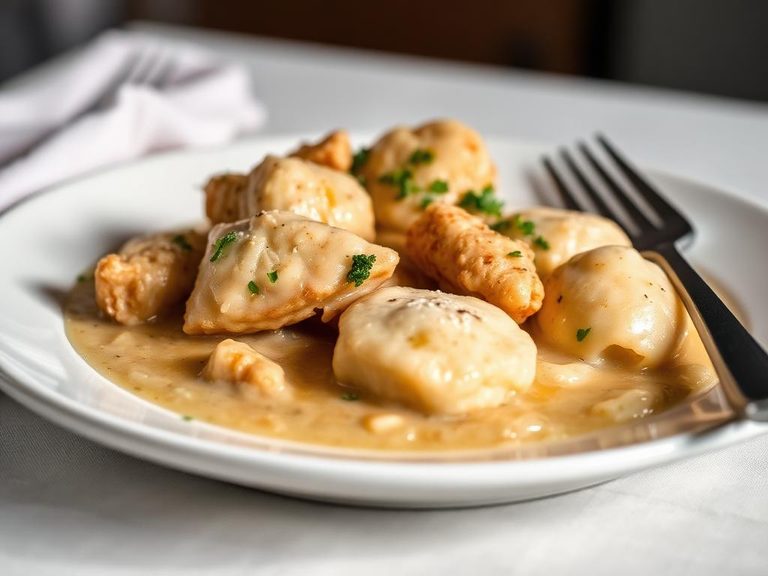
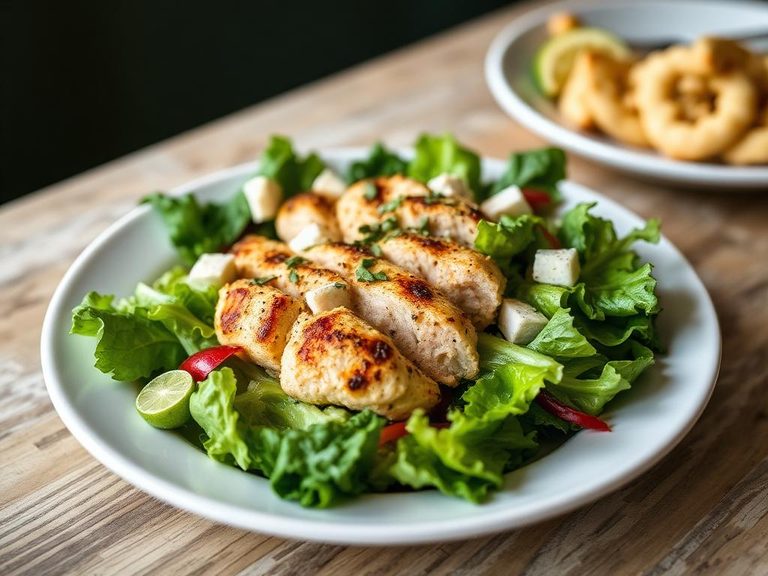

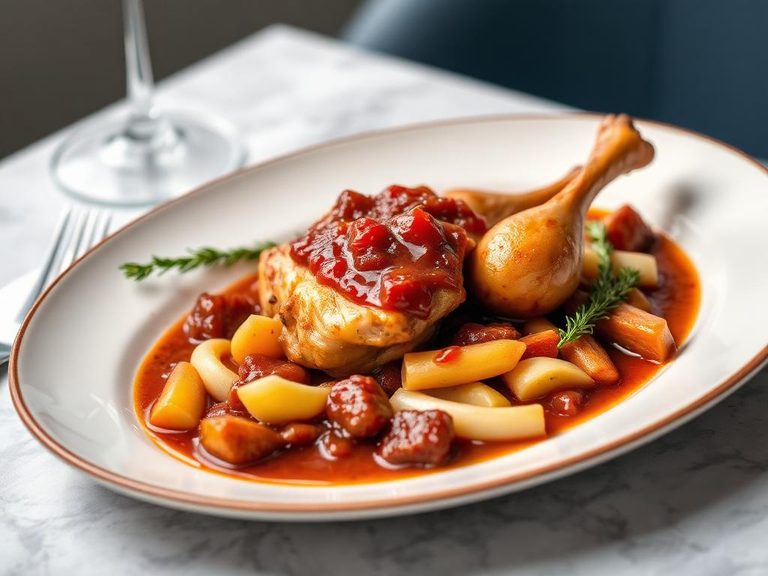
🌍 Where it's eaten
💡 Did you know?
The white meat of the breast is composed of fast-twitch muscle fibers, which are used for quick, powerful movements like flapping wings, making it leaner and quicker to cook than the darker thigh meat.
Full nutrition (USDA data · scales with serving)
| Water | 62.4 g |
| Energy | 197 kcal |
| Energy | 824 kj |
| Protein | 29.8 g |
| Total lipid (fat) | 7.8 g |
| Ash | 0.99 g |
| Carbohydrate, by difference | 0.00 g |
| Fiber, total dietary | 0.00 g |
| Total Sugars | 0.00 g |
| Calcium, Ca | 14.0 mg |
| Iron, Fe | 1.1 mg |
| Magnesium, Mg | 27.0 mg |
| Phosphorus, P | 214 mg |
| Potassium, K | 245 mg |
| Sodium, Na | 71.0 mg |
| Zinc, Zn | 1.0 mg |
| Copper, Cu | 0.05 mg |
| Manganese, Mn | 0.02 mg |
| Selenium, Se | 24.7 ug |
| Vitamin C, total ascorbic acid | 0.00 mg |
| Thiamin | 0.07 mg |
| Riboflavin | 0.12 mg |
| Niacin | 12.7 mg |
| Pantothenic acid | 0.94 mg |
| Vitamin B-6 | 0.56 mg |
| Folate, total | 4.0 ug |
| Folic acid | 0.00 ug |
| Folate, food | 4.0 ug |
| Folate, DFE | 4.0 ug |
| Choline, total | 72.8 mg |
| Betaine | 6.2 mg |
| Vitamin B-12 | 0.32 ug |
| Vitamin B-12, added | 0.00 ug |
| Vitamin A, RAE | 28.0 ug |
| Retinol | 28.0 ug |
| Carotene, beta | 0.00 ug |
| Carotene, alpha | 0.00 ug |
| Cryptoxanthin, beta | 0.00 ug |
| Vitamin A, IU | 93.0 iu |
| Lycopene | 0.00 ug |
| Lutein + zeaxanthin | 0.00 ug |
| Vitamin E (alpha-tocopherol) | 0.27 mg |
| Vitamin E, added | 0.00 mg |
| Vitamin D (D2 + D3), International Units | 5.0 iu |
| Vitamin D (D2 + D3) | 0.10 ug |
| Vitamin D3 (cholecalciferol) | 0.10 ug |
| Vitamin K (phylloquinone) | 0.30 ug |
| Vitamin K (Dihydrophylloquinone) | 0.00 ug |
| Alcohol, ethyl | 0.00 g |
| Caffeine | 0.00 mg |
| Theobromine | 0.00 mg |
Fat & fatty acid profile (per 100g)
| Fatty acids, total saturated | 2.2 g |
| SFA 4:0 | 0.00 g |
| SFA 6:0 | 0.00 g |
| SFA 8:0 | 0.00 g |
| SFA 10:0 | 0.00 g |
| SFA 12:0 | 0.01 g |
| SFA 14:0 | 0.06 g |
| SFA 16:0 | 1.6 g |
| SFA 18:0 | 0.45 g |
| Fatty acids, total monounsaturated | 3.0 g |
| MUFA 16:1 | 0.40 g |
| MUFA 18:1 | 2.5 g |
| MUFA 20:1 | 0.08 g |
| MUFA 22:1 | 0.00 g |
| Fatty acids, total polyunsaturated | 1.7 g |
| PUFA 18:2 | 1.4 g |
| PUFA 18:3 | 0.06 g |
| PUFA 18:4 | 0.00 g |
| PUFA 20:4 | 0.07 g |
| PUFA 20:5 n-3 (EPA) | 0.01 g |
| PUFA 22:5 n-3 (DPA) | 0.01 g |
| PUFA 22:6 n-3 (DHA) | 0.03 g |
| Cholesterol | 84.0 mg |
Amino acid profile (per 100g)
| Tryptophan | 0.34 g |
| Threonine | 1.2 g |
| Isoleucine | 1.5 g |
| Leucine | 2.2 g |
| Lysine | 2.5 g |
| Methionine | 0.81 g |
| Cystine | 0.39 g |
| Phenylalanine | 1.2 g |
| Tyrosine | 0.98 g |
| Valine | 1.5 g |
| Arginine | 1.8 g |
| Histidine | 0.90 g |
| Alanine | 1.7 g |
| Aspartic acid | 2.7 g |
| Glutamic acid | 4.4 g |
| Glycine | 1.7 g |
| Proline | 1.3 g |
| Serine | 1.0 g |
FAQ
Is the skin nutritious?
The skin contains most of the fat and calories of this cut. While it has some collagen and flavor, it's often removed for a leaner protein source.
How do I keep roasted chicken breast from drying out?
Key tips include not overcooking (use a meat thermometer), brining before cooking, or roasting at a high temperature for a shorter time to seal in juices.
What's the difference between 'broilers' and 'fryers'?
The terms are largely interchangeable in modern farming, both referring to young chickens raised specifically for meat, typically slaughtered between 6-8 weeks old.
Nutrient density (calculated · NRF9.3)
Nutrient Rich Foods index: beneficial nutrients (protein, fiber, vitamins, minerals) minus saturated fat, added sugar & sodium, per 100 kcal.
NRF9.3 index — Fulgoni, Keast & Drewnowski, 2009. Computed from USDA nutrients.
Weight-loss friendliness (composite index)
Energy density 1.97 kcal/g · 61% calories from protein · 0.0 g fiber · 0.0 g sugar per 100 g.
Composite of energy density (Rolls et al., 1999), protein & fiber satiety, minus sugar. A calculated heuristic — ranks satiety-per-calorie, not a clinical measure.
Dietary load (calculated from USDA values)
Potential renal acid load. Positive = acid-forming, negative = alkaline-forming.
Sodium-to-potassium ratio: 0.29 (lower is better — aim for ≤ 1)
Sodium:potassium per WHO potassium guidance. Computed from USDA nutrients.