

Chicken breast tenders, breaded, cooked, microwaved
Whole food · Poultry Products
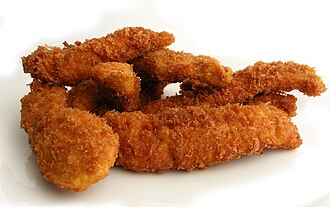
Photo: Wikipedia
Chicken breast tenders are the tender, inner strip of the chicken breast, prized for their quick cooking and mild flavor. When breaded and microwaved, they transform into a fast, crispy-on-the-outside, juicy-on-the-inside convenience food, offering a significant protein punch of 16.35g per 100g. The microwave method prioritizes speed, resulting in a softer, less uniformly crisp texture than frying but a much quicker meal.
Calorie split: 26% protein · 28% carbs · 46% fat
↓ Full nutrition💚 Why it's loved
People love chicken tenders for their universal appeal and nostalgic comfort food status, offering a mild, savory flavor that pairs perfectly with countless dipping sauces. Their pre-breaded, microwavable form makes them the ultimate quick-fix protein for busy weeknights, kids' meals, or a late-night snack.
⚠️ Watch-outs & how to enjoy it better
The primary downsides are the potential for a rubbery texture from over-microwaving and the sodium content often found in commercial breading and seasonings. To counteract texture issues, microwave in short intervals and let them rest. To manage sodium, pair with fresh, unsalted sides like steamed vegetables or a simple salad, and check labels for low-sodium brands.
Key benefits
- High-quality, complete protein source
- Extremely fast to prepare and reheat
- Low in sugar and contains no fiber
- Leaner cut compared to dark meat or fried options
- Versatile base for sauces and sides
🍽️ Popular dishes
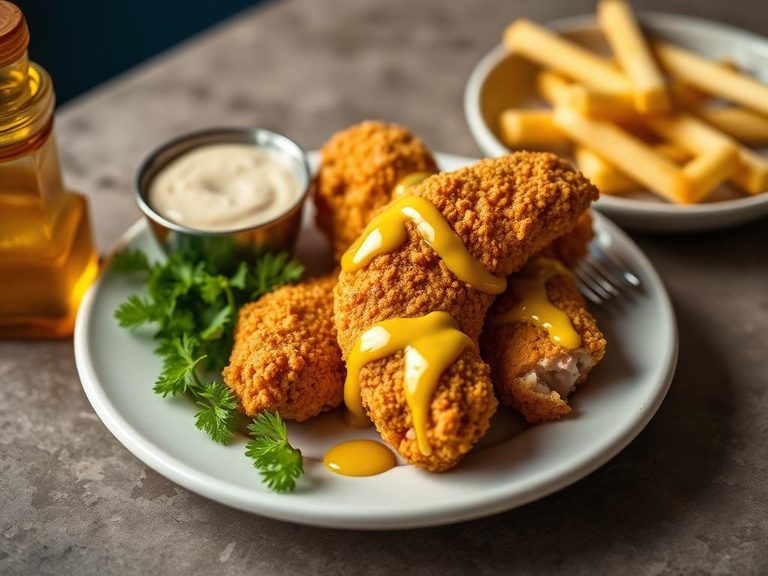
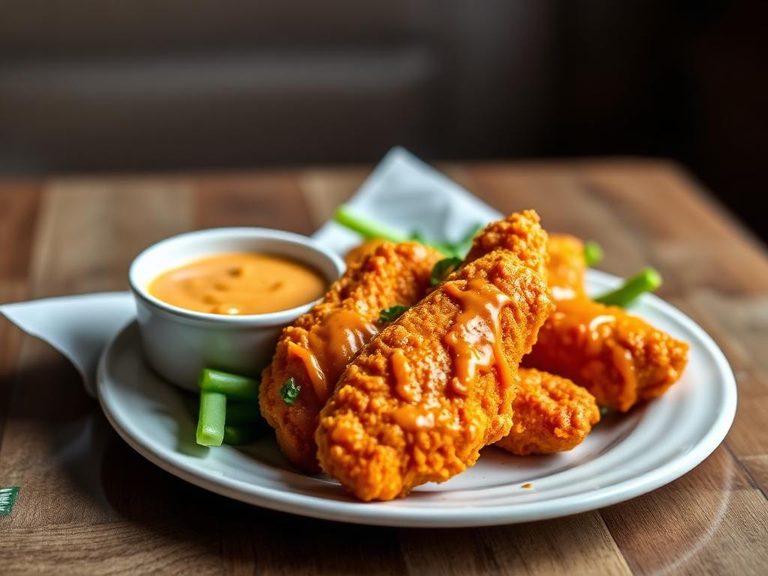
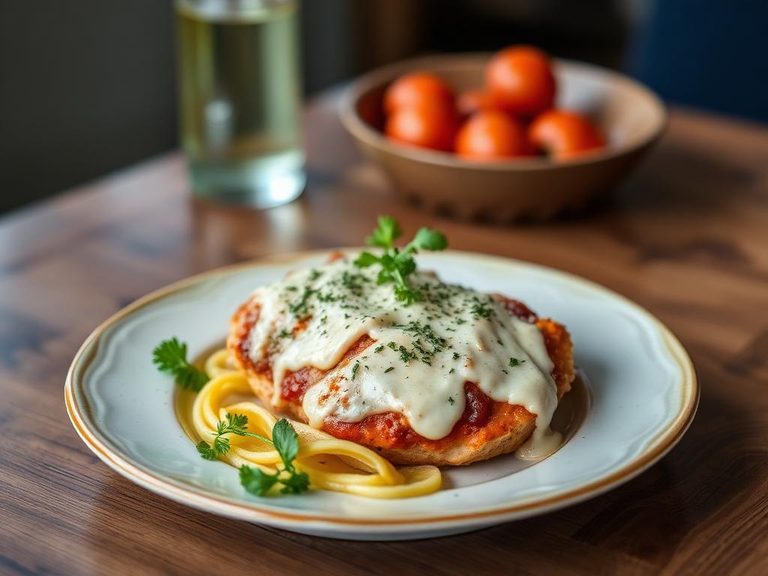
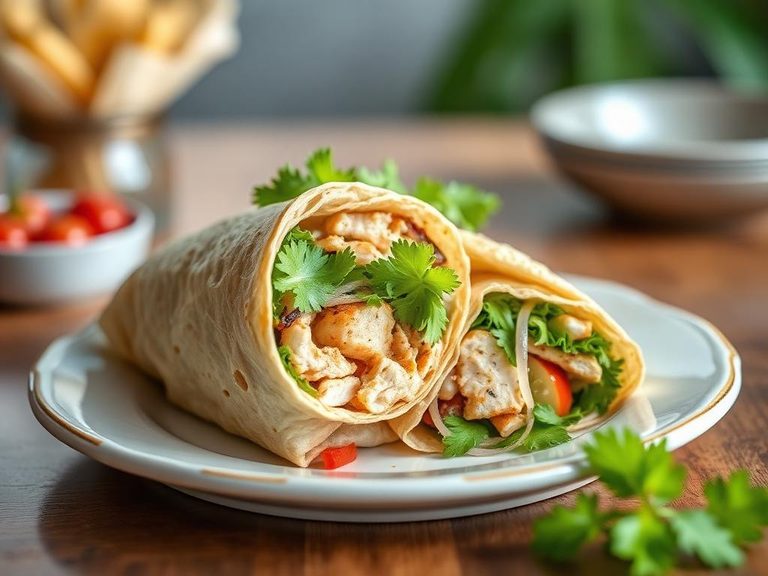
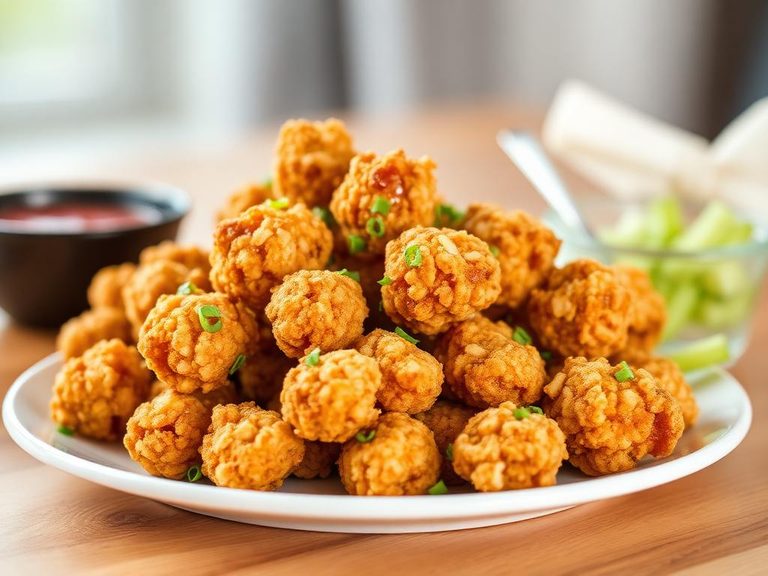
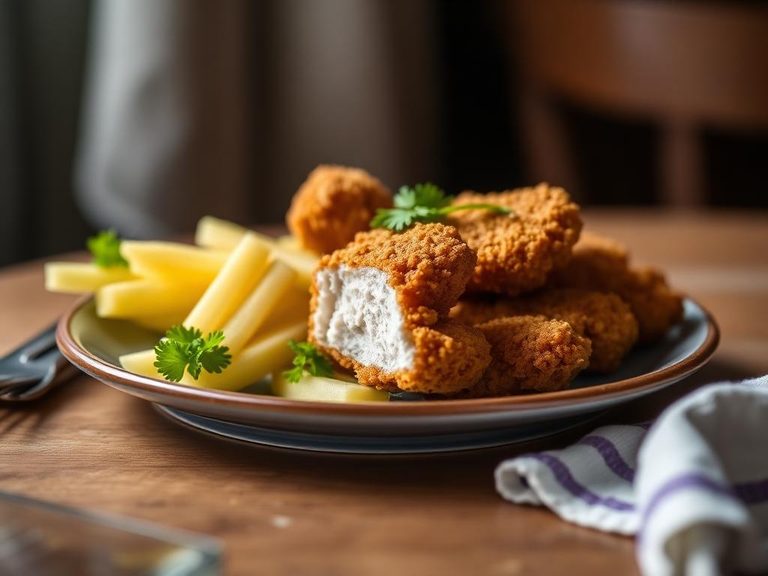
🌍 Where it's eaten
💡 Did you know?
The 'tender' is actually a distinct, small muscle (the pectoralis minor) that lies underneath the main breast muscle and is one of the first muscles to fatigue in a chicken, which is why it's so tender.
Full nutrition (USDA data · scales with serving)
| Water | 51.3 g |
| Energy | 252 kcal |
| Energy | 1053 kj |
| Protein | 16.4 g |
| Total lipid (fat) | 12.9 g |
| Ash | 1.9 g |
| Carbohydrate, by difference | 17.6 g |
| Fiber, total dietary | 0.00 g |
| Total Sugars | 0.00 g |
| Calcium, Ca | 14.0 mg |
| Iron, Fe | 1.0 mg |
| Magnesium, Mg | 26.0 mg |
| Phosphorus, P | 216 mg |
| Potassium, K | 225 mg |
| Sodium, Na | 446 mg |
| Zinc, Zn | 0.77 mg |
| Copper, Cu | 0.32 mg |
| Manganese, Mn | 0.23 mg |
| Selenium, Se | 30.6 ug |
| Vitamin C, total ascorbic acid | 0.00 mg |
| Thiamin | 0.32 mg |
| Riboflavin | 0.10 mg |
| Niacin | 6.5 mg |
| Pantothenic acid | 0.99 mg |
| Vitamin B-6 | 0.04 mg |
| Folate, total | 12.0 ug |
| Folic acid | 0.00 ug |
| Folate, food | 12.0 ug |
| Folate, DFE | 12.0 ug |
| Choline, total | 40.8 mg |
| Betaine | 30.2 mg |
| Vitamin B-12 | 0.44 ug |
| Vitamin B-12, added | 0.00 ug |
| Vitamin A, RAE | 0.00 ug |
| Retinol | 0.00 ug |
| Carotene, beta | 0.00 ug |
| Carotene, alpha | 0.00 ug |
| Cryptoxanthin, beta | 0.00 ug |
| Vitamin A, IU | 0.00 iu |
| Lycopene | 0.00 ug |
| Lutein + zeaxanthin | 0.00 ug |
| Vitamin E (alpha-tocopherol) | 0.37 mg |
| Vitamin E, added | 0.00 mg |
| Vitamin K (phylloquinone) | 4.2 ug |
| Alcohol, ethyl | 0.00 g |
| Caffeine | 0.00 mg |
| Theobromine | 0.00 mg |
Fat & fatty acid profile (per 100g)
| Fatty acids, total saturated | 3.2 g |
| SFA 4:0 | 0.00 g |
| SFA 6:0 | 0.00 g |
| SFA 8:0 | 0.00 g |
| SFA 10:0 | 0.00 g |
| SFA 12:0 | 0.00 g |
| SFA 14:0 | 0.00 g |
| SFA 15:0 | 0.00 g |
| SFA 16:0 | 2.6 g |
| SFA 17:0 | 0.00 g |
| SFA 18:0 | 0.56 g |
| SFA 20:0 | 0.00 g |
| SFA 22:0 | 0.00 g |
| SFA 24:0 | 0.00 g |
| Fatty acids, total monounsaturated | 5.7 g |
| MUFA 14:1 | 0.00 g |
| MUFA 16:1 | 0.55 g |
| MUFA 18:1 | 5.2 g |
| MUFA 20:1 | 0.00 g |
| MUFA 22:1 | 0.00 g |
| Fatty acids, total polyunsaturated | 2.8 g |
| PUFA 18:2 | 2.7 g |
| PUFA 18:3 | 0.10 g |
| PUFA 18:4 | 0.00 g |
| PUFA 20:4 | 0.00 g |
| PUFA 20:5 n-3 (EPA) | 0.00 g |
| PUFA 22:5 n-3 (DPA) | 0.00 g |
| PUFA 22:6 n-3 (DHA) | 0.00 g |
| Cholesterol | 45.0 mg |
Amino acid profile (per 100g)
| Tryptophan | 0.20 g |
| Threonine | 0.61 g |
| Isoleucine | 0.67 g |
| Leucine | 1.1 g |
| Lysine | 1.1 g |
| Methionine | 0.33 g |
| Cystine | 0.18 g |
| Phenylalanine | 0.57 g |
| Tyrosine | 0.35 g |
| Valine | 0.71 g |
| Arginine | 0.93 g |
| Histidine | 0.46 g |
| Alanine | 0.80 g |
| Aspartic acid | 1.3 g |
| Glutamic acid | 2.4 g |
| Glycine | 0.71 g |
| Proline | 0.75 g |
| Serine | 0.59 g |
| Hydroxyproline | 0.11 g |
FAQ
Why do my microwaved breaded tenders get soggy?
Microwaving creates steam, which softens the breading. To minimize this, place them on a paper towel to absorb moisture, use a shorter cooking time, and let them stand for a minute after cooking so the heat equalizes.
Are chicken tenders healthier than chicken nuggets?
Generally, yes. Tenders are typically whole-muscle meat, while nuggets are often a ground and formed mixture. This means tenders usually have less filler and a better protein-to-carb ratio, though you should always check ingredient lists.
How can I make pre-cooked, microwaved tenders crispier?
After microwaving to heat through, you can finish them in a hot skillet with a little oil for 30-60 seconds per side, or place them under a broiler for 1-2 minutes. This quickly crisps the exterior without drying the inside.
Nutrient density (calculated · NRF9.3)
Nutrient Rich Foods index: beneficial nutrients (protein, fiber, vitamins, minerals) minus saturated fat, added sugar & sodium, per 100 kcal.
NRF9.3 index — Fulgoni, Keast & Drewnowski, 2009. Computed from USDA nutrients.
Weight-loss friendliness (composite index)
Energy density 2.52 kcal/g · 26% calories from protein · 0.0 g fiber · 0.0 g sugar per 100 g.
Composite of energy density (Rolls et al., 1999), protein & fiber satiety, minus sugar. A calculated heuristic — ranks satiety-per-calorie, not a clinical measure.
Dietary load (calculated from USDA values)
Potential renal acid load. Positive = acid-forming, negative = alkaline-forming.
Sodium-to-potassium ratio: 1.98 (lower is better — aim for ≤ 1)
Sodium:potassium per WHO potassium guidance. Computed from USDA nutrients.