

Cheese, cottage, lowfat, 1% milkfat
Whole food · Dairy and Egg Products

Photo: Wikipedia
Low-fat cottage cheese is a fresh, lumpy curd cheese with a mild, milky flavor and a uniquely moist, slightly grainy texture. It's a protein powerhouse, packing over 12 grams of high-quality protein per 100 grams while remaining very low in fat and calories. This makes it a staple for those seeking a satisfying, nutrient-dense food that supports muscle health and satiety.
Calorie split: 71% protein · 16% carbs · 13% fat
↓ Full nutrition💚 Why it's loved
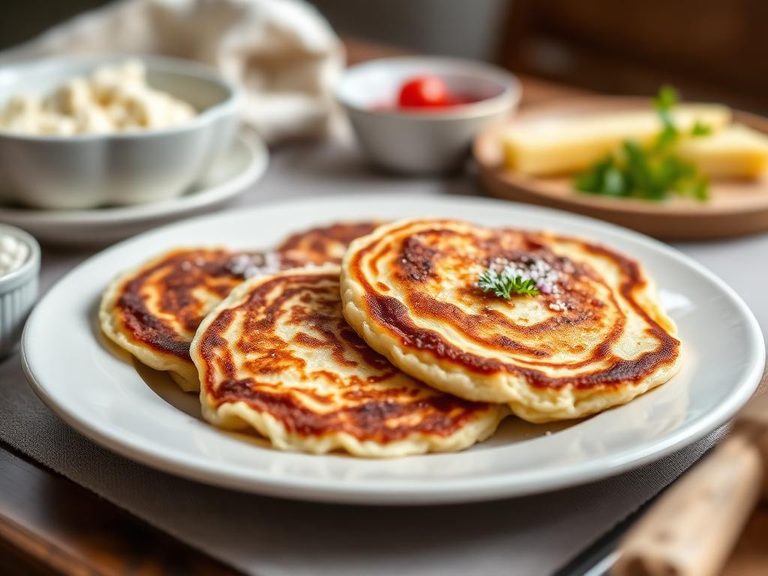
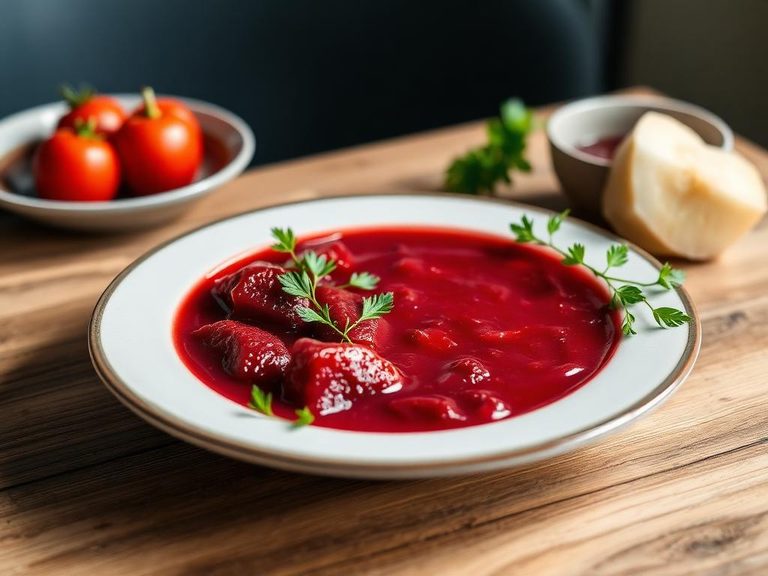
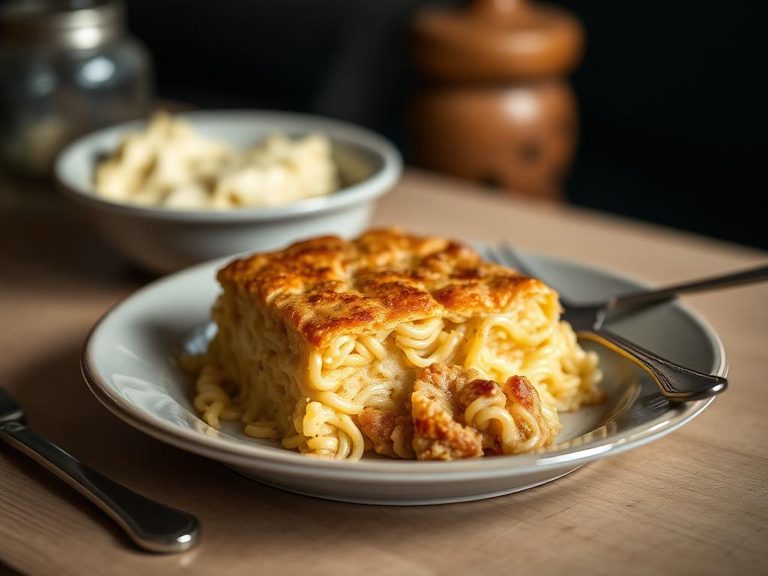
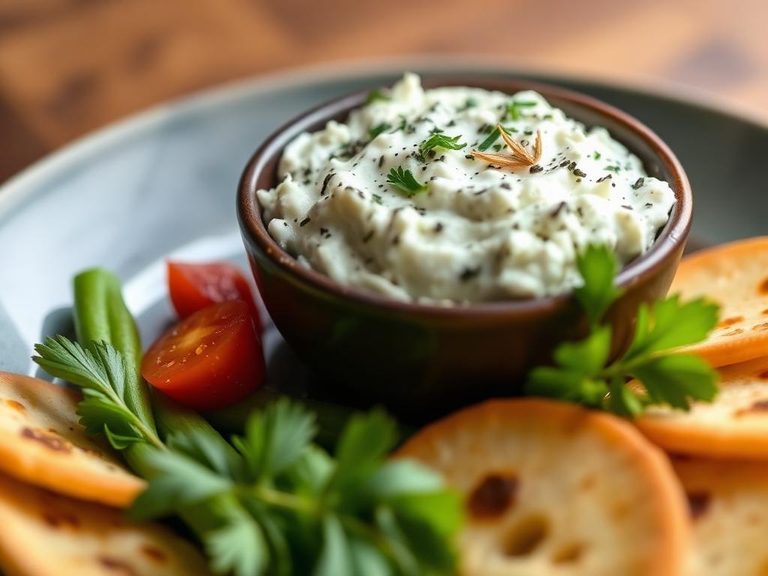
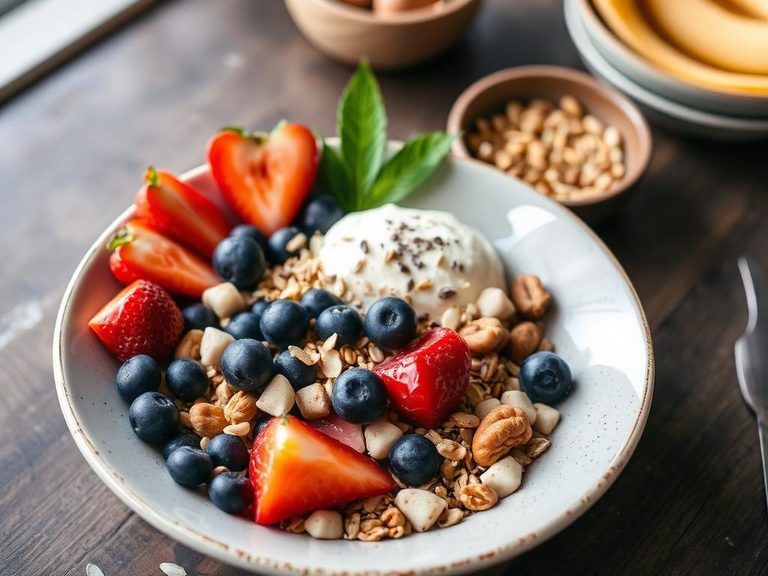
People love it for its incredible versatility—it seamlessly shifts from a savory breakfast base with fruit and seeds to a creamy, high-protein substitute in lasagna or dips. Its mild flavor acts as a blank canvas, and its association with classic comfort foods and fitness diets gives it a nostalgic yet modern appeal.
⚠️ Watch-outs & how to enjoy it better
Some find the lumpy texture unappealing, and its high protein content can be heavy for those with certain digestive sensitivities. Those monitoring sodium intake should check labels, as it can be moderately high in salt. To counteract this, pair it with fiber-rich vegetables or fruits, choose low-sodium versions, and use it as a component in a balanced meal rather than a standalone large portion.
Key benefits
- Excellent source of complete, slow-digesting casein protein.
- Very low in fat and calories, supporting weight management goals.
- Rich in calcium and phosphorus for bone health.
- Contains beneficial probiotics for gut health (in live-culture versions).
- High protein-to-carb ratio helps stabilize blood sugar.
🍽️ Popular dishes
🌍 Where it's eaten
💡 Did you know?
The 'cottage' in its name doesn't refer to a small house, but to the small, curd-like lumps that resemble pebbles or cobblestones.
Full nutrition (USDA data · scales with serving)
| Water | 82.5 g |
| Energy | 72.0 kcal |
| Energy | 303 kj |
| Protein | 12.4 g |
| Total lipid (fat) | 1.0 g |
| Ash | 1.4 g |
| Carbohydrate, by difference | 2.7 g |
| Fiber, total dietary | 0.00 g |
| Total Sugars | 2.7 g |
| Calcium, Ca | 61.0 mg |
| Iron, Fe | 0.14 mg |
| Magnesium, Mg | 5.0 mg |
| Phosphorus, P | 134 mg |
| Potassium, K | 86.0 mg |
| Sodium, Na | 406 mg |
| Zinc, Zn | 0.38 mg |
| Copper, Cu | 0.03 mg |
| Manganese, Mn | 0.00 mg |
| Selenium, Se | 9.0 ug |
| Fluoride, F | 31.6 ug |
| Vitamin C, total ascorbic acid | 0.00 mg |
| Thiamin | 0.02 mg |
| Riboflavin | 0.17 mg |
| Niacin | 0.13 mg |
| Pantothenic acid | 0.21 mg |
| Vitamin B-6 | 0.07 mg |
| Folate, total | 12.0 ug |
| Folic acid | 0.00 ug |
| Folate, food | 12.0 ug |
| Folate, DFE | 12.0 ug |
| Choline, total | 17.5 mg |
| Vitamin B-12 | 0.63 ug |
| Vitamin B-12, added | 0.00 ug |
| Vitamin A, RAE | 11.0 ug |
| Retinol | 11.0 ug |
| Carotene, beta | 3.0 ug |
| Carotene, alpha | 0.00 ug |
| Cryptoxanthin, beta | 0.00 ug |
| Vitamin A, IU | 41.0 iu |
| Lycopene | 0.00 ug |
| Lutein + zeaxanthin | 0.00 ug |
| Vitamin E (alpha-tocopherol) | 0.01 mg |
| Vitamin E, added | 0.00 mg |
| Vitamin D (D2 + D3), International Units | 0.00 iu |
| Vitamin D (D2 + D3) | 0.00 ug |
| Vitamin K (phylloquinone) | 0.10 ug |
| Alcohol, ethyl | 0.00 g |
| Caffeine | 0.00 mg |
| Theobromine | 0.00 mg |
Fat & fatty acid profile (per 100g)
| Fatty acids, total saturated | 0.65 g |
| SFA 4:0 | 0.03 g |
| SFA 6:0 | 0.01 g |
| SFA 8:0 | 0.01 g |
| SFA 10:0 | 0.02 g |
| SFA 12:0 | 0.02 g |
| SFA 14:0 | 0.11 g |
| SFA 16:0 | 0.31 g |
| SFA 18:0 | 0.12 g |
| Fatty acids, total monounsaturated | 0.29 g |
| MUFA 16:1 | 0.04 g |
| MUFA 18:1 | 0.24 g |
| MUFA 20:1 | 0.00 g |
| MUFA 22:1 | 0.00 g |
| Fatty acids, total polyunsaturated | 0.03 g |
| PUFA 18:2 | 0.02 g |
| PUFA 18:3 | 0.01 g |
| PUFA 18:4 | 0.00 g |
| PUFA 20:4 | 0.00 g |
| PUFA 20:5 n-3 (EPA) | 0.00 g |
| PUFA 22:5 n-3 (DPA) | 0.00 g |
| PUFA 22:6 n-3 (DHA) | 0.00 g |
| Cholesterol | 4.0 mg |
Amino acid profile (per 100g)
| Tryptophan | 0.14 g |
| Threonine | 0.55 g |
| Isoleucine | 0.73 g |
| Leucine | 1.3 g |
| Lysine | 1.0 g |
| Methionine | 0.37 g |
| Cystine | 0.12 g |
| Phenylalanine | 0.67 g |
| Tyrosine | 0.66 g |
| Valine | 0.77 g |
| Arginine | 0.56 g |
| Histidine | 0.41 g |
| Alanine | 0.64 g |
| Aspartic acid | 0.84 g |
| Glutamic acid | 2.7 g |
| Glycine | 0.27 g |
| Proline | 1.4 g |
| Serine | 0.69 g |
FAQ
Is low-fat cottage cheese the same as 'dry curd' cottage cheese?
No. Dry curd cottage cheese has no added cream or milk, resulting in a much drier, tangier product often used for baking. Low-fat (1%) cottage cheese has added milk for a moister, milder texture.
Why does my cottage cheese sometimes have a watery layer on top?
That's whey, a natural liquid byproduct of cheese-making. It's perfectly safe to eat—just stir it back in. You can also drain it off if you prefer a thicker consistency.
Can I use it in baking to replace some fat?
Yes, it's a popular substitute. Blending it until smooth allows it to replace some butter or oil in muffins, cakes, and brownies, adding moisture and protein while reducing fat.
Nutrient density (calculated · NRF9.3)
Nutrient Rich Foods index: beneficial nutrients (protein, fiber, vitamins, minerals) minus saturated fat, added sugar & sodium, per 100 kcal.
NRF9.3 index — Fulgoni, Keast & Drewnowski, 2009. Computed from USDA nutrients.
Weight-loss friendliness (composite index)
Energy density 0.72 kcal/g · 69% calories from protein · 0.0 g fiber · 2.7 g sugar per 100 g.
Composite of energy density (Rolls et al., 1999), protein & fiber satiety, minus sugar. A calculated heuristic — ranks satiety-per-calorie, not a clinical measure.
Dietary load (calculated from USDA values)
Potential renal acid load. Positive = acid-forming, negative = alkaline-forming.
Sodium-to-potassium ratio: 4.72 (lower is better — aim for ≤ 1)
Sodium:potassium per WHO potassium guidance. Computed from USDA nutrients.