

Beef, tenderloin, steak, separable lean and fat, trimmed to 1/8" fat, choice, cooked, broiled
Whole food · Beef Products

Photo: Wikipedia
This is the quintessential premium steak cut, the beef tenderloin, trimmed to a lean 1/8-inch fat cap and broiled to a perfect sear. Its texture is famously buttery and melt-in-your-mouth tender, with a mild, subtly sweet beef flavor that lets high-quality meat shine. Nutritionally, it's a powerhouse of complete protein with virtually no carbohydrates, making it a top choice for low-carb and high-protein diets.
Calorie split: 40% protein · 0% carbs · 60% fat
↓ Full nutrition💚 Why it's loved
People adore it for its unmatched tenderness and delicate, clean beef flavor that feels luxurious without being gamey. It's the ultimate celebratory cut, versatile enough to be the centerpiece of a simple pan-sear or an elegant filet mignon.
⚠️ Watch-outs & how to enjoy it better
Its mild flavor and lean profile can be perceived as less flavorful or drier than marbled cuts if overcooked, and its high price point is a common deterrent. To counteract dryness, use a meat thermometer to pull it at 130-135°F for medium-rare, and consider a quick pan-sauce made from the fond to add moisture and flavor. Those monitoring saturated fat intake should practice portion control.
Key benefits
- Exceptionally high in complete protein for muscle repair and satiety.
- Naturally very low in carbohydrates and sugars.
- Rich source of bioavailable iron, zinc, and B vitamins (especially B12).
- The trimmed cut provides a leaner red meat option with controlled fat content.
- Broiling is a dry-heat method that adds no extra fats.
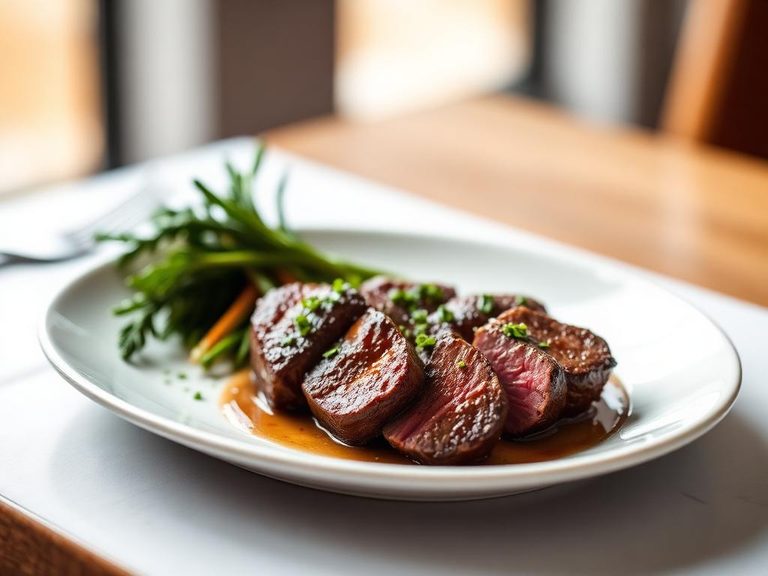
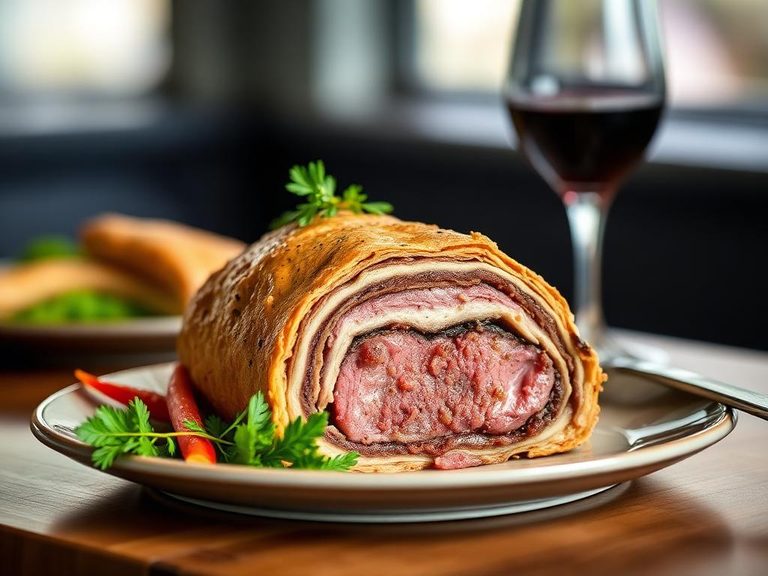
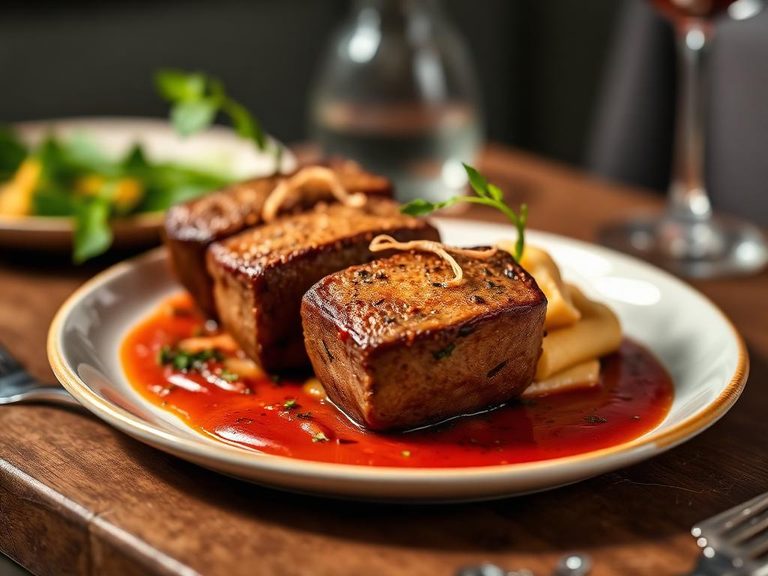
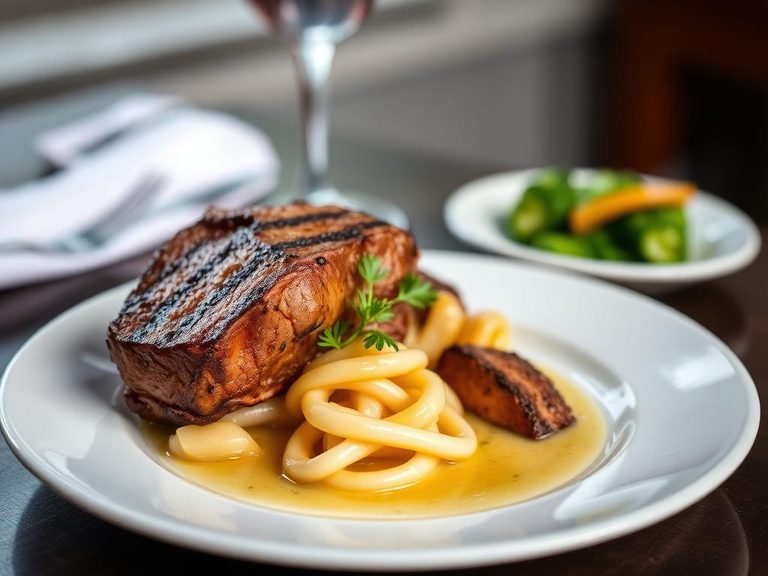
🍽️ Popular dishes
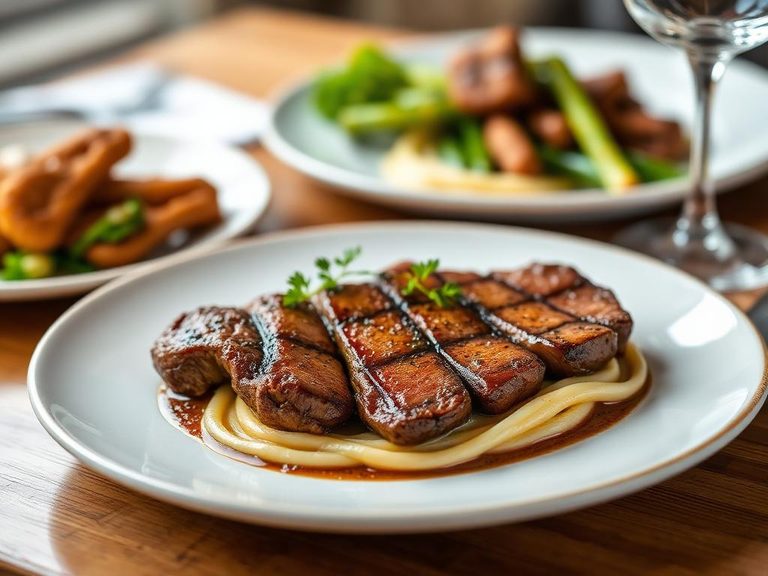
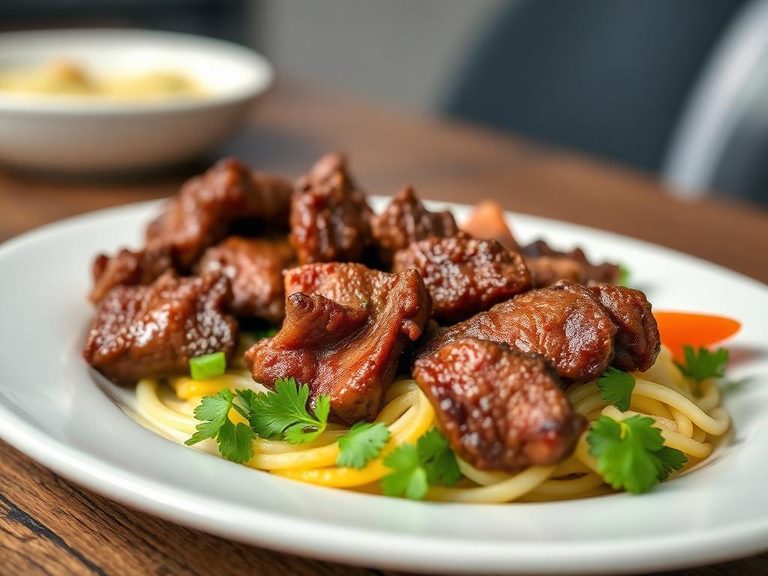
🌍 Where it's eaten
💡 Did you know?
The tenderloin is the single most tender muscle in the cow because it's a non-weight-bearing muscle along the spine that gets very little exercise, which is why it commands the highest price per pound.
Full nutrition (USDA data · scales with serving)
| Water | 55.5 g |
| Energy | 273 kcal |
| Energy | 1143 kj |
| Protein | 26.4 g |
| Total lipid (fat) | 17.8 g |
| Ash | 1.0 g |
| Carbohydrate, by difference | 0.00 g |
| Fiber, total dietary | 0.00 g |
| Total Sugars | 0.00 g |
| Calcium, Ca | 17.0 mg |
| Iron, Fe | 1.8 mg |
| Magnesium, Mg | 21.0 mg |
| Phosphorus, P | 196 mg |
| Potassium, K | 318 mg |
| Sodium, Na | 52.0 mg |
| Zinc, Zn | 4.7 mg |
| Copper, Cu | 0.09 mg |
| Manganese, Mn | 0.01 mg |
| Selenium, Se | 28.2 ug |
| Vitamin C, total ascorbic acid | 0.00 mg |
| Thiamin | 0.07 mg |
| Riboflavin | 0.12 mg |
| Niacin | 7.2 mg |
| Pantothenic acid | 0.52 mg |
| Vitamin B-6 | 0.53 mg |
| Folate, total | 8.0 ug |
| Folic acid | 0.00 ug |
| Folate, food | 8.0 ug |
| Folate, DFE | 8.0 ug |
| Choline, total | 101 mg |
| Betaine | 13.2 mg |
| Vitamin B-12 | 1.7 ug |
| Vitamin B-12, added | 0.00 ug |
| Vitamin A, RAE | 0.00 ug |
| Retinol | 0.00 ug |
| Carotene, beta | 0.00 ug |
| Carotene, alpha | 0.00 ug |
| Cryptoxanthin, beta | 0.00 ug |
| Vitamin A, IU | 0.00 iu |
| Lycopene | 0.00 ug |
| Lutein + zeaxanthin | 0.00 ug |
| Vitamin E (alpha-tocopherol) | 0.47 mg |
| Vitamin E, added | 0.00 mg |
| Tocopherol, beta | 0.00 mg |
| Tocopherol, gamma | 0.00 mg |
| Tocopherol, delta | 0.00 mg |
| Vitamin K (phylloquinone) | 1.7 ug |
| Alcohol, ethyl | 0.00 g |
| Caffeine | 0.00 mg |
| Theobromine | 0.00 mg |
Fat & fatty acid profile (per 100g)
| Fatty acids, total saturated | 7.0 g |
| SFA 4:0 | 0.00 g |
| SFA 6:0 | 0.00 g |
| SFA 8:0 | 0.00 g |
| SFA 10:0 | 0.04 g |
| SFA 12:0 | 0.04 g |
| SFA 14:0 | 0.54 g |
| SFA 16:0 | 4.2 g |
| SFA 18:0 | 2.1 g |
| Fatty acids, total monounsaturated | 7.4 g |
| MUFA 16:1 | 0.67 g |
| MUFA 18:1 | 6.7 g |
| MUFA 20:1 | 0.03 g |
| MUFA 22:1 | 0.00 g |
| Fatty acids, total polyunsaturated | 0.66 g |
| PUFA 18:2 | 0.46 g |
| PUFA 18:3 | 0.16 g |
| PUFA 18:4 | 0.00 g |
| PUFA 20:4 | 0.04 g |
| PUFA 20:5 n-3 (EPA) | 0.00 g |
| PUFA 22:5 n-3 (DPA) | 0.00 g |
| PUFA 22:6 n-3 (DHA) | 0.00 g |
| Cholesterol | 99.0 mg |
Amino acid profile (per 100g)
| Tryptophan | 0.17 g |
| Threonine | 1.1 g |
| Isoleucine | 1.2 g |
| Leucine | 2.1 g |
| Lysine | 2.2 g |
| Methionine | 0.69 g |
| Cystine | 0.34 g |
| Phenylalanine | 1.0 g |
| Tyrosine | 0.84 g |
| Valine | 1.3 g |
| Arginine | 1.7 g |
| Histidine | 0.84 g |
| Alanine | 1.6 g |
| Aspartic acid | 2.4 g |
| Glutamic acid | 4.0 g |
| Glycine | 1.6 g |
| Proline | 1.3 g |
| Serine | 1.0 g |
| Hydroxyproline | 0.28 g |
FAQ
What's the best way to cook beef tenderloin to keep it tender?
High, dry heat is key. Broiling, grilling, or pan-searing followed by an oven finish works best. Always let it rest for 5-10 minutes after cooking to allow juices to redistribute, and use a meat thermometer to avoid overcooking—pull it at 130-135°F for a perfect medium-rare.
Is beef tenderloin a healthy choice?
Yes, it's one of the leaner red meat cuts, especially when trimmed as specified. It's an excellent source of protein, iron, zinc, and B12. The main consideration is its saturated fat content, so enjoying it as part of a balanced diet with plenty of vegetables is ideal.
Why is it so expensive?
It's expensive due to scarcity and demand. Each cow yields only a small, central tenderloin (about 2-4% of the carcass weight), and it's the most prized cut for its tenderness, making it highly sought after by restaurants and home cooks.
Nutrient density (calculated · NRF9.3)
Nutrient Rich Foods index: beneficial nutrients (protein, fiber, vitamins, minerals) minus saturated fat, added sugar & sodium, per 100 kcal.
NRF9.3 index — Fulgoni, Keast & Drewnowski, 2009. Computed from USDA nutrients.
Weight-loss friendliness (composite index)
Energy density 2.73 kcal/g · 39% calories from protein · 0.0 g fiber · 0.0 g sugar per 100 g.
Composite of energy density (Rolls et al., 1999), protein & fiber satiety, minus sugar. A calculated heuristic — ranks satiety-per-calorie, not a clinical measure.
Dietary load (calculated from USDA values)
Potential renal acid load. Positive = acid-forming, negative = alkaline-forming.
Sodium-to-potassium ratio: 0.16 (lower is better — aim for ≤ 1)
Sodium:potassium per WHO potassium guidance. Computed from USDA nutrients.