

Beef, round, bottom round, steak, separable lean only, trimmed to 0" fat, select, cooked, braised
Whole food · Beef Products
This is a lean, muscular cut from the beef round, braised to a tender, pull-apart texture with a deep, beefy flavor. With virtually no fat, it delivers a dense, satisfying chew and a clean, savory taste. Nutritionally, it's a protein powerhouse, offering nearly 35 grams of protein per 100 grams with minimal calories.
Calorie split: 71% protein · 0% carbs · 29% fat
↓ Full nutrition💚 Why it's loved
People love it for its intense, pure beef flavor and its ability to become incredibly tender when braised, absorbing the flavors of the cooking liquid. It's a versatile, budget-friendly cut that forms the hearty base of comforting stews and roasts across many cultures.
⚠️ Watch-outs & how to enjoy it better
If undercooked or prepared incorrectly, it can be tough and chewy due to its lean, muscular nature. Those monitoring sodium intake should be cautious, as braised dishes often use broths or sauces high in salt. To counteract toughness, always cook it low-and-slow with moist heat (braising, stewing) until fork-tender.
Key benefits
- Exceptionally high in complete protein for muscle repair and satiety.
- Very low in fat and calories, making it ideal for lean diets.
- Rich in iron and zinc, essential minerals for energy and immunity.
- Provides B vitamins, particularly B12, crucial for nerve function.
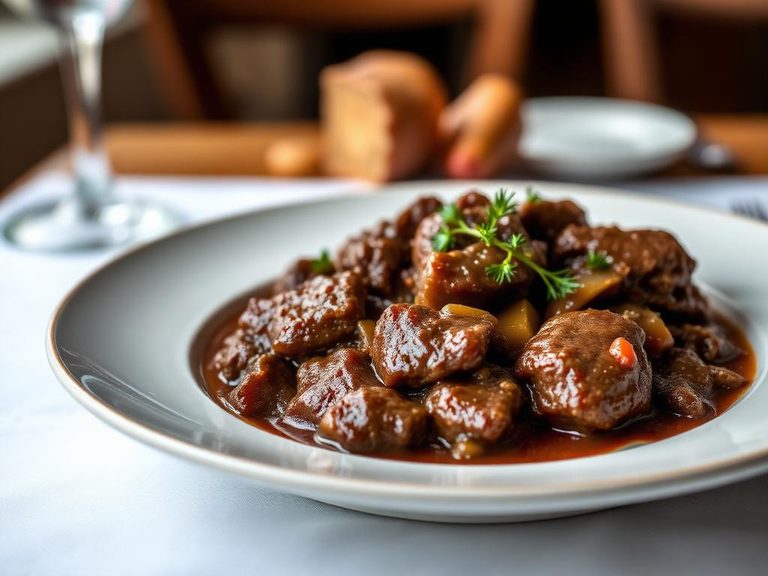
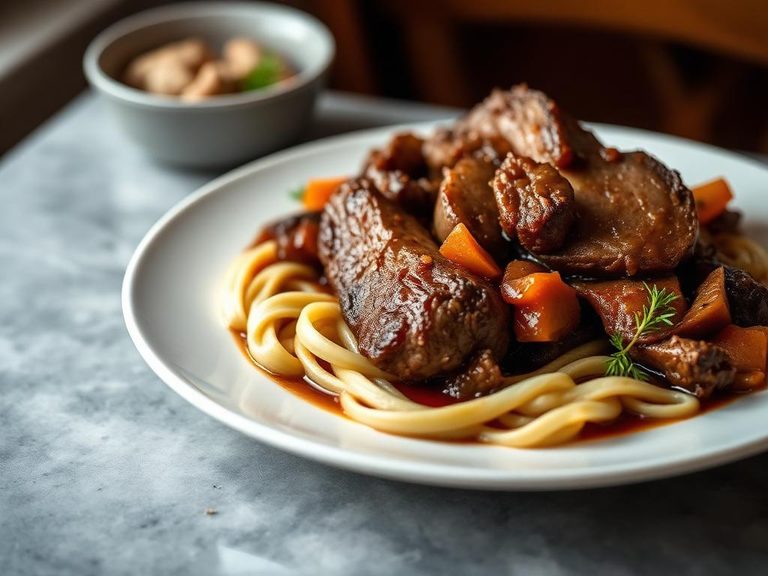
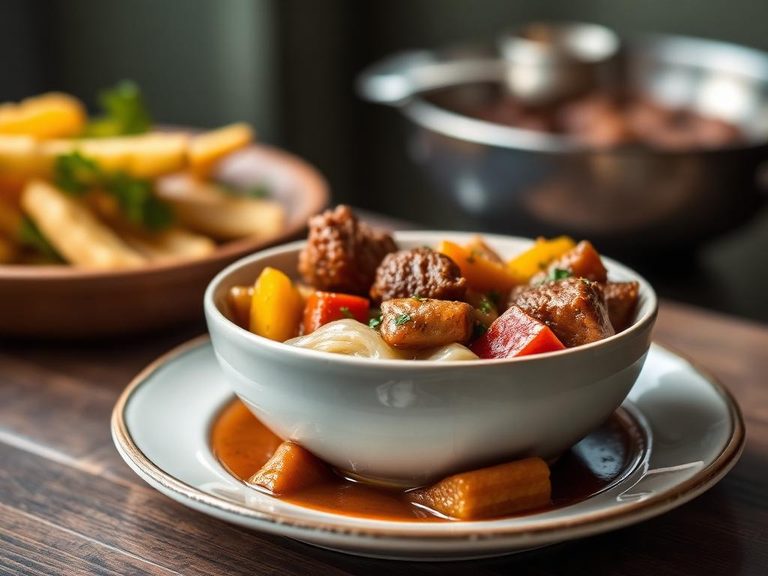
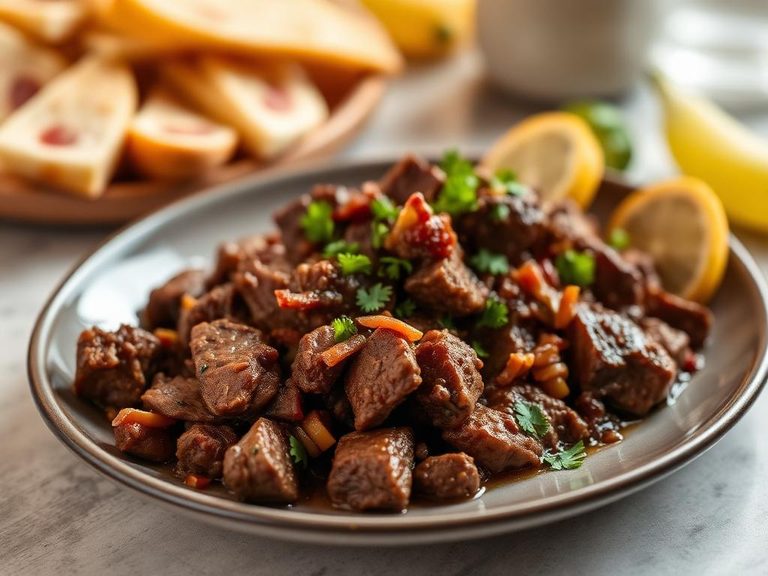
🍽️ Popular dishes
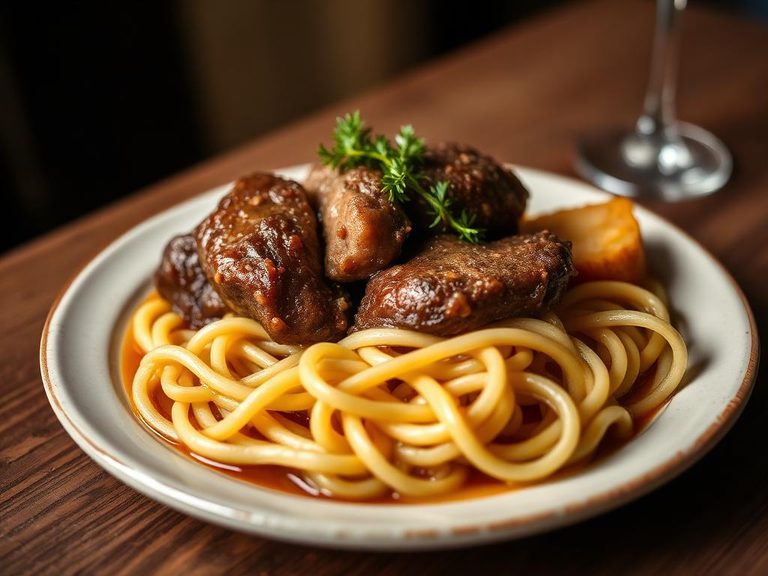
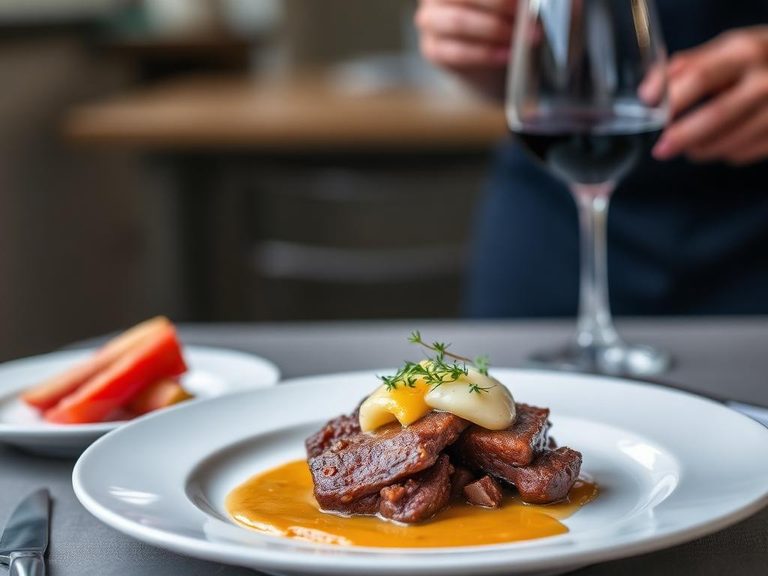
🌍 Where it's eaten
💡 Did you know?
The 'bottom round' comes from the heavily exercised rear leg of the cow, which is why it's so lean and requires slow cooking to break down its tough connective tissue into gelatin.
Full nutrition (USDA data · scales with serving)
| Water | 58.8 g |
| Energy | 206 kcal |
| Energy | 862 kj |
| Protein | 34.9 g |
| Total lipid (fat) | 6.3 g |
| Ash | 1.0 g |
| Carbohydrate, by difference | 0.00 g |
| Fiber, total dietary | 0.00 g |
| Total Sugars | 0.00 g |
| Calcium, Ca | 7.0 mg |
| Iron, Fe | 2.9 mg |
| Magnesium, Mg | 23.0 mg |
| Phosphorus, P | 222 mg |
| Potassium, K | 289 mg |
| Sodium, Na | 46.0 mg |
| Zinc, Zn | 6.0 mg |
| Copper, Cu | 0.10 mg |
| Manganese, Mn | 0.01 mg |
| Selenium, Se | 43.3 ug |
| Vitamin C, total ascorbic acid | 0.00 mg |
| Thiamin | 0.08 mg |
| Riboflavin | 0.19 mg |
| Niacin | 6.0 mg |
| Pantothenic acid | 0.69 mg |
| Vitamin B-6 | 0.46 mg |
| Folate, total | 12.0 ug |
| Folic acid | 0.00 ug |
| Folate, food | 12.0 ug |
| Folate, DFE | 12.0 ug |
| Choline, total | 133 mg |
| Betaine | 17.5 mg |
| Vitamin B-12 | 1.8 ug |
| Vitamin B-12, added | 0.00 ug |
| Vitamin A, RAE | 0.00 ug |
| Retinol | 0.00 ug |
| Carotene, beta | 0.00 ug |
| Carotene, alpha | 0.00 ug |
| Cryptoxanthin, beta | 0.00 ug |
| Vitamin A, IU | 0.00 iu |
| Lycopene | 0.00 ug |
| Lutein + zeaxanthin | 0.00 ug |
| Vitamin E (alpha-tocopherol) | 0.44 mg |
| Vitamin E, added | 0.00 mg |
| Tocopherol, beta | 0.00 mg |
| Tocopherol, gamma | 0.00 mg |
| Tocopherol, delta | 0.00 mg |
| Vitamin K (phylloquinone) | 1.6 ug |
| Alcohol, ethyl | 0.00 g |
| Caffeine | 0.00 mg |
| Theobromine | 0.00 mg |
Fat & fatty acid profile (per 100g)
| Fatty acids, total saturated | 2.2 g |
| SFA 4:0 | 0.00 g |
| SFA 6:0 | 0.00 g |
| SFA 8:0 | 0.00 g |
| SFA 10:0 | 0.00 g |
| SFA 12:0 | 0.00 g |
| SFA 14:0 | 0.16 g |
| SFA 16:0 | 1.4 g |
| SFA 18:0 | 0.68 g |
| Fatty acids, total monounsaturated | 2.7 g |
| MUFA 16:1 | 0.25 g |
| MUFA 18:1 | 2.4 g |
| MUFA 20:1 | 0.00 g |
| MUFA 22:1 | 0.00 g |
| Fatty acids, total polyunsaturated | 0.23 g |
| PUFA 18:2 | 0.18 g |
| PUFA 18:3 | 0.02 g |
| PUFA 18:4 | 0.00 g |
| PUFA 20:4 | 0.04 g |
| PUFA 20:5 n-3 (EPA) | 0.00 g |
| PUFA 22:5 n-3 (DPA) | 0.00 g |
| PUFA 22:6 n-3 (DHA) | 0.00 g |
| Cholesterol | 91.0 mg |
Amino acid profile (per 100g)
| Tryptophan | 0.23 g |
| Threonine | 1.4 g |
| Isoleucine | 1.6 g |
| Leucine | 2.8 g |
| Lysine | 3.0 g |
| Methionine | 0.91 g |
| Cystine | 0.45 g |
| Phenylalanine | 1.4 g |
| Tyrosine | 1.1 g |
| Valine | 1.7 g |
| Arginine | 2.3 g |
| Histidine | 1.1 g |
| Alanine | 2.1 g |
| Aspartic acid | 3.2 g |
| Glutamic acid | 5.2 g |
| Glycine | 2.1 g |
| Proline | 1.7 g |
| Serine | 1.4 g |
| Hydroxyproline | 0.37 g |
FAQ
Why is this cut so lean?
It comes from the cow's hind leg, a hard-working muscle that develops very little intramuscular fat (marbling), resulting in a lean, dense piece of meat.
How do I make sure it's not tough?
The key is slow, moist cooking. Braise it in liquid (like broth or wine) at a low temperature (around 300°F/150°C) for 2-3 hours, or until it easily shreds with a fork.
Is it good for grilling?
Generally, no. Because it's so lean, high-heat, dry cooking methods like grilling can make it very tough. It's best suited for braising, stewing, or pot roasting.
Nutrient density (calculated · NRF9.3)
Nutrient Rich Foods index: beneficial nutrients (protein, fiber, vitamins, minerals) minus saturated fat, added sugar & sodium, per 100 kcal.
NRF9.3 index — Fulgoni, Keast & Drewnowski, 2009. Computed from USDA nutrients.
Weight-loss friendliness (composite index)
Energy density 2.06 kcal/g · 68% calories from protein · 0.0 g fiber · 0.0 g sugar per 100 g.
Composite of energy density (Rolls et al., 1999), protein & fiber satiety, minus sugar. A calculated heuristic — ranks satiety-per-calorie, not a clinical measure.
Dietary load (calculated from USDA values)
Potential renal acid load. Positive = acid-forming, negative = alkaline-forming.
Sodium-to-potassium ratio: 0.16 (lower is better — aim for ≤ 1)
Sodium:potassium per WHO potassium guidance. Computed from USDA nutrients.