

Beef, retail cuts, separable fat, cooked
Whole food · Beef Products

Photo: Wikipedia
This is the rendered, separable fat from cooked retail beef cuts, a pure, glistening white-to-yellow substance that melts into a rich, savory liquid. Its texture is smooth and waxy when solid, becoming silky and coating when melted, with a deep, umami-rich beef flavor that is intensely savory and slightly sweet. Nutritionally, it is almost entirely fat, providing a dense source of energy with zero protein or carbohydrates.
Calorie split: 6% protein · 0% carbs · 94% fat
↓ Full nutrition💚 Why it's loved
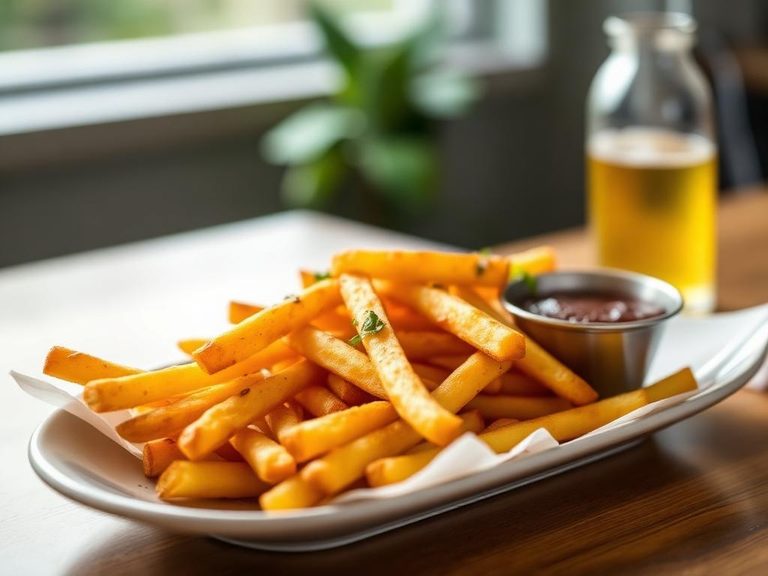
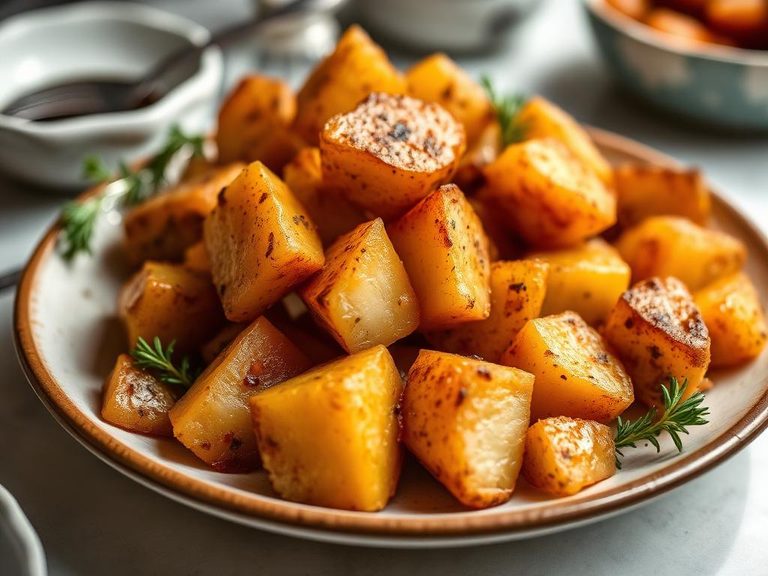
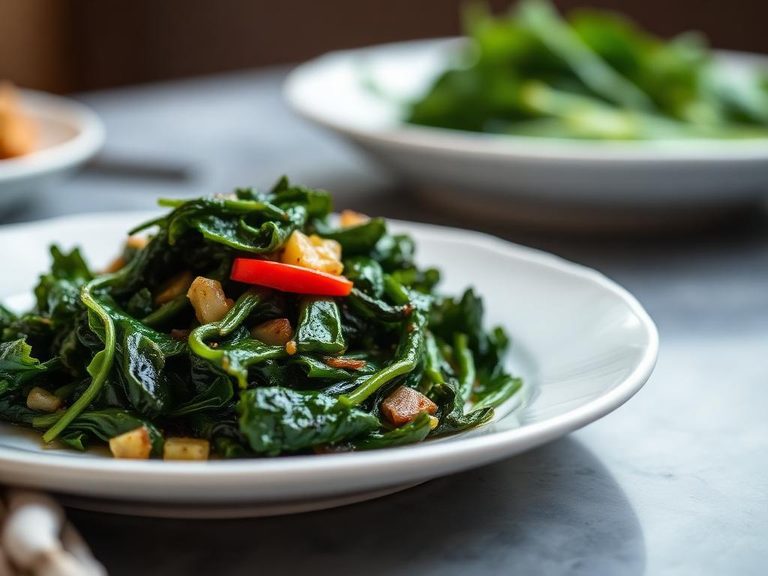
People love it for its unparalleled ability to add profound, meaty depth and a luxurious, silky mouthfeel to dishes. It's a cornerstone of flavor in many cuisines, used to fry potatoes, sauté vegetables, or enrich sauces, turning simple ingredients into something deeply satisfying.
⚠️ Watch-outs & how to enjoy it better
Its extremely high saturated fat content makes it a concern for cardiovascular health if consumed in excess. It is also very calorie-dense, which can hinder weight management goals. To enjoy it wisely, use it sparingly as a flavoring agent rather than a primary fat, and balance meals with high-fiber vegetables and lean proteins.
Key benefits
- Excellent source of energy-dense calories for high-energy needs.
- Rich in fat-soluble vitamins like A, D, E, and K.
- Contains conjugated linoleic acid (CLA), a naturally occurring fatty acid.
- Provides a stable, high smoke point for cooking.
- Enhances flavor and mouthfeel in savory dishes.
🍽️ Popular dishes
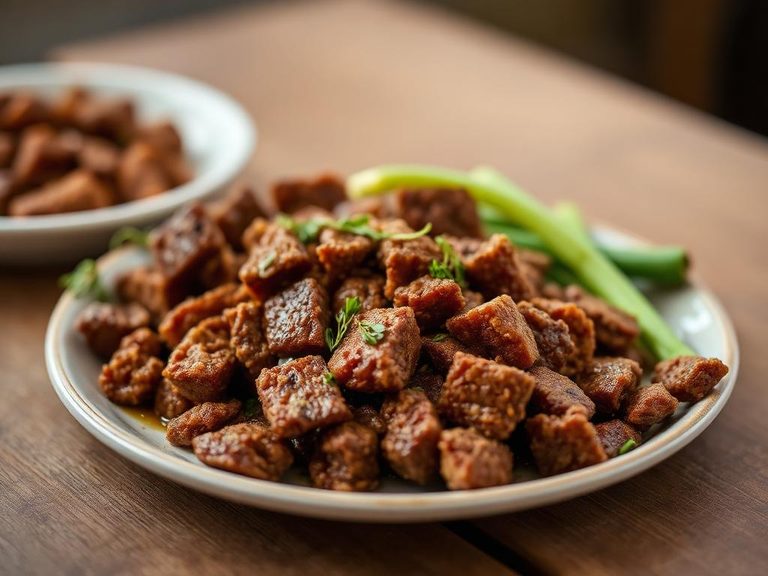
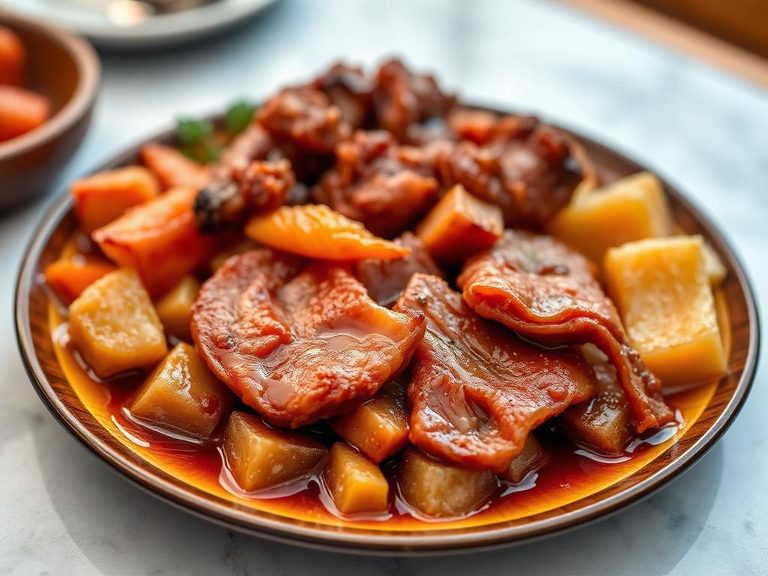
🌍 Where it's eaten
💡 Did you know?
Before the 1970s, many fast-food chains famously used beef tallow (rendered beef fat) to fry their french fries, which contributed to their distinctive, savory flavor that many people still reminisce about.
Full nutrition (USDA data · scales with serving)
| Water | 18.6 g |
| Energy | 680 kcal |
| Energy | 2845 kj |
| Protein | 10.7 g |
| Total lipid (fat) | 70.3 g |
| Ash | 0.45 g |
| Carbohydrate, by difference | 0.00 g |
| Fiber, total dietary | 0.00 g |
| Total Sugars | 0.00 g |
| Calcium, Ca | 19.0 mg |
| Iron, Fe | 1.1 mg |
| Magnesium, Mg | 6.0 mg |
| Phosphorus, P | 64.0 mg |
| Potassium, K | 99.0 mg |
| Sodium, Na | 23.0 mg |
| Zinc, Zn | 1.2 mg |
| Copper, Cu | 0.04 mg |
| Manganese, Mn | 0.00 mg |
| Selenium, Se | 8.3 ug |
| Vitamin C, total ascorbic acid | 0.00 mg |
| Thiamin | 0.03 mg |
| Riboflavin | 0.05 mg |
| Niacin | 1.5 mg |
| Pantothenic acid | 0.22 mg |
| Vitamin B-6 | 0.14 mg |
| Folate, total | 0.00 ug |
| Folic acid | 0.00 ug |
| Folate, food | 0.00 ug |
| Folate, DFE | 0.00 ug |
| Choline, total | 56.1 mg |
| Betaine | 2.2 mg |
| Vitamin B-12 | 0.90 ug |
| Vitamin B-12, added | 0.00 ug |
| Vitamin A, RAE | 0.00 ug |
| Retinol | 0.00 ug |
| Carotene, beta | 0.00 ug |
| Carotene, alpha | 0.00 ug |
| Cryptoxanthin, beta | 0.00 ug |
| Vitamin A, IU | 0.00 iu |
| Lycopene | 0.00 ug |
| Lutein + zeaxanthin | 0.00 ug |
| Vitamin E (alpha-tocopherol) | 0.00 mg |
| Vitamin E, added | 0.00 mg |
| Tocopherol, beta | 0.00 mg |
| Tocopherol, gamma | 0.00 mg |
| Tocopherol, delta | 0.00 mg |
| Vitamin D (D2 + D3), International Units | 15.0 iu |
| Vitamin D (D2 + D3) | 0.40 ug |
| Vitamin D3 (cholecalciferol) | 0.40 ug |
| Vitamin K (phylloquinone) | 3.1 ug |
| Vitamin K (Dihydrophylloquinone) | 0.00 ug |
| Alcohol, ethyl | 0.00 g |
| Caffeine | 0.00 mg |
| Theobromine | 0.00 mg |
Fat & fatty acid profile (per 100g)
| Fatty acids, total saturated | 28.5 g |
| SFA 4:0 | 0.00 g |
| SFA 6:0 | 0.00 g |
| SFA 8:0 | 0.00 g |
| SFA 10:0 | 0.27 g |
| SFA 12:0 | 0.25 g |
| SFA 14:0 | 2.4 g |
| SFA 16:0 | 17.8 g |
| SFA 18:0 | 7.9 g |
| Fatty acids, total monounsaturated | 30.4 g |
| MUFA 16:1 | 3.1 g |
| MUFA 18:1 | 27.1 g |
| MUFA 20:1 | 0.17 g |
| MUFA 22:1 | 0.00 g |
| Fatty acids, total polyunsaturated | 2.7 g |
| PUFA 18:2 | 1.6 g |
| PUFA 18:3 | 1.0 g |
| PUFA 18:4 | 0.00 g |
| PUFA 20:4 | 0.00 g |
| PUFA 20:5 n-3 (EPA) | 0.00 g |
| PUFA 22:5 n-3 (DPA) | 0.01 g |
| PUFA 22:6 n-3 (DHA) | 0.00 g |
| Cholesterol | 95.0 mg |
Amino acid profile (per 100g)
| Tryptophan | 0.07 g |
| Threonine | 0.42 g |
| Isoleucine | 0.48 g |
| Leucine | 0.85 g |
| Lysine | 0.90 g |
| Methionine | 0.28 g |
| Cystine | 0.14 g |
| Phenylalanine | 0.42 g |
| Tyrosine | 0.34 g |
| Valine | 0.53 g |
| Arginine | 0.69 g |
| Histidine | 0.34 g |
| Alanine | 0.65 g |
| Aspartic acid | 0.97 g |
| Glutamic acid | 1.6 g |
| Glycine | 0.65 g |
| Proline | 0.51 g |
| Serine | 0.42 g |
| Hydroxyproline | 0.11 g |
FAQ
What is the difference between beef fat and beef tallow?
Beef tallow is the common name for rendered, purified beef fat. The process of rendering melts the fat, separates it from connective tissue and water, and results in a solid, shelf-stable product at room temperature.
Can I use beef fat for high-heat cooking?
Yes, it has a high smoke point (around 400°F / 205°C), making it excellent for frying, searing, and roasting without burning easily.
How should I store cooked beef fat?
Rendered beef fat should be strained and stored in an airtight container in the refrigerator, where it will keep for several months, or in the freezer for even longer.
Nutrient density (calculated · NRF9.3)
Nutrient Rich Foods index: beneficial nutrients (protein, fiber, vitamins, minerals) minus saturated fat, added sugar & sodium, per 100 kcal.
NRF9.3 index — Fulgoni, Keast & Drewnowski, 2009. Computed from USDA nutrients.
Weight-loss friendliness (composite index)
Energy density 6.80 kcal/g · 6% calories from protein · 0.0 g fiber · 0.0 g sugar per 100 g.
Composite of energy density (Rolls et al., 1999), protein & fiber satiety, minus sugar. A calculated heuristic — ranks satiety-per-calorie, not a clinical measure.
Dietary load (calculated from USDA values)
Potential renal acid load. Positive = acid-forming, negative = alkaline-forming.
Sodium-to-potassium ratio: 0.23 (lower is better — aim for ≤ 1)
Sodium:potassium per WHO potassium guidance. Computed from USDA nutrients.