

Confit
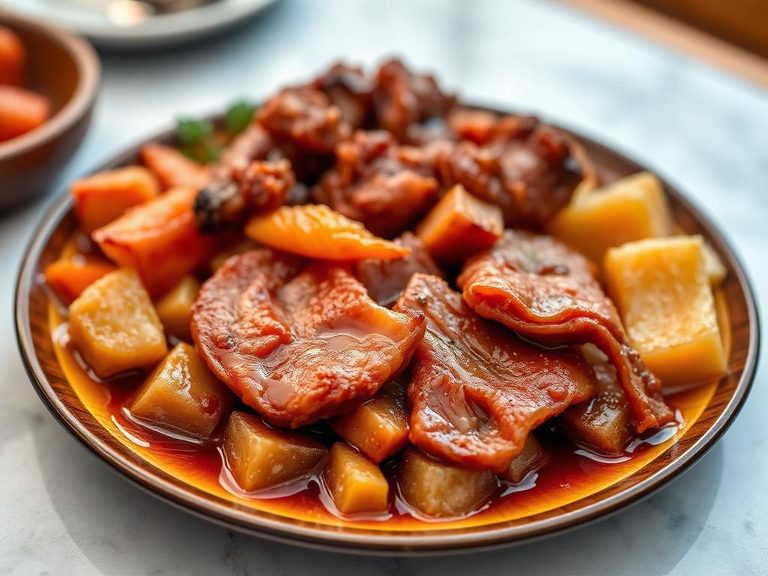
Confit is a traditional French preservation method where meat, most famously duck, is slowly cooked and then submerged in its own rendered fat, which acts as a sealant. The most iconic version is Duck Confit, made from duck legs seasoned with salt, garlic, and herbs like thyme and bay leaf. This technique originated in Southwest France as a way to preserve meat before refrigeration.
🍽️ Nutrition at a glance
Confit is extremely high in fat and protein, with virtually no carbohydrates. A typical serving is calorie-dense, providing substantial energy, along with key nutrients like iron, zinc, and B vitamins from the meat.
Nutrition breakdown
| Calories | 450 kcal |
| Protein | 28 g |
| Carbs | 0 g |
| Fat | 38 g |
| Fiber | 0 g |
| Sugar | 0 g |
| Sodium | 580 mg |
| Iron | 2.5 mg |
| Zinc | 3.8 mg |
| Vitamin B12 | 0.9 mcg |
| Niacin (B3) | 5.5 mg |
| Vitamin B6 | 0.4 mg |
| Phosphorus | 220 mg |
| Selenium | 22 mcg |
| Potassium | 210 mg |
Per 1 duck leg with skin and fat (approx. 130 g) · estimated, varies by recipe
💡 What's interesting
The name 'confit' comes from the French word 'confire,' meaning 'to preserve.' The fat layer creates an anaerobic seal that prevents spoilage, allowing the meat to be stored for months in a cool place—a brilliant pre-refrigeration food science technique.
🍽️ Related dishes

AI estimate may be inaccurate · Terms