Confits
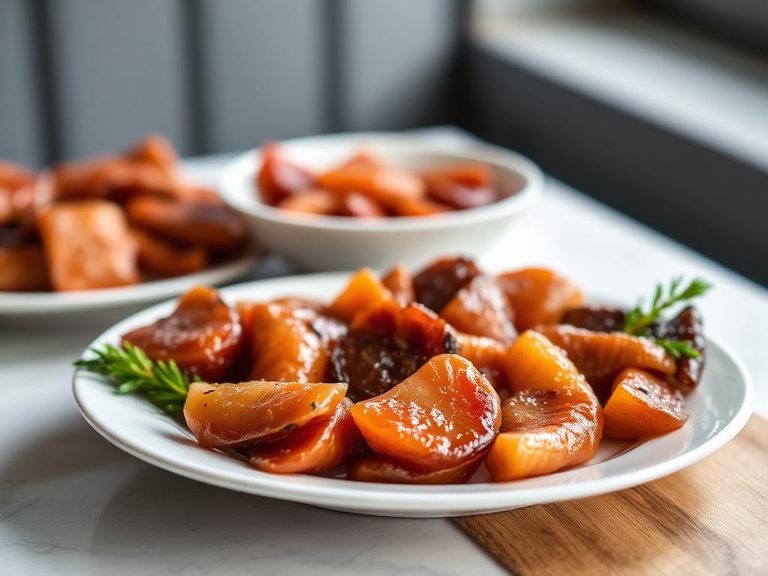
Confits are traditional preserved meats, most famously duck or goose, where the meat is slowly cooked and then stored submerged in its own rendered fat. This method, originating in Southwest France, was developed as a way to preserve meat through the winter without refrigeration. While duck is classic, other meats like pork, goose, and even fish can be prepared in this style.
🍽️ Nutrition at a glance
This is a very high-fat, high-protein dish with minimal carbohydrates, as the preservation relies on fat, not sugars or starches. A typical serving provides significant calories from fat, along with protein and fat-soluble vitamins like A and E from the meat and fat.
Nutrition breakdown
| Calories | 380 kcal |
| Protein | 18 g |
| Carbs | 0 g |
| Fat | 34 g |
| Fiber | 0 g |
| Sugar | 0 g |
| Sodium | 950 mg |
| Sodium | 950 mg |
| Potassium | 220 mg |
| Iron | 1.5 mg |
| Zinc | 3.2 mg |
| Phosphorus | 180 mg |
| Vitamin B12 | 1.8 mcg |
| Niacin (B3) | 4.5 mg |
| Selenium | 25 mcg |
Per 1/2 cup (130 g) · estimated, varies by recipe
💡 What's interesting
Culturally, confit is a cornerstone of Gascon cuisine and the basis for dishes like cassoulet. Nutritionally, the slow-cooking process in fat tenderizes the meat exceptionally well while creating a rich, deep flavor that is distinct from other cooking methods.