

Babyfood, dinner, turkey and rice, strained
Whole food · Baby Foods

Photo: Wikipedia
This is a smooth, savory puree of finely ground turkey and soft-cooked rice, designed for easy infant digestion. It has a mild, comforting flavor with a silky, lump-free texture that coats the spoon. Nutritionally, it's a lean protein source with gentle carbohydrates for energy.
Calorie split: 17% protein · 61% carbs · 21% fat
↓ Full nutrition💚 Why it's loved
Parents appreciate it as a reliable, nutrient-dense first food that's gentle on tiny tummies. Its neutral taste makes it a versatile base for mixing with vegetable purees.
⚠️ Watch-outs & how to enjoy it better
As a processed baby food, it may contain added starches or thickeners. Some babies may develop a preference for overly smooth textures, delaying acceptance of lumpier foods. Tip: Use it as a base but gradually mix in mashed soft foods to build texture tolerance.
Key benefits
- Provides easily digestible animal protein for growth
- Mild flavor helps introduce savory tastes to infants
- Smooth texture supports early feeding skills
- Low in fat and naturally low in sodium
- Contains gentle carbohydrates for sustained energy
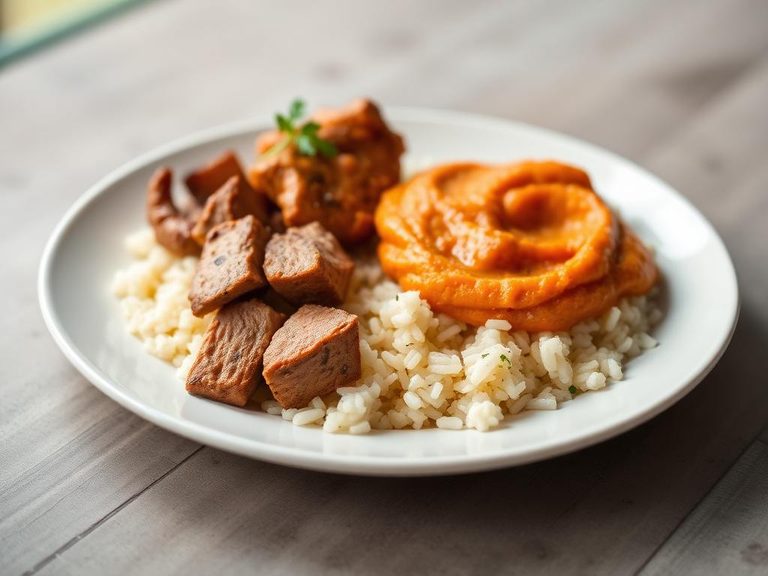
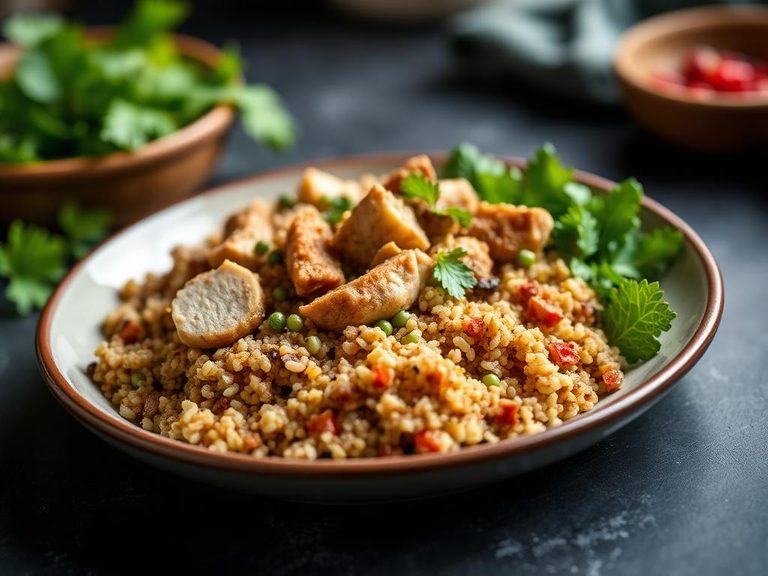
🍽️ Popular dishes
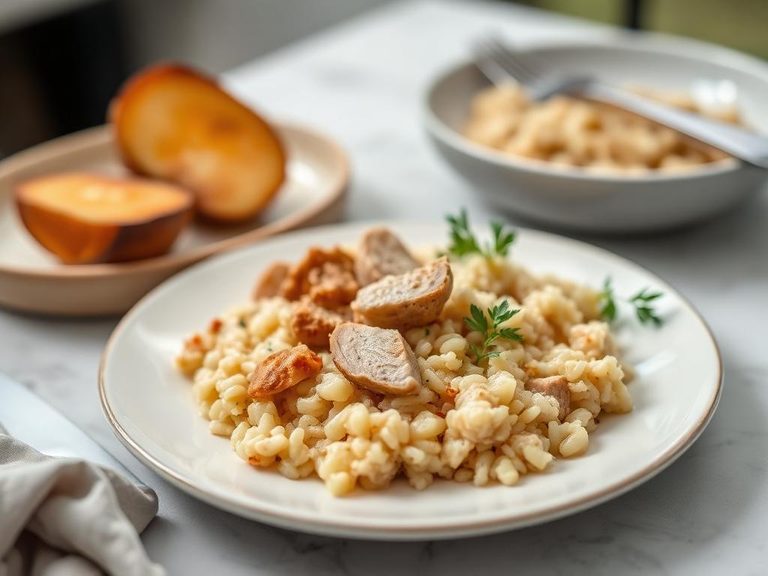
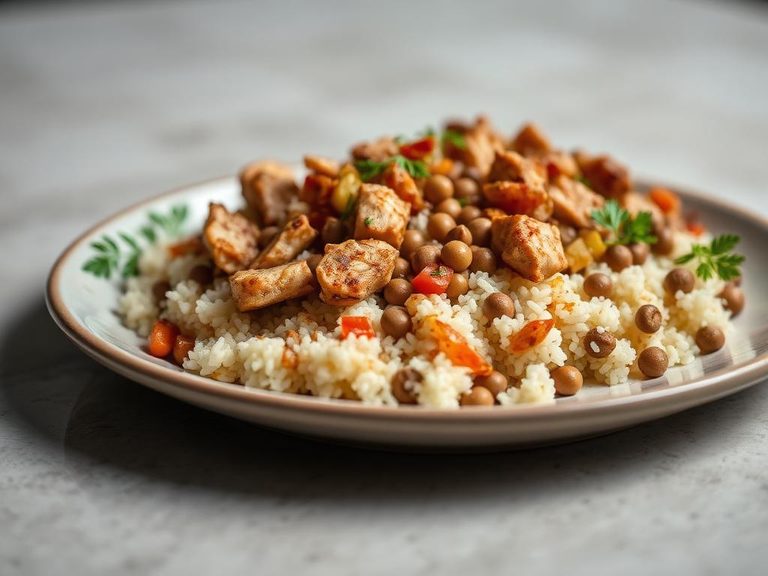
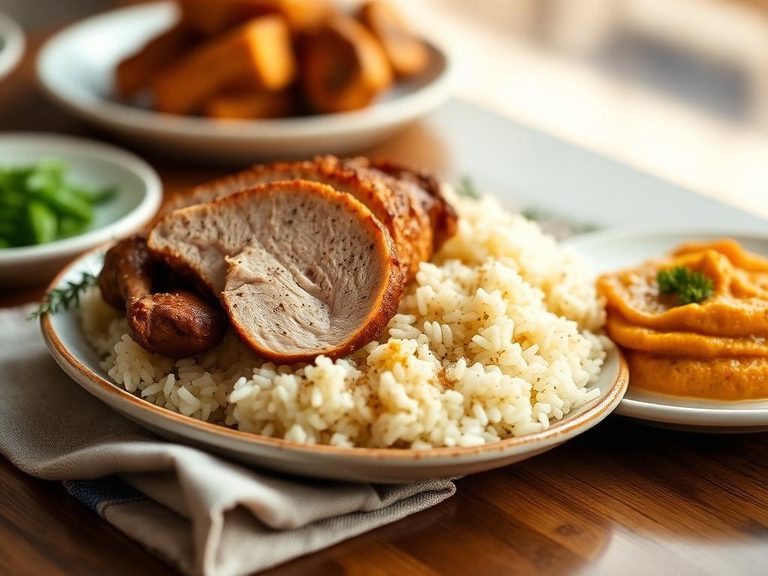
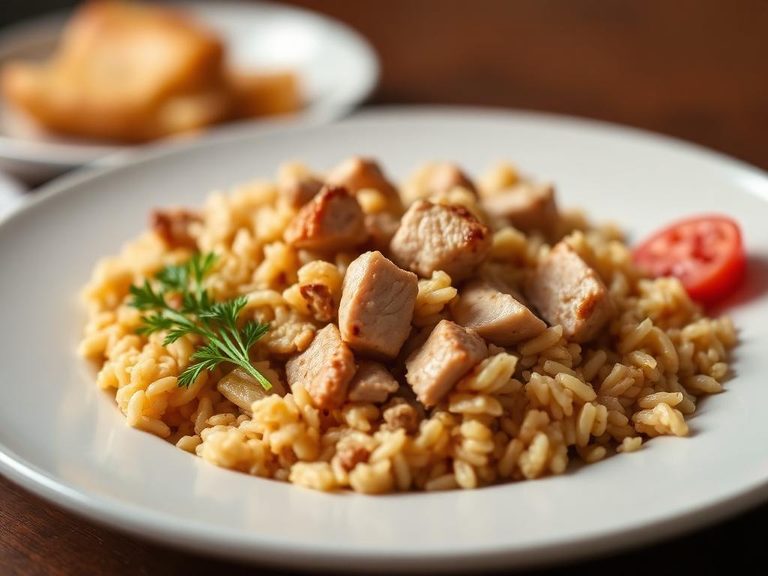
🌍 Where it's eaten
💡 Did you know?
Strained baby foods like this were popularized in the early 20th century by companies like Gerber, which began selling them in 1928.
Full nutrition (USDA data · scales with serving)
| Water | 88.2 g |
| Energy | 52.0 kcal |
| Energy | 218 kj |
| Protein | 2.3 g |
| Total lipid (fat) | 1.2 g |
| Ash | 0.33 g |
| Carbohydrate, by difference | 7.9 g |
| Fiber, total dietary | 0.90 g |
| Total Sugars | 1.7 g |
| Sucrose | 0.67 g |
| Glucose | 0.33 g |
| Fructose | 0.30 g |
| Lactose | 0.00 g |
| Maltose | 0.37 g |
| Calcium, Ca | 18.0 mg |
| Iron, Fe | 0.29 mg |
| Magnesium, Mg | 8.0 mg |
| Phosphorus, P | 34.0 mg |
| Potassium, K | 91.0 mg |
| Sodium, Na | 19.0 mg |
| Zinc, Zn | 0.40 mg |
| Copper, Cu | 0.03 mg |
| Manganese, Mn | 0.13 mg |
| Selenium, Se | 3.0 ug |
| Vitamin C, total ascorbic acid | 0.20 mg |
| Thiamin | 0.02 mg |
| Riboflavin | 0.04 mg |
| Niacin | 0.65 mg |
| Pantothenic acid | 0.18 mg |
| Vitamin B-6 | 0.05 mg |
| Folate, total | 4.0 ug |
| Folic acid | 0.00 ug |
| Folate, food | 4.0 ug |
| Folate, DFE | 4.0 ug |
| Choline, total | 6.8 mg |
| Vitamin B-12 | 0.02 ug |
| Vitamin B-12, added | 0.00 ug |
| Vitamin A, RAE | 81.0 ug |
| Retinol | 0.00 ug |
| Carotene, beta | 789 ug |
| Carotene, alpha | 368 ug |
| Cryptoxanthin, beta | 0.00 ug |
| Vitamin A, IU | 1622 iu |
| Lycopene | 0.00 ug |
| Lutein + zeaxanthin | 38.0 ug |
| Vitamin E (alpha-tocopherol) | 0.14 mg |
| Vitamin E, added | 0.00 mg |
| Vitamin D (D2 + D3), International Units | 0.00 iu |
| Vitamin D (D2 + D3) | 0.00 ug |
| Vitamin D3 (cholecalciferol) | 0.00 ug |
| Vitamin K (phylloquinone) | 1.5 ug |
| Alcohol, ethyl | 0.00 g |
| Caffeine | 0.00 mg |
| Theobromine | 0.00 mg |
Fat & fatty acid profile (per 100g)
| Fatty acids, total saturated | 0.34 g |
| SFA 4:0 | 0.00 g |
| SFA 6:0 | 0.00 g |
| SFA 8:0 | 0.00 g |
| SFA 10:0 | 0.00 g |
| SFA 12:0 | 0.00 g |
| SFA 14:0 | 0.01 g |
| SFA 16:0 | 0.22 g |
| SFA 18:0 | 0.07 g |
| Fatty acids, total monounsaturated | 0.45 g |
| MUFA 16:1 | 0.05 g |
| MUFA 18:1 | 0.38 g |
| MUFA 20:1 | 0.00 g |
| MUFA 22:1 | 0.00 g |
| Fatty acids, total polyunsaturated | 0.31 g |
| PUFA 18:2 | 0.27 g |
| PUFA 18:3 | 0.02 g |
| PUFA 18:4 | 0.00 g |
| PUFA 20:4 | 0.01 g |
| PUFA 20:5 n-3 (EPA) | 0.00 g |
| PUFA 22:5 n-3 (DPA) | 0.00 g |
| PUFA 22:6 n-3 (DHA) | 0.00 g |
| Cholesterol | 5.0 mg |
Amino acid profile (per 100g)
Estimated from Babyfood, grape juice, no sugar, canned — USDA does not publish this profile for Babyfood.
| Threonine | 0.02 g |
| Isoleucine | 0.01 g |
| Leucine | 0.02 g |
| Lysine | 0.02 g |
| Methionine | 0.03 g |
| Cystine | 0.01 g |
| Phenylalanine | 0.02 g |
| Tyrosine | 0.02 g |
| Valine | 0.02 g |
| Arginine | 0.06 g |
| Histidine | 0.03 g |
| Alanine | 0.04 g |
| Aspartic acid | 0.10 g |
| Glutamic acid | 0.18 g |
| Glycine | 0.03 g |
| Proline | 0.03 g |
| Serine | 0.04 g |
FAQ
At what age can I introduce this?
Typically around 6 months, when a baby shows signs of readiness for solids, but always consult your pediatrician.
Can I mix it with other foods?
Yes, it's an excellent base for blending with vegetable or fruit purees to introduce new flavors and nutrients.
Is it nutritionally complete?
While nutritious, it's best as part of a varied diet. Breast milk or formula remains the primary source of nutrition in the first year.
Nutrient density (calculated · NRF9.3)
Nutrient Rich Foods index: beneficial nutrients (protein, fiber, vitamins, minerals) minus saturated fat, added sugar & sodium, per 100 kcal.
NRF9.3 index — Fulgoni, Keast & Drewnowski, 2009. Computed from USDA nutrients.
Weight-loss friendliness (composite index)
Energy density 0.52 kcal/g · 17% calories from protein · 0.9 g fiber · 1.7 g sugar per 100 g.
Composite of energy density (Rolls et al., 1999), protein & fiber satiety, minus sugar. A calculated heuristic — ranks satiety-per-calorie, not a clinical measure.
Dietary load (calculated from USDA values)
Potential renal acid load. Positive = acid-forming, negative = alkaline-forming.
Sodium-to-potassium ratio: 0.21 (lower is better — aim for ≤ 1)
Sodium:potassium per WHO potassium guidance. Computed from USDA nutrients.