

Melons, cantaloupe, raw
Whole food · Fruits and Fruit Juices
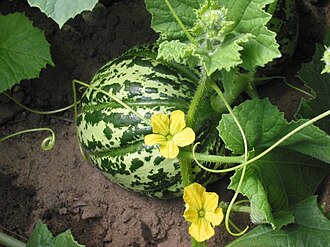
Photo: Wikipedia
Cantaloupe is a juicy, sweet melon with a distinctive netted rind and vibrant orange flesh. Its flavor is floral and honey-like, with a soft, melting texture that makes it a refreshing summer staple. Despite its sweetness, it's remarkably low in calories, offering a hydrating snack packed with beta-carotene.
Calorie split: 9% protein · 87% carbs · 4% fat
↓ Full nutrition💚 Why it's loved
People love cantaloupe for its intensely sweet, aromatic flavor and satisfyingly juicy texture that feels like a drink and a snack in one. It's a symbol of summer, enjoyed simply chilled or as a versatile base for both sweet and savory dishes.
⚠️ Watch-outs & how to enjoy it better
Its high natural sugar content can cause a rapid blood sugar spike if eaten alone in large quantities. To counteract this, pair it with a source of protein or healthy fat, like cottage cheese, nuts, or a drizzle of yogurt, to slow digestion. Also, ensure it's washed thoroughly before cutting to prevent surface bacteria from reaching the flesh.
Key benefits
- Excellent source of beta-carotene (vitamin A precursor) for eye health.
- High water content (over 90%) aids hydration.
- Provides a good amount of vitamin C for immune support.
- Contains potassium, which helps regulate blood pressure.
- Low in calories and fat, making it a light, nutrient-dense snack.
🍽️ Popular dishes
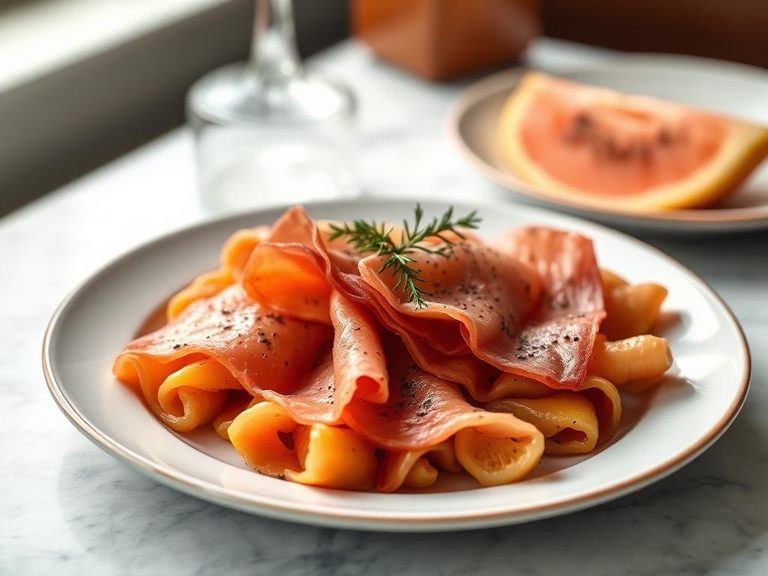
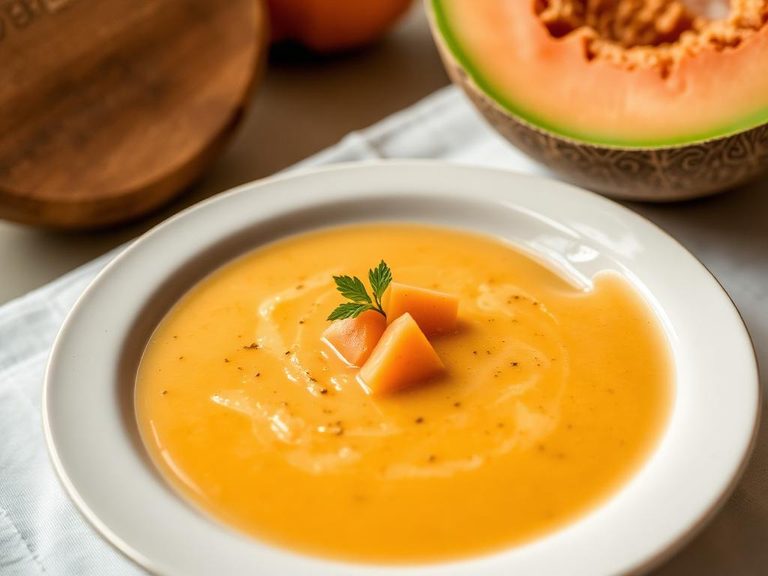
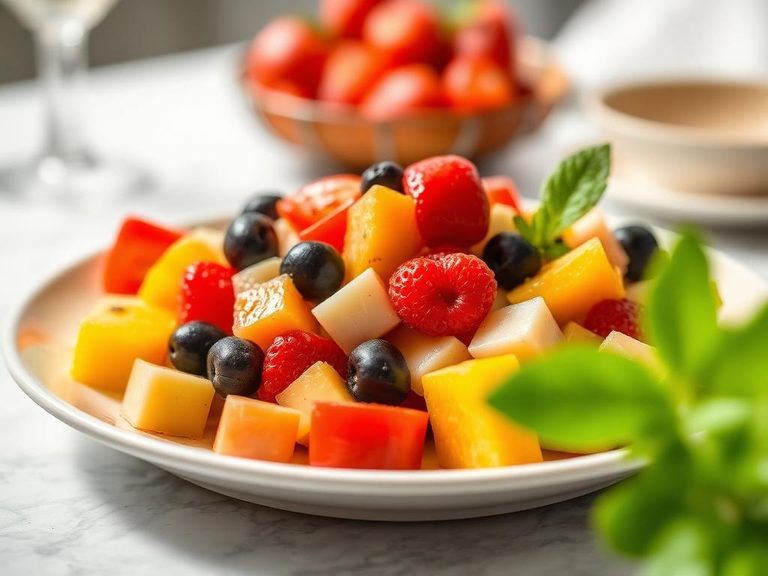

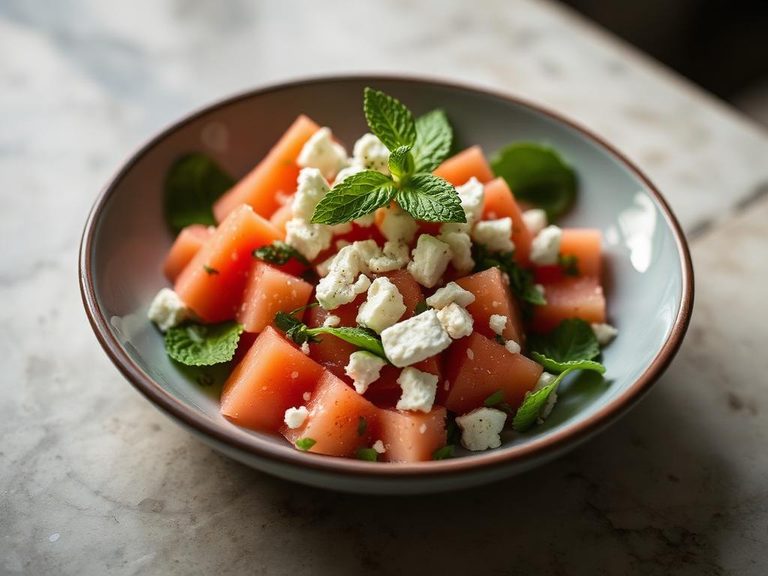
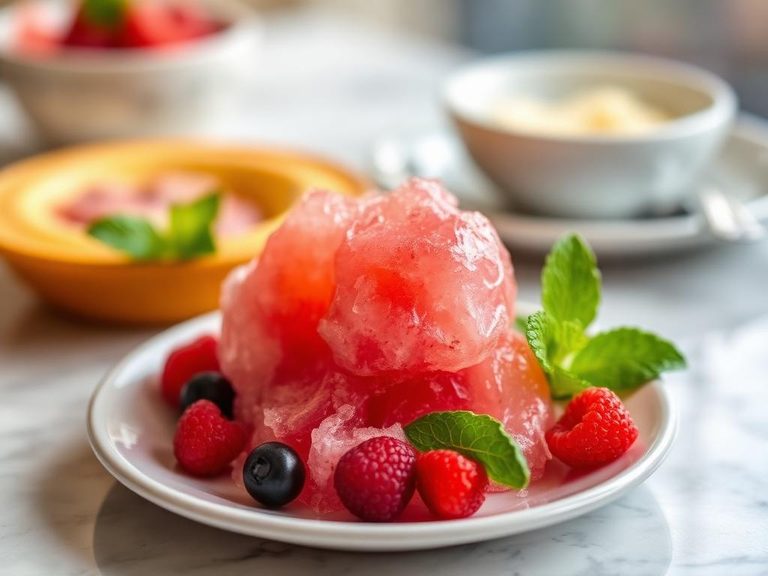
🌍 Where it's eaten
💡 Did you know?
The 'netting' on a cantaloupe's rind is actually a form of scar tissue from the fruit's rapid growth, which helps protect it from damage in the field.
Full nutrition (USDA data · scales with serving)
| Water | 90.2 g |
| Energy (Atwater General Factors) | 38.0 kcal |
| Energy (Atwater Specific Factors) | 34.0 kcal |
| Energy | 34.0 kcal |
| Energy | 141 kj |
| Nitrogen | 0.13 g |
| Protein | 0.82 g |
| Total lipid (fat) | 0.18 g |
| Ash | 0.63 g |
| Carbohydrate, by difference | 8.2 g |
| Carbohydrate, by summation | 8.7 g |
| Fiber, total dietary | 0.80 g |
| Fiber, soluble | 0.30 g |
| Fiber, insoluble | 0.50 g |
| Sugars, Total | 7.9 g |
| Sucrose | 3.3 g |
| Glucose | 2.1 g |
| Fructose | 2.4 g |
| Lactose | 0.00 g |
| Maltose | 0.02 g |
| Galactose | 0.06 g |
| Starch | 0.02 g |
| Calcium, Ca | 9.0 mg |
| Iron, Fe | 0.38 mg |
| Magnesium, Mg | 13.0 mg |
| Phosphorus, P | 17.0 mg |
| Potassium, K | 157 mg |
| Sodium, Na | 30.0 mg |
| Zinc, Zn | 0.44 mg |
| Copper, Cu | 0.09 mg |
| Manganese, Mn | 0.05 mg |
| Selenium, Se | 1.7 ug |
| Vitamin C, total ascorbic acid | 10.9 mg |
| Thiamin | 0.05 mg |
| Riboflavin | 0.03 mg |
| Niacin | 0.69 mg |
| Pantothenic acid | 0.09 mg |
| Vitamin B-6 | 0.04 mg |
| Folate, total | 14.0 ug |
| Vitamin A, RAE | 232 ug |
| Carotene, beta | 2780 ug |
| Carotene, alpha | 0.00 ug |
| Cryptoxanthin, beta | 0.00 ug |
| Lycopene | 0.00 ug |
| Lutein + zeaxanthin | 32.0 ug |
| Vitamin K (phylloquinone) | 2.7 ug |
| Vitamin K (Dihydrophylloquinone) | 0.00 ug |
Fat & fatty acid profile (per 100g)
Estimated from Melons, honeydew, raw — USDA does not publish this profile for Melons.
| Fatty acids, total saturated | 0.04 g |
| SFA 4:0 | 0.00 g |
| SFA 6:0 | 0.00 g |
| SFA 8:0 | 0.00 g |
| SFA 10:0 | 0.00 g |
| SFA 12:0 | 0.00 g |
| SFA 14:0 | 0.00 g |
| SFA 16:0 | 0.03 g |
| SFA 18:0 | 0.00 g |
| Fatty acids, total monounsaturated | 0.00 g |
| MUFA 16:1 | 0.00 g |
| MUFA 18:1 | 0.00 g |
| MUFA 20:1 | 0.00 g |
| MUFA 22:1 | 0.00 g |
| Fatty acids, total polyunsaturated | 0.06 g |
| PUFA 18:2 | 0.03 g |
| PUFA 18:3 | 0.03 g |
| PUFA 18:4 | 0.00 g |
| PUFA 20:4 | 0.00 g |
| PUFA 20:5 n-3 (EPA) | 0.00 g |
| PUFA 22:5 n-3 (DPA) | 0.00 g |
| PUFA 22:6 n-3 (DHA) | 0.00 g |
| Fatty acids, total trans | 0.00 g |
| Cholesterol | 0.00 mg |
Amino acid profile (per 100g)
| Tryptophan | 0.00 g |
| Threonine | 0.01 g |
| Isoleucine | 0.02 g |
| Leucine | 0.02 g |
| Lysine | 0.02 g |
| Methionine | 0.01 g |
| Cystine | 0.00 g |
| Phenylalanine | 0.02 g |
| Tyrosine | 0.01 g |
| Valine | 0.03 g |
| Arginine | 0.02 g |
| Histidine | 0.01 g |
| Alanine | 0.08 g |
| Aspartic acid | 0.11 g |
| Glutamic acid | 0.17 g |
| Glycine | 0.02 g |
| Proline | 0.02 g |
| Serine | 0.03 g |
FAQ
How do I pick a ripe cantaloupe?
Look for a creamy, pale yellow 'field spot' (where it sat on the ground), a sweet, musky fragrance at the stem end, and a heavy feel for its size. The netting should be raised and pronounced.
Is cantaloupe safe to eat if the rind is cracked?
It's best to discard it. Cracks can allow bacteria like Salmonella to penetrate the flesh. Always wash the rind under running water before cutting to prevent contamination.
Why is my cantaloupe not sweet?
Sweetness depends on ripeness and variety. If it was picked too early or stored cold for too long, the sugars won't develop fully. Room temperature ripening for a day or two can sometimes help.
Nutrient density (calculated · NRF9.3)
Nutrient Rich Foods index: beneficial nutrients (protein, fiber, vitamins, minerals) minus saturated fat, added sugar & sodium, per 100 kcal.
NRF9.3 index — Fulgoni, Keast & Drewnowski, 2009. Computed from USDA nutrients.
Weight-loss friendliness (composite index)
Energy density 0.34 kcal/g · 10% calories from protein · 0.8 g fiber · 0.0 g sugar per 100 g.
Composite of energy density (Rolls et al., 1999), protein & fiber satiety, minus sugar. A calculated heuristic — ranks satiety-per-calorie, not a clinical measure.
Dietary load (calculated from USDA values)
Potential renal acid load. Positive = acid-forming, negative = alkaline-forming.
Sodium-to-potassium ratio: 0.19 (lower is better — aim for ≤ 1)
Sodium:potassium per WHO potassium guidance. Computed from USDA nutrients.