Beef, top loin petite roast/filet, boneless, separable lean only, trimmed to 1/8" fat, all grades, raw
Whole food · Beef Products
This is a premium, boneless cut from the top loin of beef, meticulously trimmed to a thin 1/8-inch fat cap for a lean, tender, and buttery-rich eating experience. Its fine, consistent marbling melts during cooking, delivering a deep, savory beef flavor with a smooth, velvety texture. Nutritionally, it's a powerhouse of high-quality protein with minimal fat, making it an excellent choice for those seeking a lean, nutrient-dense meal.
💚 Why it's loved
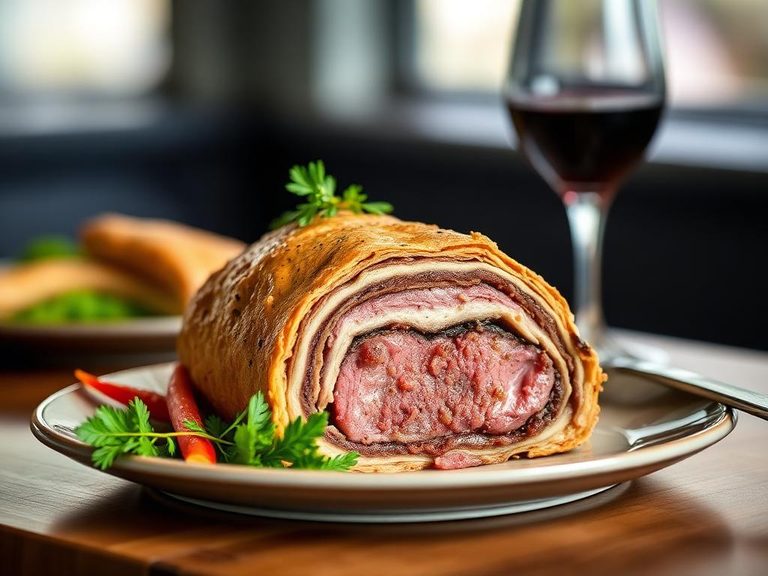
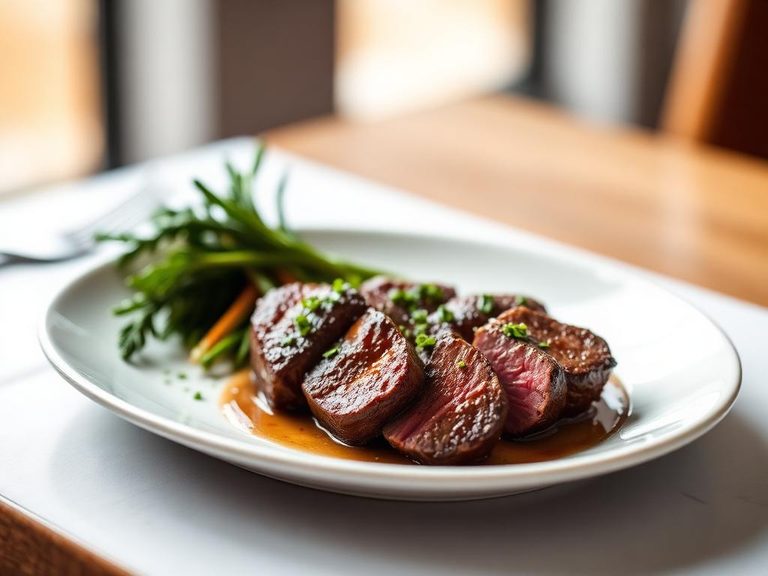
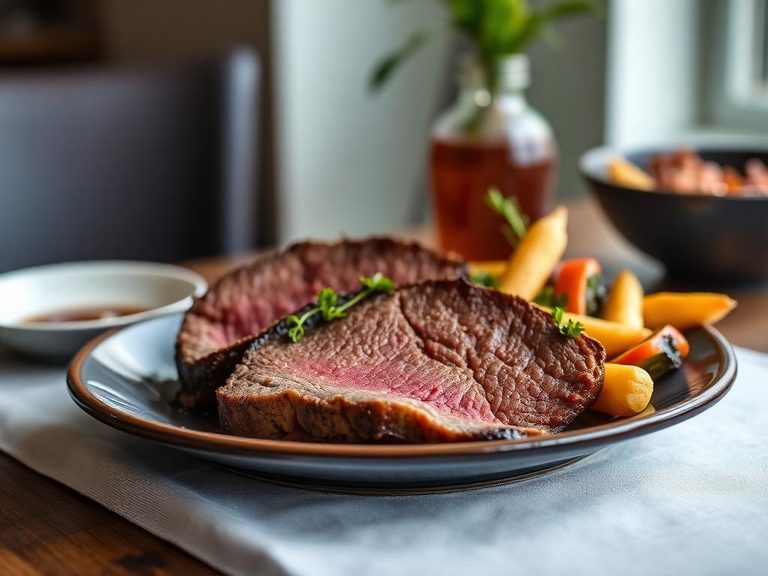
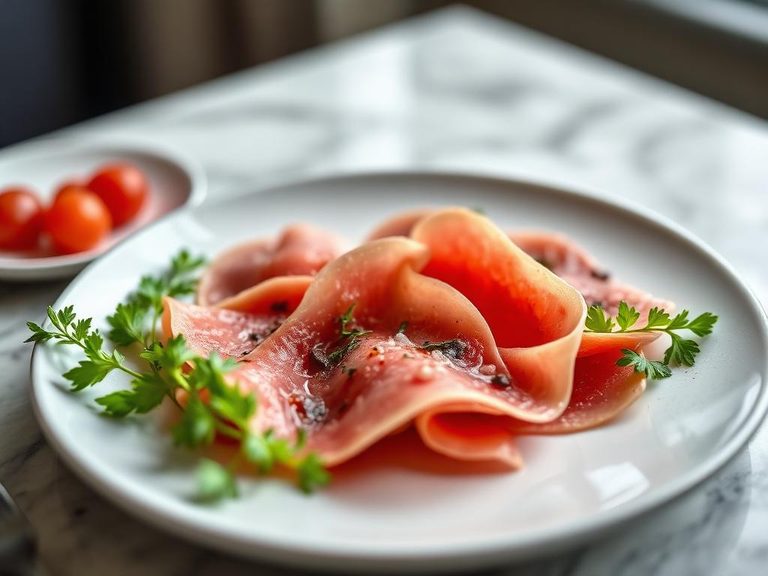
People adore this cut for its exceptional tenderness and rich, clean beef flavor that shines with simple preparation. It's a versatile star, perfect for elegant roasts, quick sears, or slicing thin for carpaccio, representing a classic, celebratory centerpiece in many cuisines.
⚠️ Watch-outs & how to enjoy it better
While lean, it is still a red meat, which some dietary guidelines recommend limiting. Its premium price can be a barrier for regular consumption. To counteract, practice mindful portion control (e.g., a 4-5 oz serving), balance your plate with abundant vegetables and whole grains, and consider it a special occasion treat rather than a daily staple.
Key benefits
- Exceptionally high in complete, muscle-building protein.
- Very low in carbohydrates and sugars, suitable for low-carb diets.
- Rich in essential minerals like iron and zinc.
- Provides B vitamins, particularly B12, crucial for nerve function.
- Trimmed fat cap offers a balance of flavor with controlled saturated fat.
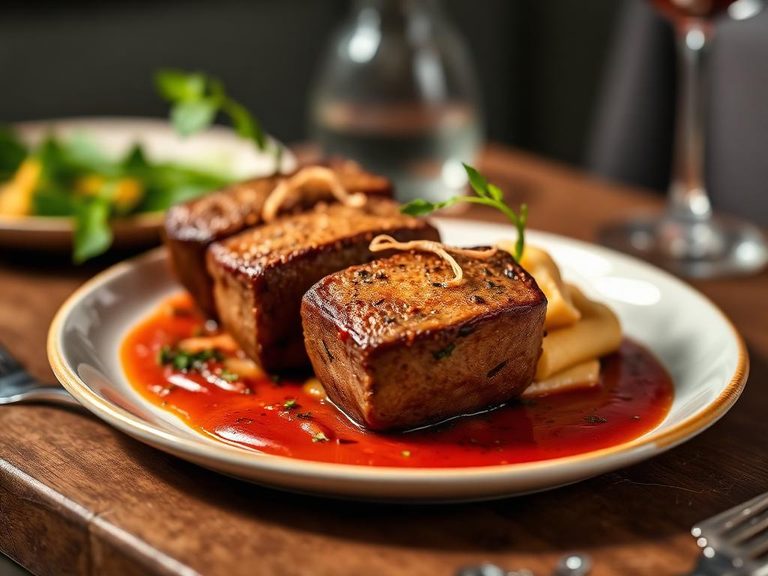
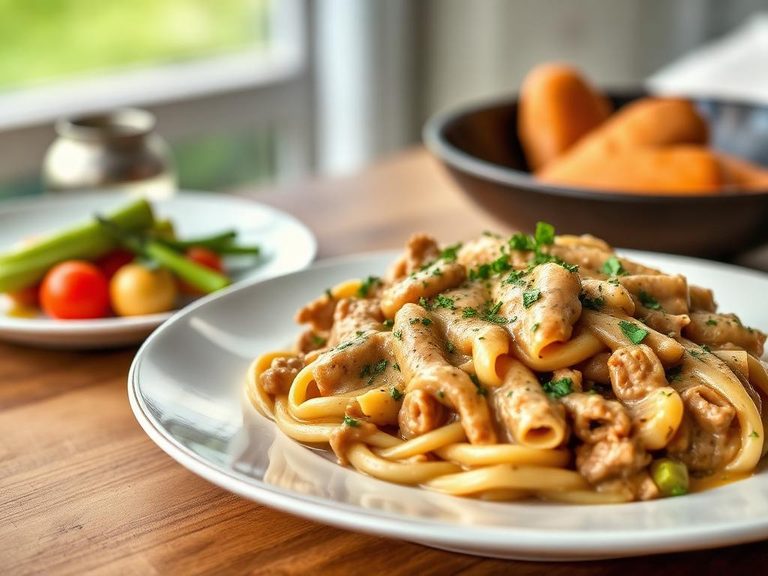
🍽️ Popular dishes
🌍 Where it's eaten
💡 Did you know?
The 'filet mignon' is technically the most tender muscle in the entire animal because it's a non-weight-bearing muscle, but the 'top loin' (strip loin) is often favored by chefs for having a superior balance of tenderness and robust beefy flavor.
Full nutrition (scales with serving)
| Water | 70.6 g |
| Energy | 143 kcal |
| Energy | 598 kj |
| Protein | 22.6 g |
| Total lipid (fat) | 5.8 g |
| Ash | 1.0 g |
| Carbohydrate, by difference | 0.00 g |
| Fiber, total dietary | 0.00 g |
| Total Sugars | 0.00 g |
| Calcium, Ca | 5.0 mg |
| Iron, Fe | 2.2 mg |
| Magnesium, Mg | 27.0 mg |
| Phosphorus, P | 239 mg |
| Potassium, K | 407 mg |
| Sodium, Na | 60.0 mg |
| Zinc, Zn | 5.8 mg |
| Copper, Cu | 0.09 mg |
| Selenium, Se | 25.5 ug |
| Vitamin C, total ascorbic acid | 0.00 mg |
| Thiamin | 0.08 mg |
| Riboflavin | 0.19 mg |
| Niacin | 5.3 mg |
| Vitamin B-6 | 0.57 mg |
| Folate, total | 4.0 ug |
| Folic acid | 0.00 ug |
| Folate, food | 4.0 ug |
| Folate, DFE | 4.0 ug |
| Vitamin B-12 | 2.9 ug |
| Vitamin B-12, added | 0.00 ug |
| Vitamin A, RAE | 2.0 ug |
| Retinol | 2.0 ug |
| Carotene, beta | 0.00 ug |
| Carotene, alpha | 0.00 ug |
| Cryptoxanthin, beta | 0.00 ug |
| Vitamin A, IU | 7.0 iu |
| Lycopene | 0.00 ug |
| Lutein + zeaxanthin | 0.00 ug |
| Vitamin D (D2 + D3), International Units | 3.0 iu |
| Vitamin D (D2 + D3) | 0.10 ug |
| Vitamin D3 (cholecalciferol) | 0.10 ug |
| Vitamin K (phylloquinone) | 1.5 ug |
| Alcohol, ethyl | 0.00 g |
| Caffeine | 0.00 mg |
| Theobromine | 0.00 mg |
Fat & fatty acid profile (per 100g)
| Fatty acids, total saturated | 2.1 g |
| SFA 4:0 | 0.00 g |
| SFA 6:0 | 0.00 g |
| SFA 8:0 | 0.00 g |
| SFA 10:0 | 0.00 g |
| SFA 12:0 | 0.00 g |
| SFA 14:0 | 0.13 g |
| SFA 16:0 | 1.2 g |
| SFA 17:0 | 0.06 g |
| SFA 18:0 | 0.72 g |
| SFA 20:0 | 0.00 g |
| SFA 24:0 | 0.01 g |
| Fatty acids, total monounsaturated | 2.5 g |
| MUFA 14:1 | 0.04 g |
| MUFA 16:1 | 0.16 g |
| MUFA 17:1 | 0.04 g |
| MUFA 18:1 | 2.3 g |
| MUFA 18:1 c | 2.1 g |
| MUFA 20:1 | 0.01 g |
| MUFA 22:1 | 0.00 g |
| Fatty acids, total polyunsaturated | 0.21 g |
| PUFA 18:2 | 0.16 g |
| PUFA 18:2 n-6 c,c | 0.14 g |
| PUFA 18:2 CLAs | 0.02 g |
| PUFA 18:3 | 0.01 g |
| PUFA 18:3 n-6 c,c,c | 0.01 g |
| PUFA 18:4 | 0.00 g |
| PUFA 20:2 n-6 c,c | 0.00 g |
| PUFA 20:4 | 0.04 g |
| PUFA 20:5 n-3 (EPA) | 0.00 g |
| PUFA 22:5 n-3 (DPA) | 0.01 g |
| PUFA 22:6 n-3 (DHA) | 0.00 g |
| Fatty acids, total trans | 0.21 g |
| Fatty acids, total trans-monoenoic | 0.21 g |
| TFA 18:1 t | 0.21 g |
| Cholesterol | 69.0 mg |
Amino acid profile (per 100g)
| Tryptophan | 0.28 g |
| Threonine | 1.2 g |
| Isoleucine | 1.2 g |
| Leucine | 2.1 g |
| Lysine | 2.4 g |
| Methionine | 0.66 g |
| Cystine | 0.25 g |
| Phenylalanine | 0.98 g |
| Tyrosine | 0.92 g |
| Valine | 1.2 g |
| Arginine | 1.7 g |
| Histidine | 0.92 g |
| Alanine | 1.5 g |
| Aspartic acid | 2.4 g |
| Glutamic acid | 4.0 g |
| Glycine | 1.1 g |
| Proline | 1.0 g |
| Serine | 1.0 g |
| Hydroxyproline | 0.11 g |
FAQ
How does the 'top loin petite roast' differ from a filet mignon?
They are different muscles. The top loin (or strip loin) is from the back and has a strip of fat along one edge, offering more beefy flavor. The filet (tenderloin) is from underneath the spine, is even more tender, but leaner and milder in taste. A 'petite roast' is a small, thick cut from the top loin, often cooked whole.
What's the best way to cook this lean cut without drying it out?
High-heat, quick cooking methods are ideal. Sear it in a very hot skillet for a deep crust, then finish in the oven. Use a meat thermometer to pull it at 130-135°F (54-57°C) for medium-rare. Always let it rest for 5-10 minutes after cooking to allow juices to redistribute.
Is the nutritional information for raw or cooked beef?
The values you cited (143 kcal, 22.61g protein per 100g) are for raw meat. Cooking, especially with dry heat, concentrates the nutrients as water is lost. A 100g cooked serving will have slightly higher calories and protein per gram than the raw weight.