

Cereals ready-to-eat, granola, homemade
Whole food · Breakfast Cereals

Photo: Wikipedia
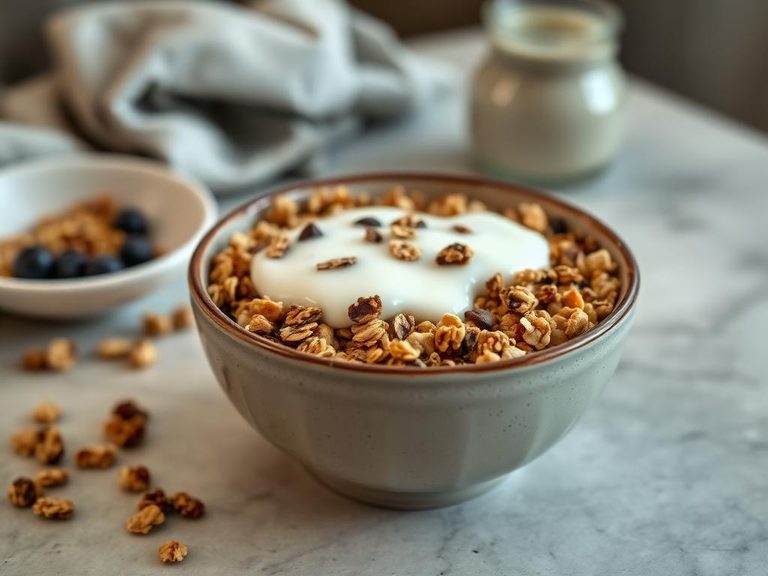
Homemade granola is a hearty, toasted mix of rolled oats, nuts, seeds, and a sweet binder, baked until golden and crunchy. Its texture is a satisfying mosaic of chewy clusters and crisp bits, often with a warm, caramelized flavor from honey or maple syrup. Nutritionally, it's a dense energy source, packing nearly 500 kcal and a solid 24g of fat per 100g, primarily from its nut and oil content.
Calorie split: 11% protein · 44% carbs · 45% fat
↓ Full nutrition💚 Why it's loved
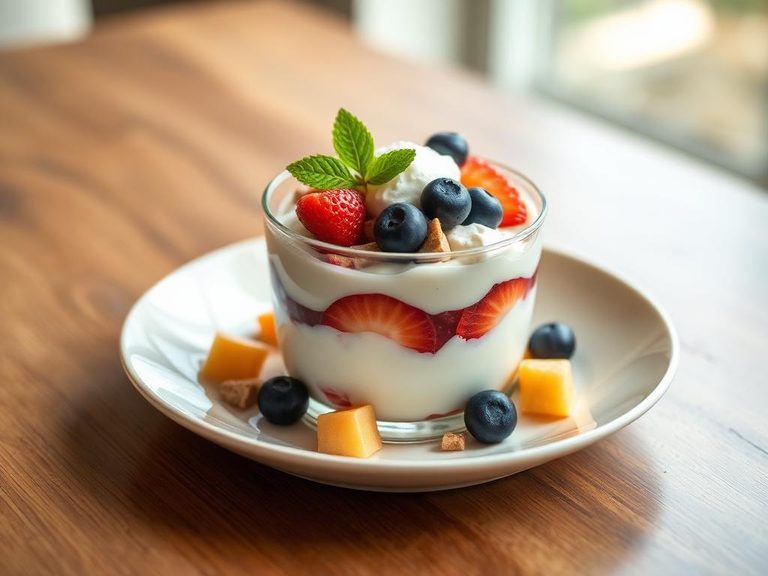
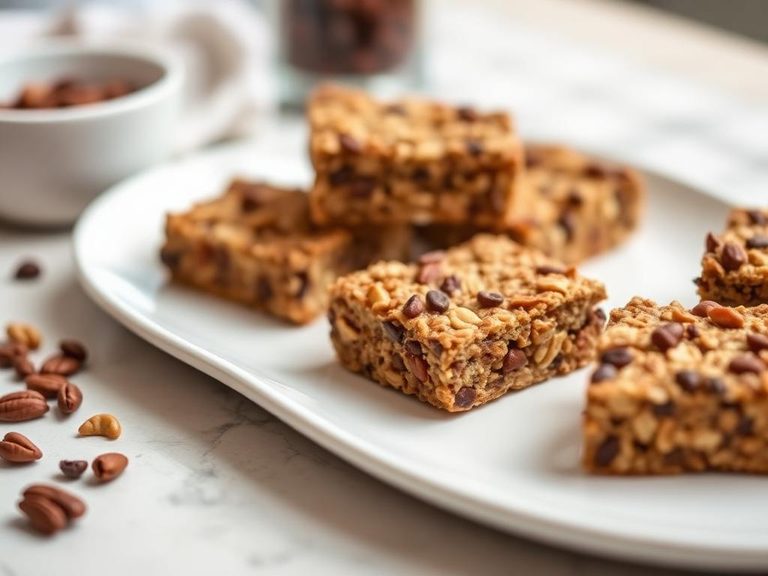
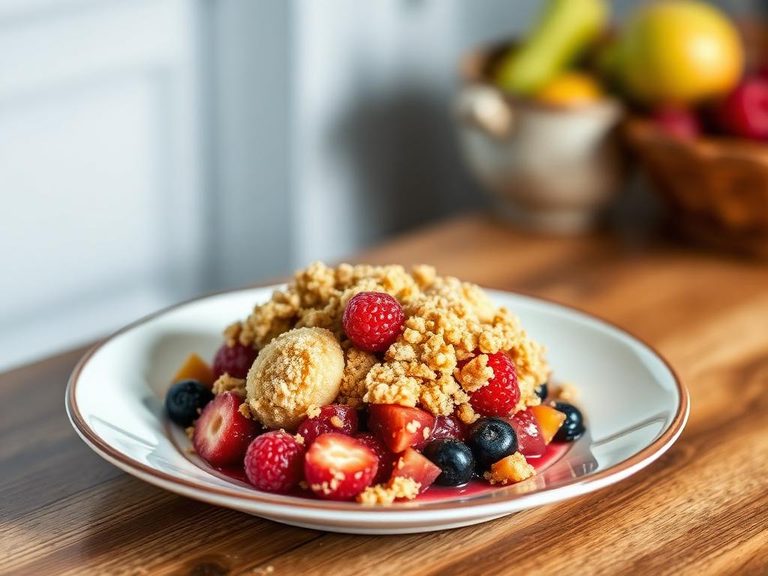
People adore homemade granola for its irresistible crunch and the comforting, toasty sweetness that feels like a treat. Its ultimate versatility makes it a beloved staple—perfect over yogurt, with milk, or as a standalone snack on hikes.
⚠️ Watch-outs & how to enjoy it better
The high calorie and sugar content can lead to overconsumption and blood-sugar spikes if not portioned carefully. To counteract this, pair it with high-protein Greek yogurt or unsweetened milk, and stick to a measured 1/4 to 1/3 cup serving. Some recipes are also high in sodium or contain common allergens like nuts and gluten.
Key benefits
- High in energy-dense calories for sustained fuel
- Good source of plant-based protein from oats and nuts
- Provides dietary fiber for digestive health
- Contains healthy fats from nuts and seeds
- Highly customizable for personal nutrition goals
🍽️ Popular dishes
🌍 Where it's eaten
💡 Did you know?
The word 'granola' was first trademarked in 1886 by Dr. James Caleb Jackson for his baked oat cereal, which he served at his health spa in New York.
Full nutrition (USDA data · scales with serving)
| Water | 5.8 g |
| Energy | 489 kcal |
| Energy | 2046 kj |
| Protein | 13.7 g |
| Total lipid (fat) | 24.3 g |
| Ash | 2.3 g |
| Carbohydrate, by difference | 53.9 g |
| Fiber, total dietary | 8.9 g |
| Total Sugars | 19.8 g |
| Calcium, Ca | 76.0 mg |
| Iron, Fe | 4.0 mg |
| Magnesium, Mg | 168 mg |
| Phosphorus, P | 431 mg |
| Potassium, K | 539 mg |
| Sodium, Na | 26.0 mg |
| Zinc, Zn | 4.2 mg |
| Copper, Cu | 0.65 mg |
| Manganese, Mn | 4.0 mg |
| Selenium, Se | 25.4 ug |
| Vitamin C, total ascorbic acid | 1.2 mg |
| Thiamin | 0.55 mg |
| Riboflavin | 0.35 mg |
| Niacin | 2.7 mg |
| Pantothenic acid | 0.75 mg |
| Vitamin B-6 | 0.37 mg |
| Folate, total | 84.0 ug |
| Folic acid | 0.00 ug |
| Folate, food | 84.0 ug |
| Folate, DFE | 84.0 ug |
| Choline, total | 49.2 mg |
| Vitamin B-12 | 0.00 ug |
| Vitamin B-12, added | 0.00 ug |
| Vitamin A, RAE | 1.0 ug |
| Retinol | 0.00 ug |
| Carotene, beta | 11.0 ug |
| Carotene, alpha | 0.00 ug |
| Cryptoxanthin, beta | 0.00 ug |
| Vitamin A, IU | 19.0 iu |
| Lycopene | 0.00 ug |
| Lutein + zeaxanthin | 137 ug |
| Vitamin E (alpha-tocopherol) | 11.1 mg |
| Vitamin E, added | 0.00 mg |
| Vitamin D (D2 + D3), International Units | 0.00 iu |
| Vitamin D (D2 + D3) | 0.00 ug |
| Vitamin K (phylloquinone) | 5.3 ug |
| Alcohol, ethyl | 0.00 g |
| Caffeine | 0.00 mg |
| Theobromine | 0.00 mg |
Fat & fatty acid profile (per 100g)
| Fatty acids, total saturated | 4.0 g |
| SFA 4:0 | 0.00 g |
| SFA 6:0 | 0.01 g |
| SFA 8:0 | 0.17 g |
| SFA 10:0 | 0.13 g |
| SFA 12:0 | 0.99 g |
| SFA 14:0 | 0.37 g |
| SFA 16:0 | 1.6 g |
| SFA 18:0 | 0.53 g |
| SFA 20:0 | 0.05 g |
| SFA 22:0 | 0.06 g |
| SFA 24:0 | 0.01 g |
| Fatty acids, total monounsaturated | 11.0 g |
| MUFA 14:1 | 0.00 g |
| MUFA 16:1 | 0.06 g |
| MUFA 18:1 | 10.8 g |
| MUFA 20:1 | 0.08 g |
| MUFA 22:1 | 0.00 g |
| Fatty acids, total polyunsaturated | 7.8 g |
| PUFA 18:2 | 7.2 g |
| PUFA 18:3 | 0.61 g |
| PUFA 18:4 | 0.00 g |
| PUFA 20:4 | 0.00 g |
| PUFA 20:5 n-3 (EPA) | 0.00 g |
| PUFA 22:4 | 0.00 g |
| PUFA 22:5 n-3 (DPA) | 0.00 g |
| PUFA 22:6 n-3 (DHA) | 0.00 g |
| Fatty acids, total trans | 0.02 g |
| Cholesterol | 0.00 mg |
Amino acid profile (per 100g)
| Tryptophan | 0.19 g |
| Threonine | 0.48 g |
| Isoleucine | 0.55 g |
| Leucine | 0.98 g |
| Lysine | 0.63 g |
| Methionine | 0.23 g |
| Cystine | 0.30 g |
| Phenylalanine | 0.67 g |
| Tyrosine | 0.38 g |
| Valine | 0.70 g |
| Arginine | 1.3 g |
| Histidine | 0.35 g |
| Alanine | 0.69 g |
| Aspartic acid | 1.4 g |
| Glutamic acid | 3.1 g |
| Glycine | 0.81 g |
| Proline | 0.66 g |
| Serine | 0.67 g |
| Hydroxyproline | 0.00 g |
FAQ
Is homemade granola healthier than store-bought?
Often yes, because you control the ingredients. Homemade versions typically have less added sugar, no preservatives, and you can choose healthier oils and add more nuts and seeds for better nutrition.
How do I get my granola to form clusters?
The key is to not stir it while baking. Press the mixture firmly into a pan, bake until golden, and let it cool completely in the pan before breaking it apart. The sweetener and oil act as the glue.
How long does homemade granola last?
Stored in an airtight container at room temperature, it will stay fresh and crunchy for 2-3 weeks. You can also freeze it for up to 3 months.
Nutrient density (calculated · NRF9.3)
Nutrient Rich Foods index: beneficial nutrients (protein, fiber, vitamins, minerals) minus saturated fat, added sugar & sodium, per 100 kcal.
NRF9.3 index — Fulgoni, Keast & Drewnowski, 2009. Computed from USDA nutrients.
Weight-loss friendliness (composite index)
Energy density 4.89 kcal/g · 11% calories from protein · 8.9 g fiber · 19.8 g sugar per 100 g.
Composite of energy density (Rolls et al., 1999), protein & fiber satiety, minus sugar. A calculated heuristic — ranks satiety-per-calorie, not a clinical measure.
Dietary load (calculated from USDA values)
Potential renal acid load. Positive = acid-forming, negative = alkaline-forming.
Sodium-to-potassium ratio: 0.05 (lower is better — aim for ≤ 1)
Sodium:potassium per WHO potassium guidance. Computed from USDA nutrients.