

Yogurt, plain, low fat
Whole food · Dairy and Egg Products
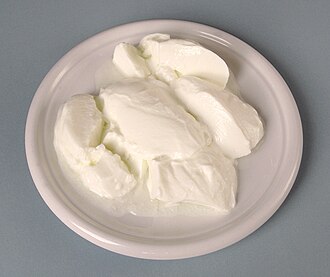
Photo: Wikipedia
This is a smooth, cultured dairy product with a clean, tangy flavor and a creamy yet pourable texture. Its standout nutritional feature is being a high-protein, low-fat food, offering a substantial 5.25 grams of protein per 100 grams for just 63 calories. It's a versatile staple, serving as both a standalone snack and a foundational ingredient in countless recipes.
Calorie split: 33% protein · 45% carbs · 22% fat
↓ Full nutrition💚 Why it's loved
People love its refreshing, subtly sour taste that cuts through sweetness and richness, making it a perfect balance to fruits, granola, or spicy foods. Its incredible versatility—from a base for smoothies and dressings to a marinade for meats—makes it a kitchen workhorse.
⚠️ Watch-outs & how to enjoy it better
The natural tartness can be off-putting to those accustomed to very sweet yogurts, and it contains lactose, a common dairy sugar that can cause digestive issues for sensitive individuals. To counteract tartness, mix in fresh fruit or a tiny drizzle of honey. For lactose sensitivity, look for brands labeled 'lactose-free' or start with small portions, as the live cultures can aid in its own digestion.
Key benefits
- Excellent source of high-quality, complete protein for muscle maintenance.
- Naturally rich in probiotics that support a healthy gut microbiome.
- Provides essential nutrients like calcium, potassium, and B vitamins.
- Low in fat and a good option for calorie-conscious protein intake.
- Fermentation can make its nutrients more easily digestible for some.
🍽️ Popular dishes
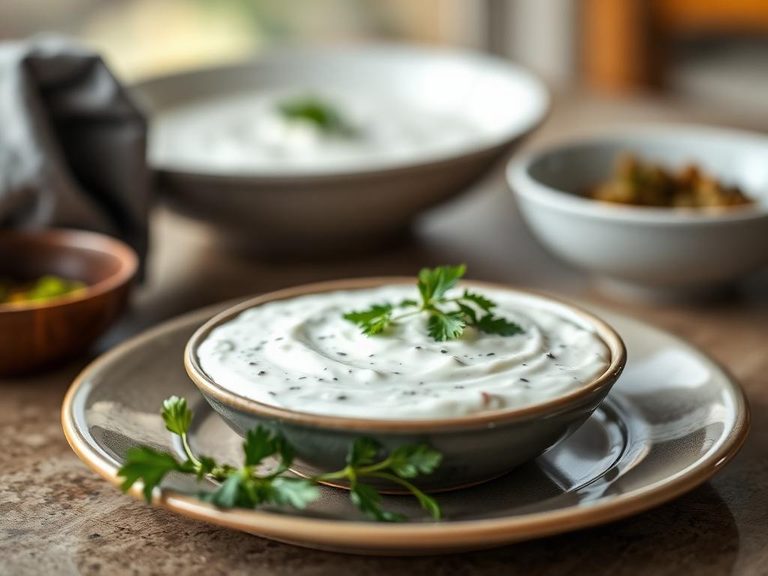
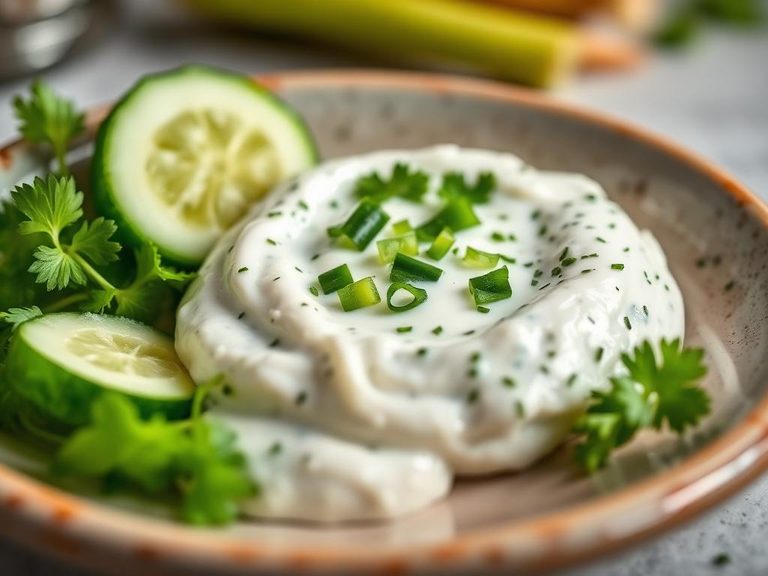
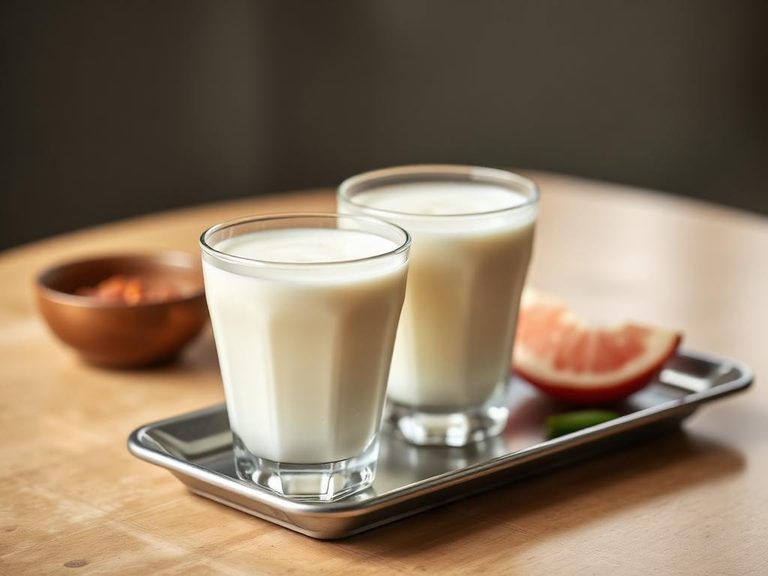



🌍 Where it's eaten
💡 Did you know?
The specific bacterial cultures used to make yogurt (typically *Lactobacillus bulgaricus* and *Streptococcus thermophilus*) are so fundamental to its identity that, in many countries, food laws legally define yogurt by the presence of these live, active microorganisms.
Full nutrition (USDA data · scales with serving)
| Water | 85.1 g |
| Energy | 63.0 kcal |
| Energy | 265 kj |
| Protein | 5.3 g |
| Total lipid (fat) | 1.6 g |
| Ash | 1.1 g |
| Carbohydrate, by difference | 7.0 g |
| Fiber, total dietary | 0.00 g |
| Total Sugars | 7.0 g |
| Calcium, Ca | 183 mg |
| Iron, Fe | 0.08 mg |
| Magnesium, Mg | 17.0 mg |
| Phosphorus, P | 144 mg |
| Potassium, K | 234 mg |
| Sodium, Na | 70.0 mg |
| Zinc, Zn | 0.89 mg |
| Copper, Cu | 0.01 mg |
| Manganese, Mn | 0.00 mg |
| Selenium, Se | 3.3 ug |
| Fluoride, F | 12.0 ug |
| Vitamin C, total ascorbic acid | 0.80 mg |
| Thiamin | 0.04 mg |
| Riboflavin | 0.21 mg |
| Niacin | 0.11 mg |
| Pantothenic acid | 0.59 mg |
| Vitamin B-6 | 0.05 mg |
| Folate, total | 11.0 ug |
| Folic acid | 0.00 ug |
| Folate, food | 11.0 ug |
| Folate, DFE | 11.0 ug |
| Choline, total | 15.2 mg |
| Betaine | 0.90 mg |
| Vitamin B-12 | 0.56 ug |
| Vitamin B-12, added | 0.00 ug |
| Vitamin A, RAE | 14.0 ug |
| Retinol | 14.0 ug |
| Carotene, beta | 2.0 ug |
| Carotene, alpha | 0.00 ug |
| Cryptoxanthin, beta | 0.00 ug |
| Vitamin A, IU | 51.0 iu |
| Lycopene | 0.00 ug |
| Lutein + zeaxanthin | 0.00 ug |
| Vitamin E (alpha-tocopherol) | 0.03 mg |
| Vitamin E, added | 0.00 mg |
| Vitamin D (D2 + D3), International Units | 1.0 iu |
| Vitamin D (D2 + D3) | 0.00 ug |
| Vitamin D3 (cholecalciferol) | 0.00 ug |
| Vitamin K (phylloquinone) | 0.20 ug |
| Alcohol, ethyl | 0.00 g |
| Caffeine | 0.00 mg |
| Theobromine | 0.00 mg |
Fat & fatty acid profile (per 100g)
| Fatty acids, total saturated | 1.0 g |
| SFA 4:0 | 0.05 g |
| SFA 6:0 | 0.03 g |
| SFA 8:0 | 0.02 g |
| SFA 10:0 | 0.04 g |
| SFA 12:0 | 0.05 g |
| SFA 14:0 | 0.16 g |
| SFA 16:0 | 0.42 g |
| SFA 18:0 | 0.15 g |
| Fatty acids, total monounsaturated | 0.43 g |
| MUFA 16:1 | 0.03 g |
| MUFA 18:1 | 0.35 g |
| MUFA 20:1 | 0.00 g |
| MUFA 22:1 | 0.00 g |
| Fatty acids, total polyunsaturated | 0.04 g |
| PUFA 18:2 | 0.03 g |
| PUFA 18:3 | 0.01 g |
| PUFA 18:4 | 0.00 g |
| PUFA 20:4 | 0.00 g |
| PUFA 20:5 n-3 (EPA) | 0.00 g |
| PUFA 22:5 n-3 (DPA) | 0.00 g |
| PUFA 22:6 n-3 (DHA) | 0.00 g |
| Cholesterol | 6.0 mg |
Amino acid profile (per 100g)
| Tryptophan | 0.03 g |
| Threonine | 0.22 g |
| Isoleucine | 0.29 g |
| Leucine | 0.53 g |
| Lysine | 0.47 g |
| Methionine | 0.15 g |
| Cystine | 0.05 g |
| Phenylalanine | 0.29 g |
| Tyrosine | 0.27 g |
| Valine | 0.43 g |
| Arginine | 0.16 g |
| Histidine | 0.13 g |
| Alanine | 0.23 g |
| Aspartic acid | 0.42 g |
| Glutamic acid | 1.0 g |
| Glycine | 0.13 g |
| Proline | 0.62 g |
| Serine | 0.33 g |
FAQ
What's the difference between this and Greek yogurt?
Plain, low-fat yogurt is typically unstrained, giving it a thinner, more liquid consistency. Greek yogurt is strained to remove whey, resulting in a much thicker, creamier texture and a higher concentration of protein and fat per gram.
Can I use this as a substitute for sour cream?
Yes, it's an excellent substitute in most recipes like dips, dressings, or baked goods, providing a similar tang with less fat. For a direct topping substitute, you may want to strain it through a cheesecloth for 30 minutes to thicken it first.
Why does the nutrition label list so many grams of sugar?
The 7.04g of sugar per 100g is almost entirely naturally occurring lactose (milk sugar). There is no added sugar in plain yogurt. This is different from flavored yogurts, which often have significant added sugars.
Nutrient density (calculated · NRF9.3)
Nutrient Rich Foods index: beneficial nutrients (protein, fiber, vitamins, minerals) minus saturated fat, added sugar & sodium, per 100 kcal.
NRF9.3 index — Fulgoni, Keast & Drewnowski, 2009. Computed from USDA nutrients.
Weight-loss friendliness (composite index)
Energy density 0.63 kcal/g · 33% calories from protein · 0.0 g fiber · 7.0 g sugar per 100 g.
Composite of energy density (Rolls et al., 1999), protein & fiber satiety, minus sugar. A calculated heuristic — ranks satiety-per-calorie, not a clinical measure.
Dietary load (calculated from USDA values)
Potential renal acid load. Positive = acid-forming, negative = alkaline-forming.
Sodium-to-potassium ratio: 0.30 (lower is better — aim for ≤ 1)
Sodium:potassium per WHO potassium guidance. Computed from USDA nutrients.