

Veal, leg (top round), separable lean only, cooked, pan-fried, not breaded
Whole food · Lamb, Veal, and Game Products

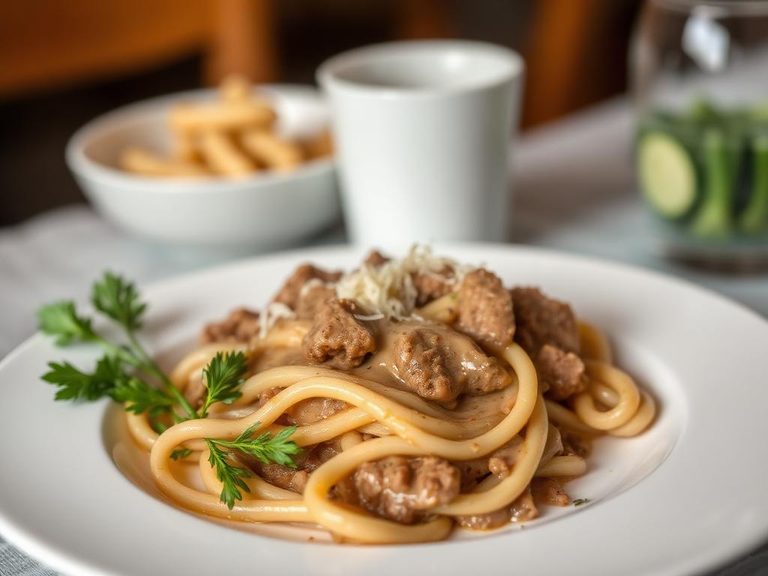
Photo: Wikipedia
This lean cut from the leg of young beef is a high-protein, low-fat workhorse, prized for its mild flavor and firm, dense texture. When pan-fried without breading, it develops a satisfying sear while remaining tender if cooked properly. It's a nutritional powerhouse, delivering over 33 grams of protein per 100 grams with virtually no carbohydrates or fat.
Calorie split: 76% protein · 0% carbs · 24% fat
↓ Full nutrition💚 Why it's loved
People love its clean, beefy taste that acts as a perfect canvas for marinades and seasonings. Its leanness and quick-cooking nature make it a versatile staple for healthy weeknight meals, from stir-fries to salads.
⚠️ Watch-outs & how to enjoy it better
Its extreme leanness means it can become dry and tough if overcooked. To counteract this, use a quick, high-heat cooking method, don't slice against the grain until after resting, and consider a brief marinade with acidic ingredients like yogurt or wine to tenderize.
Key benefits
- Excellent source of complete protein for muscle maintenance.
- Very low in fat, especially saturated fat.
- Carb-free, making it ideal for low-carb and ketogenic diets.
- Rich in essential minerals like zinc and iron.
🍽️ Popular dishes
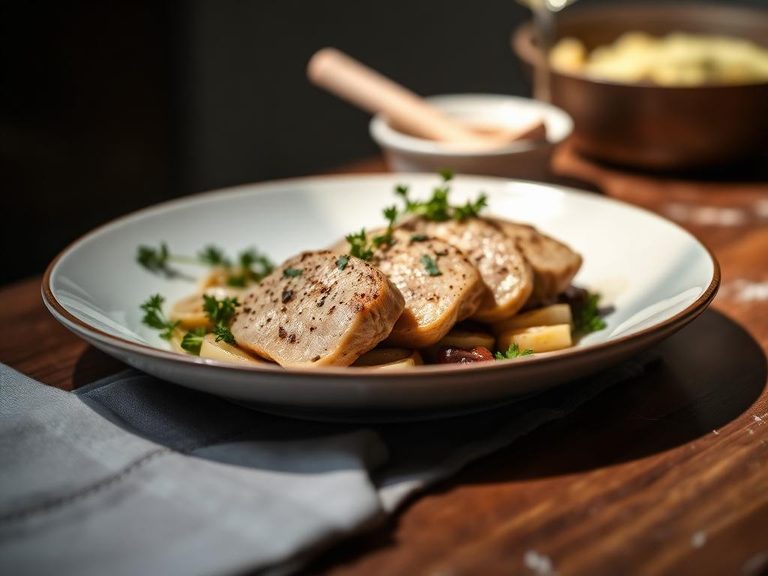
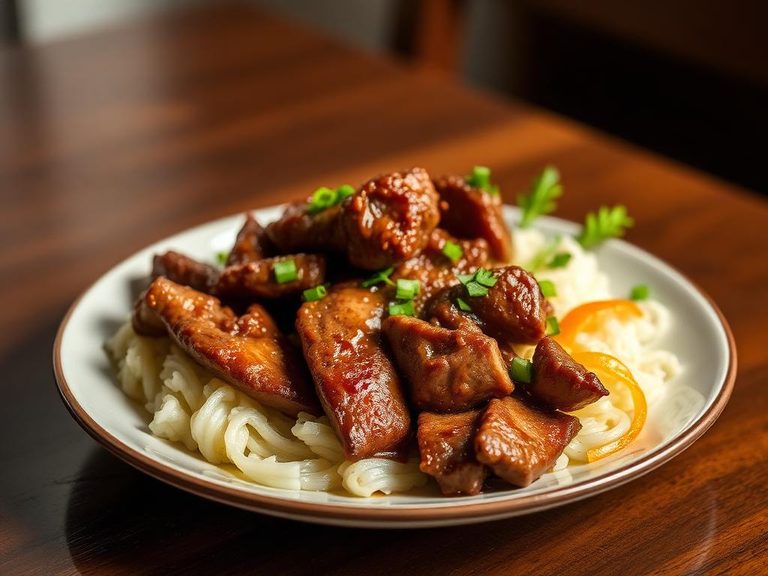
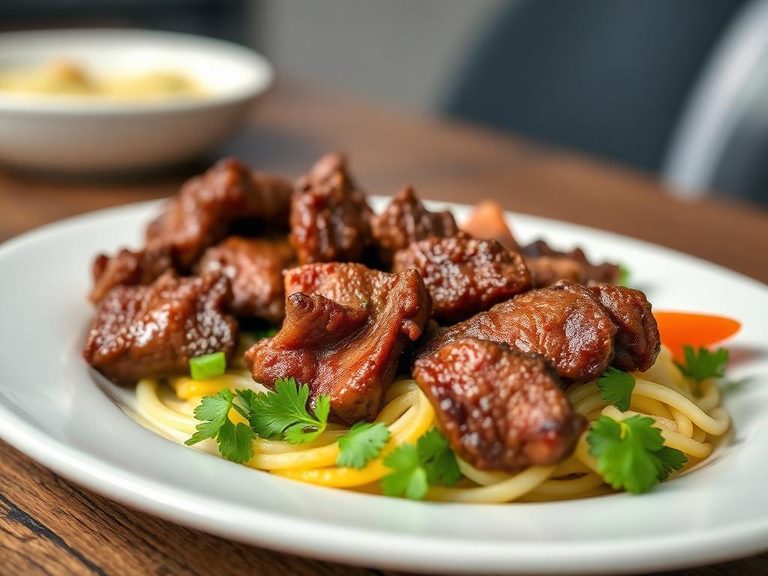
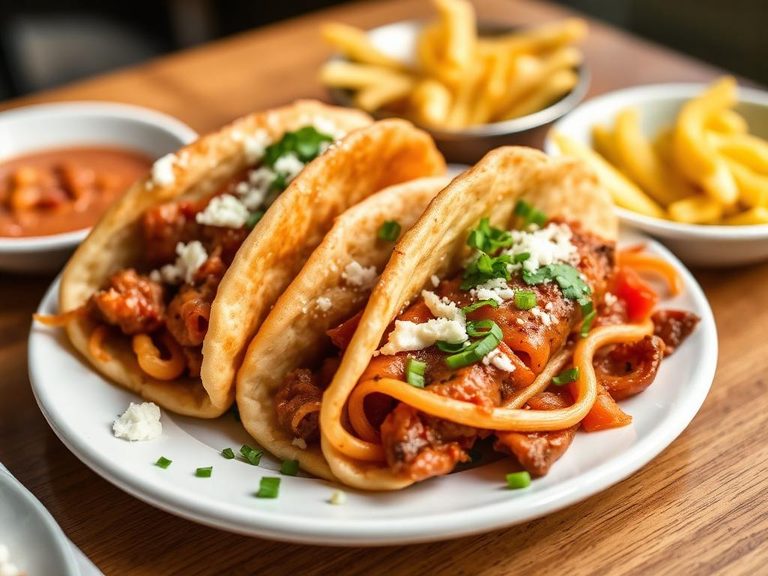
🌍 Where it's eaten
💡 Did you know?
The 'top round' is a large, heavily worked muscle from the rear leg, which is why it's lean but can be tough—the key is to slice it thinly across the grain after cooking to break up the long muscle fibers.
Full nutrition (USDA data · scales with serving)
| Water | 60.7 g |
| Energy | 183 kcal |
| Energy | 766 kj |
| Protein | 33.2 g |
| Total lipid (fat) | 4.6 g |
| Ash | 1.4 g |
| Carbohydrate, by difference | 0.00 g |
| Fiber, total dietary | 0.00 g |
| Total Sugars | 0.00 g |
| Calcium, Ca | 7.0 mg |
| Iron, Fe | 0.87 mg |
| Magnesium, Mg | 32.0 mg |
| Phosphorus, P | 290 mg |
| Potassium, K | 442 mg |
| Sodium, Na | 77.0 mg |
| Zinc, Zn | 3.4 mg |
| Copper, Cu | 0.06 mg |
| Manganese, Mn | 0.03 mg |
| Selenium, Se | 10.4 ug |
| Vitamin C, total ascorbic acid | 0.00 mg |
| Thiamin | 0.07 mg |
| Riboflavin | 0.37 mg |
| Niacin | 12.6 mg |
| Pantothenic acid | 1.2 mg |
| Vitamin B-6 | 0.51 mg |
| Folate, total | 16.0 ug |
| Folic acid | 0.00 ug |
| Folate, food | 16.0 ug |
| Folate, DFE | 16.0 ug |
| Choline, total | 128 mg |
| Betaine | 16.9 mg |
| Vitamin B-12 | 1.5 ug |
| Vitamin B-12, added | 0.00 ug |
| Vitamin A, RAE | 0.00 ug |
| Retinol | 0.00 ug |
| Carotene, beta | 0.00 ug |
| Carotene, alpha | 0.00 ug |
| Cryptoxanthin, beta | 0.00 ug |
| Vitamin A, IU | 0.00 iu |
| Lycopene | 0.00 ug |
| Lutein + zeaxanthin | 0.00 ug |
| Vitamin E (alpha-tocopherol) | 0.42 mg |
| Vitamin E, added | 0.00 mg |
| Vitamin D (D2 + D3), International Units | 0.00 iu |
| Vitamin D (D2 + D3) | 0.00 ug |
| Vitamin D3 (cholecalciferol) | 0.00 ug |
| Vitamin K (phylloquinone) | 5.0 ug |
| Vitamin K (Dihydrophylloquinone) | 0.00 ug |
| Alcohol, ethyl | 0.00 g |
| Caffeine | 0.00 mg |
| Theobromine | 0.00 mg |
Fat & fatty acid profile (per 100g)
| Fatty acids, total saturated | 1.3 g |
| SFA 4:0 | 0.00 g |
| SFA 6:0 | 0.00 g |
| SFA 8:0 | 0.00 g |
| SFA 10:0 | 0.00 g |
| SFA 12:0 | 0.01 g |
| SFA 14:0 | 0.09 g |
| SFA 16:0 | 0.75 g |
| SFA 18:0 | 0.44 g |
| Fatty acids, total monounsaturated | 1.6 g |
| MUFA 16:1 | 0.15 g |
| MUFA 18:1 | 1.5 g |
| MUFA 20:1 | 0.00 g |
| MUFA 22:1 | 0.00 g |
| Fatty acids, total polyunsaturated | 0.41 g |
| PUFA 18:2 | 0.32 g |
| PUFA 18:3 | 0.02 g |
| PUFA 18:4 | 0.00 g |
| PUFA 20:4 | 0.08 g |
| PUFA 20:5 n-3 (EPA) | 0.00 g |
| PUFA 22:5 n-3 (DPA) | 0.00 g |
| PUFA 22:6 n-3 (DHA) | 0.00 g |
| Cholesterol | 107 mg |
Amino acid profile (per 100g)
| Tryptophan | 0.34 g |
| Threonine | 1.4 g |
| Isoleucine | 1.6 g |
| Leucine | 2.6 g |
| Lysine | 2.7 g |
| Methionine | 0.77 g |
| Cystine | 0.37 g |
| Phenylalanine | 1.3 g |
| Tyrosine | 1.1 g |
| Valine | 1.8 g |
| Arginine | 2.0 g |
| Histidine | 1.2 g |
| Alanine | 2.0 g |
| Aspartic acid | 2.9 g |
| Glutamic acid | 5.2 g |
| Glycine | 1.7 g |
| Proline | 1.4 g |
| Serine | 1.2 g |
FAQ
How do I keep pan-fried veal from getting dry?
Pound it to an even thickness, cook it quickly over high heat, and let it rest for 5 minutes before slicing. A quick marinade in olive oil and lemon juice also helps.
Is this the same as 'veal cutlets'?
It's the raw material for them. Veal cutlets are typically made by pounding slices of this leg cut thin.
Why is it so low in fat?
The top round is a large, lean muscle from the leg that does a lot of work, so it contains minimal intramuscular fat (marbling).
Nutrient density (calculated · NRF9.3)
Nutrient Rich Foods index: beneficial nutrients (protein, fiber, vitamins, minerals) minus saturated fat, added sugar & sodium, per 100 kcal.
NRF9.3 index — Fulgoni, Keast & Drewnowski, 2009. Computed from USDA nutrients.
Weight-loss friendliness (composite index)
Energy density 1.83 kcal/g · 73% calories from protein · 0.0 g fiber · 0.0 g sugar per 100 g.
Composite of energy density (Rolls et al., 1999), protein & fiber satiety, minus sugar. A calculated heuristic — ranks satiety-per-calorie, not a clinical measure.
Dietary load (calculated from USDA values)
Potential renal acid load. Positive = acid-forming, negative = alkaline-forming.
Sodium-to-potassium ratio: 0.17 (lower is better — aim for ≤ 1)
Sodium:potassium per WHO potassium guidance. Computed from USDA nutrients.