

Turnips, frozen, cooked, boiled, drained, with salt
Whole food · Vegetables and Vegetable Products

Photo: Wikipedia
Frozen, boiled turnips are a humble, earthy root vegetable that becomes tender and mildly sweet when cooked, with a soft, slightly fibrous texture. They are a low-calorie, high-fiber side dish, offering a good source of vitamin C and a clean, subtly peppery flavor profile. Nutritionally, they provide a light, nutrient-dense option for adding volume and fiber to a meal without significant calories.
Calorie split: 26% protein · 64% carbs · 9% fat
↓ Full nutrition💚 Why it's loved
People appreciate turnips for their versatile, mild flavor that absorbs seasonings beautifully, making them a blank canvas for savory dishes. They are a staple in comforting, home-style cooking across many cultures, often evoking a sense of rustic, seasonal warmth.
⚠️ Watch-outs & how to enjoy it better
Some find the natural peppery or slightly bitter edge of turnips off-putting, especially if overcooked. Those monitoring sodium intake should be cautious, as this frozen, salted variety contains added salt; choosing a no-salt-added version or rinsing after cooking can mitigate this. Pairing with a healthy fat like butter or olive oil can also help balance the flavor and improve absorption of fat-soluble vitamins.
Key benefits
- Very low in calories (21 kcal per 100g)
- Good source of dietary fiber (2g per 100g)
- Provides vitamin C for immune support
- Contains glucosinolates, compounds studied for health benefits
- Low in fat and naturally cholesterol-free
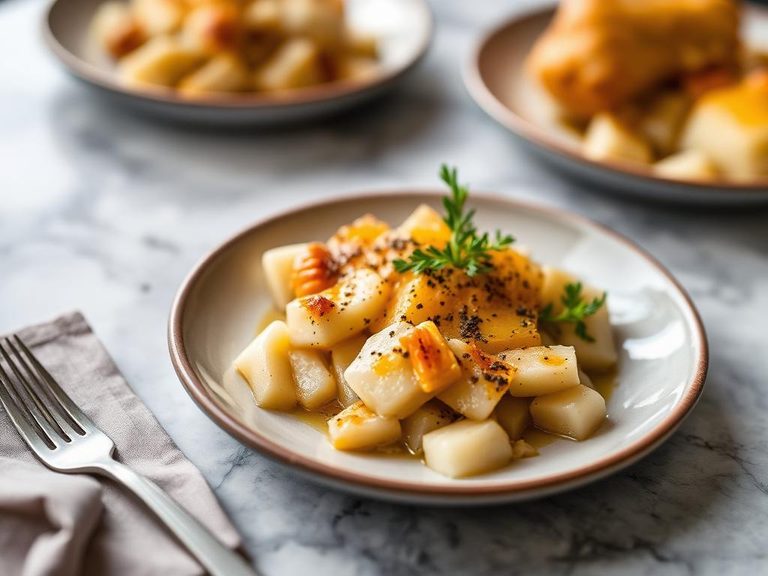
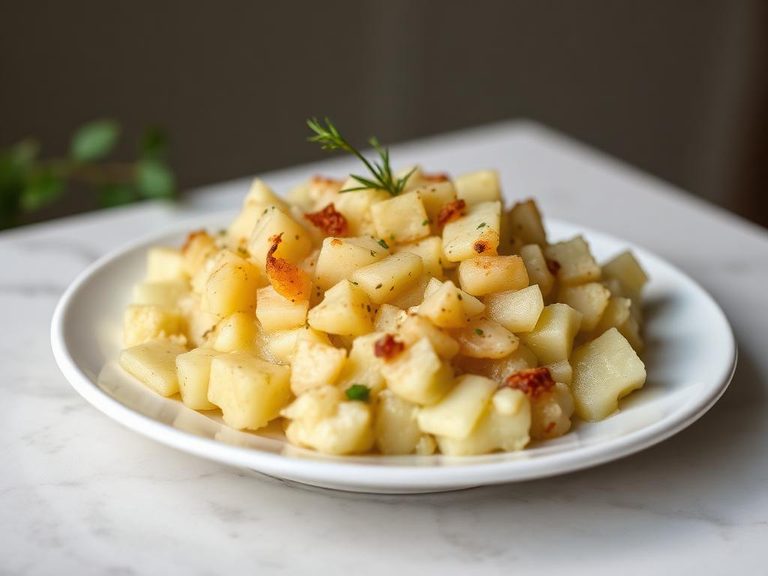
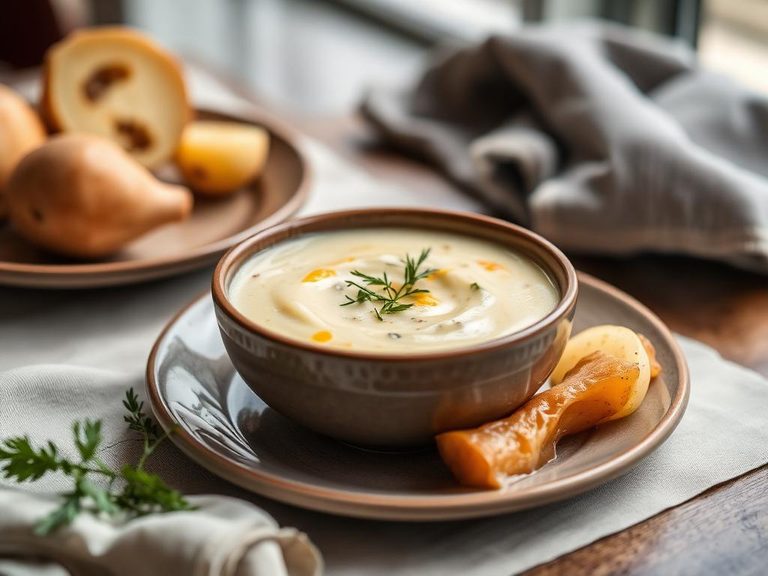
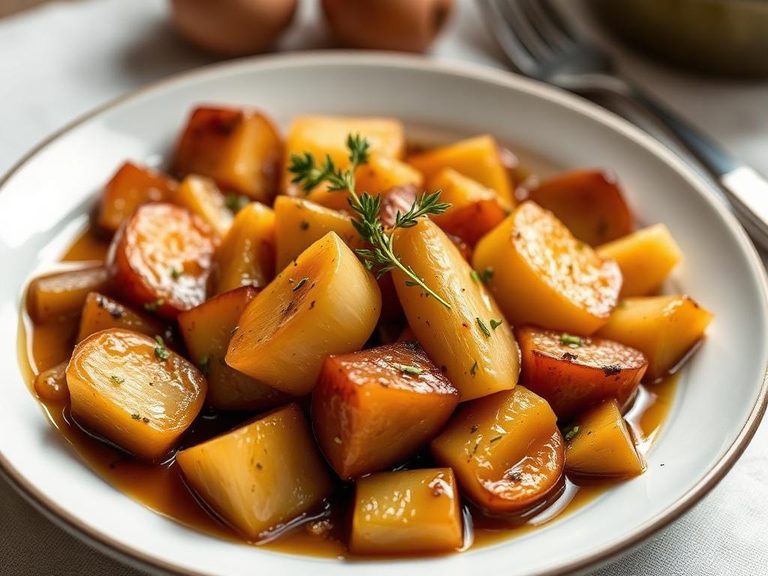
🍽️ Popular dishes
🌍 Where it's eaten
💡 Did you know?
Turnips were one of the most important root vegetables in Europe before the widespread adoption of the potato in the 18th century.
Full nutrition (USDA data · scales with serving)
| Water | 93.6 g |
| Energy | 21.0 kcal |
| Energy | 86.0 kj |
| Protein | 1.5 g |
| Total lipid (fat) | 0.24 g |
| Ash | 0.90 g |
| Carbohydrate, by difference | 3.7 g |
| Fiber, total dietary | 2.0 g |
| Total Sugars | 1.7 g |
| Calcium, Ca | 32.0 mg |
| Iron, Fe | 0.98 mg |
| Magnesium, Mg | 14.0 mg |
| Phosphorus, P | 26.0 mg |
| Potassium, K | 182 mg |
| Sodium, Na | 272 mg |
| Zinc, Zn | 0.20 mg |
| Copper, Cu | 0.06 mg |
| Manganese, Mn | 0.10 mg |
| Selenium, Se | 0.60 ug |
| Vitamin C, total ascorbic acid | 3.9 mg |
| Thiamin | 0.04 mg |
| Riboflavin | 0.03 mg |
| Niacin | 0.56 mg |
| Pantothenic acid | 0.14 mg |
| Vitamin B-6 | 0.07 mg |
| Folate, total | 8.0 ug |
| Folic acid | 0.00 ug |
| Folate, food | 8.0 ug |
| Folate, DFE | 8.0 ug |
| Choline, total | 8.7 mg |
| Vitamin B-12 | 0.00 ug |
| Vitamin B-12, added | 0.00 ug |
| Vitamin A, RAE | 0.00 ug |
| Retinol | 0.00 ug |
| Carotene, beta | 0.00 ug |
| Carotene, alpha | 0.00 ug |
| Cryptoxanthin, beta | 0.00 ug |
| Vitamin A, IU | 0.00 iu |
| Lycopene | 0.00 ug |
| Lutein + zeaxanthin | 0.00 ug |
| Vitamin E (alpha-tocopherol) | 0.02 mg |
| Vitamin E, added | 0.00 mg |
| Vitamin D (D2 + D3), International Units | 0.00 iu |
| Vitamin D (D2 + D3) | 0.00 ug |
| Vitamin K (phylloquinone) | 0.10 ug |
| Alcohol, ethyl | 0.00 g |
| Caffeine | 0.00 mg |
| Theobromine | 0.00 mg |
Fat & fatty acid profile (per 100g)
| Fatty acids, total saturated | 0.03 g |
| SFA 4:0 | 0.00 g |
| SFA 6:0 | 0.00 g |
| SFA 8:0 | 0.00 g |
| SFA 10:0 | 0.00 g |
| SFA 12:0 | 0.00 g |
| SFA 14:0 | 0.00 g |
| SFA 16:0 | 0.02 g |
| SFA 18:0 | 0.00 g |
| Fatty acids, total monounsaturated | 0.01 g |
| MUFA 16:1 | 0.00 g |
| MUFA 18:1 | 0.01 g |
| MUFA 20:1 | 0.00 g |
| MUFA 22:1 | 0.00 g |
| Fatty acids, total polyunsaturated | 0.13 g |
| PUFA 18:2 | 0.03 g |
| PUFA 18:3 | 0.09 g |
| PUFA 18:4 | 0.00 g |
| PUFA 20:4 | 0.00 g |
| PUFA 20:5 n-3 (EPA) | 0.00 g |
| PUFA 22:5 n-3 (DPA) | 0.00 g |
| PUFA 22:6 n-3 (DHA) | 0.00 g |
| Fatty acids, total trans | 0.00 g |
| Cholesterol | 0.00 mg |
Amino acid profile (per 100g)
| Tryptophan | 0.01 g |
| Threonine | 0.04 g |
| Isoleucine | 0.06 g |
| Leucine | 0.06 g |
| Lysine | 0.06 g |
| Methionine | 0.02 g |
| Cystine | 0.01 g |
| Phenylalanine | 0.03 g |
| Tyrosine | 0.02 g |
| Valine | 0.05 g |
| Arginine | 0.04 g |
| Histidine | 0.02 g |
| Alanine | 0.06 g |
| Aspartic acid | 0.11 g |
| Glutamic acid | 0.22 g |
| Glycine | 0.04 g |
| Proline | 0.04 g |
| Serine | 0.05 g |
FAQ
Are frozen cooked turnips as nutritious as fresh?
Yes, flash-freezing vegetables shortly after harvest often preserves nutrients effectively, sometimes even better than 'fresh' produce that has traveled long distances. The boiling process for frozen turnips is typically brief, minimizing nutrient loss.
How can I reduce the bitterness of turnips?
Younger, smaller turnips tend to be sweeter and less bitter. Cooking methods like roasting or sautéing with a touch of sweetener (like honey or maple syrup) or pairing with rich, fatty ingredients can also balance and mellow any bitterness.
What's the difference between turnips and rutabagas?
Turnips (Brassica rapa) are generally smaller, with white flesh and a sharper, peppery flavor. Rutabagas (Brassica napus) are a cross between turnips and cabbage, typically larger with yellowish flesh and a sweeter, milder taste.
Nutrient density (calculated · NRF9.3)
Nutrient Rich Foods index: beneficial nutrients (protein, fiber, vitamins, minerals) minus saturated fat, added sugar & sodium, per 100 kcal.
NRF9.3 index — Fulgoni, Keast & Drewnowski, 2009. Computed from USDA nutrients.
Weight-loss friendliness (composite index)
Energy density 0.21 kcal/g · 29% calories from protein · 2.0 g fiber · 1.7 g sugar per 100 g.
Composite of energy density (Rolls et al., 1999), protein & fiber satiety, minus sugar. A calculated heuristic — ranks satiety-per-calorie, not a clinical measure.
Dietary load (calculated from USDA values)
Potential renal acid load. Positive = acid-forming, negative = alkaline-forming.
Sodium-to-potassium ratio: 1.49 (lower is better — aim for ≤ 1)
Sodium:potassium per WHO potassium guidance. Computed from USDA nutrients.