

Syrups, maple
Whole food · Sweets

Photo: Wikipedia
Pure maple syrup is a viscous, amber liquid tapped directly from the sap of sugar maple trees, boiled down to concentrate its distinctive, complex sweetness. It offers a rich, caramelized flavor with notes of vanilla, butterscotch, and a subtle woody depth, unlike the one-dimensional sweetness of refined sugar. Nutritionally, it is almost entirely carbohydrate (67g per 100g), providing a quick energy source but with minimal protein, fat, or fiber.
Calorie split: 0% protein · 100% carbs · 0% fat
↓ Full nutrition💚 Why it's loved
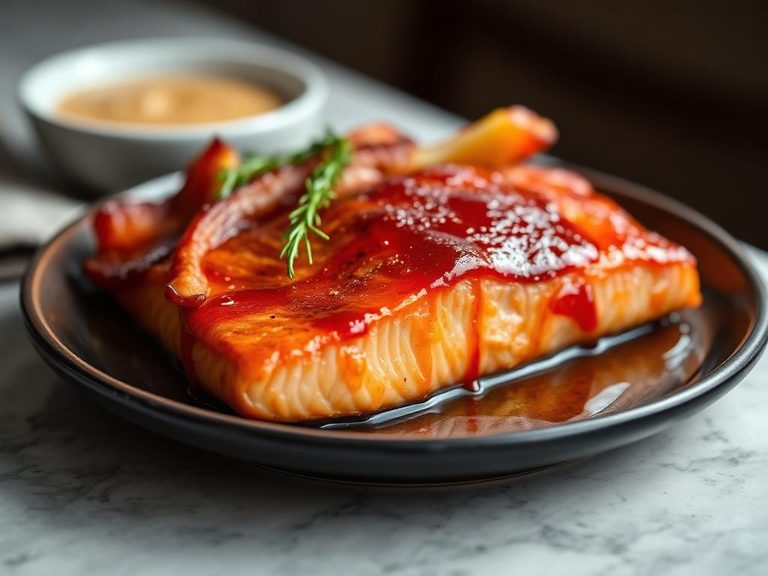
People cherish maple syrup for its irreplaceable, authentic flavor that elevates both sweet and savory dishes, from fluffy pancakes to glazed salmon. It's deeply tied to cultural traditions, especially in North American autumn harvests and breakfast rituals.
⚠️ Watch-outs & how to enjoy it better
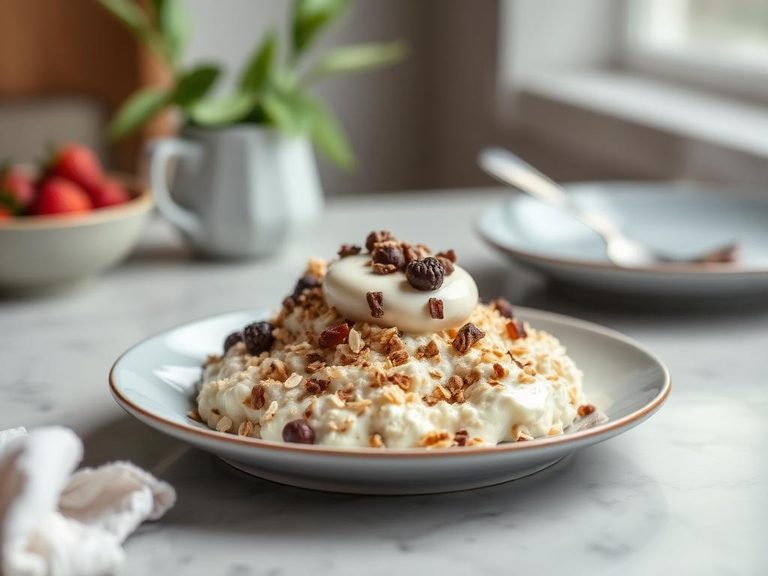
Its high sugar content (60g per 100g) can cause rapid blood-sugar spikes, making it unsuitable for low-carb diets or those managing diabetes. To mitigate this, always pair it with protein or fat (e.g., on Greek yogurt or with nuts) and practice strict portion control, using it as a flavor accent rather than a primary sweetener.
Key benefits
- Contains manganese (35% DV per 100g) and riboflavin (27% DV per 100g).
- Provides antioxidants like polyphenols, which may have anti-inflammatory properties.
- Offers a more complex flavor profile than refined sugar, allowing for less usage.
- A natural, unrefined sweetener containing minerals like zinc and calcium.
- Sourced from a renewable, forest-based agricultural product.
🍽️ Popular dishes

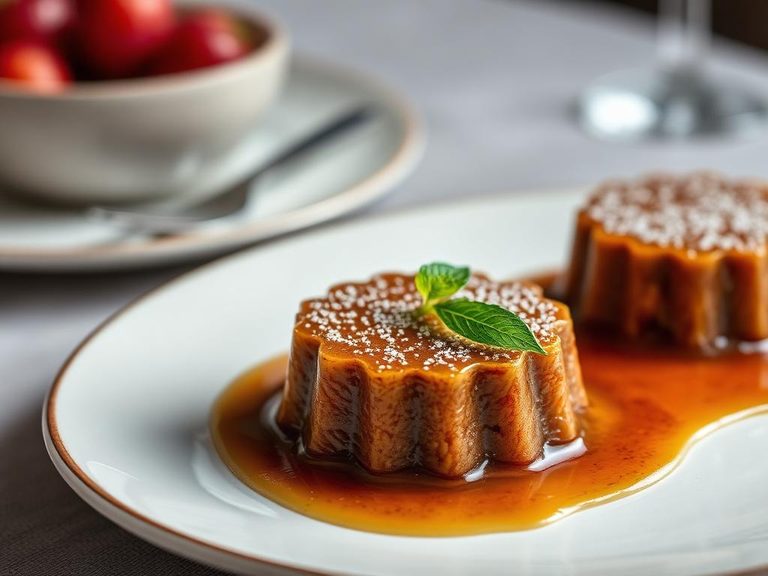
🌍 Where it's eaten
💡 Did you know?
It takes approximately 40 gallons of raw maple sap to produce just one gallon of finished maple syrup, a process historically developed by Indigenous peoples of the Northeastern Woodlands.
Full nutrition (USDA data · scales with serving)
| Water | 32.4 g |
| Energy | 260 kcal |
| Energy | 1088 kj |
| Protein | 0.04 g |
| Total lipid (fat) | 0.06 g |
| Ash | 0.47 g |
| Carbohydrate, by difference | 67.0 g |
| Fiber, total dietary | 0.00 g |
| Total Sugars | 60.5 g |
| Sucrose | 58.3 g |
| Glucose | 1.6 g |
| Fructose | 0.52 g |
| Lactose | 0.00 g |
| Maltose | 0.00 g |
| Galactose | 0.00 g |
| Calcium, Ca | 102 mg |
| Iron, Fe | 0.11 mg |
| Magnesium, Mg | 21.0 mg |
| Phosphorus, P | 2.0 mg |
| Potassium, K | 212 mg |
| Sodium, Na | 12.0 mg |
| Zinc, Zn | 1.5 mg |
| Copper, Cu | 0.02 mg |
| Manganese, Mn | 2.9 mg |
| Selenium, Se | 0.60 ug |
| Vitamin C, total ascorbic acid | 0.00 mg |
| Thiamin | 0.07 mg |
| Riboflavin | 1.3 mg |
| Niacin | 0.08 mg |
| Pantothenic acid | 0.04 mg |
| Vitamin B-6 | 0.00 mg |
| Folate, total | 0.00 ug |
| Folic acid | 0.00 ug |
| Folate, food | 0.00 ug |
| Folate, DFE | 0.00 ug |
| Choline, total | 1.6 mg |
| Vitamin B-12 | 0.00 ug |
| Vitamin B-12, added | 0.00 ug |
| Vitamin A, RAE | 0.00 ug |
| Retinol | 0.00 ug |
| Carotene, beta | 0.00 ug |
| Carotene, alpha | 0.00 ug |
| Cryptoxanthin, beta | 0.00 ug |
| Vitamin A, IU | 0.00 iu |
| Lycopene | 0.00 ug |
| Lutein + zeaxanthin | 0.00 ug |
| Vitamin E (alpha-tocopherol) | 0.00 mg |
| Vitamin E, added | 0.00 mg |
| Vitamin D (D2 + D3), International Units | 0.00 iu |
| Vitamin D (D2 + D3) | 0.00 ug |
| Vitamin K (phylloquinone) | 0.00 ug |
| Alcohol, ethyl | 0.00 g |
| Caffeine | 0.00 mg |
| Theobromine | 0.00 mg |
Fat & fatty acid profile (per 100g)
| Fatty acids, total saturated | 0.01 g |
| SFA 4:0 | 0.00 g |
| SFA 6:0 | 0.00 g |
| SFA 8:0 | 0.00 g |
| SFA 10:0 | 0.00 g |
| SFA 12:0 | 0.00 g |
| SFA 14:0 | 0.00 g |
| SFA 16:0 | 0.01 g |
| SFA 18:0 | 0.00 g |
| Fatty acids, total monounsaturated | 0.01 g |
| MUFA 16:1 | 0.00 g |
| MUFA 18:1 | 0.01 g |
| MUFA 20:1 | 0.00 g |
| MUFA 22:1 | 0.00 g |
| Fatty acids, total polyunsaturated | 0.02 g |
| PUFA 18:2 | 0.02 g |
| PUFA 18:3 | 0.00 g |
| PUFA 18:4 | 0.00 g |
| PUFA 20:4 | 0.00 g |
| PUFA 20:5 n-3 (EPA) | 0.00 g |
| PUFA 22:5 n-3 (DPA) | 0.00 g |
| PUFA 22:6 n-3 (DHA) | 0.00 g |
| Cholesterol | 0.00 mg |
Amino acid profile (per 100g)
Estimated from Syrups, malt — USDA does not publish this profile for Syrups.
| Tryptophan | 0.07 g |
| Threonine | 0.21 g |
| Isoleucine | 0.21 g |
| Leucine | 0.38 g |
| Lysine | 0.27 g |
| Methionine | 0.11 g |
| Cystine | 0.07 g |
| Phenylalanine | 0.26 g |
| Tyrosine | 0.17 g |
| Valine | 0.30 g |
| Arginine | 0.28 g |
| Histidine | 0.13 g |
| Alanine | 0.27 g |
| Aspartic acid | 0.56 g |
| Glutamic acid | 1.0 g |
| Glycine | 0.25 g |
| Proline | 0.46 g |
| Serine | 0.23 g |
FAQ
What's the difference between Grade A and the old Grade B maple syrup?
The old 'Grade B' was darker and more robust in flavor. The current 'Grade A: Dark Color, Robust Taste' is essentially the same product, reclassified for clarity. All pure maple syrup is now Grade A, with varying color and taste intensities.
Can I use maple syrup as a 1:1 replacement for white sugar in baking?
Not exactly. Maple syrup is a liquid and sweeter by volume. A general rule is to use 3/4 cup maple syrup for every 1 cup of sugar, reduce other liquids by about 3 tablespoons, and lower the oven temperature by 25°F (15°C) to prevent over-browning.
How should I store pure maple syrup after opening?
Refrigerate it immediately after opening. It will keep for at least a year in the fridge. If mold ever forms (rare), simply skim it off and gently reheat the syrup to a boil before cooling and returning it to the refrigerator.
Nutrient density (calculated · NRF9.3)
Nutrient Rich Foods index: beneficial nutrients (protein, fiber, vitamins, minerals) minus saturated fat, added sugar & sodium, per 100 kcal.
NRF9.3 index — Fulgoni, Keast & Drewnowski, 2009. Computed from USDA nutrients.
Weight-loss friendliness (composite index)
Energy density 2.60 kcal/g · 0% calories from protein · 0.0 g fiber · 60.5 g sugar per 100 g.
Composite of energy density (Rolls et al., 1999), protein & fiber satiety, minus sugar. A calculated heuristic — ranks satiety-per-calorie, not a clinical measure.
Dietary load (calculated from USDA values)
Potential renal acid load. Positive = acid-forming, negative = alkaline-forming.
Sodium-to-potassium ratio: 0.06 (lower is better — aim for ≤ 1)
Sodium:potassium per WHO potassium guidance. Computed from USDA nutrients.